Women and TMJ: Why Females Are 2x More Likely to Develop TMD

If you're a woman between 35 and 44 dealing with jaw pain, clicking, or headaches that won't quit, you're not imagining a pattern; you're in the demographic where temporomandibular disorders (TMD) show up most. According to the National Institute of Dental and Craniofacial Research (NIDCR), TMDs are twice as common in women as in men, and the gap is widest during those middle reproductive years. This article breaks down what the research actually says about why, what symptoms tend to look like for women specifically, and what evidence-based treatment looks like today.
What Is TMD, and Why Does the 2x Statistic Matter?
TMD is an umbrella term for more than 30 conditions affecting the jaw joint (the temporomandibular joint, or TMJ) and the muscles that control chewing. The NIDCR groups them into three categories: joint disorders like disc displacement, muscle disorders affecting the muscles used for chewing, and TMD-related headaches. An estimated 11 to 12 million adults in the United States live with pain in the TMJ region at any given time.
The sex gap isn't a minor statistical footnote it's one of the most consistent findings in TMD research worldwide. A systematic review of global prevalence data found the female-to-male ratio ranges from roughly 1.1 to 1 in Europe up to 1.6 to 1 in South America, and older estimates cited in the clinical literature put it as high as 80% of TMD patients being women. Whatever the exact ratio in a given population, the direction is the same everywhere researchers have looked: women are affected more often, more severely, and for longer.
The Research Behind the Gender Gap
Researchers don't point to one single cause. Instead, several biological factors appear to stack together.
Hormones and Estrogen's Role
The leading hypothesis involves estrogen. TMD prevalence is highest during a woman's reproductive years, tends to fluctuate with the menstrual cycle, and often eases after menopause, a pattern that lines up closely with estrogen levels rather than age alone. Laboratory research has identified estrogen receptors in TMJ tissue itself, including the cartilage and the tissue behind the disc, giving a plausible biological pathway for hormones to directly affect the joint. Animal studies have also found that estrogen can heighten pain sensitivity in inflamed jaw tissue, which may help explain why TMD pain, specifically, is more common in women rather than just joint sounds or structural findings.
That said, this isn't settled science. A recent systematic review comparing regional TMD prevalence ratios by sex found the differences weren't statistically significant across all regions studied, and reviewers concluded that estrogen levels alone may not fully explain symptom occurrence. The honest summary: estrogen is a strong lead, not a proven single cause.
Joint Structure and Ligament Laxity
Women are more likely than men to have generalized joint hypermobility looser ligaments that allow joints to move beyond a typical range. Studies have linked generalized joint hypermobility to a higher risk of TMJ sounds like clicking and popping (associated with disc displacement), though interestingly, some research suggests hypermobile joints are less likely to become restricted in how far they open. The NIDCR specifically notes that researchers are examining whether differences in TMJ structure and mechanics between women and men play a role in why TMD is more common in women.
Pain Perception and Central Sensitization
TMD frequently travels with other chronic pain conditions that are also more common in women fibromyalgia, irritable bowel syndrome, migraine, and chronic back pain. The NIDCR lists these as conditions that often co-occur with TMD. Some researchers believe this points to broader differences in how the nervous system processes and amplifies pain signals, rather than the jaw joint being the sole source of the problem. Laboratory pain studies have found that healthy women report more pain than healthy men in response to the same experimental stimulus applied to jaw muscle tissue, supporting the idea that pain processing itself differs by sex, independent of any structural joint issue.
Age and Reproductive Years
The concentration of TMD in women aged 35 to 44 specifically the age range the NIDCR highlights lines up with peak reproductive hormone activity. Some studies have also found elevated TMD symptom rates during pregnancy, when estrogen and relaxin (a hormone that increases ligament laxity) both rise sharply, and reduced symptoms after menopause, when estrogen drops. This age and life-stage pattern is one of the stronger pieces of circumstantial evidence tying TMD risk to hormonal status, even though the exact mechanism is still being studied.
How TMD Symptoms Can Show Up
TMD symptoms are broadly similar between men and women, but because women present more often and more severely, it's worth knowing the full symptom list. Per the NIDCR, watch for:
- Pain in the jaw joint or chewing muscles — the most common symptom
- Pain that radiates to the face, temples, or neck
- Jaw stiffness or a limited range of motion
- Jaw locking, either open or closed
- Painful clicking, popping, or grating when opening or closing the mouth
- Ringing in the ears, hearing changes, or dizziness
- A noticeable change in how the upper and lower teeth fit together
One important clarification from the NIDCR: jaw clicking or popping without pain is common and considered normal it doesn't need treatment on its own. It's pain, locking, or a real change in function that signals a TMD worth evaluating.
TMD Risk Factors and What Tends to Help
| Contributing Factor | Why It's Linked to Higher Risk in Women | What Typically Helps |
|---|---|---|
| Fluctuating estrogen (menstrual cycle, pregnancy) | Estrogen receptors in TMJ tissue; symptoms often track hormone levels | Symptom tracking alongside cycle; conservative pain management during flares |
| Post-menopausal estrogen decline | Some studies note easing of TMD symptoms after menopause | Ongoing monitoring; treatment as needed based on symptoms, not hormone status alone |
| Generalized joint hypermobility | More common in women; linked to TMJ clicking/popping | Jaw-stabilizing exercises; avoiding extreme jaw movements (wide yawns, hard/chewy foods) |
| Co-occurring chronic pain conditions (fibromyalgia, migraine, IBS) | Shared pain-processing pathways more prevalent in women | Coordinated care between dentist and physician; cognitive behavioral therapy |
| Jaw clenching or grinding (bruxism) | Not sex-specific, but compounds joint strain in an already vulnerable joint | Stress management, night guard if sleep-related, habit awareness |
Diagnosis: What to Expect
There's no single standard test for TMD, which is part of why it's historically been under- or misdiagnosed. A dentist or doctor will typically take a detailed history where the pain is, when it happens, what makes it better or worse and examine your jaw, face, and neck for tenderness, clicking, or limited movement. Imaging like an X-ray, MRI, or CT scan may be used, but mainly to rule out other causes rather than to confirm TMD on its own.
If you have other pain conditions like migraines or fibromyalgia, mention them the NIDCR notes these frequently occur alongside TMD, and a clinician who knows the full picture can plan care accordingly.
Treatment: Start Conservative
This is one area where the research is unusually clear: start with the least invasive option, and be cautious about anything that permanently changes your teeth, bite, or jaw joint. The NIDCR is direct that occlusal treatments grinding down teeth, orthodontics, or crowns specifically to "fix" TMD aren't supported by evidence and can make symptoms worse. The same caution applies to surgery and jaw implants, which should only be considered after conservative options have been tried and failed.
Conservative first-line approaches include:
- Self-care: soft foods, heat or cold applied to the jaw, gentle stretching exercises
- Over-the-counter NSAIDs for pain and inflammation
- Reducing habits like jaw clenching, gum chewing, and nail biting
- Physical therapy, including manual therapy to relax tight jaw and neck muscles
- Behavioral approaches like cognitive behavioral therapy or biofeedback, particularly useful given the overlap between TMD and stress-related or chronic pain conditions
Many cases of TMD improve or resolve without any invasive treatment at all. If conservative care isn't enough, a dentist may discuss intraoral appliances (night guards or splints), though the NIDCR notes evidence for how well these work is limited. More involved procedures arthrocentesis, arthroscopy, or open surgery are reserved for cases with clear joint damage that hasn't responded to simpler care.
What You Can Do Now
- TMD affects women at roughly 1.4 to 2 times the rate of men, consistently across most studies that report sex differences
- Estrogen and hormonal medication use are the leading, though not fully mapped, explanation for this gap
- TMD prevalence also peaks in the 20-40 age range, overlapping with peak reproductive hormonal activity
- Mentioning hormonal timing or cycle-related symptom changes to your dentist is a legitimate, useful clinical detail
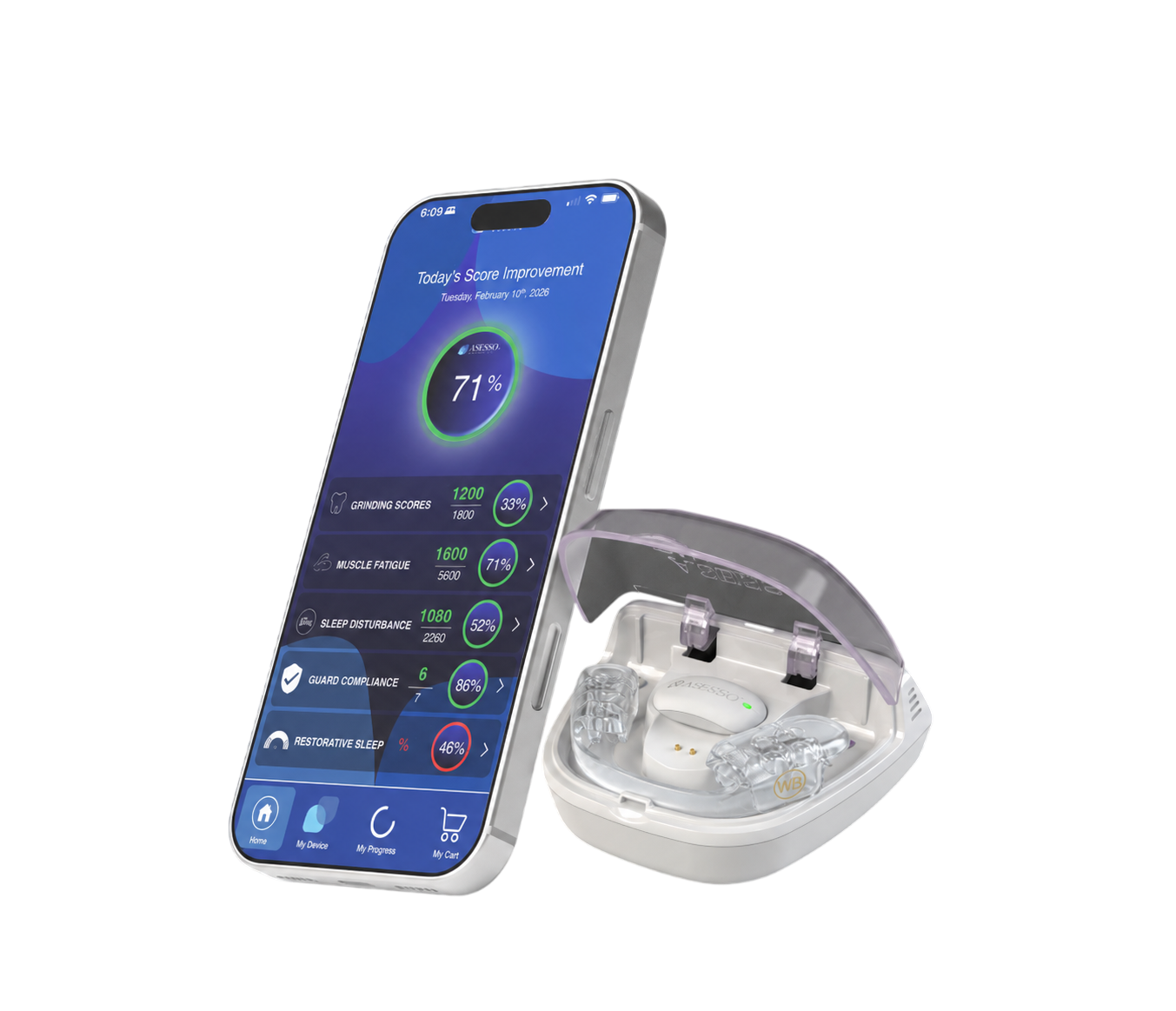
**WAKEBRIGHT | **If jaw pain is part of your pattern, the Wakebright Guard can help manage the muscle strain associated with TMD while you and your dentist explore what's driving your specific case.
Frequently Asked Questions
Why are women twice as likely to get TMD than men?
Researchers point to several overlapping factors: estrogen receptors in the jaw joint tissue, a tendency toward looser ligaments (joint hypermobility), and possible sex-based differences in how the nervous system processes pain. No single cause has been proven, but the pattern highest prevalence during reproductive years, easing after menopause points strongly toward a hormonal connection.
What age group of women is most affected by TMD?
The NIDCR specifically highlights women between 35 and 44 years old as the group with the highest TMD prevalence, aligning with peak reproductive hormone activity.
Does pregnancy affect TMJ symptoms?
Some research has found elevated rates of TMD-related symptoms during pregnancy, when both estrogen and relaxin (a ligament-loosening hormone) increase. If you notice new jaw symptoms during pregnancy, it's worth mentioning to your dentist.
Does TMD go away after menopause?
Several studies have observed lower TMD prevalence after menopause, coinciding with the drop in estrogen, though this isn't universal and symptoms can still occur. It's not a guarantee that symptoms will resolve on their own.
Is TMJ clicking always something to worry about?
No. The NIDCR notes that jaw sounds like clicking or popping without pain are common and considered normal they don't require treatment by themselves. Pain, locking, or a change in bite is what warrants an evaluation.
Can birth control or hormone therapy affect TMD symptoms?
Because TMD prevalence tracks with estrogen levels in observational studies, some researchers have studied hormonal contraceptives and hormone replacement therapy in relation to TMD symptoms, though results have been mixed. If you notice a pattern between starting or stopping hormonal medication and jaw symptoms, discuss it with both your prescriber and your dentist.
What other health conditions are linked to TMD in women?
The NIDCR notes TMD often occurs alongside headaches, back pain, sleep problems, fibromyalgia, and irritable bowel syndrome conditions that are also more common in women, supporting the theory of shared pain-processing pathways.
Is surgery ever necessary for TMD?
Rarely, and only after conservative treatments have failed. The NIDCR is explicit that permanent procedures including surgery and joint implants carry real risks and should be a last resort, pursued only for cases with clear joint damage that hasn't responded to simpler care.
Can a night guard fix TMD?
A night guard, also called a splint or occlusal appliance, may help protect teeth if grinding is contributing to your symptoms, but the NIDCR notes there isn't strong evidence that these appliances directly improve TMD pain. They're one tool among several, not a guaranteed fix.
Should I see a dentist or a doctor for TMD symptoms?
Either is a reasonable starting point. Many people begin with their dentist, since TMD involves the teeth, bite, and jaw joint, but your primary care doctor can also evaluate you and refer you to a specialist, particularly if you have other chronic pain conditions that need to be considered together.
Are joint hypermobility and TMD related?
Yes research has found generalized joint hypermobility (looser-than-average ligaments throughout the body) is associated with a higher risk of TMJ clicking and disc displacement, and hypermobility itself is more common in women.
How is TMD actually diagnosed if there's no single test?
Diagnosis relies on a detailed symptom history and a physical exam of the jaw, face, and neck. Imaging like an MRI or CT scan may be used to rule out other causes, but the NIDCR notes there's no single standard test that confirms TMD on its own.
References
- National Institute of Dental and Craniofacial Research. "TMD (Temporomandibular Disorders)." nidcr.nih.gov. https://www.nidcr.nih.gov/health-info/tmd
- Chen, X. et al. "Association between Estrogen Levels and Temporomandibular Disorders: An Updated Systematic Review." International Journal of Molecular Sciences, National Library of Medicine. https://doi.org/10.3390/ijms25189867
- Bi, R. et al. "A new hypothesis of sex-differences in temporomandibular disorders: Estrogen enhances hyperalgesia of inflamed TMJ." ScienceDirect. https://www.sciencedirect.com/science/article/abs/pii/S030698771400454X
- Robinson, J. et al. "Temporomandibular disorders and hormones in women." PubMed, National Library of Medicine. https://pubmed.ncbi.nlm.nih.gov/11455113/
- "Association between generalized joint hypermobility, temporomandibular joint hypertranslation and temporomandibular disorders: a scoping review." PMC, National Library of Medicine. https://pmc.ncbi.nlm.nih.gov/articles/PMC12005711/
- Mayo Clinic. "TMJ disorders – Diagnosis and treatment." mayoclinic.org. https://www.mayoclinic.org/diseases-conditions/tmj/diagnosis-treatment/drc-20350945
This article is for educational purposes only and does not constitute medical or dental advice. Please consult a qualified healthcare provider for personalized guidance.