Why Does My Jaw Click or Pop When I Chew? (And When It's a Problem)

You bite into a sandwich and hear it: a distinct click or pop from your jaw, right in front of your ear. Maybe it happens every time you chew. Maybe your dinner companion has asked what that sound was. The good news is that jaw clicking is extremely common and, most of the time, nothing to worry about. The less obvious part is knowing when "most of the time" doesn't apply to you.
What's Actually Making That Sound?
Your jaw joint the temporomandibular joint (TMJ) has a small cushion of cartilage called the articular disc sitting between the jawbone and the skull. That disc is supposed to glide smoothly as you open and close your mouth. When it slips slightly out of its normal position and then snaps back as you move your jaw, that's the click or pop you're hearing.
According to Cleveland Clinic, there are actually two distinct types of jaw popping, and they mean different things:
- The wide-open type, which happens when you open your mouth very wide yawning, for instance. This is typically just temporary overextension of the joint and usually isn't a concern on its own.
- The chewing/closing type, which happens as you close your mouth and then open it again the pattern you'd notice while eating or talking. This is the type caused by the disc actually sliding in and out of position, and it's the one worth paying closer attention to.
A jaw specialist interviewed by University of Utah Health described the more notable version this way: the disc slips out of place quietly as you close your mouth, then makes a louder pop or crack as it snaps back into position when you open again often loud enough for people sitting near you at a meal to notice.
Is It Normal? What the Research Actually Says
Here's the reassuring part: according to the National Institute of Dental and Craniofacial Research (NIDCR), sounds like clicking or popping in the jaw joint without pain are common, considered clinically normal, and generally don't need treatment. Temporomandibular disorders (TMD) as a whole affect an estimated 5% to 12% of the population, but plenty of people have some degree of joint clicking without ever developing an actual disorder that needs care.
In other words: the sound by itself is not the thing to worry about. What matters is whether it's accompanied by anything else.
Common Causes of Jaw Clicking
Per Cleveland Clinic, a number of factors can contribute to jaw clicking, and it's common for more than one to be involved at once:
- Bruxism teeth grinding or clenching, which places repeated strain on the joint
- Habits like nail biting or excessive gum chewing
- Arthritis affecting the jaw joint
- Malocclusion when your upper and lower teeth don't fit together properly
- Skeletal differences in the structure of the jaw joint itself
- Muscle tension from stress or anxiety
- Trauma, from an accident or sports injury
- Family history TMJ-related issues in a parent or grandparent
Because several of these can overlap, a single clicking jaw often doesn't trace back to just one cause.
When Clicking Is a Problem: Red Flags to Watch For
Cleveland Clinic is specific about this: you should see a dentist or your primary care provider if any of the following apply, even without significant pain:
- Jaw pain or tenderness that doesn't go away
- You can't close your jaw completely
- Your jaw pops specifically when chewing (as opposed to only with wide yawning)
And one clear emergency: if your jaw actually pops out of place, seek medical care right away never try to pop it back into position yourself.
Beyond Cleveland Clinic's list, other signs worth mentioning at a dental visit include a jaw that catches or briefly locks, a noticeable change in how your teeth fit together when you bite, or clicking that's gotten louder or more frequent over time.
Painless Click vs. Concerning Click
| Signal | Likely Fine to Monitor | Worth Getting Checked |
|---|---|---|
| Timing | Only with wide yawning | Specifically when chewing or talking |
| Pain | None | Any tenderness or ache, even mild |
| Jaw movement | Full, comfortable range | Limited opening or a "stuck" feeling |
| Frequency | Occasional | Frequent, worsening, or new |
| Bite | Unchanged | Teeth suddenly fit together differently |
| Locking | Never | Even brief locking or catching |
If everything you're experiencing falls in the left column, NIDCR's guidance suggests it's reasonable to simply keep an eye on it. If anything shows up in the right column, it's a reasonable prompt to get evaluated.
What Happens If You Ignore a Problem Click
Occasional, painless clicking generally doesn't need to be "fixed." But Cleveland Clinic notes that when clicking is part of a genuine TMD, leaving it untreated can allow the underlying joint problem to progress, potentially leading to permanent damage including loss of cartilage and bone in more severe, long-neglected cases. That's a real but relatively uncommon outcome, and it's part of why the presence of pain, locking, or a changing bite matters more than the sound itself.
What a Dentist Checks
If you bring jaw clicking to a dental visit, expect an exam that includes:
- Palpation of the jaw joint and surrounding muscles while you open and close your mouth, checking for tenderness
- Range-of-motion assessment, measuring how widely you can comfortably open
- A bite check, to see whether your teeth meet normally or show signs of a shifting bite
- A history, including questions about grinding, stress, prior jaw injury, and family history
Imaging (like an MRI or CT scan) isn't typically the first step NIDCR notes it's generally reserved for cases where the diagnosis is unclear or initial conservative treatment hasn't helped.
Treatment Options, From Simple to More Involved
Per Cleveland Clinic and NIDCR, treatment scales up only as needed:
If mild: Simple lifestyle adjustments often help cutting back on gum chewing, avoiding ice chewing and very hard or chewy foods, and being mindful of nail biting.
If it persists: Home care like ice or heat application, a custom or over-the-counter night guard to reduce grinding-related strain, softer foods temporarily, and over-the-counter NSAIDs for any inflammation.
If more involved: A healthcare provider might add muscle relaxants or, in some cases, medication aimed at reducing stress-related clenching. TMD-specific physical therapy, trigger point massage, and similar non-surgical approaches are also options at this stage.
Rarely, for severe cases: Procedures like arthrocentesis (removing excess joint fluid) or arthroscopy may be considered, but per NIDCR's guidance, permanent or surgical interventions are reserved for cases that haven't responded to conservative care, since less invasive approaches work for most people.
What You Can Do Now
- Jaw clicking alone, without pain or locking, is common and usually not a cause for concern
- Pain, locking, worsening frequency, or a grinding/grating sound are the signs that warrant evaluation
- The click is typically caused by a small disc in the jaw joint shifting slightly out of position during movement
- A grinding or crunching sound (crepitus) is taken more seriously than a clean click, since it can indicate joint surface changes
Frequently Asked Questions
Is it normal for my jaw to click every time I chew?
It can be, especially if there's no pain, no limitation in how wide you can open, and no change in your bite. That said, clicking specifically during chewing (rather than only during wide yawning) is worth mentioning to a dentist, even if it doesn't hurt, since Cleveland Clinic specifically lists this pattern as one to get checked.
Why does my jaw only click on one side?
TMJ issues, including clicking, commonly affect just one side of the face. It's still usually a sign of the same disc-related mechanism, just occurring in one joint rather than both.
Can jaw clicking go away on its own?
Yes, particularly if it's caused by temporary muscle tension or a habit like gum chewing that you're able to reduce. When clicking is a symptom of an actual TMD, Cleveland Clinic notes the outlook is generally good and it often resolves with treatment.
Does jaw clicking always mean I have TMJ disorder?
No. Painless, occasional clicking especially only with wide yawning is considered clinically normal by the NIDCR and doesn't necessarily indicate a disorder. Clicking becomes more clinically relevant when it's paired with pain, limited movement, or a changing bite.
Should I be worried if my jaw clicks but doesn't hurt?
Not automatically, but it's not something to fully ignore either some people with a genuine joint problem never develop significant pain. If the clicking happens specifically during chewing, it's worth a dental evaluation even without pain, per Cleveland Clinic's guidance.
What should I do if my jaw actually locks or gets stuck?
Seek prompt care. A jaw that locks even briefly or a jaw that has genuinely popped out of place needs professional evaluation. Never try to manually pop your jaw back into position yourself.
Can stress cause jaw clicking?
Yes muscle tension related to stress and anxiety is one of the recognized contributors to jaw clicking, often working alongside clenching or grinding habits that also tend to increase during stressful periods.
Will a night guard stop my jaw from clicking?
It may help if grinding or clenching is a contributing factor, since it reduces strain on the joint, but it isn't a guaranteed fix for clicking caused by other factors like joint structure or arthritis.
Can chewing gum really cause jaw clicking?
Excessive gum chewing is a recognized contributing factor, since it keeps the jaw joint and muscles in near-continuous use. Cutting back is one of the simplest first steps for mild cases.
Is jaw clicking hereditary?
There's a genetic component Cleveland Clinic lists having biological parents or grandparents with TMJ-related issues among the risk factors, alongside behavioral and structural causes.
When should I actually see someone about jaw clicking?
See a dentist or your doctor if you have ongoing jaw pain or tenderness, can't fully close your jaw, or notice clicking specifically when chewing even without pain. Seek immediate care if your jaw pops out of place or locks.
Can jaw clicking lead to permanent damage if left untreated?
In more severe, long-neglected cases tied to an actual TMD, yes Cleveland Clinic notes untreated TMD can lead to permanent loss of cartilage and bone in the joint. This is an uncommon outcome, but it's part of why persistent or worsening symptoms shouldn't be ignored indefinitely.
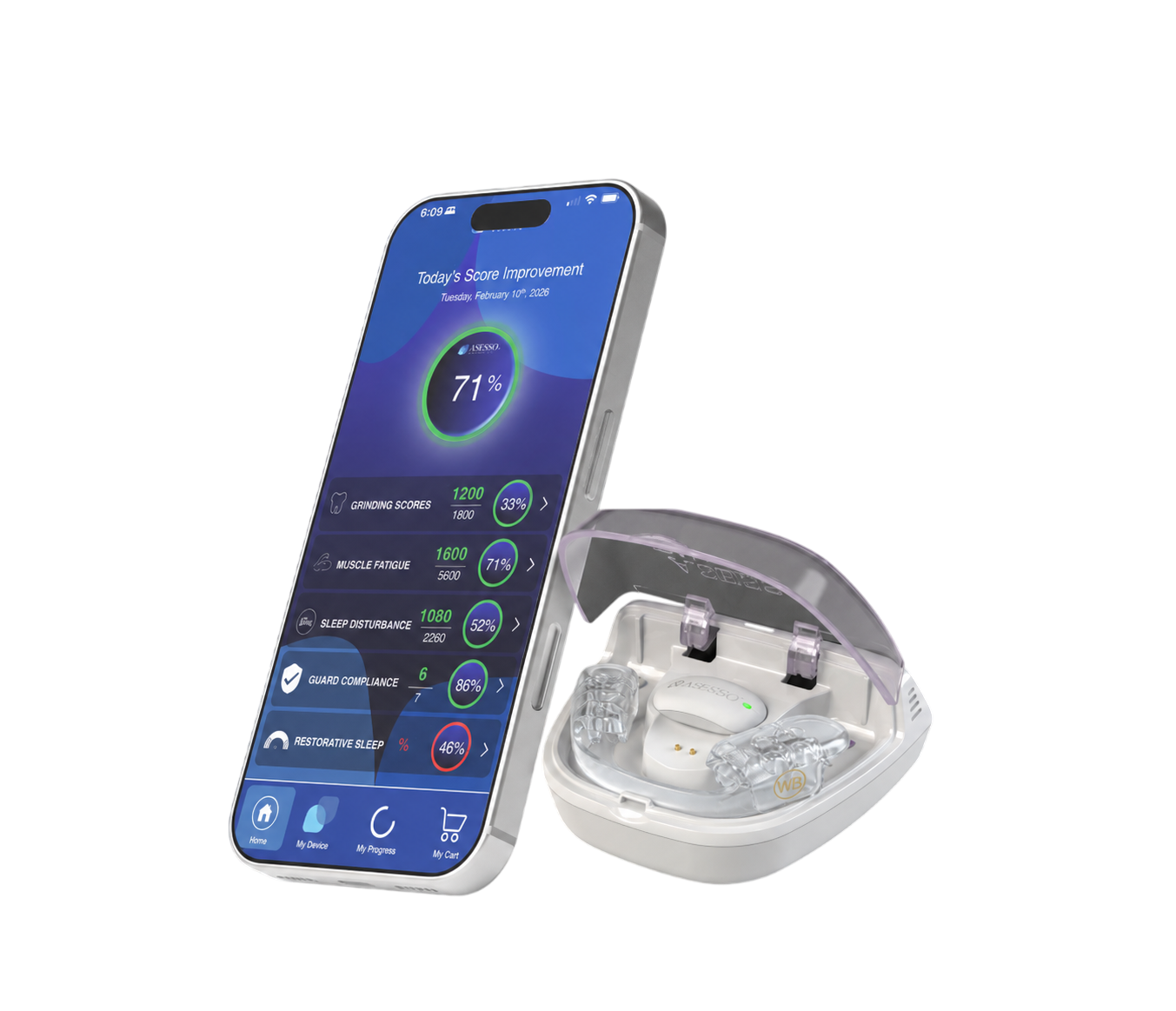
WAKEBRIGHT | If grinding is contributing to your jaw clicking, the Wakebright Guard can help reduce the muscle strain and force that may be aggravating the joint.
This article is for informational purposes only and does not constitute medical advice. Consult a licensed dentist or healthcare provider for diagnosis and treatment recommendations specific to your situation.
References
- National Institute of Dental and Craniofacial Research. "TMD (Temporomandibular Disorders)." nidcr.nih.gov. https://www.nidcr.nih.gov/health-info/tmd
- Cleveland Clinic. "Jaw Popping & Clicking: Causes, Symptoms & Treatment." my.clevelandclinic.org. https://my.clevelandclinic.org/health/symptoms/24665-jaw-popping
- University of Utah Health. "Why Your Jaw Pops or Clicks, and When It Signals a Problem." healthcare.utah.edu. https://healthcare.utah.edu/the-scope/health-library/all/2026/04/why-your-jaw-pops-or-clicks-and-when-it-signals-problem
- Mayo Clinic. "TMJ disorders – Diagnosis and treatment." mayoclinic.org. https://www.mayoclinic.org/diseases-conditions/tmj/diagnosis-treatment/drc-20350945