What Is Bruxism? Symptoms, Causes, and Treatment Explained Simply

If a dentist has ever told you that you have "bruxism," you may have nodded along without fully knowing what it meant. In plain terms: bruxism is the medical name for grinding or clenching your teeth. It's extremely common, usually harmless in small amounts, and genuinely manageable once you understand what's driving it. Here's a straightforward walkthrough of what it is, why it happens, and what actually helps.
What Is Bruxism, Exactly?
Bruxism is any repetitive clenching, grinding, or gnashing of the teeth that isn't part of normal chewing, eating, or talking. An international group of bruxism researchers formally defines it as repetitive jaw-muscle activity involving clenching or grinding the teeth, or bracing and thrusting the jaw and they split it into two distinct types based on when it happens:
- Sleep bruxism happens while you're asleep and unaware of it. It's often first noticed by a partner who hears grinding sounds, or by a dentist who spots wear on your teeth.
- Awake bruxism happens during the day, usually as clenching rather than grinding, and tends to show up during moments of concentration, stress, or tension.
You can have one type, the other, or both. They have somewhat different triggers and are managed a little differently, which is worth knowing before you assume "bruxism" means one single thing.
How Common Is It?
More common than most people realize. A large meta-analysis of global studies estimated overall bruxism prevalence at around 22%, with sleep bruxism affecting roughly 21% of people and awake bruxism around 23%. Sleep-lab studies using detailed overnight monitoring have found rates as high as 43% in some groups, since much of it happens without any awareness at all. In short: if you grind or clench your teeth, you're in very good company, and it's rarely a sign that something is seriously wrong.
Symptoms of Bruxism
Bruxism doesn't always cause noticeable symptoms — plenty of people have mild bruxism that never needs treatment. When it does cause symptoms, the National Institute of Dental and Craniofacial Research (NIDCR) groups them into three general areas:
| Where You'll Notice It | What It Looks or Feels Like |
|---|---|
| Teeth | Flattened, chipped, or cracked teeth; worn-down enamel; tooth sensitivity or pain |
| Jaw | Soreness or tightness in the jaw muscles; a tired feeling in the jaw, especially in the morning |
| Head and face | Headaches, particularly near the temples; general facial pain |
Because so much bruxism happens during sleep or without conscious awareness, dentists are often the first to notice it through wear patterns on your teeth during a routine checkup even before you've felt any symptoms yourself.
What Causes Bruxism?
There's rarely a single cause. Bruxism is generally considered multifactorial, meaning several things typically combine to produce it. The most consistently identified contributors fall into a few broad categories:
Psychological factors. Stress, anxiety, and general nervous tension are among the most frequently cited drivers, particularly for awake bruxism. Clenching is a common physical response to tension, and for many people it persists even after the stressful moment has passed.
Genetics. Bruxism runs in families more than most people expect research has found that roughly half of people with sleep bruxism have a close relative who also experiences it, pointing to a real inherited component alongside behavior and environment.
Sleep-related factors. Sleep bruxism is closely tied to brief shifts between sleep stages (called microarousals), and it's strongly associated with sleep-disordered breathing about half of adults with obstructive sleep apnea also have comorbid sleep bruxism.
Lifestyle habits. Alcohol, caffeine, and smoking are all recognized contributors, particularly when consumed later in the day.
Medications and substances. Certain antidepressants (SSRIs and SNRIs), stimulant medications, and some recreational substances are associated with an increased likelihood of bruxism as a side effect.
Other medical conditions. Acid reflux (GERD), certain neurological conditions like Parkinson's disease, and some other health conditions carry a documented association with bruxism.
If you're curious about the research behind each of these in more depth, see our companion article, [Why Do I Grind My Teeth at Night? 9 Causes Backed by Science].
How Is Bruxism Diagnosed?
There's no single lab test for bruxism. Diagnosis typically happens through a combination of:
- A dental exam, where your dentist looks for flattened, chipped, or worn teeth, and checks your jaw muscles and joint for tenderness
- Your history, including questions about your sleep, stress levels, medications, and whether a sleep partner has noticed grinding sounds
- A sleep study, in more complex cases, particularly if a sleep-related breathing disorder is suspected
Most of the time, a routine dental checkup is enough to identify bruxism it's one of the more common findings dentists come across during regular exams.
What Happens If Bruxism Goes Untreated?
Mild, occasional bruxism usually doesn't need treatment and doesn't cause lasting harm. But persistent, untreated grinding can gradually lead to worn or cracked teeth, gum recession, jaw pain, and temporomandibular joint (TMD) symptoms like clicking or restricted jaw movement. The damage tends to build slowly, which is part of why routine dental visits matter catching it early keeps treatment simple. For a closer look at how the damage and cost can escalate over time, see our article on [The Cost of Untreated Bruxism].
Treatment Options, Explained Simply
Treatment depends on severity, but it generally starts with the least invasive options and only escalates if those aren't enough.
A custom night guard. For sleep bruxism, a night guard fitted by your dentist is the standard first step. It doesn't stop the grinding itself, but it protects your teeth from the damage.
Behavior changes. For awake bruxism specifically, building awareness of your resting jaw position ("lips together, teeth apart") and catching yourself clenching during the day can meaningfully reduce it, since you're conscious for it in a way you aren't for sleep bruxism.
Stress management. Since stress is such a common driver, techniques like meditation, exercise, and for some people counseling are genuinely part of standard bruxism care, not just a side suggestion.
Reducing contributing habits. Cutting back on evening caffeine and alcohol, and not smoking, are specifically recommended by Mayo Clinic as part of standard self-care.
Treating an underlying cause. If bruxism is linked to sleep apnea, GERD, or a medication side effect, addressing that underlying condition sometimes reduces the grinding as a secondary benefit.
Medications, rarely. Mayo Clinic notes that medicines generally aren't very effective for bruxism itself, and are used sparingly, if at all, for the condition directly.
The Basics at a Glance
| Question | Short Answer |
|---|---|
| What is it? | Repetitive clenching or grinding of the teeth, either while asleep or awake |
| How common is it? | Roughly 1 in 5 people, based on global research |
| Main causes | Stress, genetics, sleep-related factors, certain medications, lifestyle habits |
| Main symptoms | Worn/chipped teeth, jaw soreness, headaches |
| First-line treatment | Custom night guard (sleep) and awareness/stress management (awake) |
| When to worry | Persistent symptoms, visible tooth damage, or jaw pain that doesn't Improve |
When to See a Dentist
Worth scheduling an evaluation if you notice tooth wear, jaw pain, morning headaches, a partner mentioning grinding sounds, or if bruxism symptoms are persistent rather than occasional. Earlier evaluation generally means simpler treatment.
What You Can Do Now
Bruxism means grinding, clenching, or gnashing teeth, and comes in sleep and awake forms
It's genuinely common affecting roughly 1 in 10 to 1 in 4 adults depending on type and measurement method
Causes are typically multifactorial: stress, sleep apnea, medications, and lifestyle factors often overlap
Treatment protects teeth and addresses contributing causes, but doesn't cure the underlying behavior outright
Frequently Asked Questions
Is bruxism a disease or just a habit?
Neither exactly current research classifies it as a behavior (a repetitive muscle activity) rather than a disease in itself, though in more severe or frequent cases it can lead to real dental and jaw complications that do need treatment.
What's the difference between sleep bruxism and awake bruxism?
Sleep bruxism happens during sleep and usually involves grinding; you're unaware of it while it's happening. Awake bruxism happens during the day, usually as clenching, and tends to be more closely tied to conscious stress and concentration.
Can bruxism go away on its own?
For some people, especially children, yes many outgrow it. In adults, it's more likely to persist or fluctuate over time depending on stress levels and other contributing factors, though it can also improve with treatment.
Do I need to see a dentist if I think I grind my teeth but don't have pain?
It's still worth mentioning at your next routine visit. A dentist can check for early wear you might not notice yet, and mild cases sometimes don't need active treatment at all just monitoring.
Is a mouthguard the same thing as a night guard for bruxism?
Not exactly. Sports mouthguards are designed for impact protection during athletic activity, while night guards are specifically designed to be worn during sleep to protect against grinding forces. They're not interchangeable.
Can bruxism be cured completely?
There's no guaranteed cure, but it's very manageable. Most treatment focuses on protecting your teeth and reducing the frequency or intensity of grinding, particularly by addressing whatever is driving it, like stress or an underlying sleep issue.
Is it normal for children to grind their teeth?
Yes, it's quite common in childhood and often resolves on its own as permanent teeth come in. A dentist can monitor it during regular checkups and flag anything that needs closer attention.
Can bruxism cause headaches?
Yes the NIDCR specifically lists headaches, especially near the temples, as one of the recognized symptoms of bruxism, along with jaw soreness and tooth-related issues.
How do I know which type of bruxism I have?
Sleep bruxism is usually identified through wear patterns a dentist notices, or a sleep partner mentioning grinding sounds. Awake bruxism is something you can often notice yourself once you start paying attention to your jaw during stressful or focused moments.
Does bruxism mean I have a sleep disorder?
Not necessarily, but the two are closely linked roughly half of people with obstructive sleep apnea also have sleep bruxism. If you snore heavily, feel excessively tired, or have other sleep-related symptoms alongside grinding, it's worth mentioning to your doctor as well as your dentist.
Can stress alone cause bruxism, or is there always something else going on?
Stress is one of the most significant contributors, especially for awake bruxism, but bruxism is generally multifactorial meaning genetics, sleep patterns, habits, and sometimes underlying medical conditions often play a role alongside stress rather than acting alone.
What should I do if I think I have bruxism?
Mention it at your next dental visit, even if you don't have symptoms yet. A dentist can check for early signs, help identify what might be contributing to it, and recommend a night guard or other simple first steps if needed.
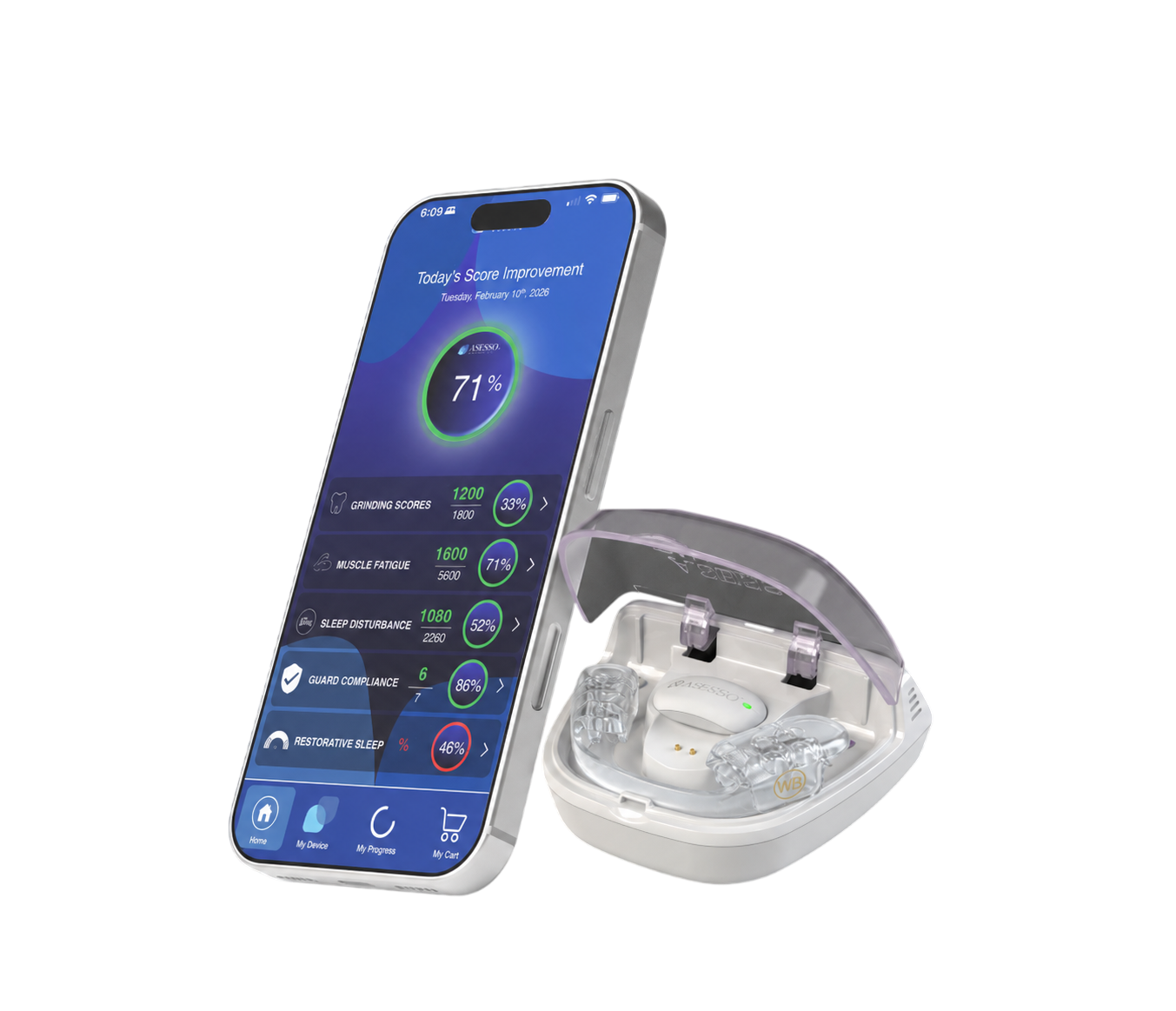
**WAKEBRIGHT | **If any of these symptoms sound familiar, the Wakebright Guard is designed to protect your teeth while you and your dentist work out what's actually driving your grinding.
This article is for informational purposes only and does not constitute medical advice. Consult a licensed dentist or healthcare provider for diagnosis and treatment recommendations specific to your situation.
References
- National Institute of Dental and Craniofacial Research. "Bruxism." nidcr.nih.gov. https://www.nidcr.nih.gov/health-info/bruxism
- Mayo Clinic. "Teeth grinding (bruxism) – Diagnosis and treatment." mayoclinic.org. https://www.mayoclinic.org/diseases-conditions/bruxism/diagnosis-treatment/drc-20356100
- Lobbezoo, F. et al. "International consensus on the assessment of bruxism: Report of a work in progress." Journal of Oral Rehabilitation, PubMed, National Library of Medicine. https://pubmed.ncbi.nlm.nih.gov/29926505/
- Melo, G. et al. "Global Prevalence of Sleep Bruxism and Awake Bruxism in Pediatric and Adult Populations: A Systematic Review and Meta-Analysis." PMC, National Library of Medicine. https://www.ncbi.nlm.nih.gov/pmc/articles/PMC11278015/
- American Dental Association, MouthHealthy. "Teeth Grinding." mouthhealthy.org. https://www.mouthhealthy.org/all-topics-a-z/teeth-grinding