What Dentists Get Wrong About Bruxism (And What to Do Instead)

Most dentists genuinely want to help their bruxism patients, and most bruxism care is reasonable and evidence-aligned. But research specifically studying how dentists actually manage bruxism in practice has found real, documented gaps between what the evidence supports and what commonly happens in the chair. Here are seven of the more significant ones not to cast blame, but so you know what to ask about at your own next visit.
Myth 1: "We'll Adjust Your Bite to Fix the Grinding"
This is the most concretely documented gap in the research. A national practice-based research network survey of 397 dentists found that while 96% offered an occlusal guard for bruxism (the evidence-supported standard), 46% also reported making occlusal adjustments physically reshaping teeth as part of bruxism treatment. The problem: the National Institute of Dental and Craniofacial Research (NIDCR) is explicit that occlusal treatments aimed at "fixing" a bite to resolve TMD or bruxism aren't well-supported by evidence and can make symptoms worse, since they're irreversible and don't address the actual, centrally-mediated cause of bruxism.
What to do instead: If a dentist recommends reshaping your teeth specifically to treat grinding, ask directly what evidence supports that approach for your case, and whether a reversible option a night guard, behavior changes, or addressing an underlying cause has been tried first.
Myth 2: "Any Amount of Grinding Should Be Treated"
Not all bruxism needs active treatment, and treating it as though it always does is a recognized form of overtreatment in the clinical literature. Bruxism researchers have specifically called for care that distinguishes between patients experiencing actual negative consequences pain, damage to teeth or restorations and those with bruxism that isn't causing measurable harm, explicitly warning that overtreating patients with neutral or even potentially adaptive bruxism activity should be avoided.
What to do instead: If you're told you have bruxism during a routine exam but have no symptoms, wear, or damage, it's reasonable to ask whether active treatment is actually necessary right now, or whether monitoring is more appropriate.
Myth 3: "Your Bite Alignment Is Causing This"
The idea that a "bad bite" (malocclusion) is a primary cause of TMD or bruxism was standard thinking for decades. Current research doesn't support it. The NIDCR states plainly that research does not support the older belief that a bad bite alone causes temporomandibular disorders a finding that undercuts a whole category of "let's fix your alignment" treatment recommendations still sometimes offered.
What to do instead: If bite alignment is proposed as the primary explanation for your bruxism or TMD, ask what else has been considered stress, sleep patterns, genetics, or other established contributors are generally more supported explanations.
Myth 4: "A Hard Night Guard Is Always the Right Answer"
Hard acrylic guards are often presented as the obvious best choice, but the actual research on splint materials is considerably more mixed than that confidence suggests. A network meta-analysis of randomized controlled trials found soft splints actually outperformed hard splints for muscle-related TMD, while hard splints performed better for joint-related TMD no universal winner. A broader systematic review using Cochrane methodology found the overall certainty of evidence for splints reducing TMD pain was very low, regardless of material.
What to do instead: Ask why a specific material is being recommended for your case severity, TMJ involvement, and comfort-driven compliance are all reasonable factors, but "hard is just better" isn't fully supported as a blanket rule.
Myth 5: "You Can't Have Ceramic Crowns With Your Bruxism"
This has been standard clinical caution for years, based on older research and case reports of ceramic restorations failing dramatically in bruxing patients. A 2026 randomized controlled trial directly tested this assumption using rigorous, EMG-confirmed bruxism assessment and found comparable survival and complication rates for modern monolithic ceramic crowns (lithium disilicate and zirconia) between bruxism and non-bruxism patients over three years directly challenging the long-standing default of steering bruxers away from ceramics.
What to do instead: If you're told ceramic restorations are off the table because of your grinding, it's reasonable to ask whether that reflects current research on modern materials specifically, since newer studies are complicating the older blanket caution.
Myth 6: "If Your Jaw Doesn't Hurt, It's Not a Jaw Problem"
This one isn't really about dentists getting something wrong so much as about a genuine, well-documented gap that affects both dentists and physicians: TMD frequently presents as headache, ear pain, or sinus-like symptoms rather than jaw pain itself. Family medicine research has found headache is the single most common symptom of TMD, occurring in about 79% of cases more common than jaw pain. If jaw symptoms aren't explicitly asked about during a workup for headaches or ear pain, this connection is easy to miss entirely, in both medical and dental settings.
What to do instead: If you have recurring headaches, ear pain, or sinus-like symptoms without a clear cause, proactively mention any jaw clicking, soreness, or grinding history even minor since it's not something every provider will think to ask about unprompted.
Myth 7: "This Is Just a Habit You Need to Try Harder to Stop"
Sleep bruxism specifically isn't simply a behavioral habit in the way biting your nails is. Clinical research describes it as a centrally-mediated phenomenon tied to brief arousals from sleep and activation of the autonomic nervous system something happening in your nervous system during sleep, not a conscious choice you're failing to control. Framing it purely as a willpower problem, particularly for nighttime grinding you have no awareness of, misrepresents what's actually happening.
What to do instead: For sleep bruxism specifically, protective measures (a night guard) and addressing contributing factors (stress, sleep quality, underlying conditions) are more appropriate than being told to simply "stop" a behavior that happens while you're unconscious.
Why These Gaps Exist
This isn't really a story about bad dentistry bruxism research has genuinely evolved faster than clinical guidance has been able to keep up in many places. A recent international consensus effort on bruxism definitions specifically noted that formally endorsed management guidelines are limited in visibility across many regions, and researchers have explicitly called for more concise, accessible clinical guidance to help close this gap and reduce unnecessary or outdated treatment approaches. Dental education and continuing education don't always keep pace with a rapidly evolving evidence base, particularly for a condition as multifactorial and historically under-researched as bruxism.
What to Look For in Bruxism Care
A dentist whose approach to bruxism reflects current evidence will generally: start with reversible, conservative options before considering anything permanent; distinguish between bruxism that needs active treatment and bruxism that just needs monitoring; ask about your broader symptoms (headaches, ear pain, sleep quality) rather than focusing narrowly on your teeth; and be willing to explain the reasoning and evidence behind a specific recommendation if you ask.
Frequently Asked Questions
Is it true that some dentists still recommend treatments not supported by current evidence for bruxism?
Research studying dental practice patterns has documented this for example, a national survey found nearly half of responding dentists reported using occlusal adjustment (reshaping teeth) for bruxism, despite this not being well-supported by current evidence from bodies like the NIDCR.
Does this mean I shouldn't trust my dentist's bruxism recommendations?
Not at all most bruxism care, including the near-universal use of night guards found in practice surveys, is reasonable and evidence-aligned. The gaps identified in research tend to be specific, documented practice patterns worth being an informed, curious patient about, not a reason for general distrust.
Why would a dentist recommend an irreversible treatment like occlusal adjustment for bruxism?
It likely reflects older, more established clinical training that hasn't fully incorporated more recent evidence questioning the effectiveness of these permanent procedures for bruxism, specifically dental education and practice patterns don't always keep pace with a rapidly evolving evidence base.
Is it ever appropriate to just monitor bruxism without active treatment?
Yes bruxism researchers have specifically cautioned against overtreating patients whose bruxism isn't causing measurable harm, and monitoring without immediate intervention is a reasonable approach for mild, asymptomatic cases.
Should I ask my dentist why they're recommending a specific type of night guard material?
It's a reasonable question, given that research on hard versus soft splint materials shows genuinely mixed results depending on the specific condition being treated — there's no universal "best" material supported by current evidence.
Is the "bad bite causes TMD" idea completely outdated?
Current research, including guidance from the NIDCR, doesn't support bite alignment as a primary cause of TMD or bruxism, even though this was a common belief in dentistry for a long time. It's a reasonable topic to ask about if it's proposed as a primary treatment rationale.
Can newer research really change what dentists recommend for ceramic crowns and bruxism?
Yes, and this is a good example of evidence evolving a 2026 randomized controlled trial challenged the long-standing assumption that bruxism should generally rule out ceramic crowns, finding comparable outcomes between bruxism and non-bruxism patients with modern materials.
Why do doctors sometimes miss the connection between jaw problems and headaches or ear pain?
Because TMD frequently presents primarily as headache or ear-related symptoms rather than jaw pain itself, and if jaw symptoms aren't specifically asked about, this connection can be easy to overlook in both medical and dental settings.
Is sleep bruxism really not something I can just will myself to stop?
Correct sleep bruxism is understood as a centrally-mediated phenomenon tied to nervous system activity during sleep, not a simple behavioral habit you consciously control, which is why protective measures like a night guard are generally more appropriate than being told to just stop.
How can I find a dentist whose bruxism care reflects current evidence?
Look for a provider who starts with conservative, reversible options, distinguishes between cases needing active treatment versus monitoring, asks about symptoms beyond just your teeth, and is willing to explain their reasoning when you ask questions about a specific recommendation.
Are these documented gaps unique to bruxism, or common in dentistry generally?
Evidence-practice gaps exist across many areas of healthcare, including dentistry and medicine broadly, often reflecting how quickly (or slowly) evolving research translates into updated clinical guidelines and training bruxism isn't uniquely affected, but it has been specifically studied and documented.
Should I bring up questions about my treatment plan even if I'm not a dental professional?
Yes asking a treating provider to explain the reasoning behind a specific recommendation is a reasonable, respectful way to be an informed participant in your own care, and a provider confident in their approach should be able to answer clearly.
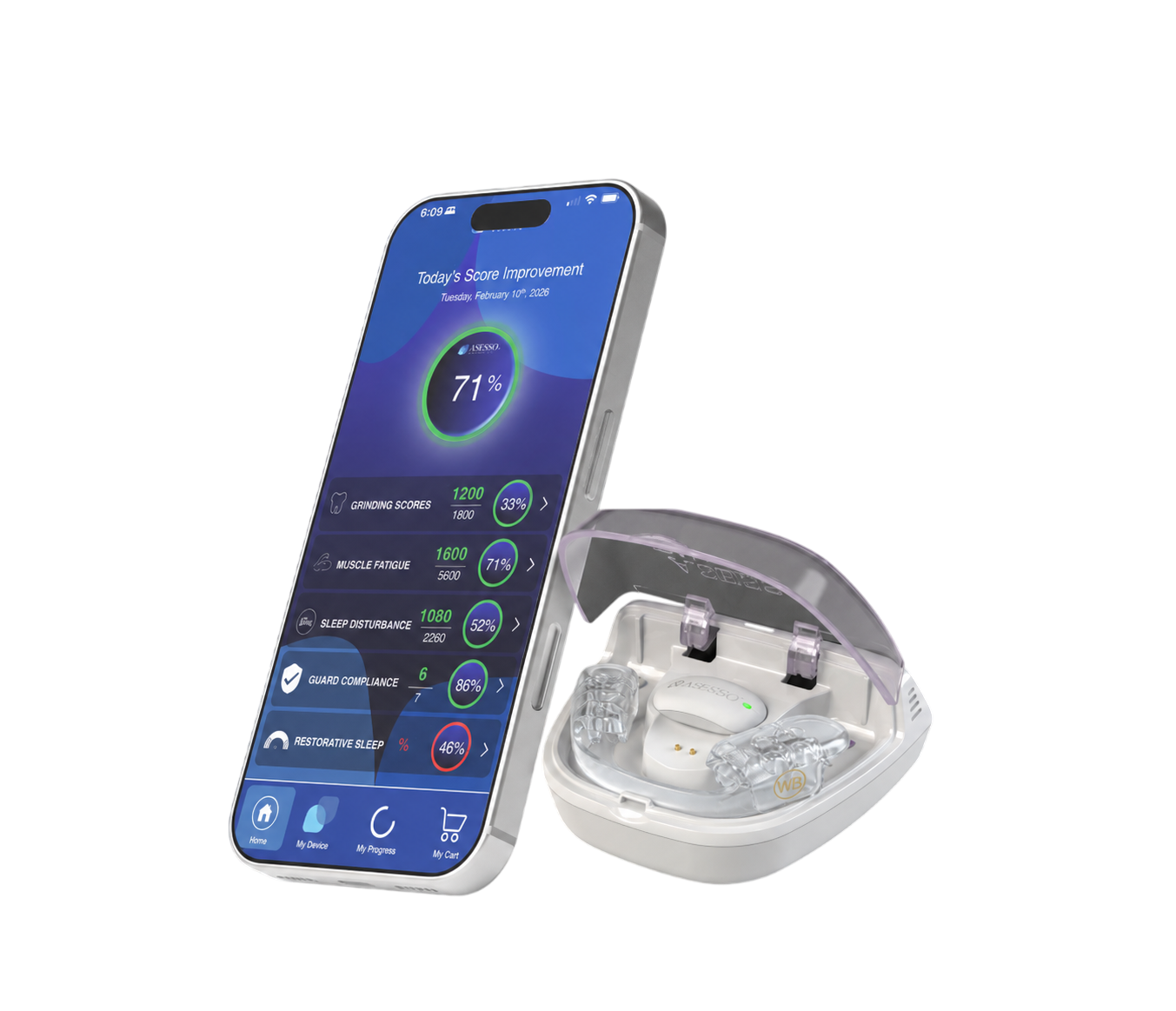
WAKEBRIGHT | Wakebright Guard is built to be step one of a complete treatment plan ask your dentist about pairing it with a full evaluation of what's actually driving your grinding.
This article is for informational purposes only and does not constitute medical advice. Consult a licensed dentist or healthcare provider for diagnosis and treatment recommendations specific to your situation.
References
- "Dental practitioner approaches to bruxism: Preliminary findings from the national dental practice-based research network." CRANIO, PubMed, National Library of Medicine. https://pubmed.ncbi.nlm.nih.gov/37016587/
- National Institute of Dental and Craniofacial Research. "TMD (Temporomandibular Disorders)." nidcr.nih.gov. https://www.nidcr.nih.gov/health-info/tmd
- National Institute of Dental and Craniofacial Research. "Bruxism." nidcr.nih.gov. https://www.nidcr.nih.gov/health-info/bruxism
- Matheson, E.M. et al. "Temporomandibular Disorders: Rapid Evidence Review." American Family Physician, American Academy of Family Physicians. https://www.aafp.org/afp/2023/0100/temporomandibular-disorders
- "Bruxism Management." StatPearls, NCBI Bookshelf, National Library of Medicine. https://www.ncbi.nlm.nih.gov/books/NBK482466/