TMJ vs. TMD: What's the Difference and Why It Matters

"I have TMJ" is one of the most common things dentists hear and, technically, it's not quite right. Everyone has a TMJ. Two of them, in fact. What most people actually mean is that they have a disorder affecting that joint, which has its own name and its own abbreviation. The distinction sounds like pedantry, but it actually matters for getting accurate information and the right care.
The Short Answer
TMJ stands for temporomandibular joint the actual physical joint connecting your jaw to your skull. It's an anatomical structure, like your knee or your elbow. You have one on each side of your face, just in front of your ears.
TMD stands for temporomandibular disorder(s) the umbrella term for the various conditions that cause pain or dysfunction in that joint or the muscles around it. The National Institute of Dental and Craniofacial Research (NIDCR) is explicit about this distinction: "TMDs" refers to the disorders, and "TMJ" refers only to the joint itself.
So when someone says "I have TMJ," what they almost always mean is "I have a TMD" — a disorder affecting their TMJ.
TMJ: The Joint Itself
The temporomandibular joint is where your lower jawbone (mandible) meets your skull, just in front of each ear. It's an unusually complex joint it works as both a hinge (opening and closing) and a sliding joint (moving your jaw forward, backward, and side to side), which is part of why it's more prone to problems than a simple hinge joint would be. A small disc of cartilage sits between the bones, cushioning the movement.
You can feel your own TMJs by placing your fingers just in front of your ears and opening and closing your mouth. Under normal conditions, the joint moves smoothly and silently. On its own, "TMJ" is a neutral, purely anatomical term it doesn't imply anything is wrong, any more than saying "knee" implies you have a knee problem.
TMD: The Umbrella Term for Disorders
TMD isn't a single condition it's a category covering more than 30 different conditions, according to the NIDCR. These generally fall into three groups:
- Disorders of the joint itself, including disc displacement and other structural issues within the TMJ
- Disorders of the muscles used for chewing (the masticatory muscles), even when the joint itself is structurally fine
- Headaches that are specifically caused by a temporomandibular disorder
A 2023 evidence review published in American Family Physician uses a similar, slightly more clinical breakdown classifying TMD as either intra-articular (problems within the joint itself, like disc derangement or degenerative joint disease) or extra-articular (problems in the surrounding muscles, like myalgia or muscle spasm). Either way, the key point is the same: TMD describes a disorder process, not a body part.
Why the Two Terms Get Confused
The mix-up is understandable. In everyday conversation, people rarely say "I have a disorder of my temporomandibular joint" they shorten it to "I have TMJ," and the shorthand has stuck so thoroughly that it's become the default way most people refer to jaw joint problems, even in casual conversation with dentists who know the distinction. It's a bit like how people often say "I sprained my ACL" when they mean they tore it, or refer to any headache as "a migraine" the more familiar or memorable term gets applied loosely to the whole category of experience.
Why the Distinction Actually Matters
This isn't just a technicality for its own sake. A few practical reasons it's worth getting right:
It affects how you describe your symptoms. Saying "I have TMJ" tells a provider almost nothing specific everyone has a TMJ. Saying "I have jaw clicking and pain when I chew" or "I think I have TMD" gives them something actionable to evaluate.
It clarifies that joint sounds alone aren't automatically a disorder. The NIDCR notes that clicking or popping in the joint without pain is common and considered normal it's a TMJ doing something noticeable, not necessarily a TMD. Conflating the two can lead people to worry about a normal joint sound as if it were a diagnosed condition.
It helps you find accurate information. Searching "TMJ treatment" and "TMD treatment" often turn up similar results in practice, but understanding that TMD is the actual diagnostic category helps you understand what you're reading particularly when comparing sources, since clinical literature (like NIDCR or peer-reviewed journals) consistently uses "TMD" for the disorder and reserves "TMJ" for the joint.
It matters for precise communication with insurance and specialists. Billing codes, referrals, and clinical documentation use "TMD" (or more specific diagnostic subtypes within it) to describe the condition being treated "TMJ" alone isn't a diagnosis a claim or referral would be built around.
Quick Comparison
| TMJ | TMD | |
|---|---|---|
| What it stands for | Temporomandibular joint | Temporomandibular disorder(s) |
| What it refers to | The physical joint itself | The conditions affecting that joint or nearby muscles |
| Is it a diagnosis? | No it's a body part | Yes it's a category of diagnosable conditions |
| Everyone has one? | Yes, two (one per side) | No only if you have a disorder |
| Example correct usage | "My TMJ is the joint in front of my ear." | "I was diagnosed with TMD after my jaw started locking." |
| Common informal usage | "I have TMJ" (technically imprecise) | Less commonly used casually, despite being the accurate term |
How to Talk About It Correctly
If you want to be precise (and it can genuinely help at a dental visit):
- Use "TMJ" when referring to the joint itself: "My TMJ clicks when I open wide."
- Use "TMD" when referring to the condition or disorder: "I think I might have TMD" or "I was diagnosed with TMD."
- It's fine to say "jaw joint" in plain conversation if you're not sure which term applies; providers will understand exactly what you mean either way.
None of this is about correcting people's casual language. "I have TMJ" is understood by every dentist and will get you the care you need regardless. It's more useful as a way to understand what you're reading when you research your own symptoms, and to describe them a little more precisely when it's helpful to do so.
Frequently Asked Questions
Is it wrong to say "I have TMJ"?
It's technically imprecise that everyone has a TMJ, so "having" one isn't a condition. But it's such a common, well-understood shorthand for a temporomandibular disorder that every dentist will understand exactly what you mean. It's not "wrong" in casual conversation, just not the clinically accurate term.
What's the correct term for jaw joint problems?
TMD (temporomandibular disorder) is the accurate umbrella term for conditions affecting the joint or surrounding muscles. TMJ refers only to the joint itself.
Does everyone have a TMJ?
Yes it's simply the name for the joint connecting your jaw to your skull. You have two, one on each side of your face. Having a TMJ is normal anatomy, not a condition.
Can you have TMJ pain without having TMD?
Not really, in the strict clinical sense pain or dysfunction in or around the joint is what defines a TMD. If your TMJ is genuinely painful or not functioning normally, that's a TMD by definition, even if people casually describe it as "TMJ pain."
Is jaw clicking automatically a sign of TMD?
No. Per the NIDCR, clicking or popping in the joint without pain is common and considered normal it doesn't necessarily indicate a temporomandibular disorder. Clicking becomes more clinically significant when it's paired with pain, limited movement, or other symptoms.
How many types of TMD are there?
The NIDCR notes there are more than 30 recognized conditions that fall under the TMD umbrella, generally grouped into joint disorders, muscle disorders, and TMD-related headaches.
Why do dentists sometimes use "TMJ" and "TMD" interchangeably too?
Even among professionals, "TMJ" has become such a common shorthand for the disorder that it sometimes gets used loosely in conversation, even though clinical and research literature consistently reserves "TMJ" for the joint and "TMD" for the disorder.
Does it matter which term I search for online?
Not hugely for finding general information, since most sources address both, but understanding the distinction helps you interpret what you're reading particularly recognizing that clinical and research sources will consistently use "TMD" when discussing the actual disorder.
What should I say to my dentist to describe my symptoms accurately?
Rather than just saying "I have TMJ," it's more useful to describe specifics: where the pain is, whether your jaw clicks or locks, when it's worse, and how long it's been happening. That detail matters more than which acronym you use.
Is "TMJD" a real term too?
Yes some sources use "TMJD" (temporomandibular joint disorder) essentially interchangeably with TMD. It's less commonly used than TMD in current clinical literature but means the same thing.
Can TMD affect areas beyond the jaw joint itself?
Yes \TMD includes disorders of the chewing muscles even when the joint structure itself is normal, and it's also classified to include TMD-related headaches. So TMD is broader than just joint problems.
Does understanding this distinction change my treatment?
Not directly \treatment is based on your specific diagnosis and symptoms, not on which term you use to describe them. But understanding the distinction can help you communicate more precisely and better understand information you find about your condition.
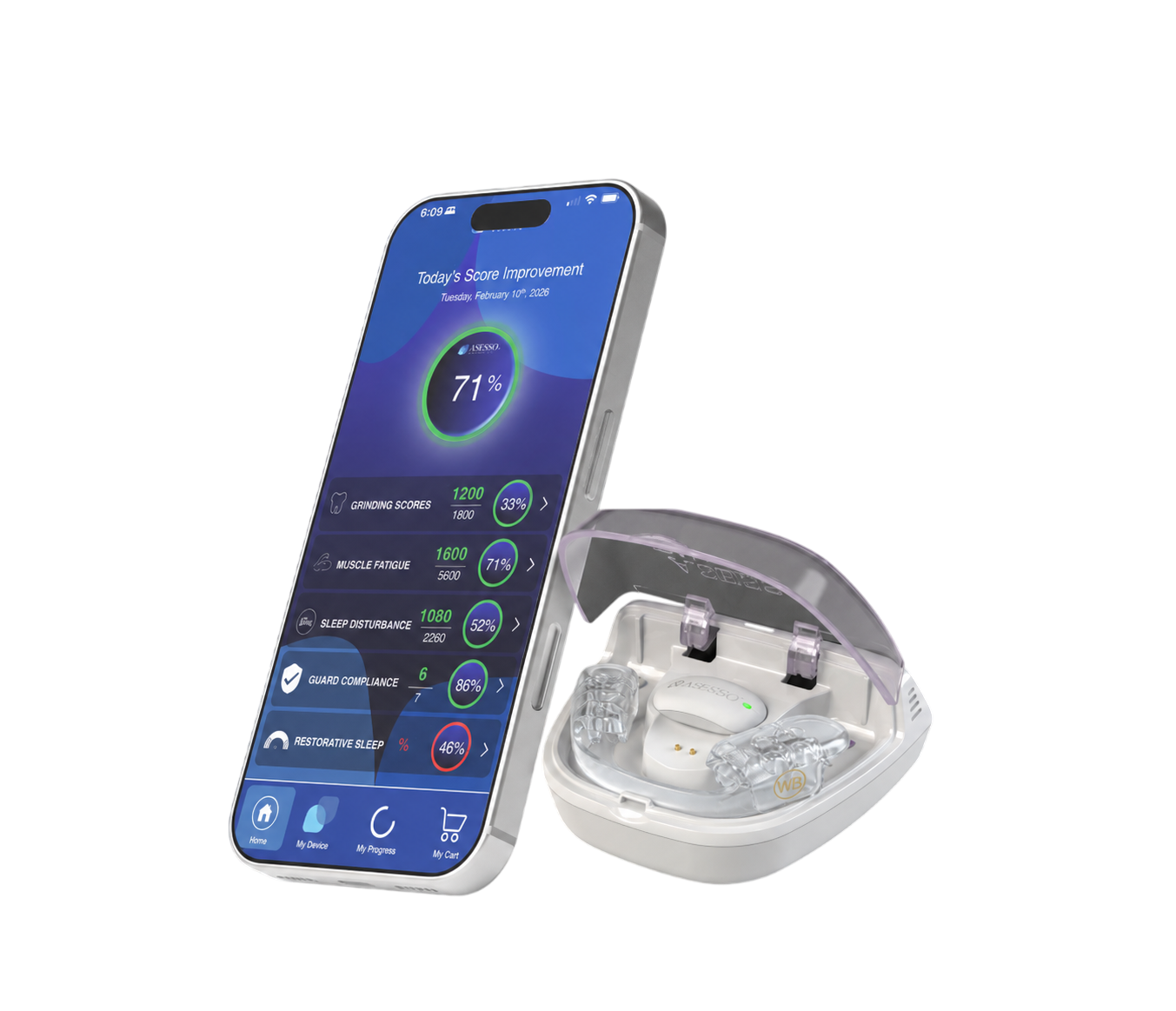
**WAKEBRIGHT | **Whether your TMD is joint-based, muscle-based, or both, the Wakebright Guard is designed to reduce the strain contributing to your symptoms, ask your dentist which approach fits your specific diagnosis.
This article is for informational purposes only and does not constitute medical advice. Consult a licensed dentist or healthcare provider for diagnosis and treatment recommendations specific to your situation.
References
- National Institute of Dental and Craniofacial Research. "TMD (Temporomandibular Disorders)." nidcr.nih.gov. https://www.nidcr.nih.gov/health-info/tmd
- Matheson, E.M. et al. "Temporomandibular Disorders: Rapid Evidence Review." American Family Physician, American Academy of Family Physicians. https://www.aafp.org/afp/2023/0100/temporomandibular-disorders
- Cleveland Clinic. "TMJ Disorders: Symptoms, Treatment & Prevention." my.clevelandclinic.org. https://my.clevelandclinic.org/health/diseases/15066-temporomandibular-disorders-tmd-overview
- Mayo Clinic. "TMJ disorders – Diagnosis and treatment." mayoclinic.org. https://www.mayoclinic.org/diseases-conditions/tmj/diagnosis-treatment/drc-20350945