TMJ/TMD Statistics: Prevalence, Demographics, and Cost of Treatment in the US

Temporomandibular disorders (TMD) are common enough that you likely know someone dealing with jaw pain, clicking, or restricted movement whether or not they've put a name to it. This roundup pulls together what's actually well-established about how common TMD is and who it affects most, and is deliberately upfront about one area where the data is genuinely unreliable: the total cost of TMD treatment in the U.S., a figure you'll see cited with wildly different numbers depending on the source.
How Common Is TMD?
The prevalence figure depends heavily on which criteria and population are used, and the range across sources reflects that:
- U.S. data from the National Institute of Dental and Craniofacial Research (NIDCR) puts TMD prevalence at 5% to 12% of the population.
- A 2025 global systematic review and meta-analysis, using broader diagnostic criteria across international studies, found a considerably higher estimate: 29.5% of the global population.
- Lifetime prevalence estimates the share of people who will experience TMD symptoms at some point, not necessarily right now have been cited as high as 75% in some clinical sources, and around 45% in others.
This spread isn't a sign of bad data so much as a reflection of how differently TMD gets defined and measured across studies some capture any reported symptom, while others require a confirmed clinical diagnosis, and those two approaches naturally produce very different numbers.
Who Is Most Affected: Age and Sex
Two demographic patterns show up consistently across the research, more reliably than the raw prevalence figures themselves:
TMD is significantly more common in women than men. A 2025 global meta-analysis found TMD prevalence of 36.7% in women versus 26.7% in men. NIDCR similarly reports TMD as at least twice as prevalent in women in the U.S. This gap shows up across nearly every study that reports sex differences, with only a small number of lower-quality studies failing to find a significant difference.
TMD peaks in early-to-middle adulthood. Multiple cross-sectional studies have found TMD prevalence significantly higher in the 20-40 age group compared to other age brackets. Prevalence in children and adolescents varies considerably between studies, but the general pattern a jaw condition disproportionately affecting younger and middle-aged adults, especially women is one of the more consistent findings in the field.
NIDCR data adds one more detail: women using supplemental estrogen or oral contraceptives are more likely to seek treatment for TMD specifically, a pattern that's contributed to research interest in hormonal factors as part of the sex-based prevalence gap, though the exact mechanism isn't fully established.
What the 2020 National Academies Report Found
Beyond raw prevalence, a landmark 2020 report from the National Academies of Sciences, Engineering, and Medicine examined the broader state of TMD care in the U.S. and its findings are arguably more actionable than any single prevalence percentage. The report documented systemic problems in TMD care: a persistent divide between medical and dental treatment, inconsistent diagnostic standards, and for a meaningful subset of patients cycles of ineffective or even harmful treatment before finding appropriate care.
The report specifically called for more rigorous research into the direct and indirect costs of TMD, noting that comprehensive cost data specific to TMD diagnosis remain rare which brings us to the part of this topic where the available numbers genuinely can't be trusted.
The Cost Question: Why We Won't Cite a Single Figure
If you search for "TMD treatment cost" or "TMJ economic burden," you'll find numbers ranging enormously and this isn't a case where we can respectably split the difference. A 2024 peer-reviewed commentary examining this exact question found that publicly cited estimates for the annual cost of TMD in the United States range from $4 billion to $32 billion, an eightfold spread. Critically, that same commentary notes that the 2020 National Academies report the most authoritative source on TMD in recent years did not provide a clear estimate of the economic burden of TMD in the United States at all, precisely because the underlying cost data are too limited to support one.
Some older or narrower estimates put direct treatment costs specifically (not total economic burden, which includes lost productivity and other indirect costs) at roughly $2 billion annually, though this figure's original sourcing is harder to trace and predates more recent research attention to the topic. Broader chronic pain cost figures sometimes $560-$635 billion annually for all chronic pain conditions in the U.S. occasionally get associated with TMD in secondary sources, but this conflates TMD with the entire category of chronic pain conditions and shouldn't be read as a TMD-specific figure.
The honest summary: no one currently has a reliable, verified figure for what TMD treatment costs the U.S. annually. The 2024 peer-reviewed commentary that examined this question explicitly called for better cost-effectiveness research because the current data don't support a confident number which is a more useful and more honest answer than repeating any of the individual figures as fact.
What We Do Know About Individual Cost Burden
While an aggregate national figure isn't reliable, individual patient experience is better documented, at least qualitatively. The National Academies report specifically noted that patients and families frequently described the financial burden of TMD care many reported limited insurance coverage, with a substantial share of costs paid out of pocket, in some cases reaching tens of thousands of dollars for more complex or prolonged cases. This tracks with the broader finding that TMD care is often not well-integrated between medical and dental insurance systems, leaving coverage gaps that patients absorb directly.
Comparing the Key Data Points
| Statistic | Reported Figure | Reliability |
|---|---|---|
| U.S. TMD prevalence (NIDCR) | 5-12% | Well-established, government source |
| Global TMD prevalence (2025 meta-analysis) | 29.5% | Solid, but uses broader diagnostic criteria than NIDCR |
| Lifetime prevalence | 45-75% (varies by source) | Wide range reflects inconsistent definitions |
| Sex gap | ~37% women vs. ~27% men | Consistent finding across most studies |
| Peak age range | 20-40 years | Consistent finding across multiple studies |
| Annual U.S. treatment cost | Cited from $2B to $32B+ | Not reliable no authoritative source confirms any single figure |
Why This Matters Beyond the Numbers
The prevalence and demographic data are solid enough to draw real conclusions from: TMD is common, disproportionately affects women, and tends to peak during early-to-middle adulthood patterns worth knowing whether you're a patient trying to make sense of your own symptoms or simply curious how common this actually is. The cost picture is a different story, and being honest about that gap matters. The National Academies' own conclusion that TMD cost data remain too limited for a confident estimate is itself a meaningful finding about how under-researched this condition has been relative to how many people it affects.
Frequently Asked Questions
How common is TMD in the United States?
NIDCR reports U.S. TMD prevalence at 5-12% of the population, though broader international studies using different diagnostic criteria have found considerably higher global estimates, up to 29.5% in one 2025 meta-analysis.
Is TMD more common in women or men?
Significantly more common in women. A 2025 global meta-analysis found TMD prevalence of roughly 37% in women versus 27% in men, and NIDCR reports TMD as at least twice as prevalent in women in the U.S.
What age group is most affected by TMD?
Multiple studies have found TMD prevalence significantly higher in the 20-40 age range compared to other age brackets, though it can affect people at any age.
How much does TMD treatment cost annually in the United States?
There's no reliable answer to this. Cited figures range from $4 billion to $32 billion, and a 2024 peer-reviewed commentary confirmed that even the authoritative 2020 National Academies report didn't provide a clear cost estimate, because the underlying data are too limited.
Why can't researchers agree on a cost figure for TMD?
Studies assessing direct and indirect costs specific to a TMD diagnosis are genuinely rare, according to the National Academies' own 2020 report this isn't a case of researchers disagreeing on interpretation, but a real gap in the underlying data.
What did the 2020 National Academies report find about TMD care?
Beyond prevalence, it documented a persistent divide between medical and dental care for TMD, inconsistent diagnostic standards, and cycles of ineffective or harmful treatment for a subset of patients before they found appropriate care.
Do hormones affect TMD prevalence?
There's a documented association NIDCR notes that women using supplemental estrogen or oral contraceptives are more likely to seek TMD treatment though the exact mechanism connecting hormones to TMD risk isn't fully established.
Is TMD covered by insurance?
Coverage is often limited and inconsistent, according to patient reports documented in the National Academies report, with many individuals paying a substantial share of TMD-related costs out of pocket, sometimes reaching tens of thousands of dollars for complex cases.
Why is the lifetime TMD prevalence figure so much higher than the current prevalence figure?
Lifetime prevalence counts everyone who experiences symptoms at any point in their life, while current prevalence reflects only those affected at a given time TMD symptoms often resolve or fluctuate, which is part of why the lifetime figure runs considerably higher.
Should I trust "TMJ market size" or "TMD cost" statistics I see cited elsewhere?
Be skeptical of any confident single figure as this article covers, even the most authoritative source on TMD in the U.S. explicitly declined to provide one, citing insufficient underlying data.
What You Can Do Now
- TMD is genuinely common, meaningfully more so in women and adults aged 20-40
- No reliable national cost estimate for TMD treatment exists even the most authoritative U.S. review declined to provide one
- Your own diagnosis and insurance coverage matter far more than any national statistic
- A direct conversation with your provider is the most useful next step if you suspect TMD
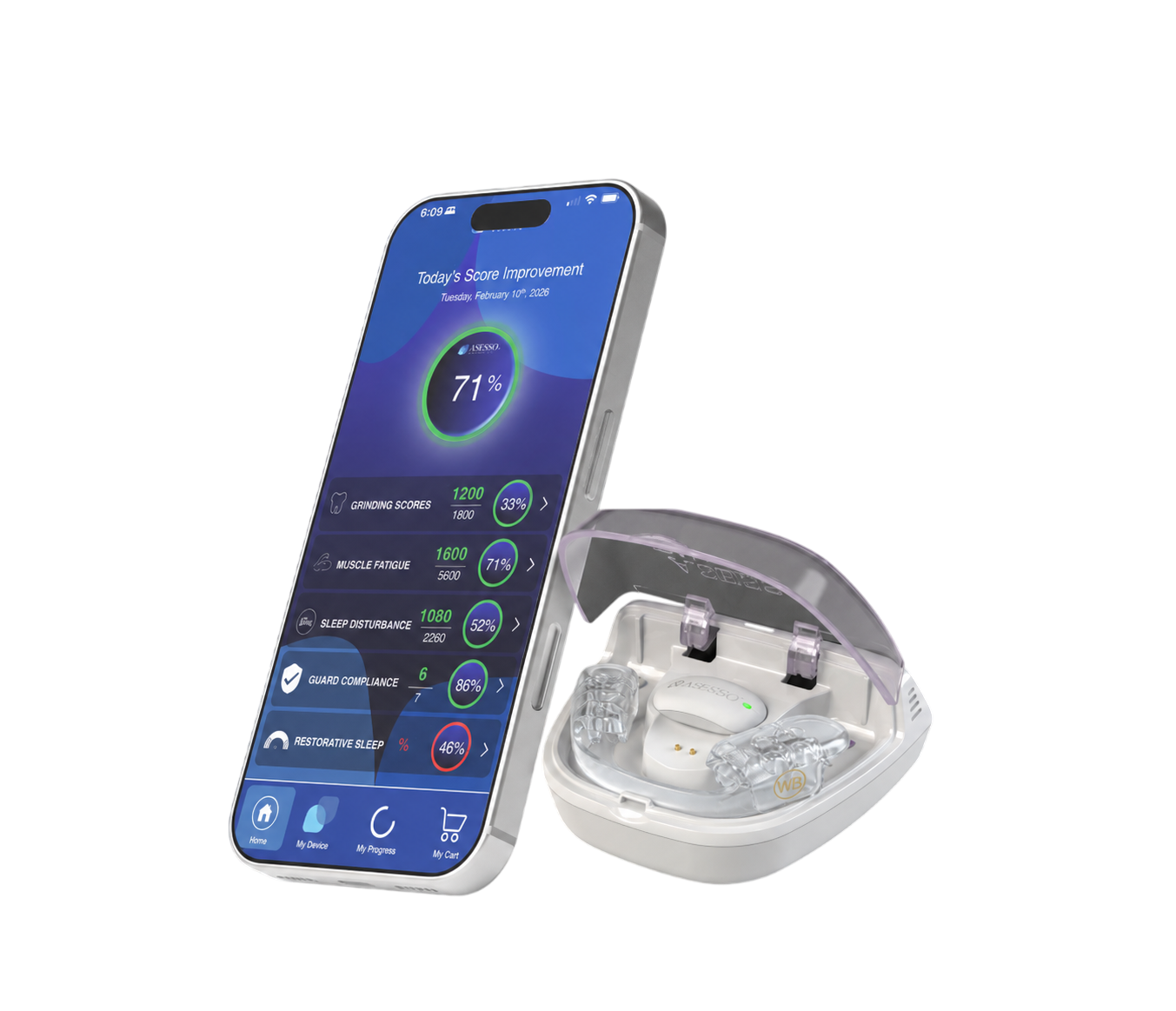
**WAKEBRIGHT | **If TMD symptoms are part of your picture, ask your dentist whether the Wakebright Guard fits into your broader treatment plan alongside any other care you need.
This article is for informational purposes only and does not constitute medical or financial advice. Consult a licensed dentist or healthcare provider for diagnosis and treatment recommendations specific to your situation.
References
- National Institute of Dental and Craniofacial Research (NIDCR). "Prevalence of TMJD and its Signs and Symptoms." nidcr.nih.gov. https://www.nidcr.nih.gov/research/data-statistics/facial-pain/prevalence
- Global prevalence of temporomandibular disorders: a systematic review and meta-analysis. Journal of Oral & Facial Pain and Headache (2025). https://www.jofph.com/articles/10.22514/jofph.2025.025
- National Academies of Sciences, Engineering, and Medicine (2020). "Temporomandibular Disorders: Priorities for Research and Care." National Academies Press. DOI: 10.17226/25652. https://www.ncbi.nlm.nih.gov/books/NBK557986/
- Commentary on the Urgent Need for Comprehensive Cost-Effectiveness Studies in Temporomandibular Disorders. Cranio (2024). DOI: 10.1080/19424396.2024.2432684. https://www.tandfonline.com/doi/full/10.1080/19424396.2024.2432684
- Epidemiology of Temporomandibular Disorder in the General Population: a Systematic Review. Juniper Publishers. https://juniperpublishers.com/adoh/ADOH.MS.ID.555787.php