TMJ Subluxation and Open-Lock: What You Need to Know

What Is TMJ Subluxation? The Jaw Gets Stuck Open
TMJ subluxation, also called open-lock, is a frightening experience: the jaw swings open during wide opening and gets stuck, and you cannot close it. Unlike lockjaw where the jaw is locked shut, open-lock is the opposite extreme. The jaw hangs open and attempts to close it fail. You feel as though the joint is dislocated or displaced. That is indeed what is happening at the joint level, though true dislocation (complete separation) is rare. Most cases are subluxation: partial displacement with some remaining joint contact.
During normal jaw opening, the articular disc in the TMJ glides smoothly forward with the condyle (the rounded end of the lower jawbone). At the end of opening, the disc and condyle move backward together to close. In subluxation, the disc displaces so far forward during opening that it blocks the condyle's path backward. The jaw is mechanically stuck open: the condyle cannot retract into its socket because the disc is in the way. The jaw hangs, muscles stretch painfully, and you are trapped in this position until the disc repositions.
Subluxation episodes are acutely distressing. Patients describe panic: will my jaw ever close? Can I talk or swallow? The jaw may remain open for seconds to minutes before either self-reducing (the disc slips back and the jaw closes) or requiring manual reduction. Each episode is terrifying, and fear of another one often develops, leading to jaw guarding and avoidance of wide opening. Over time, this protective behavior can worsen the underlying disc dysfunction.
The Anatomy Behind Open-Lock: Disc Displacement and Condyle Mechanics
The TMJ is a complex hinge-gliding joint with three moving parts: the condyle (lower jawbone), the articular disc (cartilage cushion), and the glenoid fossa (the upper jawbone socket). During normal opening, the disc glides forward with the condyle as a unit. The disc is held in position by ligaments and tethered backward by the retrodiscal tissue. When these stabilizing ligaments stretch or tear from trauma or chronic overload, the disc becomes lax and can displace anteriorly (forward).
In normal opening, the condyle glides forward smoothly. But if the disc has migrated forward beyond where the condyle can reach, the disc becomes an obstruction. As the condyle tries to glide forward and then return (as happens during yawning or wide opening), it becomes blocked by the disc. The disc acts like a mechanical brake: the condyle cannot retract, and the jaw remains open. Muscles stretch, pain is severe, and you are stuck.
Why does the disc displace forward? Chronic overload is the primary mechanism. Years of muscle tension, clenching, and grinding (bruxism) stress the joint. The ligaments holding the disc gradually stretch from repeated microtrauma. Once the ligaments are lax, the disc is no longer held securely in place. A single wide opening (a yawn, a large bite, dental work) can then trigger acute displacement. Some patients experience acute trauma (a jaw blow or whiplash) that tears the ligaments immediately. Others develop subluxation gradually after years of bruxism-driven stress.
Who Is at Risk? Age, Sex, Bruxism, and Hypermobility
TMJ subluxation is most common in people aged 20 to 40, with females more frequently affected than males at roughly a 3:1 ratio. Why the female predominance? Hormonal influences (estrogen increases joint laxity), structural differences (females tend to have smaller condyles and looser ligaments), and higher rates of hypermobility disorders (connective tissue conditions that allow excessive joint movement). Males absolutely develop subluxation too; it is not exclusive to females.
Chronic bruxism is the strongest risk factor. People who grind and clench their teeth nightly for months to years gradually stress the disc's stabilizing ligaments. The repeated loading causes microtrauma that accumulates into macroscopic laxity. Patients often do not appreciate the magnitude of force involved: grinding can produce forces 3 to 5 times the load of normal chewing. A person grinding nightly subjects the joint to enormous stress, night after night, with no rest or recovery.
Generalized hypermobility (excessive joint laxity throughout the body) predisposes to subluxation. Marfan syndrome, Ehlers-Danlos syndrome, and other connective tissue disorders involve lax ligaments. People with these conditions carry higher baseline risk. Postural factors matter too: forward head posture and poor ergonomics increase joint load and risk. Prior jaw trauma (a blow to the face, whiplash, or a difficult intubation) can acutely damage the disc's ligamentous support and trigger subluxation even years later.
What Happens During a Subluxation Episode: The Experience and Mechanics
A subluxation episode typically occurs during wide opening: yawning, taking a large bite, opening for dental work, or sometimes seemingly out of nowhere. The jaw opens smoothly at first, then suddenly feels stuck. You cannot close your mouth. The jaw hangs open, muscles stretch painfully, and panic often accompanies the sensation. Some patients experience associated symptoms: clicking or clunking as the disc shifts, facial pain, or pressure around the ear. Swallowing becomes difficult; saliva drools. Speaking is impossible.
What is happening mechanically is that the condyle has glided forward to its maximum extent, but the disc has not followed smoothly. Instead, the disc has displaced anteriorly (forward) relative to the condyle. When the jaw tries to close, the condyle must retract backward into its socket, but the disc is blocking its path. The condyle is mechanically prevented from retracting. You are stuck with the jaw open until one of two things happens: the disc slips back into position (spontaneous reduction, which may occur over seconds to minutes), or manual reduction is performed.
The duration of a subluxation episode varies. Some self-reduce within seconds to minutes as the muscles relax and the disc shifts back. Others persist longer and require manual reduction from a healthcare provider. Attempted closure or forceful reduction can cause additional soft tissue injury, ligament damage, or even fracture. This is why gentle, careful reduction is essential. After reduction, the jaw is usually very sore, and muscle spasm typically accompanies the initial recovery. Most patients avoid wide opening for days or weeks afterward, fearing another episode.
Acute Management: How to Reduce Subluxation Safely
During an active subluxation episode, the primary goal is calm, gentle reduction. Panic worsens muscle tension, which prevents reduction. Breathe slowly and deeply. Many patients find that sitting upright, keeping the jaw relaxed, and waiting patiently for spontaneous reduction works. The disc may slip back on its own as the muscles tire and relax. This takes patience, sometimes minutes, but forcing the jaw closed risks injury.
If waiting does not achieve reduction within a few minutes, gentle manual reduction can help. Techniques include: relaxing the jaw completely and allowing gravity to assist closure slowly; gentle downward and backward pressure on the chin to guide the condyle back into the socket; or having someone gently support the jaw from underneath while you relax. Gentleness is the key: no forcing, no aggressive manipulation. If you feel the condyle slip back into place, stop and let the jaw close slowly. If manual reduction does not work or causes severe pain, seek professional help immediately.
After reduction, apply ice to reduce inflammation. Rest the jaw by sticking to soft foods for several days and avoid wide opening. Anti-inflammatory medication (ibuprofen) helps. The jaw will be sore and the muscles protective (muscle spasm). This is appropriate: the muscles are guarding against another episode. Gentle heat after 48 hours, once the acute inflammation begins resolving, helps muscle relaxation. Most acute recovery takes 3 to 7 days. The critical point: an episode of subluxation means the disc's stabilizing ligaments are lax and the risk of recurrence is high without intervention.
Long-Term Prevention: Addressing Laxity and Muscle Load
Once subluxation has occurred, the underlying disc laxity does not resolve without intervention. The ligaments that stabilized the disc are stretched. You are at high risk for recurrent episodes. Long-term prevention focuses on two goals: preventing further disc displacement (avoiding wide-opening triggers and addressing bruxism) and reducing the joint load that perpetuates laxity.
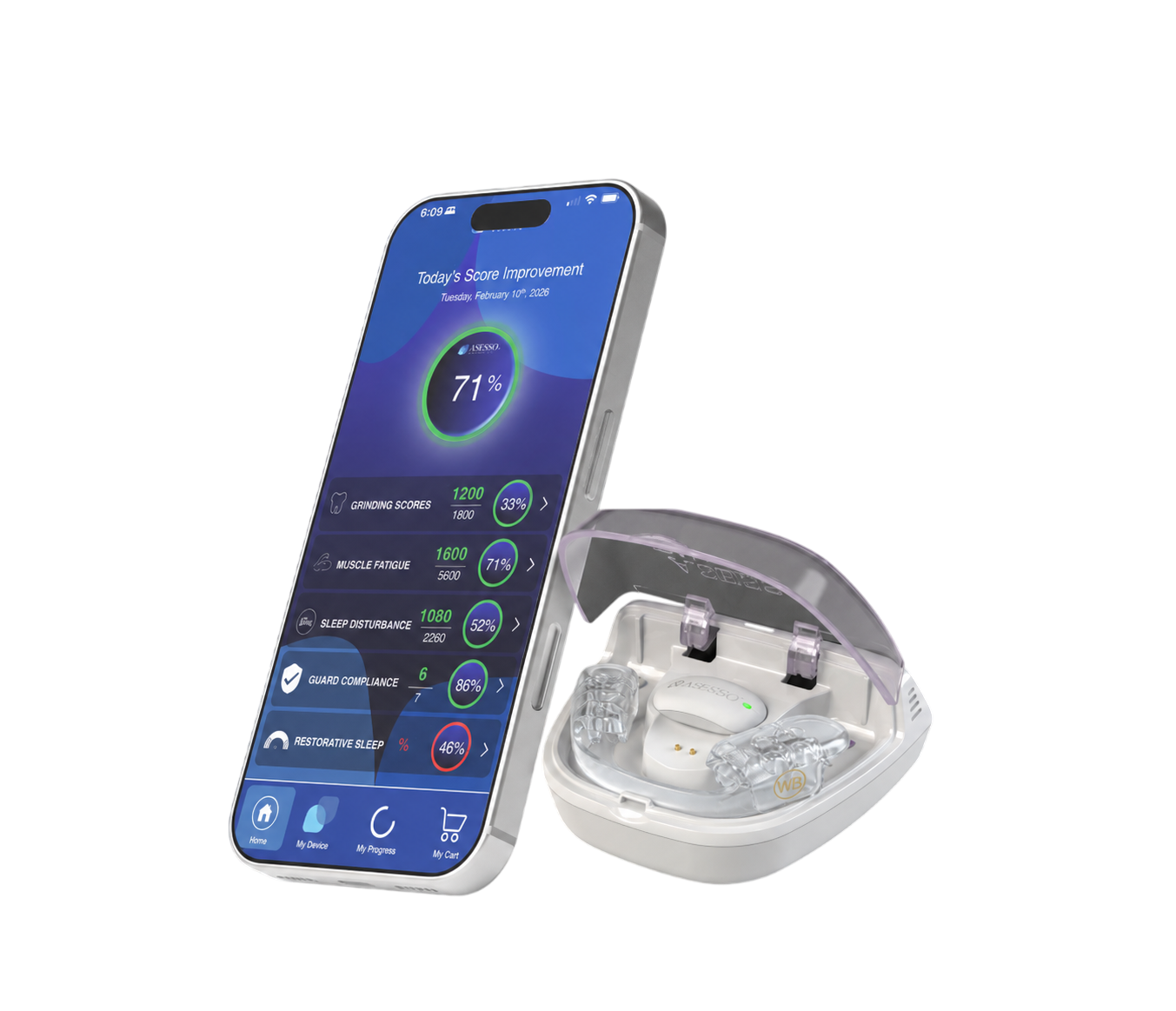
Behavioral prevention includes avoiding triggers: avoid large yawns (yawn with the mouth slightly closed), steer clear of wide opening, and avoid chewy or hard foods that require forceful chewing. Protect the jaw during sleep and high-stress periods when bruxism occurs. This is where jaw repositioning during sleep becomes critical. The Wakebright Grind Guard reduces the chronic overload that keeps the joint lax and the disc vulnerable. By eliminating nightly muscle tension and supporting the jaw in a relaxed posture, it allows the stabilizing ligaments to gradually tighten (remodel) and become more robust.
Real-world experience shows that patients with subluxation who use the Wakebright Grind Guard consistently report dramatic reductions in recurrence. Episodes that were happening monthly or weekly become rare. This is because the underlying mechanical stress driving disc displacement is being addressed. Combined with behavioral avoidance of wide-opening triggers, the Grind Guard provides long-term stability. Some patients eventually resume normal activities as the disc becomes more stable, while others maintain consistent preventive measures to avoid risking recurrence. Either way, addressing the root cause, which is chronic joint load, is the difference between living with recurring episodes and moving beyond the fear that accompanies subluxation.
What You Can Do Now
TMJ subluxation (open-lock) occurs when the jaw gets stuck open: the disc is displaced forward and blocks the condyle's retraction.
Chronic bruxism and joint overload stretch the disc's stabilizing ligaments, creating disc laxity and raising subluxation risk.
Females are more commonly affected, but males can develop subluxation too. Hypermobility and prior trauma increase risk.
During an episode, calm, patience, and gentle technique are essential. Forcing the jaw closed risks additional injury.
Spontaneous reduction occurs in many cases; if not, gentle manual reduction may help.
Long-term prevention requires avoiding wide-opening triggers and, most importantly, addressing the chronic joint load driving disc laxity.
The Wakebright Grind Guard dramatically reduces subluxation recurrence by eliminating nightly muscle tension and allowing the disc ligaments to remodel and stabilize.
Frequently Asked Questions
Q: What's the difference between subluxation and dislocation?
Subluxation is partial displacement: the jaw is stuck open but retains some joint contact. Dislocation is complete separation. Both feel terrifying, but subluxation is far more common. Both require careful reduction, though true dislocation may need imaging or professional reduction.
Q: Can subluxation happen while sleeping?
Yes. Some patients experience subluxation during sleep when the jaw relaxes and shifts into an unstable position. Waking with the jaw stuck is possible. Jaw repositioning during sleep prevents this by maintaining stable positioning throughout the night.
Q: How do I reduce a subluxation safely?
Stay calm, be patient, and be gentle. Sit upright, relax the jaw, and breathe slowly. Most cases self-reduce within minutes. Gentle manual reduction (downward and backward pressure on the chin) may help. Never force it. If the jaw stays stuck or causes severe pain, seek professional help.
Q: Will my subluxation happen again?
Yes, without intervention. The disc's laxity does not resolve on its own. Long-term prevention requires addressing the joint load and avoiding wide-opening triggers. Jaw repositioning during sleep dramatically reduces recurrence risk.
Q: Should I avoid wide opening after subluxation?
Initially, yes. Protect the jaw during recovery in the first week. Then gradually return to normal activities, but continue to avoid extreme yawning, large bites, or forceful opening. Ongoing prevention through jaw repositioning during sleep allows you to resume normal function safely.
Q: Can subluxation cause permanent damage?
Repeated subluxation and forceful reduction can damage cartilage and worsen disc laxity. Preventing recurrence through jaw muscle load reduction is essential to avoid progressive joint damage.
Q: How does jaw repositioning prevent subluxation recurrence?
It reduces chronic joint load, allowing the stretched disc ligaments to gradually remodel and tighten. Without that ongoing load, the disc becomes more stable and less likely to displace.
WAKEBRIGHT | If you have experienced the terror of open-lock, you know the fear that follows. Recurrence is likely without addressing the underlying disc laxity. Jaw repositioning during sleep is the most effective long-term prevention: it allows the joint's stabilizing ligaments to gradually remodel while preventing the nightly stress that keeps them lax. The Wakebright Grind Guard gives your jaw the stable support it needs to heal. Learn how you can move beyond fear of the next episode and enjoy full, confident jaw function. This article is for educational purposes only and does not constitute medical or dental advice. Please consult a qualified healthcare provider for personalized guidance.