TMJ Self-Care Tools That Actually Work

The Self-Care Hierarchy: What Works, What Doesn't, and Why
TMJ self-care is not all created equal. Some interventions genuinely reduce muscle tension and restore function; others provide temporary comfort while leaving the underlying problem untouched. Understanding the hierarchy, meaning what is foundational versus what is supplementary, helps you invest your effort wisely. The most effective self-care addresses the root cause: chronic jaw muscle stress and fatigue. Temporary pain relief, while helpful, does not solve the problem driving jaw pain and dysfunction. Arranged by priority, the self-care toolkit looks like this: address nightly muscle load (foundational), manage daily stress and posture, apply targeted heat and massage, adopt a soft diet during flares, and use pain management as needed.
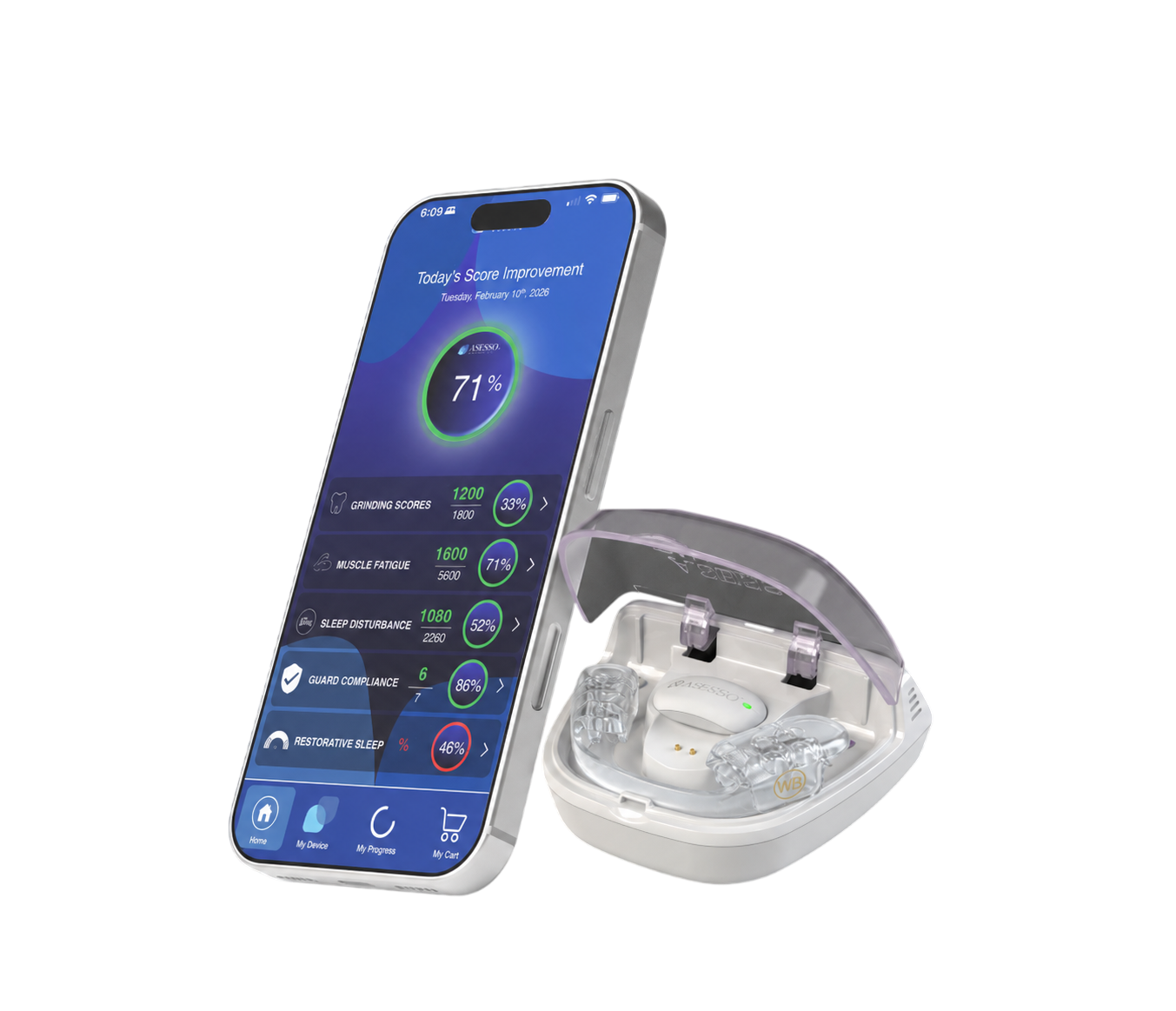
Think of self-care like building a house. The foundation, the load-bearing structure, is addressing nightly muscle stress through jaw repositioning during sleep. Without a solid foundation, temporary interventions like massage and heat are like painting walls that lack structural support. They help temporarily but do not fix the underlying instability. This is why the Wakebright Grind Guard sits at the top of the effective self-care list: it is the only intervention that addresses the 6 to 8 hours of nightly stress when most muscle fatigue accumulates. Everything else, stretching, massage, heat, stress management, amplifies the benefit of that foundational load reduction.
The evidence is clear: in patient surveys and thousands of hours of real-world use over two decades, Grind Guard users report superior outcomes compared to those relying on massage, heat, and exercise alone. Not because those tools do not help, but because they lack the sleep-phase intervention that prevents damage from accumulating. The parallel: physical therapy for an athlete helps, but proper sleep and recovery are non-negotiable. Miss the sleep part and you never fully heal.
Heat Therapy: Protocols That Reduce Muscle Tension
Heat therapy relaxes protective muscle tension, improves blood flow, and reduces pain. Moist heat penetrates tissue more effectively than dry heat; a warm (not hot) shower, a heating pad wrapped in a damp towel, or heat therapy gel packs all work well. The protocol: 15 to 20 minutes at comfortable warmth (not so hot it burns), applied to the jaw, temples, and neck 2 to 3 times daily. Evening heat before bed is especially effective, as it primes the muscles for the sleep phase when load reduction is critical.
Why heat works: muscle tension is partly neurogenic (the nervous system maintaining a protective contraction) and partly mechanical (muscle fiber shortening and stiffness). Heat addresses both. It signals the nervous system that the area is safe and increases parasympathetic tone (the relaxation response). It also physically warms the muscle fibers, increasing elasticity and reducing stiffness. Combined with gentle stretching while the muscles are warm, heat therapy measurably improves opening and reduces pain within days.
One important note: heat should never precede acute inflammation in the first 24 to 48 hours after an injury. Ice is appropriate for acute swelling; heat is for chronic muscle tension. A practical guideline: if swelling is visible, ice first. If swelling has resolved and you have chronic stiffness and pain, heat wins. Many TMD patients benefit from alternating: 15 minutes of ice, 15 minutes of heat, then ice again. This cycle reduces swelling while relaxing tension, which is ideal for chronic TMD.
Self-Massage and Trigger Point Release: Techniques and Cautions
Self-massage addresses muscle tension directly. The masseter (the powerful muscle on the side of the jaw) and the temporalis (at the temples) are both accessible and responsive to massage. Technique: using three fingers, apply gentle to moderate pressure in small circular motions for 30 to 60 seconds per area. Work the entire muscle, not just the painful spots. Repeat 2 to 3 times daily. Pressure should be firm enough to feel the muscle working but should never cause sharp pain. Gentle discomfort is fine, but acute pain means you are pushing too hard.
Intraoral massage (done inside the mouth) targets muscles that external massage cannot reach. Wash your hands thoroughly first. Place your index finger inside your cheek, between the teeth and the cheek, and find the soft bulge of the masseter. Apply gentle circular pressure for 30 to 60 seconds. This is deeply effective but requires care: your fingers can easily slip against the teeth or create micro-injuries. Start gently and increase pressure only if comfortable. Many patients find intraoral massage transformative, dramatically reducing muscle tension and jaw pain.
Trigger point release using a soft ball or roller can help but carries risk. Self-directed deep pressure on the masseter can create inflammation or bruising if done too aggressively. The safer approach is gentle self-massage or professional massage. Avoid aggressive myofascial release without training. The guiding principle: self-massage should feel relieving, not aggressive. If it creates jaw pain or swelling, you are doing too much. Massage is supplementary to foundational load reduction, not a substitute for it.
Soft Diet Phases: Protecting the Jaw During Flares
A soft diet is non-negotiable during TMJ flares. When muscles are inflamed and painful, chewing load worsens inflammation and slows recovery. The approach is to phase the diet based on symptoms. Phase 1 (acute pain): smoothies, soups, yogurt, soft fruits, soft cheeses, eggs, pasta, ground meat, and anything else requiring minimal chewing. Avoid bread crusts, nuts, hard candy, and anything requiring wide opening or forceful chewing. Phase 1 typically lasts 2 to 7 days.
Phase 2 (improving symptoms): gradually introduce slightly more texture. Add small, soft-cooked vegetables, moist chicken, soft bread, and well-cooked rice and grains. Continue avoiding hard, sticky, or large-bite foods. Chew on the less painful side and chew slowly and deliberately. Many patients benefit from cutting food into smaller pieces and using utensils that minimize jaw movement. Phase 2 may last 1 to 2 weeks depending on progress.
Phase 3 (recovery): reintroduce a normal diet gradually. But here is the key: even in recovery, stay mindful. Avoid the worst offenders such as hard candy, sticky foods, large bites, and wide opening. This is not permanent restriction; it is temporary wisdom during healing. The important caution: some patients stay on soft foods indefinitely, fearing jaw pain will return with normal eating. That is not necessary. Gradual return to normal eating as inflammation resolves is entirely appropriate. The diet is a flare-management tool, not a permanent TMJ prescription.
Stress Reduction and Sleep Quality: Foundational to All Progress
Stress and poor sleep are jaw pain amplifiers. Under stress, the nervous system triggers protective muscle contraction and the jaw tightens unconsciously. Chronic stress creates chronic muscle tension. Poor sleep prevents muscle recovery and the clearance of inflammation; tissues heal during sleep. Together, stress and sleep deprivation create a vicious cycle: muscles neither relax nor recover, pain worsens, stress increases, and sleep deteriorates further. Breaking this cycle is essential.
Practical stress reduction: deep breathing (4-count inhale, 6-count exhale, 5 minutes daily), progressive muscle relaxation (systematically tensing and releasing muscle groups), mindfulness or meditation (even 10 minutes daily helps), or physical activity (walking, yoga, swimming, or anything that feels stress-relieving). The goal is activating the parasympathetic nervous system, which signals safety and allows muscles to relax. Many TMD patients find that stress reduction alone provides relief comparable to medication.
Sleep quality directly impacts jaw pain. Poor sleep (insufficient duration or fragmented rest) impairs the parasympathetic nervous system and prevents muscle recovery. Aim for 7 to 9 hours. Create a supportive sleep environment: dark, cool, and quiet. Avoid screens 30 minutes before bed. Establish a consistent bedtime. And critically, if you grind or clench at night, address it with jaw repositioning during sleep. This is where the Wakebright Grind Guard becomes part of your sleep hygiene: it supports your jaw muscles so they can recover fully during the sleep phase when they are most vulnerable to damage from clenching.
Posture and Ergonomics: Reducing Chronic Muscle Load During Waking Hours
Posture dramatically influences jaw muscle load. Forward head posture (chin jutting forward, common with desk work and phone use) adds 10 to 20 pounds of extra tension on the jaw muscles throughout the day. This chronic overload accumulates during waking hours, and nightly bruxism then amplifies the damage during sleep. Correcting posture brings immediate pain relief for many TMD patients. The target alignment: ears over shoulders, shoulders over hips, neutral spine.
Practical adjustments: position your monitor at eye level rather than below it, which forces forward head posture. Position your phone at eye level during video calls. Use a document holder at eye level when working with papers. When using your phone, bring it up to eye level rather than looking down at it. These small adjustments, accumulated across a full workday, dramatically reduce jaw muscle load. Many patients notice jaw pain improving within days of posture correction alone.
Ergonomic optimization extends to your sleep environment. Sleep position matters: side sleeping is generally better than lying face-down for jaw health. Face-down sleeping forces the jaw into rotated positions that stress the TMJ. Pillow height also matters: too high or too low creates forward head posture even during sleep. The ideal pillow supports the neck in neutral alignment, not so high that the chin tucks and not so low that the head tips backward. These sleep-phase ergonomics, combined with the Grind Guard's jaw support, create an optimized environment for jaw muscle recovery.
Why the Wakebright Grind Guard Sits Atop the Self-Care Toolkit
The Wakebright Grind Guard is fundamentally different from massage, heat, stretching, or diet modification. Those tools manage symptoms and support recovery. The Grind Guard prevents the damage from occurring in the first place. During the 6 to 8 hours of sleep, while your conscious stress management takes a break, the Grind Guard keeps working. It repositions the jaw to a muscle-load-reducing angle, eliminating the tension and clenching that would otherwise accumulate. This uninterrupted nightly intervention addresses the 30 to 40 percent of daily muscle load that occurs during sleep.
The parallel is striking: imagine training for a marathon. Daily stretching, massage, and stress management help, but without adequate sleep and recovery, the training actually damages the body rather than building it. Sleep is where adaptation happens. TMJ recovery works the same way. Heat and massage during the day help, but if the jaw muscles spend 6 to 8 hours grinding and clenching every night, daytime interventions cannot keep pace with the nightly damage.
Real-world data from thousands of Grind Guard users over two decades shows a consistent pattern: users who combine nightly jaw repositioning with self-care (heat, massage, stress management, soft diet during flares) achieve full recovery from TMD symptoms. Users who rely on self-care alone see temporary improvement but often plateau or slide back. The difference plays out overnight, literally. The Wakebright Grind Guard provides the sleep-phase protection that makes all other self-care interventions fully effective. It is not a substitute for good self-care; it is the foundation that allows self-care to work as intended.
What You Can Do Now
Heat therapy, self-massage, a soft diet, stress reduction, and posture correction all effectively manage TMJ symptoms.
These tools are supplementary to addressing the root cause: chronic jaw muscle stress during sleep.
A soft diet during flares reduces inflammation and chewing load; phase it as symptoms improve.
Stress and poor sleep amplify jaw pain. Stress reduction and sleep quality are non-negotiable.
Posture correction reduces chronic jaw muscle load throughout the day. Forward head posture adds significant stress.
The Wakebright Grind Guard is foundational: it prevents nightly muscle damage during the 6 to 8 hours when most stress accumulates.
Combining nightly jaw repositioning with self-care tools produces superior, lasting results compared to self-care alone.
Frequently Asked Questions
Q: What's the best self-care for jaw pain: heat or ice?
Ice for acute swelling in the first 24 to 48 hours; heat for chronic muscle tension. Many patients benefit from alternating: 15 minutes of ice, then 15 minutes of heat. Heat before bed is especially helpful, as it primes the muscles for rest and pairs well with nightly jaw repositioning.
Q: How often should I do jaw exercises for TMJ?
During acute flares, rest is better than exercise. Once pain improves, gentle stretching 2 to 3 times daily helps. Aggressive exercise can worsen inflammation. Focus on gentle, pain-free movement. If stretching causes pain, stop. Self-massage is often more effective than formal exercises.
Q: Can diet changes help TMJ pain?
Absolutely. A soft diet during flares reduces chewing load and inflammation. Phase the diet: very soft during acute pain, then gradually introduce more texture as pain improves. Avoid hard, sticky, or large-bite foods even in recovery. This is not permanent; it is a temporary tool for flare management.
Q: Does stress really affect jaw pain?
Yes, significantly. Stress triggers protective muscle contraction and bruxism. Stress reduction through breathing, meditation, and exercise directly reduces jaw pain for many patients. Poor sleep amplifies pain by preventing muscle recovery, so sleep is essential.
Q: How long does self-care take to work?
Heat and massage provide immediate, temporary relief. Diet changes reduce inflammation within days. Posture correction often helps within days as well. Comprehensive self-care addressing stress, posture, sleep, and diet typically shows measurable improvement within 1 to 2 weeks.
Q: Is self-massage safe for TMJ pain?
Yes, when done gently. Massage the masseter and temporalis muscles with gentle circular pressure 2 to 3 times daily. Intraoral massage is effective but requires clean hands and a gentle touch. Avoid aggressive pressure; the goal is relief, not pain.
Q: Why doesn't self-care alone fully resolve my TMJ pain?
Self-care addresses daytime load and symptoms but misses the 6 to 8 hours of nightly stress when most muscle fatigue accumulates. Jaw repositioning during sleep with the Wakebright Grind Guard is the missing piece: it prevents nightly damage so that self-care can fully work.
WAKEBRIGHT | You are doing the self-care right: heat, massage, a soft diet, and stress management all help. But if you are still grinding your teeth at night or waking with jaw pain, the missing piece is addressing that nightly load. The Wakebright Grind Guard is designed to do what daytime self-care cannot: support your jaw muscles during sleep when stress accumulates most. Pair your self-care routine with nightly jaw repositioning and experience the full effectiveness of your efforts.
This article is for educational purposes only and does not constitute medical or dental advice. Please consult a qualified healthcare provider for personalized guidance.