TMJ Headache: Recognizing Jaw-Related Head Pain and Finding Relief

What Is a TMJ Headache? Jaw Dysfunction Masquerading as Head Pain
A TMJ headache is not a typical headache. It originates not in the brain but in the jaw joints, jaw muscles, and surrounding fascia. The temporomandibular joint (TMJ) is a sophisticated hinge joint where the lower jaw attaches to the skull, supported by an intricate network of muscles, ligaments, and nerve pathways. When this system becomes dysfunctional through jaw clenching, teeth grinding, or muscle overload, pain radiates upward into the head, temples, and surrounding regions. Most people experiencing TMJ headaches assume they have tension headaches or migraines, never recognizing the jaw as the source.
The pain pattern of a TMJ headache is distinctive. It typically radiates from the jaw joint area (just in front of and below the ear) upward into the temples, across the forehead, or along the back of the head and neck. The pain is often accompanied by jaw soreness, clicking or popping sounds when chewing, and a sensation that the jaw is misaligned or uncomfortable. TMJ headaches frequently intensify in the morning, particularly after nights of teeth grinding, because the jaw muscles have been engaged in intense, repeated contractions throughout sleep.
TMJ headaches occur because the jaw joint and its supporting muscles share extensive nerve connections with other cranial structures. When jaw muscles are chronically tense or fatigued, they generate referred pain that reaches the head. Think of it like a chain of dominoes: stress in the jaw triggers muscle tension, which activates pain-sensitive nerve fibers, which then signal pain in the head. Understanding this pathway is crucial because it means that relieving jaw muscle stress can directly ease the headache.
Many TMJ headache sufferers visit neurologists, take migraine medications, and try various headache treatments, all without success, because they are not addressing the real problem. A TMJ headache requires a jaw-focused approach. When the jaw muscles are released from stress and the jaw joint is properly supported, TMJ headaches often resolve within days or weeks, revealing that the headache was never truly a head problem at all.
TMJ Headaches vs. Tension Headaches vs. Migraines: Understanding the Difference
Tension headaches and TMJ headaches are frequently confused because both involve muscle tension and produce similar pain sensations. They originate from different sources, however, and call for different treatments. A tension headache typically stems from overall stress, poor posture, or neck and shoulder muscle tightness. The pain is usually bilateral (felt on both sides of the head) and often described as a tight band around the head. TMJ headaches, by contrast, are usually unilateral (one-sided) or asymmetrical, originating specifically from the jaw joint and radiating upward.
The key distinction: with a TMJ headache, pressing on the jaw joint area or moving the jaw aggravates the pain. Clenching or grinding worsens TMJ headaches, and the jaw may feel sore or fatigued. With a pure tension headache, jaw function is typically unaffected. Additionally, TMJ headaches often come with accompanying jaw symptoms such as clicking, popping, difficulty opening the mouth, or morning jaw stiffness, which are rare in tension headaches.
Migraines are entirely different neurological events involving blood vessel dilation and chemical changes in the brain. Migraine pain is typically throbbing, one-sided, and may include visual disturbances, nausea, or sensitivity to light. However, people with TMJ dysfunction can also experience migraines, and jaw muscle tension can trigger migraine episodes in susceptible individuals. This overlap is why accurate diagnosis matters. Someone might have both TMJ dysfunction-related headaches and occasional migraines, requiring treatment strategies that address both.
The most reliable way to distinguish a TMJ headache is to assess jaw involvement. Keep a headache diary for one to two weeks, noting which headaches correlate with jaw soreness, grinding sounds, or jaw discomfort. If headaches consistently accompany jaw symptoms, TMJ dysfunction is likely the culprit. This recognition is powerful because TMJ headaches are highly responsive to jaw-focused interventions, while tension or migraine headaches may require different approaches.
The Root Cause: Jaw Muscle Stress and Sleep Grinding
Most TMJ headaches trace back to a single root cause: chronic jaw muscle stress. This stress accumulates through several mechanisms, with teeth grinding and jaw clenching during sleep being the most powerful contributors. When you grind your teeth at night, the jaw muscles, particularly the masseter and temporalis, contract with tremendous force, sometimes exceeding normal chewing pressure several times over. This occurs repeatedly throughout the night, sometimes hundreds of times per hour in severe grinders.
By morning, these muscles are fatigued, inflamed, and knotted with tension. That fatigue persists into the day, leaving the muscles sensitive and reactive to further stress. If grinding resumes the following night, the muscles never fully recover. Over weeks and months, this pattern creates a chronic inflammatory state in the jaw muscles. The inflammation and muscle tension then generate pain signals that radiate into the head, producing the characteristic TMJ headache.
Beyond sleep grinding, daytime stress amplifies jaw muscle tension. Many people unconsciously clench their teeth or tense their jaw muscles during stressful situations or while concentrating. This daytime clenching, combined with nighttime grinding, creates a relentless cycle of muscle stress. The jaw muscles never get a genuine break, and pain and dysfunction accumulate. This is why TMJ headaches so often worsen during high-stress periods: the jaw muscles have reached a breaking point.
Poor posture and a forward head position, common with desk work and phone use, add another layer of stress to the jaw muscles. When the head is positioned forward, the jaw muscles must work harder to support the jaw against gravity. This extra effort, combined with stress-related clenching, amplifies muscle fatigue. Understanding this cascade, grinding plus clenching plus poor posture leading to chronic jaw muscle stress and TMJ headaches, reveals why addressing jaw muscle load is so critical for headache resolution.
How the Wakebright Grind Guard Reduces TMJ Headaches
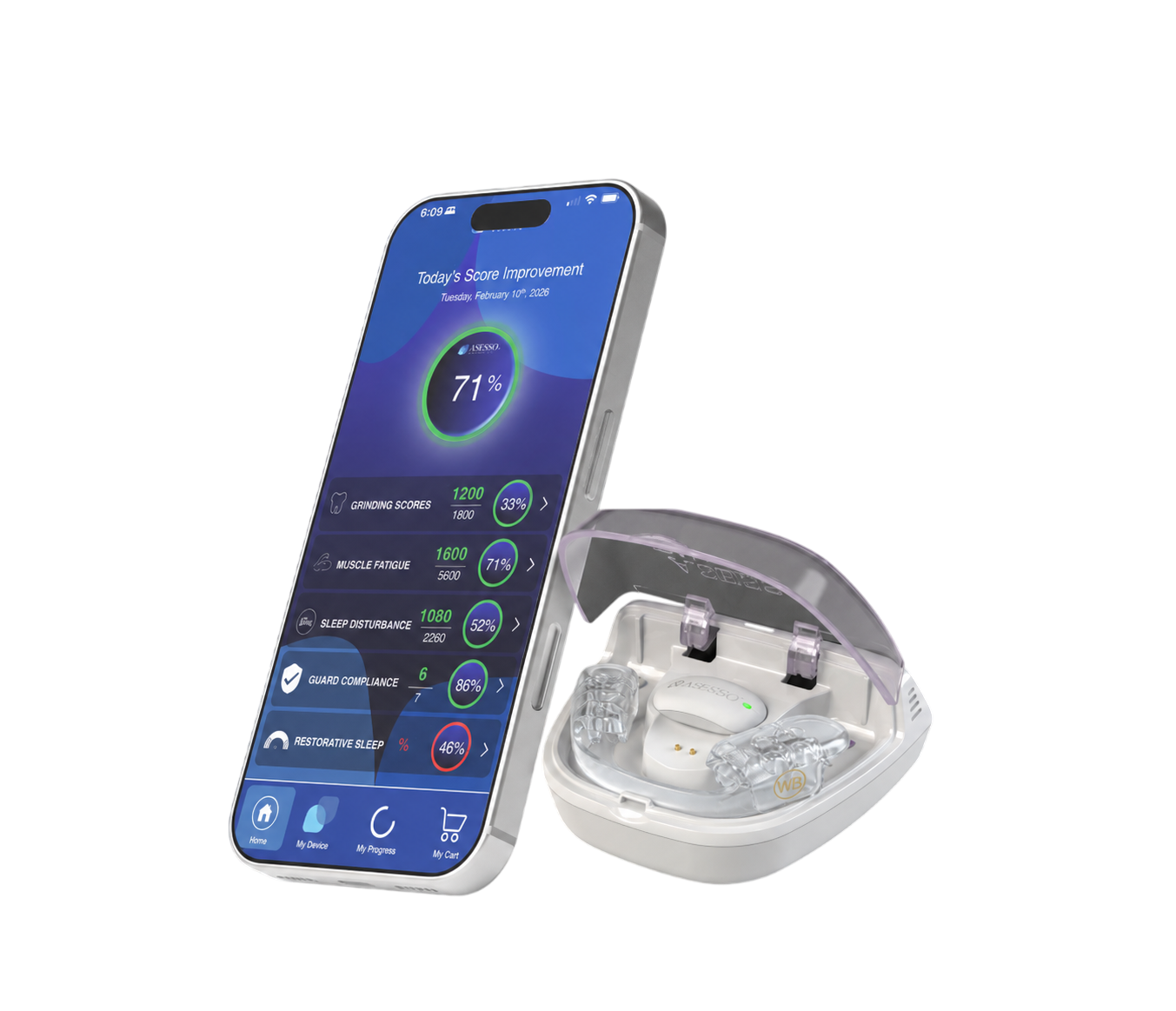
The Wakebright Grind Guard addresses TMJ headaches by directly reducing jaw muscle load during sleep, the period when grinding occurs and muscle damage accumulates. By repositioning the lower jaw forward and slightly downward, the guard optimizes jaw alignment and dramatically lowers the force the jaw muscles need to sustain. This repositioning is grounded in biomechanical principles and more than 20 years of real-world use data showing that jaw position significantly influences muscle load.
When jaw muscle load decreases, muscle fatigue and inflammation diminish rapidly. Within the first few nights of Grind Guard use, many people report noticeably reduced morning jaw soreness. Within one to two weeks, TMJ headaches begin to resolve as the inflammatory state in the jaw muscles subsides. This improvement continues over subsequent weeks as the muscles fully recover from the accumulated stress of prolonged grinding.
The mechanism is straightforward: by reducing nighttime grinding force through optimized jaw positioning, the guard allows the jaw muscles to spend the night in a lower-stress state. This represents a profound change from the damaging grinding cycle. Instead of hundreds of high-force muscle contractions per night, the muscles maintain a relaxed, supported position. The reduction in muscle damage and inflammation translates directly into headache relief.
Because the Wakebright Grind Guard is custom-fitted to your specific jaw anatomy and grinding pattern, the load reduction is optimized precisely for you. This personalized approach ensures maximum effectiveness for TMJ headache relief. Users report not just headache resolution, but also improved jaw function, better sleep quality, and a return to comfortable jaw movement, all stemming from the fundamental reduction in jaw muscle stress during sleep.
Beyond the Guard: Additional Strategies for TMJ Headache Relief
While the Wakebright Grind Guard directly addresses the root cause of TMJ headaches by eliminating nighttime jaw muscle stress, several complementary strategies can accelerate relief and prevent relapse. Gentle jaw muscle stretching helps lengthen fatigued muscles and improve circulation. After removing the guard in the morning, gently open your mouth slightly wider than the resting position and hold for 10 to 15 seconds. These stretches should be pain-free; forcing movement creates additional stress.
Moist heat applied to the jaw area for 15 to 20 minutes in the morning or evening also reduces muscle tension and promotes healing. Heat increases blood flow to fatigued muscles, delivering the oxygen and nutrients needed for recovery. Many TMJ headache sufferers find that a warm compress against the jaw joint area brings immediate comfort. Combined with the Grind Guard's nighttime load reduction, heat therapy accelerates the resolution of inflammation and pain.
Daytime stress awareness is equally important. Consciously check whether you are clenching your teeth during stressful moments, and actively relax the jaw. A simple practice: throughout the day, periodically notice your jaw. If your teeth are in contact, separate them slightly and let the muscles soften. This breaks the daytime clenching cycle and prevents accumulated stress. Maintaining good posture, especially at a desk or while using a phone, also reduces the extra load on jaw muscles from a forward head position.
Adequate sleep and stress management round out the approach. Fatigue and emotional stress amplify jaw clenching and grinding. Prioritizing 7 to 9 hours of quality sleep, combined with stress-reduction practices like deep breathing or gentle exercise, creates an environment where the jaw muscles can recover. These complementary approaches, working alongside the Grind Guard's nighttime load reduction, create a comprehensive strategy for TMJ headache resolution and long-term jaw health.
What You Can Do Now
Recognize TMJ headache patterns: headaches originating from the jaw joint, radiating to the temples or forehead, and accompanied by jaw soreness or clicking are TMJ-related, not tension or migraine headaches.
Identify the root cause: nighttime grinding and daytime clenching stress the jaw muscles relentlessly, causing inflammation and pain that radiates into the head. Stopping that stress stops the headache.
Reduce nighttime grinding load: a custom-fitted guard that repositions the jaw can dramatically reduce grinding force, allowing muscles to recover and headaches to resolve within weeks.
Support with heat and stretching: gentle heat application and muscle stretching accelerate recovery, but only when combined with a guard that stops the underlying grinding stress.
Manage daytime stress: consciously monitor and interrupt unconscious jaw clenching throughout the day to reduce accumulated muscle tension and support headache relief.
Prioritize sleep and wellness: adequate sleep and stress management reduce grinding and clenching, creating an environment where jaw muscles can heal and TMJ headaches resolve.
Frequently Asked Questions
Q: How do I know if my headaches are TMJ-related?
TMJ headaches originate in the jaw joint and radiate to the temples or forehead. Key indicators include jaw soreness or clicking, pain that worsens with jaw movement or grinding, morning headaches accompanied by jaw stiffness, and pain localized to one side of the head. If these symptoms accompany your headaches, TMJ dysfunction is likely involved.
Q: Can jaw clenching cause headaches?
Yes. Both unconscious daytime jaw clenching and nighttime teeth grinding cause the jaw muscles to fatigue and become inflamed. That inflammation and tension generate pain that radiates into the head. Reducing jaw muscle tension through proper repositioning directly alleviates these headaches.
Q: How quickly can a TMJ-focused approach relieve headaches?
Most people experience noticeable improvement within one to two weeks of consistent use with a load-reduction guard like the Wakebright Grind Guard. The reduction in jaw muscle stress begins immediately, but resolution of inflammation and full pain relief typically takes a few weeks. The earlier you address jaw muscle stress, the faster relief arrives.
Q: Will jaw stretching help my TMJ headache?
Gentle stretching can support relief, but it addresses only muscle tension, not the underlying cause. Stretching works best when combined with a guard that reduces nighttime grinding load. Without addressing the grinding, the muscles become re-stressed each night, and stretching provides only temporary relief.
Q: Is heat therapy effective for TMJ headaches?
Heat therapy accelerates healing by increasing blood flow to fatigued muscles and supporting recovery. Applied for 15 to 20 minutes daily, it reduces muscle tension and inflammation. Heat works well alongside a load-reduction guard to speed the resolution of TMJ headaches and restore comfortable jaw function.
Q: Can stress worsen TMJ headaches?
Absolutely. Stress triggers unconscious jaw clenching, which amplifies jaw muscle tension and aggravates TMJ headaches. Managing stress through relaxation, deep breathing, or exercise, combined with a guard that reduces nighttime grinding, provides comprehensive relief. Stress awareness prevents the vicious cycle of tension and pain.
Q: Why don't migraine medications work for my TMJ headaches?
Because TMJ headaches are not migraines. They are referred pain from jaw muscle dysfunction. Migraine medications target neurological pathways unrelated to jaw muscle stress. Addressing the jaw directly through load reduction is far more effective than medications designed for other headache types.
WAKEBRIGHT | TMJ headaches are a symptom of jaw muscle stress that can be resolved. The Wakebright Grind Guard's load-reduction design directly addresses the grinding and muscle fatigue that trigger TMJ headaches. Discover how optimized jaw positioning can bring lasting headache relief and restore comfortable jaw function. This article is for educational purposes only and does not constitute medical or dental advice. Please consult a qualified healthcare provider for personalized guidance.