The Multifactorial Nature of Bruxism: Stress, Airway, Medication, and More

If you've been told you grind your teeth, you've probably also been told why: stress. It's the most common explanation patients hear, and it's not wrong but it's rarely the whole story. Research increasingly shows that bruxism is a multifactorial condition, meaning it usually results from two or more overlapping causes working together, not a single trigger acting alone. Understanding which factors apply to you is what separates a night guard that just protects your enamel from a treatment plan that actually addresses why you're grinding in the first place.
What Bruxism Actually Is
Bruxism is the repetitive clenching, grinding, or gnashing of teeth, and it comes in two distinct forms. Awake bruxism happens during the day, is semi-voluntary, and tends to show up as jaw clenching during concentration or stress. Sleep bruxism happens unconsciously at night and is classified as a sleep-related movement disorder rather than a habit; it's tied to brief arousals in the central nervous system rather than anything happening in the jaw itself.
That distinction matters because the two types don't necessarily share the same causes. Researchers now generally agree that both forms are centrally mediated, meaning they originate in brain activity and nervous system regulation rather than being caused primarily by a bad bite or misaligned teeth, as was once widely assumed.
Estimates of how common bruxism is vary quite a bit depending on how it's measured, but sleep bruxism is generally reported in roughly 8-16% of adults, and awake bruxism in a wider range of about 22-31%, with rates considerably higher in children (American Dental Association; StatPearls).
Why "It's Just Stress" Undersells the Picture
Stress and anxiety are consistently the most cited contributors to bruxism, and for awake bruxism specifically, the link is strong clenching often functions as an unconscious physical outlet for tension, frustration, or intense concentration. Some researchers have described chronic stress as capable of affecting brain pathways involved in dopamine regulation, which in turn influence involuntary jaw muscle activity.
But sleep bruxism's relationship to stress is more indirect. It's better understood as one output of a broader pattern of nighttime nervous system arousal, the same kind of brief awakenings that show up in people with disrupted sleep for entirely different reasons, including the airway issues covered next. That's the core of the multifactorial argument: stress can prime the nervous system toward bruxism, but something else often has to be present: a fragmented airway, a medication, an underlying condition for it to actually show up as grinding at night.
The Airway Connection
One of the more clinically important and still not fully settled pieces of the bruxism puzzle is its relationship with obstructive sleep apnea (OSA). Several polysomnographic (sleep-lab) studies have found that people with OSA show a meaningfully higher rate of sleep bruxism than the general population, and that bruxism episodes often cluster around the arousals that follow an apnea event.
The leading theory is that rhythmic jaw movement may be a protective reflex: as the airway narrows or partially collapses during sleep, activating the muscles involved in chewing may help reopen it and restore airflow. Under this model, bruxism isn't the root problem — it's a downstream response to a breathing problem. That's why an occlusal guard, which only protects the teeth, can sometimes make things worse: several sources note that occlusal splints have been flagged as a possible contraindication in patients with unmanaged OSA, since a guard can restrict jaw movement without addressing the underlying airway obstruction. It's also why a dentist who suspects an airway component may recommend a sleep study or an oral appliance designed for OSA (a mandibular advancement device) rather than a standard night guard.
To be clear, the research hasn't established OSA as a direct cause of bruxism, and the two conditions can and do occur independently. But given how common undiagnosed sleep apnea is, screening for airway issues in a patient with unexplained sleep bruxism is a reasonable and increasingly common step.
Medications That Can Trigger or Worsen Bruxism
This is the factor patients are least likely to have heard about, and it's often the most actionable. A number of common medications particularly SSRIs used for depression and anxiety — have a documented, if underrecognized, association with new or worsening bruxism.
Fluoxetine and sertraline are the most frequently reported SSRIs linked to bruxism in the literature, though citalopram, escitalopram, fluvoxamine, paroxetine, and venlafaxine have all been implicated as well. The leading explanation involves how these medications affect neurotransmitter balance: SSRIs increase serotonin activity, and in a subset of patients that appears to suppress dopamine signaling involved in controlling involuntary jaw muscle movement. Onset is typically reported within the first few weeks of starting or increasing a dose, and cases often resolve within weeks of stopping or switching medications.
Other medication and substance categories associated with bruxism include:
- Stimulant medications for ADHD, including amphetamine-based drugs
- Certain antipsychotics
- Recreational stimulants (notably MDMA and cocaine)
- High caffeine intake and alcohol use, which function more as aggravating habits than direct triggers
None of this means patients should stop a prescribed medication on their own. If bruxism appears to line up with starting a new drug, the appropriate step is a conversation with the prescribing physician options can include dose adjustment, switching medications, or in some cases adding a second medication specifically to counteract the side effect.
Other Contributing Factors
Beyond stress, airway issues, and medications, several other factors are consistently associated with bruxism risk:
- Sleep disorders beyond OSA including snoring and other conditions that fragment sleep architecture
- Neurological and movement conditions bruxism is more common in people with Parkinson's disease and other movement disorders
- Gastroesophageal reflux (GERD) some research links reflux episodes to bruxism activity, though the mechanism isn't fully established
- Genetics sleep bruxism has a tendency to run in families
- Lifestyle factors smoking, high caffeine intake, and alcohol use are each independently associated with increased bruxism risk
- Personality traits some studies associate competitive, aggressive, or hyperactive personality types with higher awake-bruxism rates
Comparing the Major Contributing Factors
| Factor | Type Most Affected | How It's Thought to Work | What Helps |
|---|---|---|---|
| Stress/anxiety | Awake bruxism primarily | Unconscious muscle tension as a physical outlet | Stress management, counseling, behavioral awareness training |
| Obstructive sleep apnea | Sleep bruxism | Possible protective reflex to reopen a narrowed airway | Sleep study, CPAP or mandibular advancement device (not a standard night guard) |
| SSRIs and other medications | Both, medication-dependent | Altered serotonin/dopamine balance affecting muscle control | Discuss dose/timing/alternatives with prescriber; never self-adjust |
| Neurological conditions | Both | Disruption of central nervous system motor control | Coordinated care with a physician; symptom management |
| GERD | Sleep bruxism (proposed link) | Possible reflex response to acid exposure during sleep | Reflux management; evaluation by a physician |
| Genetics/family history | Sleep bruxism | Inherited predisposition, mechanism unclear | No prevention; focus on monitoring and protection |
How Dentists Approach a Multifactorial Case
Because bruxism so often has more than one contributing cause, a thorough evaluation looks past the teeth themselves. That typically includes a conversation about sleep quality and snoring, current medications, stress levels, and any diagnosed neurological or GI conditions, alongside the clinical exam for tooth wear, muscle tenderness, and jaw joint function.
Treatment is generally built in layers rather than a single fix:
- Protective: a custom occlusal guard to prevent further tooth damage appropriate for most patients without unmanaged OSA
- Contributing-factor management: referral for a sleep evaluation, coordination with a physician about medication options, or stress-reduction strategies such as counseling, biofeedback, or relaxation techniques
- Monitoring: periodic reassessment, since bruxism triggered by a medication or a temporary high-stress period may resolve on its own once that factor changes
It's worth noting plainly that no treatment reliably eliminates bruxism itself current approaches manage its effects and address contributing causes rather than curing the underlying behavior.
Frequently Asked Questions
Q:Is bruxism always caused by stress?
No. Stress is a major contributor, especially for awake bruxism, but sleep bruxism in particular is often linked to other factors like airway problems, medications, or neurological conditions — frequently more than one at once.
Q:Can antidepressants really cause teeth grinding?
Yes. SSRIs are a documented, though still underrecognized, cause of new or worsened bruxism in some patients, typically appearing within the first few weeks of starting or increasing a dose. Talk to your prescribing physician before making any changes.
Q:Should I stop my medication if I think it's causing bruxism?
No never adjust or stop a prescribed medication without talking to the prescribing physician first. They can evaluate whether a dose change, a different medication, or an added treatment makes sense.
Q:Is there a connection between sleep apnea and teeth grinding?
Research shows people with obstructive sleep apnea have notably higher rates of sleep bruxism, and one leading theory is that jaw movement may be a reflex response to a narrowing airway. The link isn't fully understood, and the two conditions can also occur independently.
Q:Can a night guard make sleep apnea worse?
A standard occlusal guard restricts jaw movement, which is a concern if undiagnosed or unmanaged sleep apnea is present. This is one reason dentists ask about snoring and sleep quality before recommending a guard.
Q:What are the signs I might have bruxism?
Common signs include a sore or tight jaw on waking, flattened or chipped teeth, increased tooth sensitivity, headaches (especially at the temples), and a partner noticing grinding sounds at night.
Q:Does bruxism run in families?
Sleep bruxism does appear to have a genetic component and tends to cluster in families, though the exact mechanism isn't well understood.
Q:Can children have multifactorial bruxism too?
Yes. Bruxism is actually more common in children than adults, and can involve similar contributing factors, though it also frequently resolves on its own as children get older.
Q:Is grinding my teeth actually harmful, or just annoying?
Left unmanaged, chronic bruxism can wear down enamel, crack or loosen teeth, damage dental work, and contribute to jaw joint (TMJ) disorders and chronic headaches — it's worth addressing even if it feels like a minor annoyance.
Q:How does a dentist figure out what's causing my bruxism?
Through a combination of a clinical exam (tooth wear, jaw muscle tenderness), a review of your medications and sleep habits, and when an airway or neurological cause is suspected — referral for further evaluation like a sleep study.
Q:Can GERD (acid reflux) really contribute to teeth grinding?
Some research has found an association between reflux episodes and sleep bruxism activity, though the exact mechanism is still being studied. If you have both symptoms, it's worth mentioning to your dentist and physician.
Q:Will my bruxism go away on its own?
It depends on the cause. Bruxism tied to a temporary stressor or a specific medication often improves once that factor changes. Bruxism linked to a chronic condition like OSA is more likely to persist until that condition is managed directly.
What You Can Do Now
- Bruxism is rarely caused by just one thing stress, airway health, medications, and other factors often overlap
- Effective management starts with identifying which combination of causes applies to you
- A new medication, a sore jaw, or new tooth wear are all details worth bringing to your dentist
- Treating the cause, not just the symptom, is what leads to lasting improvement
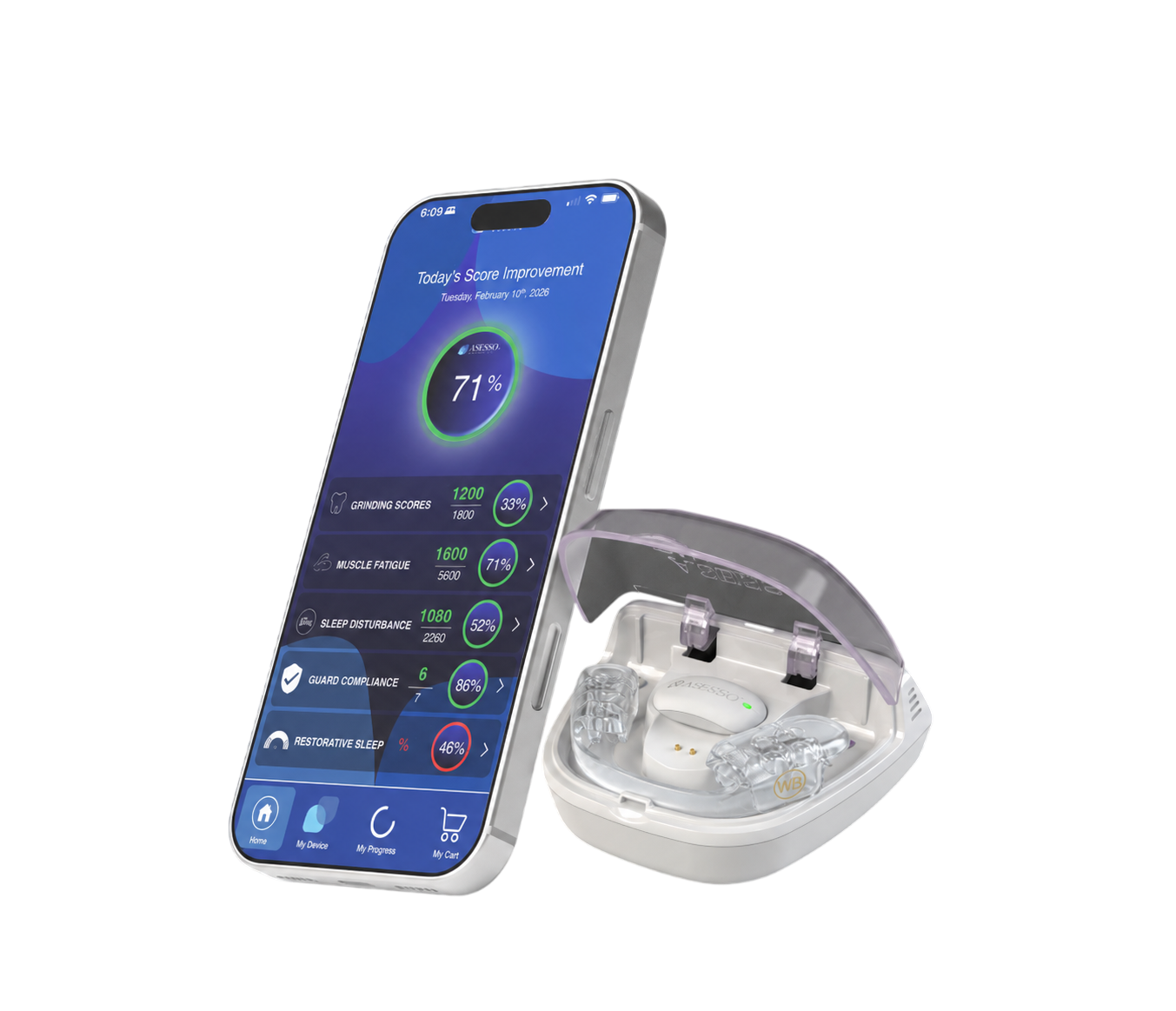
WAKEBRIGHT | While you and your dentist work through the underlying causes, the Wakebright Guard protects your teeth from grinding damage in the meantime.
This article is for informational purposes only and does not constitute medical advice. Consult a licensed dentist or healthcare provider for diagnosis and treatment recommendations specific to your situation.
References
- American Dental Association / MouthHealthy — Bruxism (Teeth Grinding) prevalence data referenced via ADA-affiliated clinical sources. ada.org
- Mayo Clinic. "Teeth grinding (bruxism) — Symptoms and causes." mayoclinic.org. https://www.mayoclinic.org/diseases-conditions/bruxism/symptoms-causes/syc-20356095
- Mayo Clinic. "Teeth grinding (bruxism) — Diagnosis and treatment." mayoclinic.org. https://www.mayoclinic.org/diseases-conditions/bruxism/diagnosis-treatment/drc-20356100
- StatPearls (NCBI Bookshelf). "Bruxism Management." https://www.ncbi.nlm.nih.gov/books/NBK482466/
- Kazubowska-Machnowska, K., et al. (2022). "The Effect of Severity of Obstructive Sleep Apnea on Sleep Bruxism in Respiratory Polygraphy Study." Brain Sciences. DOI: 10.3390/brainsci12070828. https://www.ncbi.nlm.nih.gov/pmc/articles/PMC9313411/
- Sleep Foundation. "The Connection Between Sleep Apnea and Teeth Grinding (or Bruxism)." https://www.sleepfoundation.org/sleep-apnea/link-between-sleep-apnea-and-teeth-grinding
- Relationship Between Bruxism and Obstructive Sleep Apnea: A Systematic Review of the Literature. MDPI. https://www.mdpi.com/2077-0383/14/14/5013
- Sertraline-induced bruxism: a case report and review of the literature. PMC. https://pmc.ncbi.nlm.nih.gov/articles/PMC12998030/
- SSRI-associated bruxism. Neurology Clinical Practice. https://www.neurology.org/doi/10.1212/CPJ.0000000000000433
- George, S., Joy, R., Roy, A. (2021). "Drug-Induced Bruxism: a Comprehensive Literature Review." Journal of Indian Prosthodontic Society (SAGE). https://journals.sagepub.com/doi/10.1177/2320206821992534
- Global Prevalence of Sleep Bruxism and Awake Bruxism in Pediatric and Adult Populations: A Systematic Review and Meta-Analysis. PMC. https://www.ncbi.nlm.nih.gov/pmc/articles/PMC11278015/
- Epidemiology of bruxism in adults: a systematic review of the literature. PubMed. https://pubmed.ncbi.nlm.nih.gov/23630682/
- Sleep Bruxism: A Narrative Review of Current Concepts, Mechanisms, and Clinical Implications. PMC. https://pmc.ncbi.nlm.nih.gov/articles/PMC13094812/
- Neurobiology of bruxism: The impact of stress (Review). Biomedical Reports (Spandidos Publications). https://www.spandidos-publications.com/10.3892/br.2024.1747
- Thomas, et al. "Sleep related bruxism—comprehensive review of the literature based on a rare case presentation." Frontiers of Oral and Maxillofacial Medicine. https://fomm.amegroups.org/article/view/67995/html