The Future of TMD Care: Measurable, Data-Driven, Same-Day

For decades, diagnosing a temporomandibular disorder has relied heavily on a dentist's hands, a patient's description of their pain, and a strip of articulating paper to check where teeth meet. That's changing. A new generation of dental technology is turning TMD evaluation from an educated judgment call into something closer to measurable, objective data and it's reshaping how quickly patients can move from "something's wrong with my jaw" to an actual, evidence-backed plan.
Why TMD Diagnosis Has Lagged Behind
Temporomandibular disorders have always been diagnostically tricky. Symptoms vary widely between patients, TMD overlaps with headaches, ear symptoms, and neck pain in ways that complicate a clean diagnosis, and the traditional exam involves palpating jaw muscles, checking range of motion, using colored articulating paper to see where teeth contact is useful but inherently subjective. Two dentists examining the same patient can reasonably reach somewhat different conclusions about severity or the specific mechanism at play. That subjectivity has been one of the field's persistent limitations.
What "Measurable" Looks Like Today
Several established digital tools are already changing this, moving TMD assessment toward objective, quantified data rather than clinical impression alone:
Digital occlusal analysis (T-Scan and similar systems). Instead of paper that only shows where teeth contact, these systems measure the timing, sequence, and relative force of every contact point in real time. A 2025 peer-reviewed study using this kind of digital tracking on bruxism patients wearing 3D-printed splints found a genuinely important nuance: even splints designed with uniform contact areas across the occlusal surface didn't necessarily produce uniform force distribution a distinction invisible to a traditional articulating-paper exam, but clearly visible with digital force mapping.
Surface electromyography (EMG). By measuring electrical activity in the jaw muscles during clenching, chewing, or rest, EMG gives dentists an objective read on muscle activity levels rather than relying solely on a patient's self-reported pain or a dentist's palpation.
Joint vibration analysis (JVA). This uses sensors placed over the jaw joints to detect and record vibrations associated with joint sounds clicking, popping, or grinding sensations providing an objective, recordable signal instead of relying on what a clinician can hear or feel during an exam.
3D jaw tracking. High-precision motion tracking can capture the exact path, velocity, and any deviations in jaw movement, offering detailed data for complex cases that a visual assessment alone can't fully capture.
CBCT imaging. Cone-beam CT scans provide detailed 3D imaging of the jaw joint structure itself, useful for cases where the diagnosis isn't clear from a clinical exam and symptoms haven't responded to initial conservative treatment.
What "Data-Driven" Adds Beyond Individual Tools
The real shift isn't any single device it's combining these data streams into a more complete picture than any one measurement provides alone. A dentist integrating digital occlusal force mapping with EMG readings and joint vibration data has a genuinely more objective basis for a treatment plan than exam findings and patient-reported symptoms alone. This matters clinically: as covered in our article on hard versus soft night guards, research on splint therapy has found mixed, sometimes low-certainty evidence for which approach works best a gap that more precise, individualized diagnostic data has real potential to help close over time, by better matching specific treatment approaches to what's actually happening in a given patient's bite and muscles, rather than a generalized protocol.
What "Same-Day" Means in This Context
Digital workflows are also compressing timelines that used to require multiple visits. As covered in more detail in our comparison of same-day and lab-made night guards, digital scanning paired with in-office milling or fast-turnaround fabrication can reduce what was once a two-visit, multi-week process to a single appointment for suitable cases. Combined with same-visit digital diagnostics a T-Scan reading, an EMG check, and a jaw-tracking assessment all completed during one exam the realistic future for many TMD cases is evaluation, diagnosis discussion, and an initial treatment appliance within a single visit, rather than an exam followed by a separate fabrication appointment weeks later.
The Next Wave: AI-Assisted Analysis and Wearables
Looking slightly further ahead, two developing areas are worth watching, with appropriately measured expectations since they're earlier-stage than the established tools above:
AI-assisted diagnostic support. Software platforms are beginning to integrate CBCT imaging, jaw-motion tracking, EMG, and occlusal data into unified analysis tools intended to help clinicians review TMD cases more systematically. This is genuinely promising as a way to organize and cross-reference complex data, though it should be understood as a tool supporting clinical judgment, not a replacement for it the technology is still maturing, and clinical decision-making remains squarely with the treating dentist.
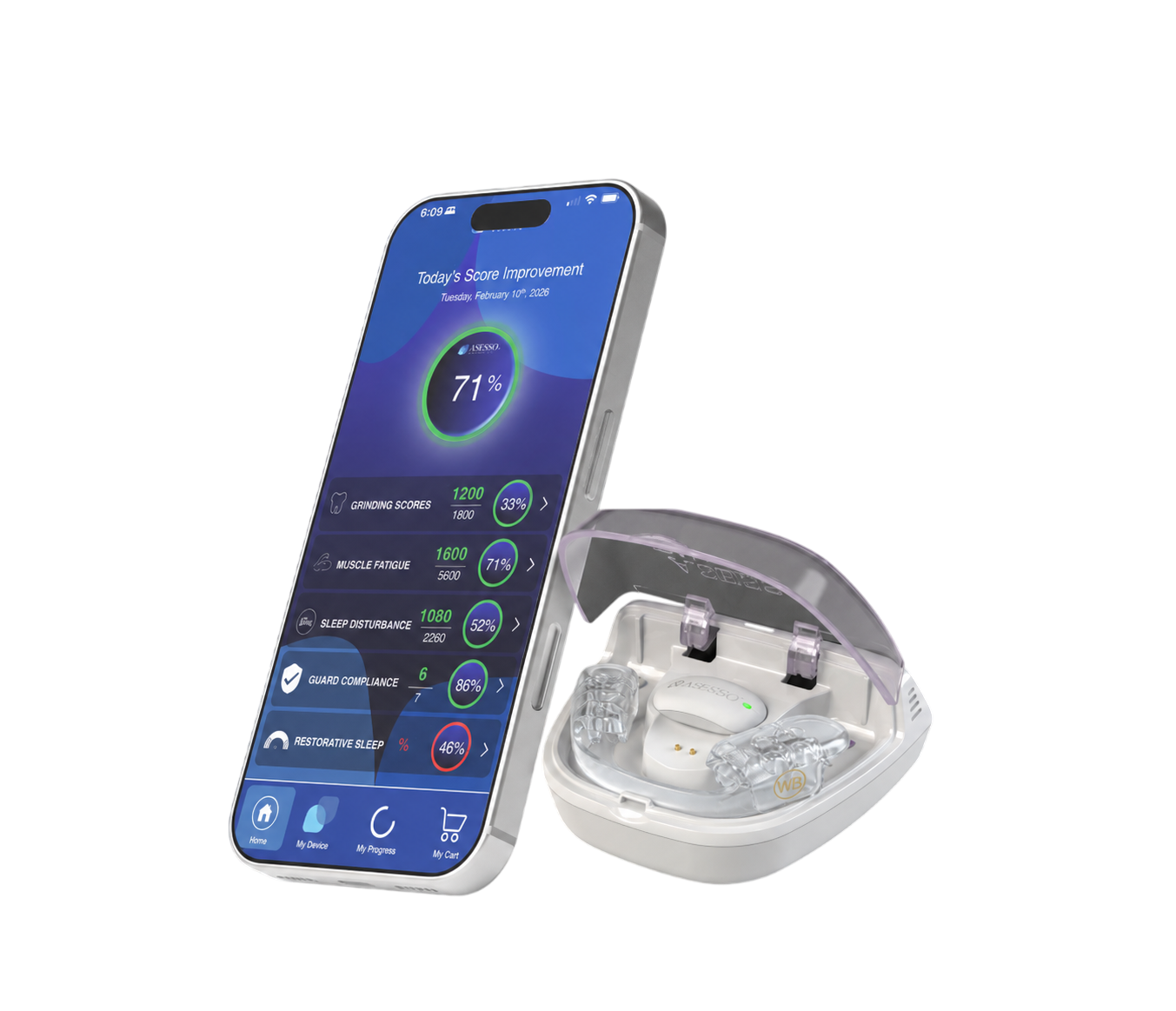
Wearable jaw and grinding trackers. Consumer and clinical-grade wearables capable of tracking jaw movement or muscle activity outside the dental office, potentially over multiple nights of actual sleep rather than a single in-office snapshot, represent a meaningful potential upgrade continuous, real-world data instead of a brief clinical exam. This mirrors a broader trend across medicine toward wearable, continuous monitoring rather than single-point-in-time assessments, though dental-specific wearables for this purpose are still an emerging category rather than a routine standard of care.
What This Means for Patients
Practically, this shift toward measurable, data-driven TMD care means a few real benefits as these tools become more widely adopted: more objective evidence behind a diagnosis rather than "the exam suggests X," treatment plans that can be more precisely matched to what's actually happening in your specific bite and muscles, and in many cases, faster turnaround from initial evaluation to an actual appliance in your mouth.
A Word of Caution: Technology Supports, Doesn't Replace, Clinical Judgment
It's worth being clear-eyed about this rather than overselling it: none of these tools diagnose TMD on their own. They generate data that an experienced clinician interprets alongside your history, symptoms, and exam findings. As covered throughout our other TMD content, the underlying evidence for many TMD treatments including which splint design works best for which patient remains genuinely mixed in the broader research literature, and better diagnostic data doesn't automatically resolve that; it gives clinicians better inputs to work with, not a guaranteed answer for every case.
Frequently Asked Questions
Is digital TMD diagnosis actually more accurate than a traditional exam?
It provides more objective, quantifiable data than a traditional exam alone for example, digital occlusal analysis can reveal force imbalances invisible to standard articulating paper. This generally supplements, rather than fully replaces, a clinician's exam and judgment, since interpreting the data still requires clinical expertise.
What is T-Scan, and how is it different from traditional bite-checking?
T-Scan is a digital occlusal analysis system that measures the timing, sequence, and relative force of tooth contacts in real time, unlike traditional articulating paper, which only shows where contact occurs without quantifying force or timing.
Does EMG testing hurt or require anything invasive?
No surface electromyography uses sensors placed on the skin over the jaw muscles to measure electrical activity, and it's a non-invasive, painless part of a diagnostic exam.
Can AI actually diagnose TMD on its own?
Not currently in routine clinical practice AI-assisted platforms are emerging as tools to help organize and analyze diagnostic data (imaging, jaw tracking, EMG) for clinicians, but diagnosis and treatment decisions remain the responsibility of the treating dentist.
Will same-day TMD treatment be available everywhere soon?
Availability depends on whether a specific practice has invested in the necessary digital scanning and fabrication equipment, so it's not universal yet, though the underlying technology enabling faster turnaround is increasingly accessible.
Are wearable devices for tracking jaw clenching or grinding reliable yet?
This is still an emerging category rather than an established clinical standard, so while the concept is promising for capturing real-world data over time, it's reasonable to treat current consumer wearables in this space with appropriate caution until more validation research is available.
Does more advanced diagnostic technology mean a more expensive TMD evaluation?
It can, since these tools represent real equipment and training investments for a practice, though the value lies in more precise diagnosis and potentially avoiding ineffective treatments worth discussing directly with your provider regarding cost.
How does joint vibration analysis (JVA) work?
JVA uses sensors placed over the jaw joints to detect and record vibrations associated with joint sounds, providing an objective, recordable signal instead of relying solely on what a clinician can hear or feel during a manual exam.
If my dentist doesn't have this technology, does that mean I'm getting worse care?
Not necessarily traditional clinical exam methods remain a valid, well-established basis for TMD evaluation and treatment. These digital tools add precision and objectivity, but a thorough traditional exam by an experienced clinician is still a legitimate standard of care.
Can digital diagnostic tools tell me exactly which type of night guard or splint I need?
They can provide more detailed data to inform that decision, but given how mixed the broader research evidence is on which splint type works best for which patient, the choice still involves clinical judgment informed by, not dictated by, the data.
Is CBCT imaging necessary for every TMD diagnosis?
No it's generally reserved for cases where the diagnosis is unclear from a clinical exam or when initial conservative treatment hasn't resolved symptoms, rather than a routine first step for every patient with jaw symptoms.
How can I ask my dentist whether they use any of these diagnostic tools?
It's reasonable to simply ask directly what tools they use for TMD evaluation and why, particularly if you've had inconclusive results from a purely clinical exam elsewhere or are dealing with a complex, hard-to-pin-down case.
WAKEBRIGHT | | While data-driven TMD diagnosis continues developing in research settings, the Wakebright Guard offers proven, evidence-based protection available today — ask your dentist how it fits your current treatment plan.
This article is for informational purposes only and does not constitute medical advice. Consult a licensed dentist or healthcare provider for diagnosis and treatment recommendations specific to your situation.
References
- Shopova, D. "Digital Occlusion Tracking by T-Scan Novus System in Bruxism Patients Treated With 3D Printed Occlusal Splints." International Journal of Dentistry, PMC, National Library of Medicine. https://www.ncbi.nlm.nih.gov/pmc/articles/PMC12041642/
- National Institute of Dental and Craniofacial Research. "TMD (Temporomandibular Disorders)." nidcr.nih.gov. https://www.nidcr.nih.gov/health-info/tmd
- Mayo Clinic. "TMJ disorders – Diagnosis and treatment." mayoclinic.org. https://www.mayoclinic.org/diseases-conditions/tmj/diagnosis-treatment/drc-20350945