The Connection Between TMJ and Migraines: What You Should Know

The Anatomical Connection: Why TMJ Dysfunction and Migraines Go Hand-in-Hand
Temporomandibular joint dysfunction (TMD) and migraines are connected through anatomy. The trigeminal nerve (cranial nerve V) is the primary pain pathway for both conditions. This nerve has three branches: the ophthalmic branch (forehead and eyes), the maxillary branch (midface and upper jaw), and the mandibular branch (lower jaw and teeth). The TMJ is innervated by the mandibular branch. The dura mater (the membrane surrounding the brain) is also innervated by trigeminal branches. When TMJ muscles are tense or the joint is inflamed, the mandibular branch sends pain signals along the same pathways the brain uses for migraines. Activation of the trigeminal nerve, whether from jaw muscle tension, joint inflammation, or primary migraine mechanisms, can trigger or amplify both conditions.
But the connection runs deeper than shared nerve anatomy. The trigeminal nerve is not simply a pain conduit; it is a complex neuromodulator that influences pain processing throughout the central nervous system. When chronically inflamed or overactive, it can sensitize the entire pain system, a process called central sensitization. This is why TMD patients often develop migraines or see their existing migraines worsen. The jaw dysfunction becomes a chronic irritant that keeps the trigeminal nerve activated, setting the stage for migraine episodes. Reduce TMJ inflammation and muscle tension, and trigeminal nerve activation decreases, reducing migraine susceptibility.
The real-world consequence: a patient with mild migraines might experience increased frequency and severity once TMD develops. Another patient who never had migraines might develop them after TMD takes hold. The jaw dysfunction is not the sole cause, but it is a significant contributing factor. Addressing TMD often produces measurable improvement in migraine frequency and severity, sometimes dramatically so. This is why a thorough migraine workup should include an assessment of the jaw and TMJ.
Referred Pain and Trigeminal Convergence: How Jaw Pain Feels Like Headache
Referred pain is pain felt in one location but arising from another. The classic example is heart attack pain felt in the left arm. With TMD and migraines, referred pain is remarkably common. Jaw muscle tension can create pain or pressure that radiates to the temples, forehead, or behind the eyes, which are classic migraine-like locations. This happens because trigeminal nerve fibers from the jaw and those from the head share relay centers in the brainstem. When the jaw branch is activated, the brain can mislocalize the pain to head regions. The result: patients report migraine-like pain that is actually referred jaw muscle pain, or genuine migraines that overlap with jaw pain.
Trigeminal convergence is the process where nerve fibers from different body regions converge on the same relay points in the central nervous system. When the jaw sends intense or frequent signals from muscle tension, joint inflammation, or bruxism, those signals arrive at the brainstem at the same relay points used by head pain pathways. The cumulative effect is amplification: the brain's pain-processing centers become hypersensitive to all trigeminal input, not just jaw pain. This sensitization makes the system more reactive, so smaller triggers produce larger pain responses. A patient might tolerate mild jaw tension without issue, but once TMD develops and chronic trigeminal activation begins, minor stressors that previously caused mild headaches can now trigger full migraines.
Practically, this means that treating jaw dysfunction with nightly muscle load reduction has measurable effects on migraine. Reducing trigeminal nerve activation from jaw sources quiets the entire system. Real-world data show that TMD patients who reduce jaw muscle stress often experience 20 to 50 percent reductions in migraine frequency within weeks to months. Not because the jaw was the sole cause, but because addressing one significant trigeminal contributor allows the entire system to settle.
Central Sensitization: From Local Jaw Pain to Widespread Pain Sensitivity
Central sensitization is the nervous system's tendency to increase its gain, to amplify pain signals, in response to chronic input. Picture a volume knob on your pain system. Normally it sits at a baseline level. With chronic jaw pain or TMD, the nervous system keeps turning the volume up. After weeks or months of persistent jaw signals, the brain's pain-processing centers become hypersensitive. Stimuli that would not normally trigger pain begin doing so. The pain threshold drops. Patients develop widespread pain sensitivity: headaches become more frequent, light touches feel painful, sound sensitivity develops, and smells become overwhelming.
This is why migraine and TMD so often occur together and why one condition worsens the other. TMD's chronic jaw muscle tension constantly activates the trigeminal nerve. That persistent input drives central sensitization. The nervous system becomes a hypersensitive alarm system, responding to minor trigeminal triggers (stress, hormonal changes, foods, weather) with massive pain responses. Meanwhile, the brain's own migraine mechanisms are amplified by the already-sensitized system. The jaw pain and migraines feed each other.
Breaking central sensitization requires addressing the chronically activated trigeminal inputs. This is why taking migraine medication without addressing TMD so often fails: you are not touching the peripheral driver (jaw dysfunction) that keeps the central system sensitized. If you reduce jaw muscle tension and joint inflammation, the chronic trigeminal input decreases. The nervous system's gain gradually returns to normal over weeks to months. Pain thresholds rise. Migraines become less frequent and less severe, not because the migraine mechanism itself changed, but because the underlying sensitization was reduced.
Clinical Evidence: What Research Shows About TMD and Migraine Overlap
The epidemiological data is striking: TMD patients have migraine prevalence rates roughly 2 to 3 times higher than the general population. In studies of chronic migraine patients, 60 to 80 percent have detectable TMJ abnormalities or jaw muscle dysfunction. This is not random; it is a consistent, biologically plausible relationship. The question is no longer whether TMD and migraines are related, but how to quantify the relationship and how much migraine improvement can be expected from TMD intervention.
Intervention studies show measurable benefits. When TMD patients receive treatment for jaw dysfunction (physical therapy, medication, or device-based intervention), migraine frequency improves in roughly 50 to 70 percent of patients. The magnitude of improvement varies. Some see 20 to 30 percent reductions; others see 50 to 80 percent reductions. The variation reflects individual differences: some patients have migraines driven substantially by TMD and see dramatic improvement with jaw treatment, while others have migraines with multiple causes where TMD is one factor among several. Across the board, addressing TMD produces measurable reductions in migraine burden.
Why the variation matters: migraine is multifactorial, involving stress, hormones, foods, sleep, genetics, and more. TMD is one modifiable risk factor. Patients with migraines from multiple causes benefit from addressing all factors, including stress management, sleep optimization, dietary triggers, and TMD treatment. But in patients where TMD is a significant contributor, addressing jaw dysfunction can produce remarkable migraine improvement.
How Bruxism Drives Both Jaw Pain and Migraines: The Sleep-Phase Amplifier
Bruxism, meaning teeth grinding and clenching during sleep, is a silent driver of both TMD and migraines. Each night, grinding forces stress the jaw joint and masseter muscles beyond normal limits. The muscles fatigue and develop microtrauma and inflammation. The joint's articular disc comes under sustained stress. The trigeminal nerve, which senses all of this damage and inflammation, becomes chronically activated. Over weeks and months, the cumulative damage produces TMD symptoms: jaw pain, limited opening, and clicking. The chronic trigeminal nerve activation produces central sensitization, creating the perfect substrate for migraines. Bruxism essentially sets both conditions in motion.
The sleep phase is critical because this is when the damage accumulates unimpeded. During waking hours, conscious control limits grinding; you notice it and stop yourself. But during sleep, the conscious mind is offline. Grinding continues unchecked for 6 to 8 hours. The forces involved are extraordinary, three to five times normal chewing load. Night after night, the jaw system is stressed by forces it was not designed to sustain continuously. This is why addressing sleep-phase jaw stress is the most powerful intervention available. Stop the nightly grinding, and you stop the primary driver of both TMD and migraine sensitization.
The parallel to other conditions is instructive: athletes cannot recover without sleep; patients with inflammatory conditions cannot heal without sleep; the nervous system cannot regulate pain without sleep. Sleep is when healing happens. But if sleep involves jaw grinding, you are actively damaging the TMJ and sensitizing the trigeminal nerve during the very hours when healing should be occurring. That is counterproductive. Address the grinding genuinely and consistently, and the cascade toward migraines and TMD is halted.
A Practical Framework for Addressing Both Conditions: Conservative to Targeted
For anyone managing both TMD and migraines, a practical framework guides treatment: start with interventions that address both conditions simultaneously (these are most efficient), then add targeted approaches for whichever condition remains problematic. Interventions that benefit both include stress management (reduces jaw tension and migraine triggers), sleep optimization (rests the jaw and allows nervous system recovery), posture correction (reduces jaw muscle load), and a soft diet during jaw flares (reduces inflammation). These are foundational starting points for anyone with both conditions.
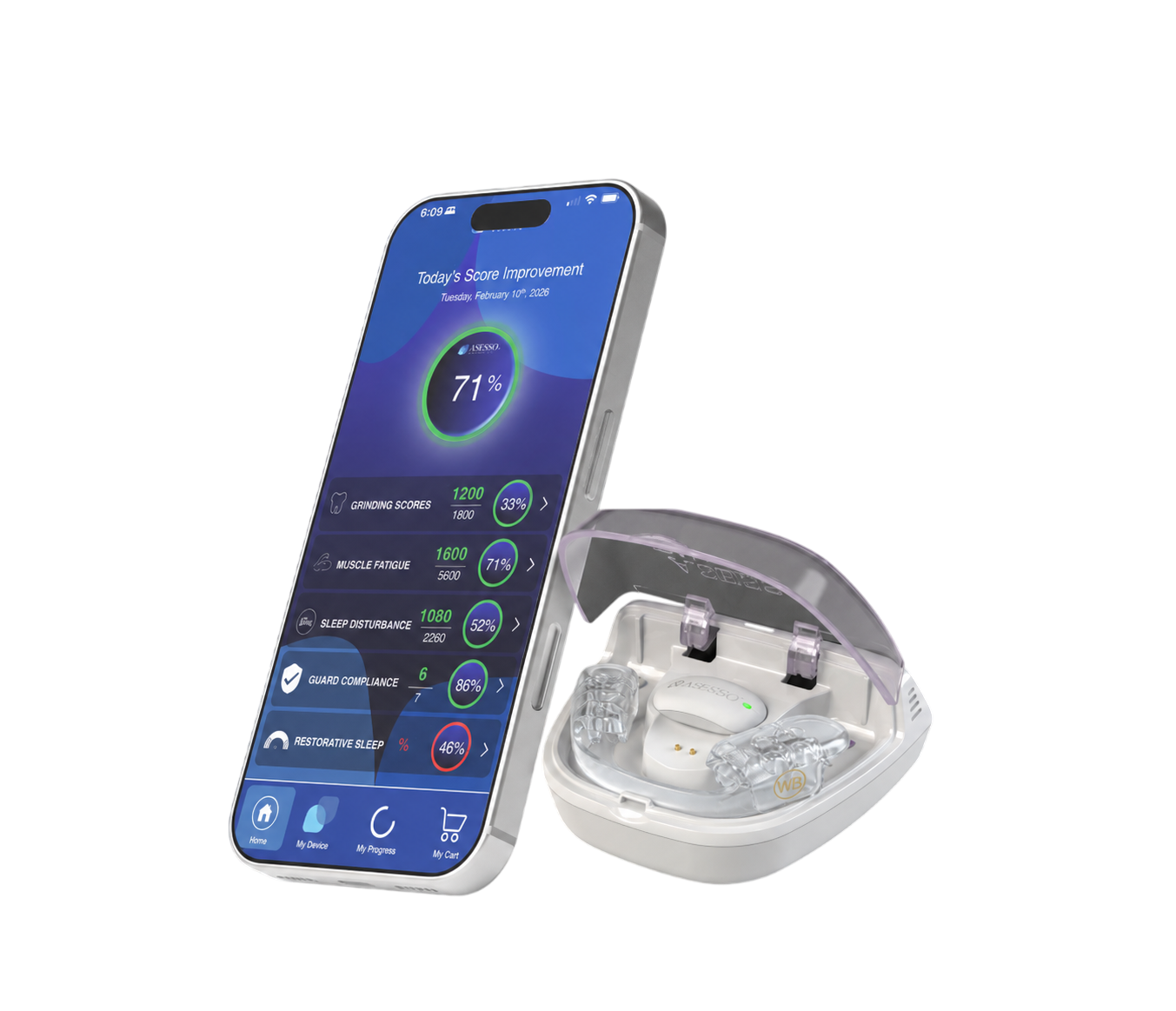
The next level is addressing the sleep-phase jaw stress driving both. This is where the Wakebright Grind Guard becomes critical. By reducing nightly grinding and clenching, it stops the primary damage from accumulating. Real-world experience shows that users implementing sleep-phase jaw repositioning see measurable improvements in both jaw pain and migraine frequency within weeks. The effect is consistent: fewer jaw symptoms, fewer migraines, reduced severity of both. This is because you have addressed the shared root cause, trigeminal nerve activation driven by jaw dysfunction.
Finally, targeted approaches for whichever condition remains problematic can be added. If migraines persist despite TMD improvement, migraine-specific treatments (medication, Botox, device-based interventions) become more likely to succeed because the peripheral trigeminal driver has been reduced. The nervous system is less sensitized and more responsive to migraine treatments. Similarly, if jaw dysfunction persists despite adequate stress management and sleep optimization, more advanced jaw treatments can be considered. But the foundational intervention, jaw muscle load reduction during sleep, should be the starting point because it addresses both conditions at once.
Beyond Pain Management: Restoring Function and Quality of Life
The goal of addressing the TMD-migraine connection is not just pain reduction; it is restoring function and quality of life. TMD patients often avoid solid foods, extensive speaking, or activities that trigger jaw pain. This restriction compounds over time: nutrition suffers, social engagement drops, exercise decreases. Migraine patients face similar limitations: they avoid light, sound, physical activity, and social situations during episodes, and fear of future attacks drives avoidance even between them.
Addressing the TMD-migraine connection restores this lost function. Patients report being able to eat without planning around jaw pain, speak without fatigue, exercise without triggering migraines, and engage socially without fear of episodes. The functional improvements often exceed the pain reduction itself. Going from "my life is limited by jaw pain and migraines" to "my jaw and migraines are basically not limiting my life" is transformational.
Wakebright Grind Guard users report exactly this progression. They begin using it primarily for jaw pain reduction, then notice migraine improvements, then realize their overall quality of life has lifted. They can eat preferred foods again, work a full day without jaw or migraine concerns, exercise regularly, and engage in activities they had avoided. It is not that jaw pain and migraines vanish completely, but their impact shrinks to a manageable level that no longer defines daily life. That shift from "my conditions control my life" to "my conditions are manageable" is the real win.
What You Can Do Now
TMD and migraines share anatomy: the trigeminal nerve innervates both the jaw and the pain pathways used by migraines.
Chronic jaw inflammation and muscle tension activate the trigeminal nerve, sensitizing the pain system (central sensitization) and increasing migraine frequency.
Referred pain from jaw muscles can feel like migraine-like headaches in the temples, forehead, or behind the eyes.
Epidemiological data: TMD patients have 2 to 3 times higher migraine prevalence; 60 to 80 percent of chronic migraine patients have TMJ abnormalities.
Addressing TMD reduces migraine frequency by 20 to 50 percent in most patients; when TMD is a major driver, improvements can reach 50 to 80 percent.
Bruxism (teeth grinding during sleep) drives both TMD and migraine sensitization by repeatedly stressing the jaw and activating the trigeminal nerve.
Jaw repositioning during sleep with the Wakebright Grind Guard reduces nightly grinding, reducing chronic trigeminal activation and measurably improving both jaw and migraine symptoms.
Frequently Asked Questions
Q: Can TMJ dysfunction actually cause migraines?
TMD does not directly cause migraines, but it significantly raises risk and frequency. Both conditions involve the trigeminal nerve. TMD's chronic jaw inflammation and muscle tension activate the trigeminal nerve, sensitizing the pain system to migraine triggers. Addressing TMD reduces migraine frequency in 50 to 70 percent of TMD patients.
Q: What percentage of migraine patients have TMJ problems?
Studies show 60 to 80 percent of chronic migraine patients have detectable TMJ abnormalities or jaw muscle dysfunction. Not all migraines are TMD-related, but TMD is a significant factor in a large proportion of migraine sufferers.
Q: How long does it take for jaw treatment to reduce migraines?
Initial improvements often appear within weeks as acute inflammation decreases. Measurable migraine frequency reduction typically appears within 4 to 8 weeks as jaw muscle health improves and central sensitization begins resolving. Full benefits may take 8 to 12 weeks.
Q: Can fixing TMJ completely eliminate my migraines?
In patients where TMD is a major driver, jaw treatment can reduce migraines by 50 to 80 percent. Migraines are multifactorial, however, so if other factors such as stress, hormones, foods, and sleep are significant, addressing them is equally important. Jaw treatment is one piece of the puzzle.
Q: Is the jaw pain I feel the same as my migraine headache?
No. Jaw muscle tension can create referred pain that feels like a headache in the temples, forehead, or behind the eyes but originates from the jaw. True migraines are a distinct neurological process. You can experience both simultaneously, which makes diagnosis tricky.
Q: Why does grinding my teeth at night cause migraines?
Grinding stresses the jaw joint and muscles, chronically activating the trigeminal nerve. This persistent activation sensitizes the pain system, making it more reactive to migraine triggers such as stress, hormones, and foods. Stop the grinding, and the nervous system's sensitivity gradually decreases.
Q: How does jaw repositioning during sleep help migraines?
By eliminating nightly grinding and clenching, jaw repositioning stops the chronic trigeminal nerve activation driving central sensitization. Reduced trigeminal input allows the pain system to normalize, raising migraine thresholds and reducing frequency.
WAKEBRIGHT | If you live with both TMJ dysfunction and migraines, you know how they feed each other. The good news is that they share a root cause: chronic jaw stress. Addressing that cause improves both. The Wakebright Grind Guard eliminates the nightly grinding that drives both conditions, often producing measurable migraine improvements within weeks. You do not have to choose between treating your jaw and treating your migraines. Address the shared root cause and see both improve together. Discover how jaw repositioning during sleep can reduce your migraine burden while resolving jaw dysfunction. This article is for educational purposes only and does not constitute medical or dental advice. Please consult a qualified healthcare provider for personalized guidance.