The Band-Aid on a Check Engine Light: Why Night Guards Treat Symptoms, Not Causes

Your check engine light comes on, so you put a piece of tape over it. The light's gone. The problem underneath absolutely is not. That's roughly what a night guard does for bruxism and it's worth saying plainly, because it's a genuinely useful device that a lot of patients quietly misunderstand. A night guard is one of the most effective tools in dentistry for protecting teeth from grinding damage. It is not a treatment for grinding itself. Those are two different claims, and mixing them up is why some patients wear a guard faithfully for years and still wonder why nothing seems to actually be getting better.
What a Night Guard Actually Does
To be clear from the outset: night guards work, for what they're designed to do. By creating a physical barrier between your upper and lower teeth, a properly fitted guard absorbs the force of grinding and clenching instead of letting that force wear down enamel, crack teeth, or damage crowns and fillings. That's real, measurable protection, and it's the right first step for most people who are actively grinding, regardless of what's causing it.
What a night guard does not do and this is the part that gets lost is stop the grinding. Ask any dentist directly, and the answer is consistent: a guard doesn't prevent the jaw muscles from contracting or the behavior from happening. It changes what that force lands on. Your jaw muscles still fire, your teeth still clench, and depending on the cause, you may still wake up with a sore jaw or a headache even with a perfectly fitted guard in place because the guard was never built to touch the actual mechanism producing the grinding.
Why This Distinction Actually Matters
This isn't a pedantic point. If bruxism has an underlying cause and it almost always does a guard that only protects the teeth leaves that cause completely untouched. Consider what's actually driving most grinding:
- Stress and anxiety, which the American Dental Association's own Health Policy Institute has tracked directly: in a 2021 survey, more than 70% of dentists reported an increase in patients grinding or clenching, tied specifically to pandemic-era stress.
- Sleep-disordered breathing, including obstructive sleep apnea, where research suggests grinding may function as a reflex response to a narrowing airway.
- Medications, particularly SSRIs, which have a documented association with new or worsened bruxism in a subset of patients.
- Neurological and other systemic factors, which are more the exception than the rule but do occur.
A night guard addresses none of these. It can't reduce your stress level, open a narrowed airway, or change how a medication interacts with your dopamine system. It just makes sure that whatever is happening doesn't cost you your enamel while you figure out what's actually going on.
Why the "Just Wear a Guard" Approach Falls Short
This is the practical consequence of treating bruxism as a purely dental problem: patients get a guard, the visible symptom the wear, the damage stops accumulating, and the case quietly gets closed. But if the underlying driver was undiagnosed sleep apnea, or a medication side effect nobody flagged, or unmanaged chronic stress, none of that goes away. It's just no longer showing up on your teeth, which is exactly the "check engine light" problem: the warning signal is gone, but the engine is still running however it was running before.
Some patients notice this gap directly; they wear their guard consistently and still wake up with jaw pain, headaches, or fatigue, because those symptoms were never coming from tooth-on-tooth contact in the first place. They were coming from muscle activity and, in some cases, the disrupted sleep underneath it. A guard that's protecting teeth beautifully can still leave a patient feeling like nothing has actually improved.
What Root-Cause Treatment Actually Looks Like
None of this means skip the night guard it means don't stop there. A more complete approach starts with the same protective step and adds an honest look at what's driving the grinding:
- Rule out or confirm a sleep-related cause. If you have signs of snoring, disrupted sleep, or daytime fatigue alongside grinding, that's worth raising with your dentist and potentially getting evaluated for sleep-disordered breathing rather than assuming stress is the whole story.
- Review medications with your prescriber. If grinding started or worsened after beginning a new medication SSRIs are the most commonly implicated that timing is worth flagging, not silently working around.
- Take stress seriously as a clinical factor, not just a lifestyle footnote. Given how directly stress and bruxism track together in the data, addressing chronic stress through whatever combination of tools actually works for you, from therapy to basic sleep hygiene to daytime relaxation practice is treatment, not self-help.
- Keep wearing the guard the whole time. Root-cause work often takes weeks or months. The guard's job is to make sure your teeth survive that process intact while the rest of it gets sorted out.
Comparing the Two Approaches
| Guard Alone | Guard + Root-Cause Approach | |
|---|---|---|
| Protects teeth from wear | Yes | Yes |
| Addresses jaw muscle activity itself | No | Partially, depending on cause |
| Resolves morning jaw pain/headaches | Sometimes, if purely mechanical | More likely, if the actual driver is addressed |
| Requires ongoing use | Indefinitely, regardless of cause | Potentially reduces over time as cause is managed |
| Treats stress, airway, or medication factors | No | Yes |
Why "Just Get a Guard" Became the Default
It's worth understanding why this gap exists in the first place, rather than treating it as an oversight. A night guard is something a dentist can diagnose, fabricate, and deliver entirely within a single practice, on a predictable timeline, using tools dentistry has refined for decades. Identifying and managing an underlying cause a sleep study, a conversation with a prescribing physician, sustained stress management often means coordinating outside the walls of a dental office, on a timeline nobody fully controls. One of those paths is simply more straightforward to execute, and it's not surprising that it became the default.
That's a structural explanation, not an excuse. It means the responsibility for asking the harder "why" question sometimes falls more on the patient than it should which is exactly why it's worth asking directly, even if your dentist doesn't raise it first.
This Isn't a Knock on Night Guards
It's worth being direct here: none of this is an argument against getting a night guard, or a suggestion that it's a lesser form of care. For active grinding, it's genuinely the right first move in nearly every case you protect the teeth while you figure out the rest, not after. The point isn't that guards are inadequate; it's that "guard" and "treatment" aren't interchangeable words, and a patient who understands the difference is in a much better position to ask their dentist the follow-up question that actually matters: okay, but why am I grinding in the first place?
When to Push for That Follow-Up Conversation
It's worth explicitly asking your dentist about underlying causes not just accepting a guard and moving on if:
- You're still waking up with jaw pain, headaches, or fatigue despite consistent guard use
- Your grinding started or noticeably worsened around a specific life event, new medication, or health change
- You snore, wake up gasping, or have been told you seem to stop breathing during sleep
- Your grinding has been going on for years without any conversation about why
A good dentist will welcome that question. Root-cause bruxism management genuinely isn't a solo dental job in a lot of cases it often means coordinating with a physician, a sleep specialist, or addressing stress directly, and a dentist who takes the "why" seriously is doing the more complete version of the job.
Frequently Asked Questions
Does a night guard actually stop teeth grinding?
No. A night guard protects your teeth from the damage caused by grinding, but it doesn't stop the grinding behavior or the muscle activity behind it. Addressing the underlying cause is what actually reduces grinding itself.
If my night guard is working, why do I still wake up with jaw pain?
Because a guard protects your teeth, not necessarily your jaw muscles or whatever's driving the grinding in the first place. If the underlying cause is stress, an airway issue, a medication is still active, jaw pain and headaches can persist even with excellent tooth protection.
Is it pointless to keep wearing a night guard if it's not fixing the root cause?
No it's still doing important, separate work: preventing irreversible tooth damage while the underlying cause gets identified and addressed. Stopping the guard while the cause is still active just removes protection without solving anything.
What are the most common underlying causes of bruxism that a guard doesn't address?
Stress and anxiety, sleep-disordered breathing (including sleep apnea), certain medications (particularly SSRIs), and less commonly, neurological or other systemic factors.
How do I know if stress is actually causing my grinding?
Timing is often the biggest clue grinding that started or worsened during a stressful period, or that fluctuates with your stress level, points toward a stress-related driver. Your dentist can help evaluate this alongside other possible causes.
Should I ask my dentist why I'm grinding, or is that overstepping?
It's a completely reasonable and encouraging question. A dentist focused only on fitting a guard without discussing potential causes is giving you half the picture asking "why" is a normal part of thorough bruxism care.
Can treating the root cause mean I eventually won't need a night guard?
Possibly, if the underlying cause resolves or is successfully managed for example, temporary high-stress periods that pass, or a medication that gets switched. But this varies by individual, and any change to guard use should be confirmed with your dentist rather than assumed.
Is it my dentist's job to find out why I'm grinding, or my doctor's?
Often both. Dentists are well positioned to assess dental damage and screen for likely causes, but airway issues, medications, and significant stress or anxiety frequently benefit from coordination with a physician, sleep specialist, or mental health provider.
Does this mean over-the-counter night guards are a bad option?
Not necessarily for protection, but the core point applies regardless of guard type even a well-fitted custom guard doesn't address why you're grinding. The type of guard affects fit and durability, not whether root-cause treatment is still needed.
How long does it typically take to identify what's causing bruxism?
It varies widely depending on the cause a clear medication link might be identified quickly, while an airway evaluation or addressing chronic stress can take longer. Consistent guard use in the meantime protects your teeth throughout that process.
What You Can Do Now
- A night guard protects your teeth from grinding damage but doesn't stop the grinding itself
- If an underlying cause like stress, an airway issue, or a medication is still active, symptoms can persist even with a well-fitted guard
- Keep wearing the guard while the underlying cause gets identified and addressed
- Ask your dentist directly why you're grinding, not just how to protect against it
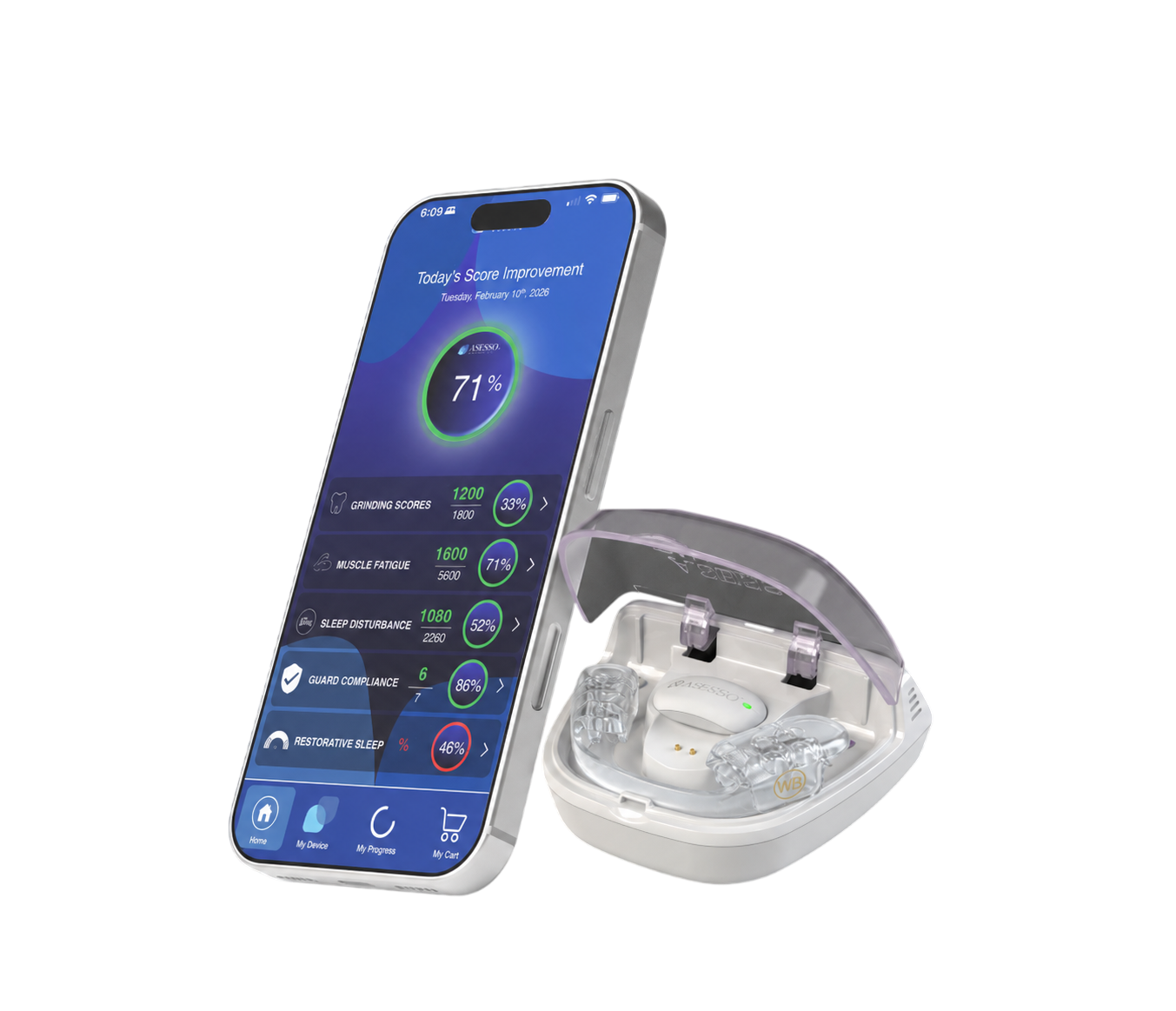
**WAKEBRIGHT | **The Wakebright Guard is designed to reduce jaw muscle load while you and your dentist work through the root cause protection and root-cause care, together.
This article is for informational purposes only and does not constitute medical advice. Consult a licensed dentist or healthcare provider for diagnosis and treatment recommendations specific to your situation.
References
- American Dental Association. "New survey finds stress-related dental conditions continue to increase." ada.org. https://www.ada.org/about/press-releases/2021-archives/new-survey-finds-stress-related-dental-conditions-continue-to-increase
- ADA News. "HPI poll: Dentists see increased prevalence of stress-related oral health conditions." adanews.ada.org. https://adanews.ada.org/ada-news/2021/march/hpi-poll-dentists-see-increased-prevalence-of-stress-related-oral-health-conditions
- Sleep Foundation. "The Connection Between Sleep Apnea and Teeth Grinding (or Bruxism)." sleepfoundation.org. https://www.sleepfoundation.org/sleep-apnea/link-between-sleep-apnea-and-teeth-grinding