The 70% Overlap: New Data on Bruxism and TMD Co-Occurrence in North America

A 2025 meta-regression analysis put a striking number on something clinicians have long suspected: bruxism and temporomandibular disorders (TMD) don't just occasionally overlap in North America specifically, the data shows them co-occurring in roughly 70% of the cases studied. That's a dramatically higher rate than any other region analyzed. Here's what the study actually found, what it doesn't prove, and where the number needs a caveat attached.
The Study Behind the Number
Published in Dental and Medical Problems in 2025, this meta-regression analysis synthesized data from six prior meta-analyses and systematic reviews, pulling in 30 individual studies covering 31 populations and a combined 37,680 participants of whom 5,117 were diagnosed with both bruxism and TMD. The researchers used a statistical technique called meta-regression to formally test whether region, sex, age, and study year predicted how often the two conditions showed up together.
Two Different Numbers, Easy to Conflate
This study actually reports two related but distinct measures, and it's worth keeping them separate:
1. Co-occurrence in the general population studied how often bruxism and TMD showed up together across all participants, bruxers and non-bruxers alike. Globally, this was 17.1%. Broken down by region:
- North America: 69.8% (the "70%" headline figure)
- South America: 24.1%
- Europe: 13.7%
- Asia: 9.4% (lowest)
2. TMD prevalence specifically among people who already have bruxism a conditional measure, answering "if someone has bruxism, how likely are they to also have TMD?" Globally, this was 63.5%. By region:
- North America: 98.3% (nearly universal, in this dataset)
- Europe: 62.2%
- South America: 55.5%
- Asia: 53.9% (lowest)
Both measures point the same direction a strong bruxism-TMD connection, most pronounced in North America but they answer different questions, and conflating them overstates what either one shows on its own.
The Honest Caveat: Small Sample Behind the North America Figure
This is the single most important nuance in the entire study, and it's worth stating plainly: the North America co-occurrence figure is based on only 2 individual studies. The researchers themselves flagged this directly, noting it limits how confidently the finding can be generalized. A striking number built on a thin evidence base is still worth reporting especially since the study's authors were transparent about the limitation rather than burying it but "70% in North America" shouldn't be repeated as a settled, robust fact the way, say, the much larger European estimate (based on 15 studies) reasonably could be.
There's a second statistical wrinkle worth knowing: when the researchers tested whether the TMD-prevalence-among-bruxers figures actually differed significantly across continents, the result didn't reach statistical significance (p = 0.098), despite North America's point estimate looking dramatically higher (98.3% vs. 53-62% elsewhere). That doesn't mean the regional difference isn't real it may simply reflect limited data but it's a meaningful piece of the honest picture that a headline number alone wouldn't tell you.
What Actually Predicted the Overlap
The meta-regression didn't just report regional differences it tested what factors statistically explained them. Two findings stood out:
Sex was a significant predictor. A 1% increase in the proportion of female participants in a given study was associated with a 4.4% increase in the probability of bruxism-TMD co-occurrence. This tracks with broader research showing TMD affects women more than men, and suggests at least part of the regional variation may reflect differences in study populations' sex composition rather than purely geography.
Age and study year were not significant predictors. The researchers specifically tested whether the year a study was conducted, or the average age of participants, explained variation in co-occurrence neither did. This is a useful negative finding: it suggests the regional pattern isn't simply an artifact of older studies or particular age groups being overrepresented in certain regions.
What This Study Doesn't Establish
The researchers were direct about this in their own discussion, and it's worth carrying that honesty into how this data gets used:
- It doesn't prove bruxism causes TMD, or vice versa. Co-occurrence describes a statistical association, not a causal mechanism.
- It doesn't distinguish sleep bruxism from awake bruxism a real limitation, since the underlying reviews didn't consistently separate the two types, and other research (covered below) suggests they may relate to TMD differently.
- It treats TMD as one condition, when clinically it covers a range of distinct disorders muscle-based pain, joint-based pathology, and others that may each relate to bruxism differently. The study's authors explicitly flagged this as a limitation.
- Nearly all subgroups showed extremely high statistical heterogeneity (often 95%+ I² statistic), meaning the individual studies feeding into each regional estimate varied enormously in method and findings a sign to treat any single pooled number as a rough signal rather than a precise, stable fact.
A Genuine Scientific Debate Underneath This Data
One more layer of nuance the study itself surfaces: research using self-reported or clinically diagnosed bruxism has fairly consistently found a positive association with TMD pain. But studies using objective, instrument-based measurement polysomnography or surface electromyography have often found a weaker association, or none at all, between sleep bruxism specifically and TMD. Several polysomnography studies cited in this research found no meaningful difference in TMD rates between people who objectively grind their teeth during sleep and those who don't.
Separately, at least one comparative study found that awake bruxism specifically is more strongly linked to jaw pain and functional limitation than sleep bruxism is suggesting the two subtypes may not carry equal weight in driving TMD risk, even though this meta-regression analysis (due to its source data) couldn't separate them.
Comparing the Key Figures
| Measure | Global | North America | Notes |
|---|---|---|---|
| Bruxism + TMD co-occurrence (general population) | 17.1% | 69.8% | North America based on only 2 studies |
| TMD prevalence among bruxism patients | 63.5% | 98.3% | Regional difference not statistically significant (p=0.098) |
| Effect of higher female study proportion | +4.4% co-occurrence per 1% increase | Statistically significant predictor | |
| Effect of study year or participant age | None found | Not significant predictors |
What This Means Practically
If you have bruxism, this research is a reasonable, evidence-backed reason to ask your dentist whether TMD symptoms, jaw pain, clicking, restricted movement should be part of your evaluation, even if you haven't noticed them yet, particularly given how commonly the two co-occur in this dataset. It's not, however, a reason to assume TMD is inevitable if you grind your teeth, or that one condition is definitely causing the other. The honest takeaway is that the two are statistically linked, more so in North America than elsewhere in this data, and less certainly than the headline number alone might suggest given the small North American sample.
Frequently Asked Questions
Is it true that bruxism and TMD co-occur 70% of the time in North America?
A 2025 meta-regression study found a 69.8% co-occurrence rate in North American study populations, but this figure is based on only 2 individual studies, which the researchers themselves flagged as a limitation on how confidently it can be generalized.
Does having bruxism mean I'll also develop TMD?
Not necessarily. The data shows a strong statistical association, particularly in North America, but the study doesn't establish that bruxism causes TMD, and the relationship between the two conditions remains genuinely debated in the research community.
Why is North America so different from other regions in this data?
The study doesn't fully explain why, though it identified the proportion of female participants in study samples as a significant factor, and suggested geographical, ethnic, genetic, or hormonal influences may play a role but the small North American sample (2 studies) limits how confidently any explanation can be drawn.
Does sex affect the likelihood of having both bruxism and TMD?
Yes — the study found that a higher proportion of female participants in a study sample significantly increased the likelihood of bruxism-TMD co-occurrence, consistent with broader research showing TMD affects women more than men.
Is sleep bruxism or awake bruxism more strongly linked to TMD?
This specific study didn't distinguish between the two types due to limitations in its source data, but separate research has suggested awake bruxism may be more strongly linked to TMJ pain and functional limitation than sleep bruxism is.
Do objective measurements (like sleep studies) support the bruxism-TMD link as strongly as self-reported studies do?
Not consistently several polysomnography-based studies have found weaker or no association between sleep bruxism and TMD, in contrast to the more consistent positive association found in self-report and clinical-diagnosis-based studies.
What does "TMD prevalence among bruxism patients" actually mean?
It's a conditional statistic specifically, of people who already have bruxism, what percentage also have TMD. This is different from "co-occurrence in the general population," which includes both bruxers and non-bruxers in the total.
Why does this study say age and study year don't matter, when other bruxism research emphasizes age effects?
This particular analysis tested whether age or year explained differences in co-occurrence rates specifically, and found neither did this doesn't contradict other research on how bruxism prevalence itself changes with age, since it's answering a different question.
Should I be concerned that most of these findings show high statistical "heterogeneity"?
It's a legitimate reason for caution high heterogeneity means the underlying studies varied substantially in method and results, so pooled figures should be treated as general signals rather than precise, stable facts.
What should I actually do with this information as a patient?
It's a reasonable prompt to ask your dentist whether a TMD evaluation should be part of your bruxism care, especially if you're in North America, but it shouldn't be treated as a guarantee that you have or will develop TMD simply because you grind your teeth.
What You Can Do Now
- A 2025 meta-regression study found bruxism and TMD co-occurring in 70% of North American cases studied
- That headline figure rests on only 2 underlying studies a real limitation the researchers themselves flagged
- The broader, better-supported finding is a meaningful statistical link between the two conditions, more pronounced in North America
- The field still debates how strong the link is once you look past self-reported data toward objective measurement
- If you grind your teeth, this is a reasonable prompt to ask about TMD screening not a reason to assume the worst
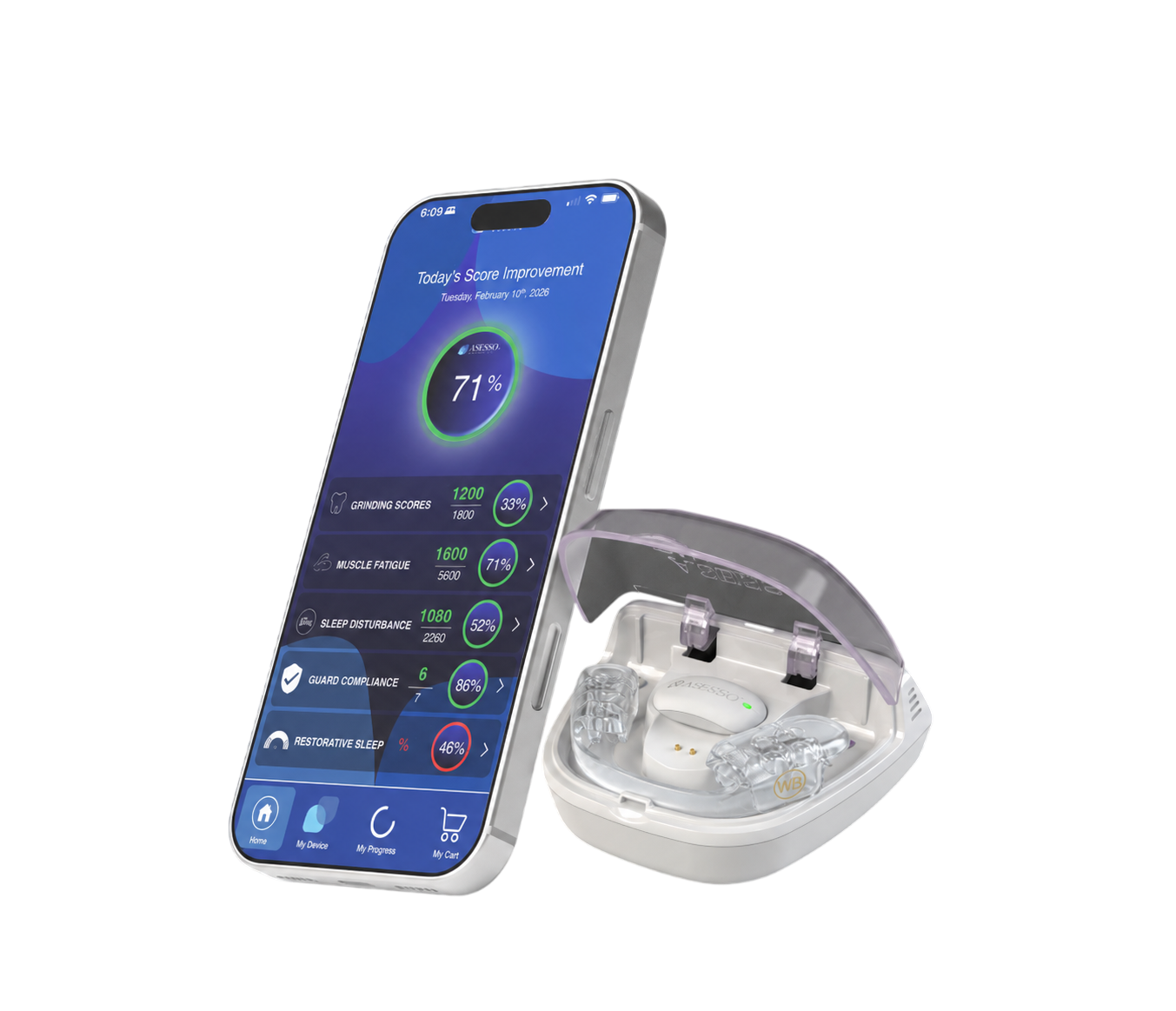
WAKEBRIGHT | If bruxism and jaw pain are showing up together for you, the Wakebright Guard is designed to ease jaw muscle tension while you and your dentist evaluate whether TMD is part of the picture.
References
- Zieliński, G., Pająk-Zielińska, B., Pająk, A., Wójcicki, M., Litko-Rola, M., Ginszt, M. (2025). "Global co-occurrence of bruxism and temporomandibular disorders: A meta-regression analysis." Dental and Medical Problems, 62(2), 309-321. DOI: 10.17219/dmp/201376. https://dmp.umw.edu.pl/en/article/2025/62/2/309/
- Global prevalence of temporomandibular disorders: a systematic review and meta-analysis. Journal of Oral & Facial Pain and Headache (2025). https://www.jofph.com/articles/10.22514/jofph.2025.025
- Global Prevalence of Sleep Bruxism and Awake Bruxism in Pediatric and Adult Populations: A Systematic Review and Meta-Analysis. Journal of Clinical Medicine (2024). https://pmc.ncbi.nlm.nih.gov/articles/PMC11278015/
This article is for educational purposes only and does not constitute medical or dental advice. Please consult a qualified healthcare provider for personalized guidance.