Temple Headache: What It Is, Causes, and Symptoms

Understanding Temple Headaches
A temple headache is a common form of localized head pain centered on one or both temples, the area just above and in front of your ears. The pain typically ranges from mild throbbing to severe pounding and may come with pressure, tightness, or a squeezing sensation around the temple region. Many people experience temple headaches as isolated episodes, while others deal with chronic, recurring pain that significantly affects daily life, sleep quality, and work performance.
The temples are a focal point for multiple muscle groups, including the temporalis, a large, fan-shaped muscle that attaches to the temporal bone and plays a critical role in jaw clenching and chewing. When this muscle contracts persistently due to stress, tension, or nighttime bruxism (teeth grinding), the surrounding tissue becomes inflamed and tender, triggering the distinctive temple pain pattern. Understanding the anatomy behind temple headaches is the first step toward identifying the root cause and finding effective relief.
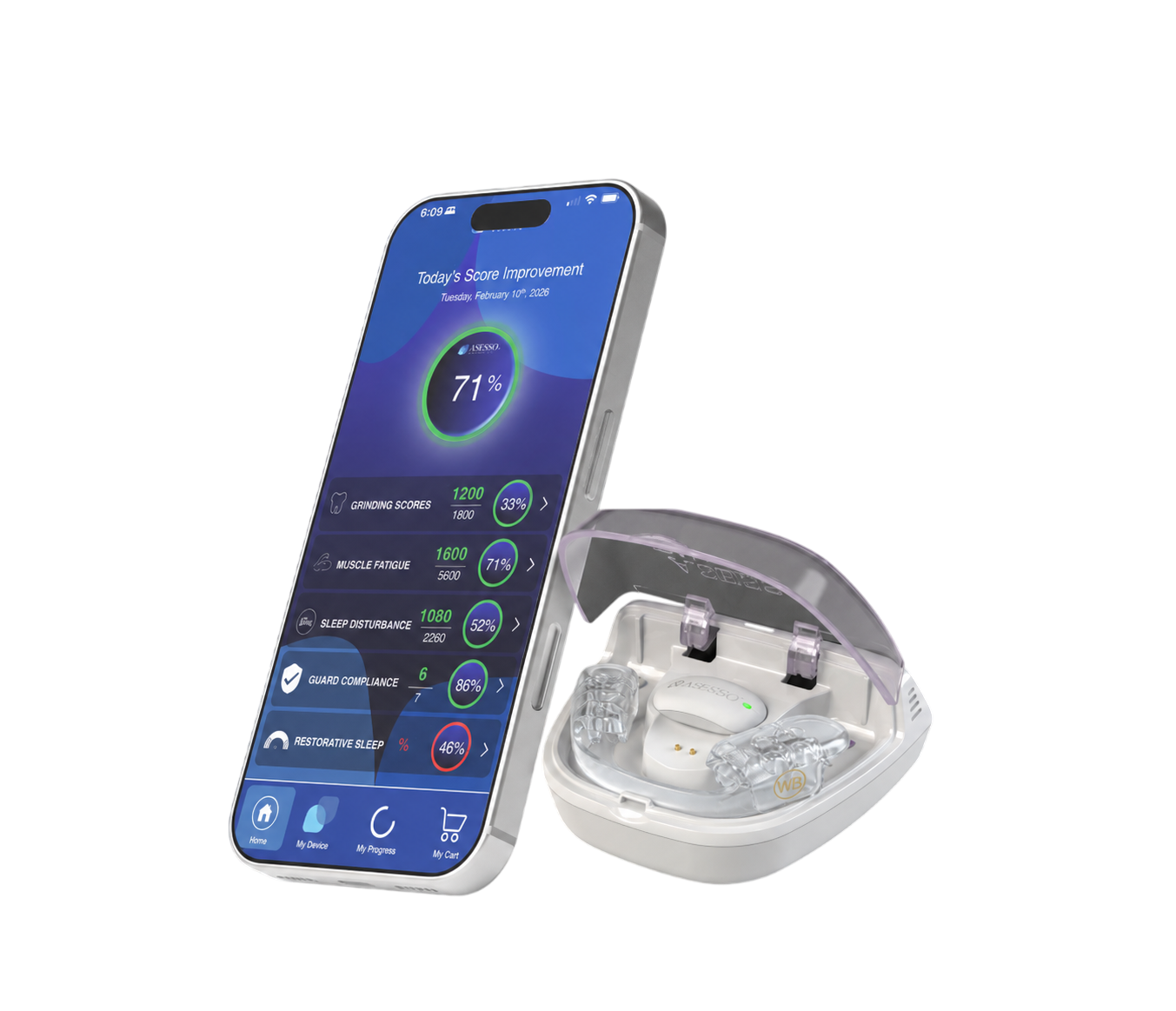
Temple headaches often go underdiagnosed because people attribute them to general stress or tension rather than jaw-related mechanics. Many sufferers reach for ice packs, pain relievers, or neck stretches without addressing the underlying jaw muscle overload. This incomplete approach may bring temporary relief but rarely breaks the chronic cycle. The Wakebright Grind Guard works by reducing the mechanical load on the jaw muscles during sleep, when many people unconsciously intensify their clenching patterns.
Research on jaw-related pain has shown that muscle-driven tension headaches represent a significant portion of recurring temple pain cases. When jaw muscles remain contracted for hours each night, they develop trigger points, small knots of tension that radiate pain to the temples, forehead, and behind the eyes. Addressing this mechanical root cause offers a sustainable path to reducing both the frequency and intensity of temple headache episodes.
The Anatomical Role of the Temporalis Muscle
The temporalis is one of the body's most powerful muscles relative to its size. It spans from the temple area down to the jawbone and contracts forcefully every time you chew, clench your teeth, or hold tension in your jaw. The muscle fibers fan outward like a spread hand, which means tension in one area can radiate pain across the entire temple region and even toward the forehead.
When you clench your teeth, whether consciously during stress or unconsciously at night, the temporalis contracts isometrically (without movement), holding a fixed position for extended periods. During sleep, many people increase their clenching force significantly, sometimes generating pressures exceeding 200 pounds per square inch. That sustained contraction over 6 to 8 hours nightly can lead to muscle fatigue, trigger point development, and persistent temple pain on waking.
The temporalis is densely packed with sensory nerve endings, making it exquisitely sensitive to tension and fatigue. When trigger points develop within this muscle, they produce referred pain, discomfort that appears in a different location from where the trigger point originates. This explains why you might feel sharp temple pain even when the primary muscle tension is actually in the jaw.
More than 20 years of real-world data shows that people using the Wakebright Grind Guard experience a measurable reduction in temporalis muscle tension during sleep. By repositioning the jaw to a more relaxed, neutral position, the guard lowers the mechanical load on the temporalis and allows it to relax more fully through the night. That consistent reduction translates into fewer and less intense temple headaches over weeks and months of regular use.
Common Causes of Temple Headaches
Temple headaches have multiple potential causes, but jaw muscle tension remains one of the most underrecognized drivers. While stress, dehydration, caffeine withdrawal, and certain foods can trigger headaches, many recurring temple headaches stem from nocturnal teeth grinding and jaw clenching. The challenge is that people often attribute morning temple pain to sleep position or mattress quality, missing the jaw mechanics entirely.
Bruxism (teeth grinding) and jaw clenching are amplified by stress, sleep disorders like sleep apnea, and stimulating substances such as caffeine or certain medications. When you grind or clench at night, the temporalis and masseter muscles work continuously at high intensity, similar to exercising without rest. By morning these muscles are fatigued and inflamed, producing the characteristic temple headache that eases gradually as the day progresses.
Malocclusion (misaligned bite) is another structural factor that can perpetuate temple headaches. When the upper and lower teeth do not meet evenly, the jaw adopts a compensatory clenching pattern to stabilize itself. This unbalanced muscle activation creates localized tension in the temples. The Wakebright Grind Guard's design addresses this by promoting a more balanced, neutral jaw position during sleep, reducing compensatory clenching.
Postural factors such as forward head posture from computer work or smartphone use can also worsen temple headaches by shifting the mechanical load onto the jaw and neck muscles. Posture alone, however, rarely accounts for the full intensity of chronic temple pain; jaw muscle tension amplifies the problem. Addressing jaw mechanics through evidence-based tools like the Wakebright Grind Guard provides a direct, sustainable intervention that works alongside posture correction.
The Wakebright Approach to Reducing Temple Pain
The Wakebright Grind Guard was designed with more than 20 years of real-world experience to address the root mechanical cause of jaw muscle-driven pain. Rather than masking symptoms with medication, the guard repositions the jaw to a neutral, relaxed position during sleep. This simple mechanical shift dramatically reduces the load on the temporalis and masseter muscles, allowing them to rest and recover throughout the night.
Think of jaw muscle tension like a grip you hold all day and all night without releasing it. If you clutch a tennis ball tightly in your hand from 8 PM to 6 AM, your hand will ache by morning. The Wakebright Grind Guard works like a rest device for your jaw: it encourages the jaw muscles to relax and hold a neutral position, giving them the recovery time they need. Users report noticing a reduction in morning temple tension within 1 to 2 weeks and meaningful improvement in headache frequency within 4 to 6 weeks.
The guard's design incorporates ergonomic principles based on how jaw muscles naturally relax. By holding the jaw in a slightly forward, unstrained position, it prevents the compensatory clenching that drives temple pain. The mechanism is straightforward: less muscle tension during the 8-hour sleep window equals measurable pain reduction during waking hours.
Clinical observations and user feedback spanning two decades show that people using the Wakebright Grind Guard experience fewer morning headaches, reduced temple tenderness, and improved daytime jaw comfort. Many users report being able to reduce or stop pain medication as their temple headaches diminish. The approach is non-invasive, non-pharmaceutical, and targets the mechanical root cause rather than the symptom alone.
What You Can Do Now
Temple headaches often stem from jaw muscle tension and nocturnal bruxism rather than general stress alone.
The temporalis muscle, which controls jaw movement, attaches to the temple area and is highly sensitive to tension and fatigue.
Persistent jaw clenching during sleep can generate intense pressure and produce trigger points that radiate pain to the temples.
The Wakebright Grind Guard reduces temple headaches by mechanically unloading the jaw muscles during sleep, allowing them to recover.
Users typically notice reduced morning temple tension within 1 to 2 weeks and significant headache reduction within 4 to 6 weeks.
Combining the Grind Guard with stress management and jaw relaxation exercises maximizes results.
Frequently Asked Questions
Q: Can jaw clenching really cause temple headaches?
Yes. The temporalis muscle, which controls jaw movement, attaches directly to the temple area. When jaw muscles remain contracted for extended periods, especially at night during teeth grinding, they develop tension and trigger points that radiate pain to the temples. Addressing jaw muscle load is a direct way to reduce temple headaches.
Q: What's the difference between temple headaches and migraines?
Temple headaches are typically localized, throbbing pain in the temple region caused by muscle tension or jaw mechanics. Migraines are usually one-sided, pulsating headaches often accompanied by nausea, light sensitivity, or aura. Many people experience both; if jaw tension is worsening your headaches, the Wakebright Grind Guard can help reduce that mechanical component.
Q: How does the Wakebright Grind Guard reduce temple headaches?
The guard repositions the jaw to a neutral, relaxed position during sleep, which reduces the mechanical load on the temporalis muscle and prevents compensatory clenching. With 8 hours of reduced muscle tension each night, the jaw muscles recover more fully, and temple headache frequency and intensity decrease significantly.
Q: How long does it take to notice a reduction in temple headaches?
Most users report reduced morning temple tension within 1 to 2 weeks of consistent use. Measurable improvements in headache frequency typically appear within 4 to 6 weeks. Results vary based on the severity of initial muscle tension and individual response to the mechanical support.
Q: Are there other ways to reduce jaw tension and temple pain?
Yes. Stress management, jaw relaxation exercises, heat therapy, and postural correction all help. These approaches work best when combined with the Wakebright Grind Guard's mechanical support during sleep, which addresses the root cause of nocturnal muscle overload.
Q: Can temple headaches caused by other factors be helped by the Wakebright Grind Guard?
The Grind Guard is most effective for headaches driven by jaw muscle tension and bruxism. If your temple headaches stem primarily from dehydration, caffeine withdrawal, or other non-jaw factors, the guard will not directly address those causes. However, many people have multiple contributing factors, and reducing jaw tension is often a key piece.
Q: Is the Wakebright Grind Guard safe to wear every night?
Yes. The Grind Guard is designed for nightly use over extended periods. It is non-invasive, holds the jaw in a naturally relaxed position, and supports gentle, passive muscle recovery. More than 20 years of real-world use demonstrates excellent safety and tolerability, including for chronic nightly use.
WAKEBRIGHT | If you experience frequent temple headaches, especially ones that feel worse in the morning, jaw muscle tension may be the underlying cause. The Wakebright Grind Guard offers a non-invasive, proven approach to reducing that mechanical load during sleep. With more than 20 years of real-world use, the Grind Guard has helped thousands of people reduce their temple headache frequency and reclaim pain-free mornings. Explore how the Wakebright Grind Guard can work for you and take the first step toward lasting relief. This article is for educational purposes only and does not constitute medical or dental advice. Please consult a qualified healthcare provider for personalized guidance.