Sleeping Bruxism Treatment Market: Growth Trends & Solutions (2026–2031)

Sleep bruxism treatment has changed more in the last several years than in the previous few decades combined not because the condition itself is new, but because the tools for diagnosing and managing it have genuinely improved. If you're researching treatment options right now, it's worth knowing what's actually shifting in this space and what's just marketing noise. Here's an honest look at where sleep bruxism care is headed, grounded in what's actually verifiable.
A Quick Note on "Market Growth" Claims
If you've searched around this topic, you may have seen headlines citing specific dollar figures for the global "bruxism treatment market" numbers in the hundreds of millions or even billions, with precise growth percentages attached. Worth knowing: these figures come from commercial market-research reports that are frequently inconsistent with each other, sometimes by a factor of 20 or more for the same claimed market in the same year. Rather than repeat a specific number that can't be verified, this piece focuses on the actual clinical and technological developments driving change in bruxism care which is the part that actually matters if you're deciding on treatment.
Trend 1: Diagnosis Is Becoming Less Guesswork, More Data
Bruxism has historically been diagnosed largely on self-report and visible tooth wear reasonably effective, but heavily dependent on a patient noticing symptoms or a dentist catching signs during a routine exam. That's shifting.
Home sleep apnea testing (HSAT) has expanded significantly, driven by rising awareness of the meaningful overlap between sleep bruxism and obstructive sleep apnea. Where a full in-lab sleep study was once the only path to a real airway diagnosis, FDA-cleared home devices now let patients get tested without a lab visit, which matters directly for bruxism care given how often an unmanaged airway issue turns out to be part of the picture. Expanded access to home testing is also reducing the cost and logistical barriers that used to delay this evaluation for a lot of patients.
Consumer sleep-tracking tools, smartwatches, phone-based sleep apps are contributing to this shift too, less as clinical diagnostic tools and more as an on-ramp: research suggests these devices are increasing general sleep awareness and prompting more people to bring concerns to a clinician who can pursue an actual evaluation.
Trend 2: The Field Is Moving Past "Just Wear a Guard"
There's a growing, well-supported shift in how bruxism gets framed clinically from a purely dental problem treated with an appliance, toward recognition that it's typically multifactorial, involving stress, airway health, medications, and sometimes neurological factors together. This isn't a minor semantic shift. It changes what a thorough evaluation actually looks like, moving toward asking about sleep quality, medications, and stress levels as standard practice rather than an afterthought, and it's part of why coordination between dentists, physicians, and sleep specialists is becoming more common rather than treating bruxism as a dental-only issue.
Trend 3: Faster, More Comfortable Guard Fabrication
The fabrication side of treatment has moved substantially toward digital workflows. Intraoral scanners have largely closed the accuracy gap with traditional impressions while eliminating the uncomfortable impression material a lot of patients specifically dreaded. Combined with in-office milling and 3D printing, some practices can now design and fabricate a custom guard in a single visit rather than the traditional multi-week, two-appointment process.
Material science has kept pace too milled guards, 3D-printed options, and dual-laminate designs each offer different tradeoffs between comfort and durability, giving patients and dentists more ability to match the appliance to the severity and pattern of an individual's grinding rather than defaulting to one-size-fits-all.
Trend 4: Behavioral and Biofeedback Approaches Are Gaining Real Evidence
For awake bruxism specifically, a 2025 systematic review found generally positive if still early-stage evidence for behavioral approaches: biofeedback, habit reversal training, guided relaxation, and reminder-based awareness techniques. Wearable biofeedback devices that detect jaw muscle activity and cue a conscious release are a genuinely newer category, moving daytime bruxism management from "wear a thin guard and hope" toward something closer to active habit retraining, backed by a small but real base of clinical research.
It's worth being precise here: this evidence is still described as low-quality by the researchers reviewing it, and there's no official clinical guideline for awake bruxism management yet. This is a promising, developing area not an established standard of care.
Trend 5: Sleep Medicine and Dentistry Are Coordinating More
Oral appliance therapy for obstructive sleep apnea using a mandibular advancement device rather than CPAP — has moved from a secondary option toward something closer to first-line care for appropriate patients, according to recent dental sleep medicine literature. Because bruxism and OSA overlap so often, this shift has direct relevance: a patient being evaluated for grinding increasingly gets asked about airway symptoms, and a patient being treated for OSA increasingly gets asked about jaw and tooth wear, rather than the two conditions being managed by entirely separate providers who never compare notes.
Why Diagnosis Rates Are Rising
Part of what's driving all of this is simply that more people are being identified as having bruxism or a related condition than in years past and it's worth understanding why, since it affects how you might interpret your own diagnosis. The American Dental Association's Health Policy Institute has directly tracked one clear driver: in a 2021 survey, more than 70% of dentists reported an increase in patients grinding or clenching, tied to pandemic-era stress. That's a real, measured shift in reported prevalence, not a marketing claim.
Beyond stress specifically, general sleep and health awareness has risen alongside the spread of consumer wearables and more accessible testing, meaning more people are noticing symptoms, getting screened, and ending up in front of a dentist or sleep specialist who can make an actual diagnosis. None of this means bruxism itself is becoming more common in some biological sense it more likely means a condition that's always been common is being recognized and treated more consistently than it used to be.
What Hasn't Changed (and Shouldn't)
Amid all this, a few fundamentals remain constant, and any "innovation" that contradicts them is worth being skeptical of:
- No treatment reliably eliminates bruxism itself. Current approaches manage its effects and address contributing causes there's no cure to be marketed, however a product frames it.
- Protection and root-cause treatment are different things. A night guard, however advanced its fabrication, still primarily protects teeth rather than stopping the underlying muscle activity.
- A proper evaluation still requires a clinician. Consumer sleep trackers and biofeedback wearables are useful data points and awareness tools, not replacements for a dentist's clinical exam or a physician's sleep study interpretation.
Comparing Where Things Stand
| Area | Where It Was | Where It's Heading |
|---|---|---|
| Diagnosis | Self-report + visible wear, in-lab sleep studies only | Home sleep testing, wearable-driven awareness, more coordinated screening |
| Guard fabrication | Multi-week, impression-based, two appointments | Digital scanning, same-day milling/printing at many practices |
| Awake bruxism management | Largely just a thin daytime guard | Biofeedback devices, habit reversal training, still early-evidence but developing |
| Care coordination | Dental-only, siloed from sleep medicine | Growing dentist–physician–sleep specialist coordination |
| OSA-bruxism overlap | Often unaddressed connection | Increasingly recognized as a standard part of bruxism evaluation |
What This Means for Your Care
If you're being evaluated for bruxism today, it's reasonable to expect more than "here's your guard, see you in a year." A thorough, current-standard evaluation should include questions about your sleep, medications, and stress levels, and if any of those raise flags a conversation about further evaluation rather than treating the guard as the end of the process. If your current dental provider isn't asking these questions, it's a fair thing to raise directly.
Frequently Asked Questions
Is there a cure for bruxism now?
No. Current treatment approaches manage the effects of bruxism and address contributing causes there's no established cure, regardless of how newer products or techniques are marketed.
Are the "market size" statistics about bruxism treatment reliable?
Generally no commercial market-research reports on this topic vary enormously from source to source, sometimes by a factor of 20 or more for the same claimed figure, which makes any single number unverifiable as a hard fact.
What's the biggest actual change in bruxism diagnosis recently?
The expansion of home sleep apnea testing is probably the most clinically meaningful shift, since it's made evaluating a potential airway component of bruxism significantly more accessible than requiring an in-lab sleep study.
Do biofeedback devices for jaw clenching actually work?
There's genuine, if still early-stage, evidence supporting biofeedback and related behavioral techniques for awake bruxism specifically. Researchers describe the current evidence quality as low, so it's promising rather than a proven standard treatment yet.
Can a smartwatch or sleep-tracking app diagnose my bruxism or sleep apnea?
No these tools can raise awareness and prompt a conversation with a clinician, but they aren't diagnostic devices. An actual diagnosis still requires clinical evaluation, whether through a dentist's exam or a proper sleep study.
Is same-day night guard fabrication available everywhere now?
No it depends on whether a specific practice has invested in intraoral scanning plus in-office milling or 3D printing equipment. Many practices still use digital scanning but send the design to an outside lab, which is faster than traditional impressions but not same-day.
Is oral appliance therapy replacing CPAP for sleep apnea?
Not replacing it broadly, but it's increasingly considered a legitimate first-line option for appropriate patients rather than only a fallback for those who can't tolerate CPAP the right choice still depends on individual diagnosis and severity.
Should I ask my dentist about airway health even if I've only been told I grind my teeth?
Yes given how often sleep bruxism and airway issues overlap, it's a reasonable and increasingly standard question to raise, even if no one has brought it up yet.
Are newer, more durable night guard materials actually better for me?
It depends on your grinding severity and priorities. More durable materials (like milled guards) may suit heavier grinders, while more flexible options may suit comfort-focused or lighter cases this is worth discussing directly with your dentist rather than assuming newer automatically means better for your situation.
How do I know if a bruxism treatment claim is legitimate versus overhyped?
Be skeptical of any claim to "cure" bruxism outright, and look for language distinguishing established treatment (like protective night guards) from developing approaches (like biofeedback) legitimate sources are usually upfront about that distinction.
What You Can Do Now
- Bruxism diagnosis is becoming more accessible through home sleep testing and better clinician coordination
- Guard fabrication has moved toward faster, more comfortable digital workflows
- Behavioral tools like biofeedback show real, if still-developing, promise for daytime clenching
- No treatment cures bruxism; outright protection and root-cause care both still matter
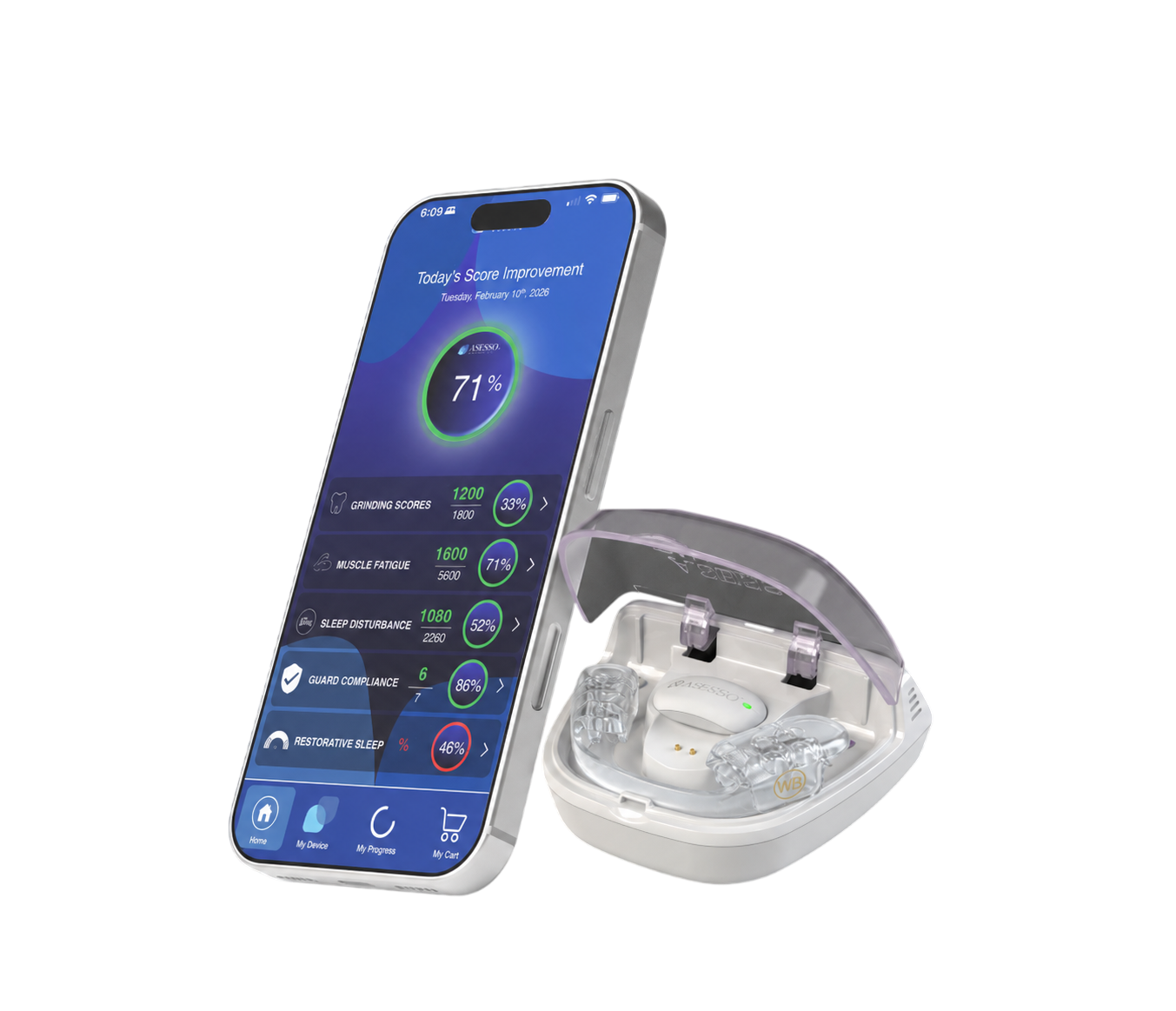
WAKEBRIGHT | The Wakebright Guard reflects where night guard care is headed: precise fit, comfortable materials, and protection you can start using right away while the rest of your evaluation catches up.
This article is for informational purposes only and does not constitute medical advice. Consult a licensed dentist or healthcare provider for diagnosis and treatment recommendations specific to your situation.
References
- Management of awake bruxism: a systematic review. BMC Oral Health (2025). https://pmc.ncbi.nlm.nih.gov/articles/PMC13037066/
- Oral Appliance Therapy for Obstructive Sleep Apnea: From Treatment Alternative to First-Line Care. Compendium. https://www.compendiumlive.com/2026/05/oralappliance/
- Advancements in home sleep apnea tests: Bridging convenience and clinical effectiveness. American Academy of Sleep Medicine (AASM). https://aasm.org/advancements-in-home-sleep-apnea-tests-bridging-convenience-and-clinical-effectiveness/
- FDA-cleared home sleep apnea testing devices. PMC. https://www.ncbi.nlm.nih.gov/pmc/articles/PMC11091199/