Night Guard for Severe Bruxism: Ultimate Protection Beyond Tooth Shielding

Understanding Severe Bruxism: Beyond Worn Teeth
Severe bruxism affects roughly 15 to 20 percent of the population, but its impact extends far beyond visible tooth damage. While most people associate teeth grinding with enamel erosion and chips, the real battle happens within the jaw muscle system itself. When grinding intensifies into the severe category, the masseter and temporalis muscles contract with extraordinary force, sometimes exceeding 250 pounds of pressure per bite. This relentless muscle engagement creates a cascade of problems that standard night guards simply cannot address.
Think of severe bruxism like a heavyweight boxer punching a heavy bag all night long. The gloves protect the bag (your teeth), but the boxer's arms (your jaw muscles) absorb tremendous strain. Most conventional guards focus exclusively on the bag. They are designed to form a barrier between upper and lower teeth, preventing direct contact and enamel wear. For mild to moderate grinding, this approach works adequately. But when grinding becomes severe, the muscle fatigue, inflammation, and dysfunction intensify regardless of tooth protection.
The distinction between typical bruxism and severe bruxism is crucial. Severe cases often involve higher grinding force, longer grinding episodes, audible grinding sounds that disturb sleep partners, and persistent jaw soreness or tension on waking. People with severe bruxism frequently experience morning stiffness, difficulty opening their mouth fully, and pain that radiates through the face and temples. These symptoms point to a muscle problem, not just a tooth problem.
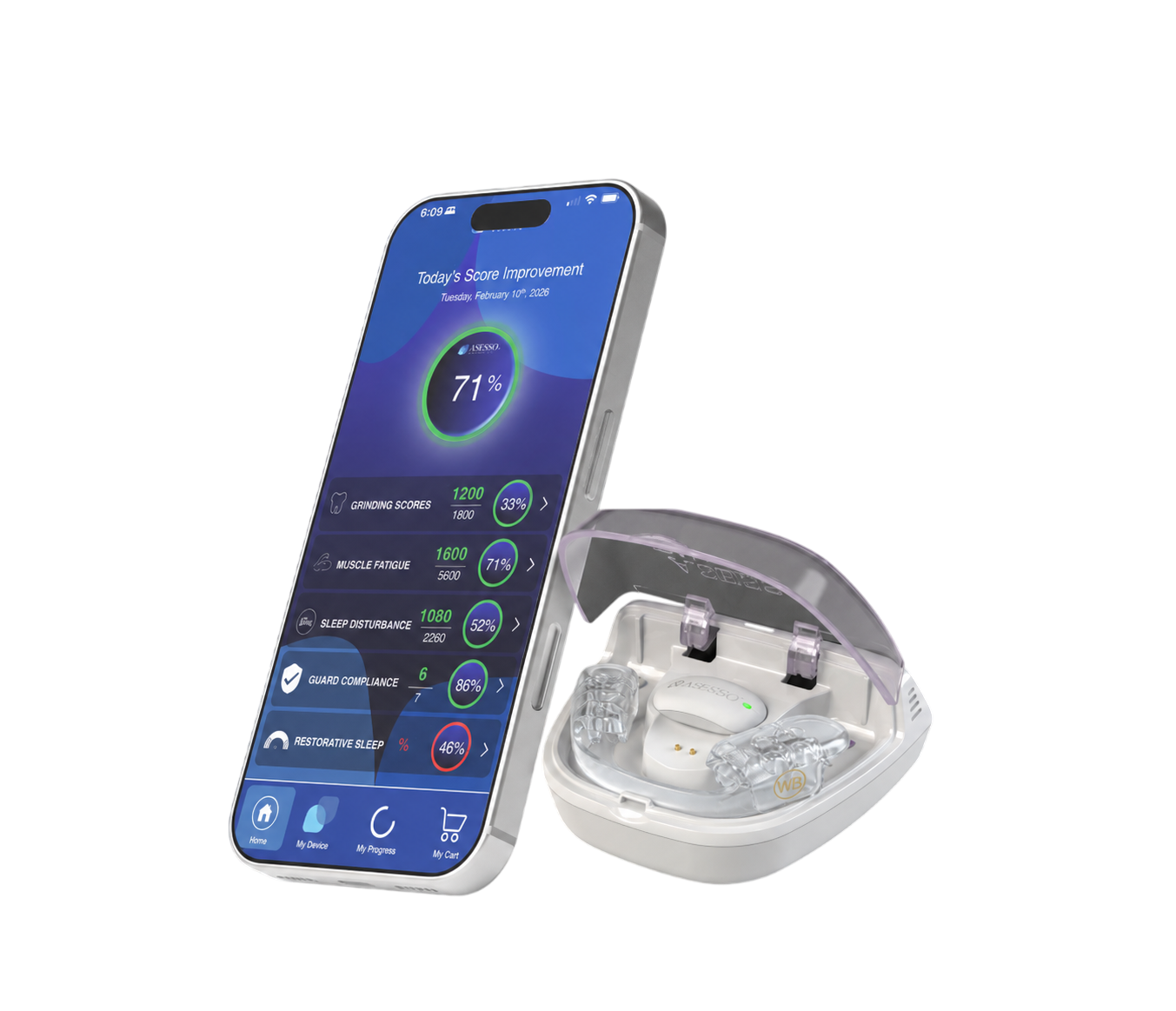
Standard flat-surface night guards, while reducing enamel contact, do nothing to address the underlying jaw muscle overload. In fact, many conventional guards can worsen muscle strain by forcing the jaw into an unnatural position throughout the night. The Wakebright Grind Guard approaches severe bruxism differently, by repositioning the jaw to reduce muscle load from the outset, allowing overworked jaw muscles to recover and repair while you sleep.
Why Standard Night Guards Fall Short in Severe Cases
The typical night guard rests on the upper teeth and creates a flat chewing surface between the upper and lower jaws. While this design prevents tooth-to-tooth contact, it does not address the fundamental issue driving severe bruxism: excessive jaw muscle load. In severe cases, the grinding force is so powerful that even protected teeth remain under significant stress, and the muscles powering those grinding movements stay fatigued and inflamed.
Consider this analogy: a basketball player with a knee injury wearing a standard knee brace. The brace stabilizes the joint and prevents certain harmful movements, but if the underlying muscle imbalance is never corrected, pain persists and the injury may worsen. Similarly, a standard guard prevents tooth damage, but when jaw muscles are overloaded they continue to suffer. Severe bruxism sufferers wake up to muscle pain because the guard has not reduced the load; it has only protected the teeth.
Many people with severe bruxism find that their standard guards become uncomfortable or difficult to wear consistently. Some guards create jaw soreness within an hour of insertion because they increase muscle tension rather than relieving it. Others shift out of position during sleep and become ineffective. The design itself, flat and rigid, forces the jaw into an unnatural posture throughout the night. For severe grinders, that prolonged unnatural position intensifies muscle fatigue.
Standard guards also do nothing to address the root cause of severe bruxism: jaw muscle stress and dysfunction. They are reactive, not proactive. They wait for grinding to happen, then defend against it. The Wakebright Grind Guard is fundamentally different. By repositioning the jaw to a more natural, lower-stress alignment, it reduces the compulsion to grind in the first place and allows fatigued muscles to actually recover.
The Wakebright Grind Guard Advantage: Load Reduction for Severe Grinding
The Wakebright Grind Guard repositions the lower jaw forward and slightly downward, creating a biomechanically favorable alignment that reduces the load on jaw muscles. This repositioning draws on more than 20 years of real-world use, during which thousands of severe bruxism sufferers have found substantial relief. Unlike flat-surface guards that ignore jaw biomechanics, the Grind Guard works with the jaw's natural anatomy to decrease muscle strain.
Picture a tightrope walker carrying a heavy weight. The walker struggles with the load. Now imagine a mechanical assist that distributes the weight more evenly: suddenly the same walker can cross the rope with far less strain. The jaw muscles face a similar situation. When positioned naturally, they require less force to maintain jaw stability and function. That reduced requirement means less grinding pressure and, critically, less muscle fatigue and inflammation.
The Wakebright Grind Guard's repositioning mechanism operates through a principle called neuromuscular optimization. When the jaw is positioned to reduce muscle tension, the nervous system senses the improvement and lowers the grinding impulse. This is not a passive solution: your own nervous system actively participates in reducing grinding behavior. People report that within one to two weeks of consistent Grind Guard use, grinding episodes diminish in frequency and intensity, and morning jaw soreness decreases noticeably.
In severe bruxism cases, this load-reduction approach is transformative. Because the guard addresses the root cause (jaw muscle overload), it provides benefits that standard guards cannot match. Users report sleeping more deeply, experiencing less jaw pain, and noticing improved overall jaw function. The muscle recovery that becomes possible with reduced nighttime load creates a positive feedback loop: less grinding leads to less muscle fatigue, which leads to less grinding.
When to Consider a Load-Reduction Guard for Severe Bruxism
Severe bruxism warrants specialized treatment, and recognizing when you need more than a standard guard is the first step. If you experience any combination of the following, a load-reduction guard may be essential: audible grinding that disturbs your sleep partner, persistent jaw soreness or stiffness on waking, difficulty opening your mouth fully in the morning, or frequent tension headaches localized to the temples and jaw area.
Another indicator is a lack of improvement with a standard guard. If you have worn a conventional night guard for three months or longer and still experience significant jaw pain or grinding episodes, your situation likely requires a more advanced approach. Severe bruxism does not respond predictably to simple tooth protection; the muscles remain engaged and fatigued. A load-reduction guard addresses this directly.
If you have also been told you have TMJ dysfunction or temporomandibular joint disorder alongside your bruxism, load reduction becomes even more critical. The jaw joint and surrounding muscles are already compromised, and a standard guard that forces them into an unnatural position can accelerate damage. The Wakebright Grind Guard's repositioning approach actively supports jaw joint health by reducing stress on the joint capsule and surrounding musculature.
The transition to a load-reduction guard is straightforward. The Grind Guard is fitted to your specific jaw structure and grinding pattern, ensuring optimal comfort and effectiveness. Most users report initial adaptation within a few nights, and the therapeutic benefits, including reduced grinding, less muscle pain, and deeper sleep, typically become apparent within the first two weeks of consistent use.
Real-World Results: Beyond Tooth Protection
Over two decades, the Wakebright Grind Guard has been worn by thousands of severe bruxism sufferers, generating substantial real-world data on its effectiveness. The most commonly reported outcome is not simply prevention of tooth damage; it is a substantial reduction in jaw muscle pain and grinding behavior. Users consistently report waking without the typical morning jaw soreness that characterizes severe bruxism.
A hallmark experience among Grind Guard users is improvement in sleep quality. Because the guard reduces jaw muscle load and the grinding impulse itself, sleep becomes less interrupted by grinding-related muscle tension. Users report fewer arousals, longer consolidated sleep, and a more restorative sleep experience. This improvement in sleep depth often leads to secondary benefits: better daytime alertness, improved mood, and reduced daytime jaw tension.
Another significant real-world observation is the resolution of tension headaches. Severe bruxism commonly triggers morning headaches due to sustained muscle tension throughout the night. With the Grind Guard reducing nighttime jaw load, that muscle tension diminishes and headaches often resolve. Users note that they can now open their mouth comfortably on waking, a freedom that had been lost due to morning stiffness.
Importantly, the effectiveness persists. Unlike some interventions that fade over time, the Grind Guard's load-reduction mechanism remains effective month after month and year after year. Users maintain consistent benefits, which suggests that improved jaw muscle function and reduced grinding behavior become stabilized through sustained use. This long-term effectiveness is a direct result of addressing the root cause, jaw muscle load, rather than merely shielding teeth.
What You Can Do Now
Recognize severe bruxism symptoms: audible grinding, morning jaw soreness, and difficulty opening the mouth all signal severe bruxism that requires specialized care.
Standard guards may not be enough: flat-surface guards protect teeth but ignore jaw muscle load, the root cause of severe bruxism. A load-reduction approach is needed for genuine relief.
Seek load-reduction solutions: a guard that repositions the jaw to reduce muscle strain addresses the problem at its source, cutting grinding behavior and allowing muscle recovery.
Custom fitting is essential: a custom-fitted load-reduction guard accounts for your specific anatomy and grinding pattern, ensuring comfort and effectiveness.
Expect improvement within weeks: most users report reduced grinding and jaw pain within one to two weeks of consistent Grind Guard use, with sustained benefits over months and years.
Protect both teeth and muscles: while tooth protection is important, shielding the jaw muscles from fatigue and dysfunction is equally critical for long-term jaw health and quality of life.
Frequently Asked Questions
Q: Can a night guard help with severe bruxism?
Yes, but the type matters significantly. Standard guards reduce tooth damage but do not address muscle load, leaving severe grinders with continued jaw pain. Load-reduction guards like the Wakebright Grind Guard directly lower jaw muscle strain, which is the root cause of severe grinding. This approach delivers relief that standard guards cannot.
Q: What makes a night guard effective for severe bruxism?
An effective guard for severe bruxism must reduce jaw muscle load, the fundamental driver of severe grinding. Repositioning the jaw to a biomechanically favorable position decreases muscle strain and tension, which automatically lowers the grinding impulse. This is superior to flat-surface designs that ignore jaw mechanics and muscle function.
Q: How long does it take to feel improvement with a load-reduction guard?
Most users report noticeable reduction in grinding episodes and jaw soreness within one to two weeks of consistent nightly use. The Wakebright Grind Guard works by optimizing jaw position to reduce muscle load, so benefits begin accumulating immediately. Some users notice improvements within the first few nights.
Q: Are load-reduction guards comfortable for severe grinders?
Yes. Because a load-reduction guard positions the jaw naturally and reduces muscle tension, most users find it more comfortable than standard flat-surface guards. The Wakebright Grind Guard is custom-fitted and designed to stay comfortable throughout the night, even for severe bruxism sufferers with compromised jaw function.
Q: Can severe bruxism cause permanent jaw damage?
Prolonged, untreated severe bruxism can lead to significant dental wear, enamel loss, jaw joint dysfunction, and chronic muscle pain. Early intervention with a load-reduction guard protects the teeth and, more importantly, prevents jaw muscle fatigue and joint stress from building up. Addressing severe bruxism promptly minimizes long-term complications.
Q: How does load reduction differ from standard tooth protection?
Standard guards act as a barrier between teeth, preventing contact during grinding. Load reduction addresses the grinding itself by optimizing jaw position to lower muscle strain. When the muscles carry less strain, the nervous system reduces the grinding impulse. This tackles the root cause, whereas standard guards address only the symptom.
Q: Is a custom-fitted guard better than over-the-counter options?
For severe bruxism, yes, significantly. Over-the-counter guards are generic and often do not account for individual jaw anatomy or grinding patterns. A custom guard like the Wakebright Grind Guard is designed specifically for your jaw structure and grinding characteristics, ensuring optimal load reduction and long-term effectiveness.
WAKEBRIGHT | Ready to move beyond standard protection? Explore how the Wakebright Grind Guard's load-reduction design provides relief for severe bruxism that conventional guards cannot match. Discover the difference when your jaw is positioned to reduce muscle load and allow real recovery. This article is for educational purposes only and does not constitute medical or dental advice. Please consult a qualified healthcare provider for personalized guidance.