Neck Stretches and Exercises for Pain Relief

Understanding the Jaw-Neck Tension Connection
Neck pain and jaw tension are intimately connected through a network of muscles, fascia, and nerve pathways that link the jaw, skull, neck, and shoulders. The temporalis and masseter muscles connect to the temporal bone of the skull, while the sternocleidomastoid and upper trapezius muscles run from the neck up to the skull and jaw area. When the jaw muscles tense chronically, they pull on the attachments they share with neck muscles, creating a biomechanical cascade of tension throughout the entire neck.
This interconnected relationship means that addressing neck pain in isolation through stretching alone often yields limited long-term results. Many people stretch their neck diligently and experience temporary relief, only to have pain return when they stop. That frustrating cycle usually signals that the root cause is being missed. If the jaw muscles are driving the tension, stretching the neck will never fully resolve the problem.
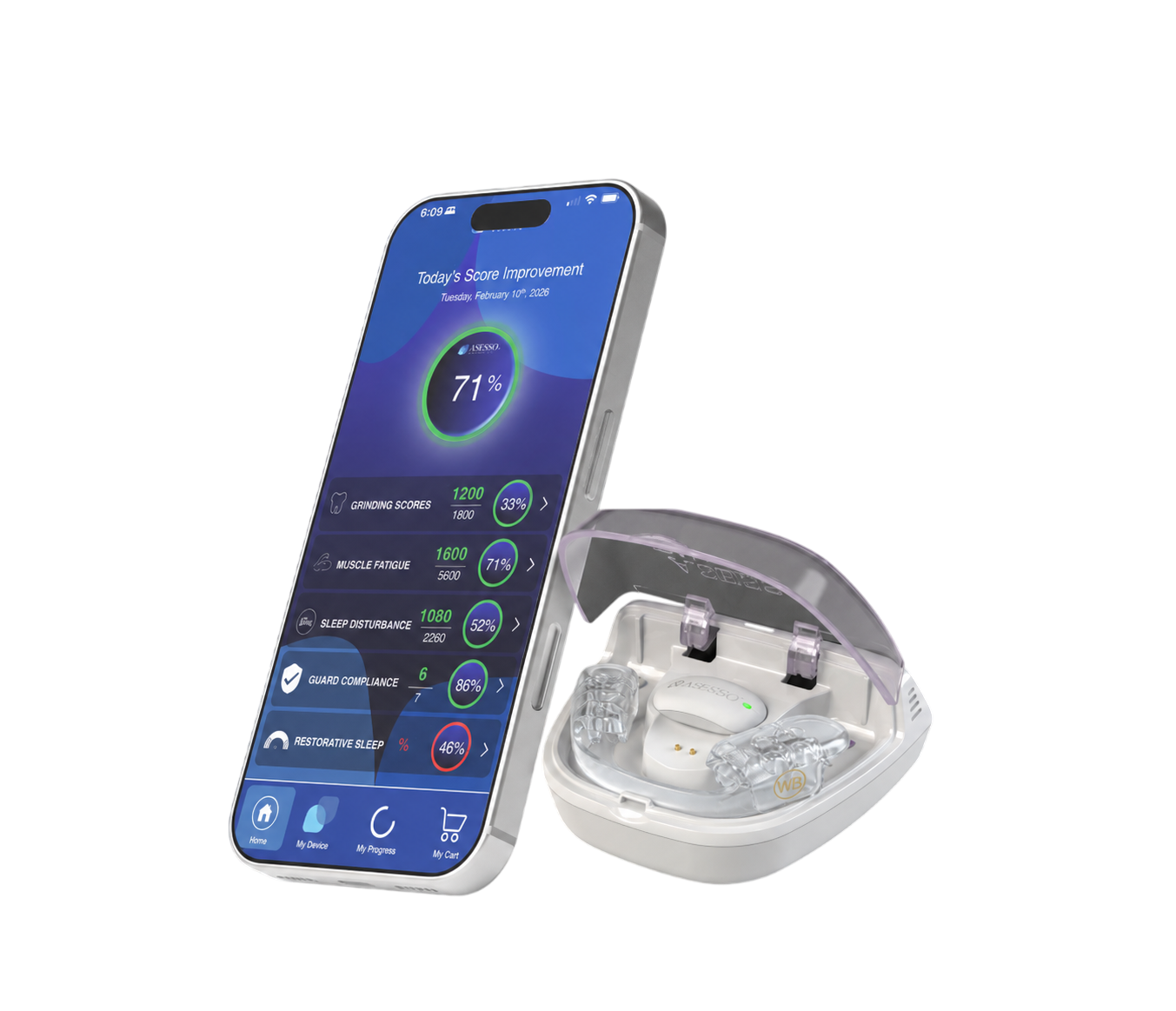
Think of the jaw-neck system like a ship with tangled rigging: you can adjust the sails and lines, but if the main mast is bent, all your adjustments will be temporary. The jaw is the mast; the neck muscles are the rigging. Until the mast (jaw tension) is addressed, the rigging (neck) will keep compensating and hurting. The Wakebright Grind Guard targets the root mast, your jaw mechanics, allowing your neck muscles to relax and hold the improvements stretching provides.
Research on cervicogenic headaches and neck pain shows that approximately 25 to 30 percent of chronic neck pain cases have a significant jaw component. Yet many people never address their jaw, treating only the neck symptoms. The most effective approach combines neck stretches and exercises with mechanical jaw support.
Effective Neck Stretches for Pain Relief
Gentle, sustained stretching is one of the most effective tools for reducing neck pain and improving mobility. The following stretches should be performed slowly, never forcing into pain, and held for 20 to 30 seconds on each side. Always stretch both sides even if one side hurts more than the other.
The lateral neck flexion stretch is performed by sitting upright and slowly tilting your right ear toward your right shoulder, feeling a gentle stretch along the left side of your neck. Hold without forcing, breathe deeply, and repeat on the opposite side. This stretch targets the upper trapezius and sternocleidomastoid muscles, which frequently tense in response to jaw muscle overload. Perform it 2 to 3 times per side, three times daily for the best results.
The upper trapezius stretch is effective for releasing tension in the large muscle that spans from your neck to your shoulder. Place your right hand over your head, gently drawing your right ear toward your right shoulder while your left arm hangs at your side. You should feel the stretch along the left shoulder and upper back. Hold for 20 to 30 seconds, then repeat on the other side. This muscle is highly responsive to jaw tension, so expect to feel immediate relief when this stretch is combined with jaw relaxation.
Neck rotation stretches help maintain rotational mobility and reduce stiffness. Slowly turn your head to look over your right shoulder, holding gently without forcing. Return to center, then rotate left. Repeat 5 to 10 times on each side, twice daily. Rotation stretches should feel smooth and painless; if you experience sharp pain, reduce your range of motion. These stretches work best when jaw tension has been reduced through the Wakebright Grind Guard, giving your neck greater freedom of movement.
Strengthening Exercises for Neck Stability
While stretching addresses tightness, strengthening exercises build the muscular endurance and stability needed to maintain good posture and prevent pain from recurring. Weak neck muscles cannot support the weight of your head effectively, which forces the jaw muscles to compensate through tension. Strengthening creates a foundation that allows stretching and Grind Guard use to produce lasting results.
Isometric neck exercises are particularly effective because they build strength without requiring movement, reducing irritation to an already sore neck. Perform them by applying gentle resistance with your hand while your neck muscles contract without moving. Place your right hand against the right side of your head and push your head gently into your hand, holding for 5 to 10 seconds. Perform 10 repetitions, then repeat in the opposite direction. Do this exercise 2 to 3 times weekly for progressive strengthening.
Scapular stabilization exercises strengthen your shoulders and upper back, preventing the forward shoulder posture that worsens neck tension. The wall angel exercise is performed by standing with your back against a wall, arms raised to shoulder height with elbows bent at 90 degrees (forming a goal-post position). Slowly slide your arms up toward your head while maintaining contact with the wall, then slide back down. Repeat 10 to 15 times, 2 to 3 times weekly. This exercise corrects the postural patterns that amplify jaw and neck tension.
Resistance band exercises provide progressive strengthening for neck extensors and stabilizers. Anchor a light resistance band at chest height, place it behind your head, and gently pull forward against the resistance to engage your neck extensors. Start with light resistance and low repetitions, gradually increasing as strength builds. Combined with the Grind Guard's mechanical support and regular stretching, these exercises create the complete foundation for lasting neck pain relief.
Why Jaw Support Amplifies the Benefits of Neck Stretching
Many people stretch their neck consistently but never achieve lasting relief because they are not addressing the jaw tension driving the problem. Picture trying to pull a tangled knot loose while someone else keeps pulling on the other end: your efforts are partly counteracted. Stretching pulls the neck toward relaxation while jaw clenching pulls it back toward tension. The result is a stalemate where temporary relief fades as soon as you stop stretching.
The Wakebright Grind Guard removes the jaw component of this tension stalemate. By reducing jaw muscle load during sleep, when many people intensify their clenching unconsciously, the guard allows the neck muscles to truly relax and reset. When you combine this mechanical support with consistent stretching and strengthening, the cumulative effect is dramatic. Users report that neck stretches become more effective, improvements last longer between sessions, and range of motion increases more significantly.
A useful analogy is the difference between tuning a guitar string while the instrument body is vibrating versus while it is still. Stretching your neck while jaw tension persists is like tuning the string while the body vibrates: you see temporary improvement but cannot achieve stable results. The Wakebright Grind Guard creates a stable foundation, allowing your stretches to produce lasting tension reduction. Many users report being able to reduce stretching frequency after several weeks of Grind Guard use, which suggests genuine structural improvement rather than temporary symptom relief.
Research on multimodal neck pain treatment shows that combining mechanical interventions with therapeutic exercise produces significantly better long-term outcomes than either intervention alone. The jaw repositioning support the Grind Guard provides creates an environment where stretches become more effective, muscle tension decreases more quickly, and lasting pain relief becomes achievable.
What You Can Do Now
Jaw muscles and neck muscles are deeply interconnected through shared attachments and fascia, so jaw tension drives neck pain.
Effective neck stretches include lateral flexion, upper trapezius, and rotation stretches performed 2 to 3 times daily.
Strengthening exercises like isometric neck work and scapular stabilization build the muscular foundation needed for lasting pain relief.
Stretching alone often fails to provide lasting relief because ongoing jaw clenching continuously reintroduces tension.
The Wakebright Grind Guard removes the jaw tension component, allowing neck stretches and exercises to achieve durable results.
Combined therapy, meaning stretching plus the Grind Guard, produces significantly better long-term outcomes than either intervention alone.
Users typically maintain lasting improvements in neck mobility and pain reduction after 4 to 6 weeks of consistent stretching with the Grind Guard.
Frequently Asked Questions
Q: Why don't my neck stretches provide lasting relief?
Stretching addresses the symptom (tight neck muscles) but not the root cause (jaw tension pulling on neck muscles). Jaw clenching continuously reintroduces tension that counteracts your stretching efforts. Adding the Wakebright Grind Guard removes the jaw tension source, allowing stretches to produce lasting results.
Q: How often should I stretch my neck?
For pain relief, aim for 2 to 3 sessions daily, holding each stretch for 20 to 30 seconds. Consistency matters more than intensity. Gentle, frequent stretching is more effective than occasional aggressive sessions. Once pain improves significantly with the Grind Guard, you can reduce frequency while maintaining the gains.
Q: Can strengthening exercises make my neck pain worse?
If performed incorrectly or too aggressively, yes. Start with light resistance, low repetitions, and pain-free ranges of motion. If an exercise increases pain, modify it or skip it. The rule is gentle progression: you should feel challenged but not in pain during exercise.
Q: How long does it take neck stretches and exercises to work?
Combined with the Wakebright Grind Guard, most people notice improved flexibility within 1 to 2 weeks and significant pain reduction within 4 to 6 weeks. Without the Grind Guard, improvement is typically slower and less stable, since jaw tension keeps reintroducing the problem.
Q: Should I stretch if my neck is acutely painful?
Gentle stretching can help, but avoid aggressive stretching during acute flare-ups. Light, supported movement is better than complete immobilization. If pain is severe or comes with neurological symptoms such as numbness, tingling, or weakness, consult a healthcare provider before stretching.
Q: Can posture correction reduce neck pain without stretching?
Posture improvement helps by reducing mechanical stress on neck muscles. However, if jaw tension is present, it will continue driving neck tension regardless of posture. The best results come from combining posture correction, stretching, and the Grind Guard's jaw support.
Q: Is it safe to do neck exercises while using the Wakebright Grind Guard?
Absolutely. The Grind Guard actually enhances the benefits of neck exercises by removing the jaw tension that would otherwise counteract your strengthening efforts. Many users find their exercises become more effective once they add the guard to their routine.
WAKEBRIGHT | If you have been stretching your neck diligently but the pain keeps returning, jaw tension may be the hidden driver. Neck stretches and exercises are essential tools, but they work best when combined with addressing the jaw mechanics that continuously reintroduce tension. The Wakebright Grind Guard provides that mechanical foundation, allowing your stretches to achieve lasting pain relief. Thousands of users have broken the cycle of temporary relief and recurring neck pain by addressing both the neck and the jaw. Start with consistent stretching and the Grind Guard today, and experience the difference that complete, multimodal care makes. This article is for educational purposes only and does not constitute medical or dental advice. Please consult a qualified healthcare provider for personalized guidance.