Neck and Shoulder Tension That Won't Go Away: Check Your Jaw First

You've tried the massages, the stretching routines, the ergonomic chair. Your neck and shoulders are still tight, day after day, with no clear trigger you can point to. Before assuming it's purely a posture or workstation problem, there's a connection worth ruling out: your jaw. Research on chronic jaw disorders has found something genuinely counterintuitive — the referred pain from jaw-related trigger points can actually be larger in the neck and shoulders than in the jaw muscles themselves.
The Muscle Chain Nobody Thinks to Check
Your jaw muscles and your neck muscles don't operate as separate systems. The temporalis and masseter muscles (used for chewing and clenching) and the muscles of your neck and shoulders including the sternocleidomastoid, upper trapezius, and suboccipital muscles are functionally and neurologically connected, working together to stabilize your head and support jaw movement. When one part of that chain is under chronic strain, it's common for the effects to show up somewhere else in the chain entirely.
What the Research Actually Found
A controlled study published in The Journal of Pain examined this connection directly. Researchers compared 25 women with myofascial temporomandibular disorder (TMD) to 25 healthy, matched women, checking both groups for trigger points small, hypersensitive spots in muscle tissue that produce local and "referred" pain elsewhere across the masticatory muscles (temporalis, deep and superficial masseter) and the neck-shoulder muscles (sternocleidomastoid, upper trapezius, suboccipital).
The findings were striking. TMD patients had significantly more active and latent trigger points across all the muscles examined not just the jaw muscles, but the neck and shoulder muscles too. And when researchers measured the size of the referred pain areas each trigger point produced, they found something unexpected: referred pain areas from the neck trigger points were actually larger than those from the masticatory muscle trigger points. The suboccipital muscles specifically produced the largest referred pain areas of any muscle group studied.
In plain terms: in people with a jaw disorder, the neck muscles weren't just along for the ride they were arguably contributing more to the overall pain picture than the jaw muscles themselves.
Why This Happens: Shared Nerve Pathways
The proposed explanation involves how pain signals from the jaw and neck are processed in the nervous system. Nerve fibers from the trigeminal nerve (which serves the jaw and face) and the upper cervical spinal nerves (which serve the neck) converge in a shared region of the brainstem. This overlap means pain signals from these two areas can essentially blend together at a neurological level, which the researchers noted supports the idea of shared sensitization mechanisms between TMD and neck-shoulder pain, rather than these being two coincidentally co-occurring but separate problems.
The Posture Piece
Beyond the direct neurological connection, there's also a mechanical one. Jaw clenching and forward-head posture the position common with prolonged phone or computer use tend to reinforce each other. A jaw held in a tense, forward, or misaligned position changes how your neck muscles have to work to keep your head balanced, and a strained neck posture can in turn change how your jaw muscles engage. This bidirectional relationship is part of why treating jaw tension often requires attention to posture, and vice versa.
Signs Your Neck and Shoulder Tension Might Be Jaw-Related
Consider a jaw connection if your neck and shoulder tension comes with any of the following:
- Jaw clicking, popping, or stiffness
- Morning jaw soreness or a tired feeling in your jaw muscles
- Headaches concentrated at the temples
- A history of teeth grinding or clenching, especially if you've been told this by a dentist or partner
- Tension that hasn't responded to typical neck/shoulder treatments like massage, stretching, or posture correction alone
- Pain that seems to radiate between your jaw, temple, and upper neck/shoulder area rather than staying isolated to one spot
A Simple Self-Check
This isn't a diagnosis, but it can offer a useful clue:
- Gently press along your jaw muscles the sides of your face from your cheekbone to your jawline and note any tenderness.
- Press along your upper trapezius (the muscle running from your neck to your shoulder) and the base of your skull (suboccipital area), and note whether pressing there reproduces or resembles your usual tension.
- Notice whether opening your mouth wide, clenching gently, or moving your jaw side to side changes the intensity of your neck or shoulder discomfort.
If jaw movement seems to influence your neck/shoulder tension, or pressing on jaw muscles reproduces pain you usually feel in your neck, that's a reasonable sign to bring up with a dentist alongside not instead of addressing it with your usual neck-focused approaches.
Quick Reference
| Symptom Pattern | Suggests |
|---|---|
| Neck/shoulder tension with jaw clicking or morning jaw soreness | Possible TMD contributing to referred neck/shoulder pain |
| Tension that worsens with stress and clenching episodes | Jaw and neck tension likely reinforcing each other |
| Tension unaffected by jaw movement, isolated to posture-related triggers | More likely primarily postural/musculoskeletal, less jaw-related |
| Tension alongside forward-head posture and prolonged screen use | Combined mechanical and jaw-related factors likely |
What Treatment Looks Like
Given the research, effective treatment for jaw-related neck and shoulder tension often needs to address both areas rather than just one. Reasonable approaches include:
- A dental evaluation to check for TMD, bruxism, and jaw muscle tenderness, since addressing the jaw component directly can reduce the referred strain on neck and shoulder muscles
- A custom night guard, if grinding or clenching is a contributing factor
- Physical therapy targeting both the jaw and neck-shoulder region together, given how interconnected the muscle groups are
- Posture-focused changes, particularly around screen use, since forward-head posture and jaw tension tend to reinforce each other
- Trigger point-focused treatment, such as massage or manual therapy, applied to both the masticatory and neck-shoulder muscles rather than just the area where you feel the most discomfort
Frequently Asked Questions
Can TMJ or jaw problems really cause neck and shoulder pain?
Yes a controlled study found that people with myofascial TMD had significantly more trigger points in both their jaw and neck-shoulder muscles compared to healthy individuals, and that referred pain from neck trigger points was actually larger in area than pain referred from the jaw muscles themselves.
Why would jaw problems cause more pain in my neck than in my jaw?
Research suggests jaw and neck pain pathways converge in a shared region of the nervous system, meaning the two areas are neurologically linked rather than fully separate. In some people, this connection means neck and shoulder symptoms end up more prominent than jaw symptoms, even when the jaw is a significant contributing factor.
How do I know if my neck tension is from my jaw or just poor posture?
Look for jaw-specific clues alongside the tension clicking, morning jaw soreness, a history of grinding, or headaches at the temples. Also notice whether jaw movement or clenching seems to affect your neck/shoulder discomfort; if it does, a jaw connection is more likely.
Can treating my jaw actually reduce my neck and shoulder tension?
For many people, yes, if TMD or bruxism is a genuine contributing factor addressing the jaw component can reduce the referred strain reaching the neck and shoulder muscles. However, tension caused primarily by posture or unrelated factors won't necessarily improve from jaw treatment alone.
What are trigger points, and why do they matter here?
Trigger points are hypersensitive spots within muscle tissue that cause both local pain and pain referred to other areas when pressed or activated. Research has found significantly more of these in both the jaw and neck-shoulder muscles of people with TMD, which helps explain why the two types of pain often occur together.
Should I see a physical therapist or a dentist first for jaw-related neck tension?
Either can be a reasonable starting point, and many people benefit from both a dentist can evaluate for TMD and grinding, while a physical therapist can address the muscular and postural components across both the jaw and neck-shoulder regions.
Can forward-head posture from phone or computer use actually cause jaw tension?
Yes jaw position and neck posture tend to influence each other, so prolonged forward-head posture can contribute to jaw muscle tension, and jaw clenching can in turn affect how your neck muscles work to support your head position.
Is it common for TMD to be missed as a cause of chronic neck and shoulder tension?
It's a genuine possibility, particularly since neck and shoulder tension has so many potential causes and jaw symptoms aren't always obviously connected in a patient's mind. This is part of why bringing up any jaw-related symptoms, even minor ones, can help redirect a stalled evaluation.
Can stress cause both jaw clenching and neck tension independently?
Yes, and this can make the two conditions difficult to fully separate, since stress-driven muscle tension often affects the jaw, neck, and shoulders simultaneously, whether or not one is directly causing the other.
Will a night guard help with neck and shoulder tension if I also grind my teeth?
It may help indirectly, since reducing jaw clenching-related strain can lessen the referred tension reaching your neck and shoulders, though it's typically most effective as part of a broader approach that also addresses posture and any existing neck-shoulder muscle tension directly.
How long does it typically take to see improvement if jaw treatment is addressing my neck tension?
It varies by individual and by how significant the jaw component is relative to other contributing factors, but many people see gradual improvement over weeks to a few months with consistent treatment addressing both the jaw and neck-shoulder regions.
Is this connection specific to women, since the study focused on women?
The specific study cited examined women with myofascial TMD, but TMD and its associated muscle and referred pain patterns aren't exclusive to women the underlying anatomy and nerve pathways involved apply to men as well, even though research samples have sometimes focused on female populations given TMD's higher prevalence in women overall.
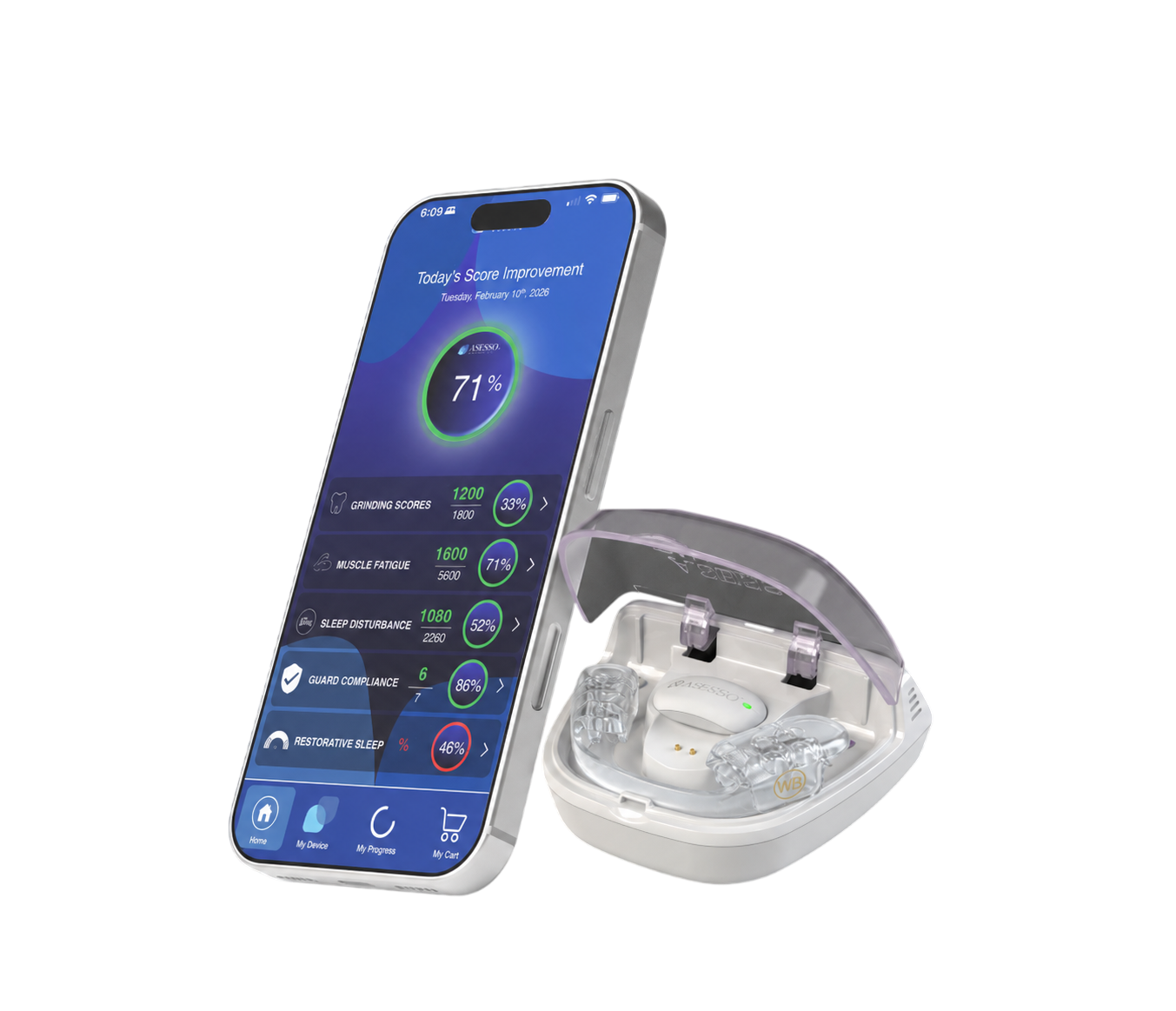
WAKEBRIGHT | If jaw clenching is contributing to your neck and shoulder tension, the Wakebright Guard addresses the source while your physical therapy or massage work continues to help downstream.
This article is for informational purposes only and does not constitute medical advice. Consult a licensed dentist or healthcare provider for diagnosis and treatment recommendations specific to your situation.
References
- Fernández-de-las-Peñas, C. et al. "Referred Pain from Muscle Trigger Points in the Masticatory and Neck-Shoulder Musculature in Women With Temporomandibular Disoders." The Journal of Pain, ScienceDirect. https://www.sciencedirect.com/science/article/pii/S1526590010003937
- National Institute of Dental and Craniofacial Research. "TMD (Temporomandibular Disorders)." nidcr.nih.gov. https://www.nidcr.nih.gov/health-info/tmd
- Cleveland Clinic. "Your Jaw May Be To Blame for Your Headaches." health.clevelandclinic.org. https://health.clevelandclinic.org/your-jaw-may-be-to-blame-for-your-migraine-headaches