Muscle-Load Reduction vs. Tooth Protection: Two Philosophies of Treating Bruxism

Almost every bruxism treatment falls into one of two conceptual camps, whether or not it's ever labeled that way. One camp accepts that the grinding is going to happen and focuses on protecting your teeth from the consequences. The other tries to reduce how much your jaw muscles actually contract in the first place. Understanding this split makes it much easier to understand why your dentist might recommend one option over another and why, increasingly, the honest answer is often "some of both."
Philosophy One: Protect the Teeth, Let the Muscles Do What They Do
This is the older, more established approach, and it's what most people picture when they think of bruxism treatment: a full-arch night guard or hard acrylic occlusal splint that sits between your teeth. Per clinical guidance summarized on the NCBI Bookshelf (StatPearls), occlusal appliances remain a foundational part of bruxism management, and research reviewed there confirms appliances are effective at reducing sleep bruxism activity in general use.
The core idea: these appliances don't try to change what your nervous system is doing. Whatever is driving the grinding stress, genetics, sleep-stage transitions continues largely unaffected. What changes is the outcome: instead of tooth-on-tooth contact wearing down enamel and cracking teeth, the force gets absorbed by the appliance instead.
Strengths: this approach is well-established, doesn't require your underlying cause to be identified or resolved, carries a comparatively low risk profile when properly fitted, and reliably does the one job it's designed for protecting your teeth.
Limitations: it doesn't reduce clenching intensity, muscle fatigue, or jaw pain the way muscle-focused approaches aim to. Some heavy clenchers continue to bite down with significant, sustained force even with a guard in place, meaning the appliance protects the teeth without necessarily easing the underlying strain on jaw muscles and the temporomandibular joint.
Philosophy Two: Reduce the Muscle Activity Itself
This is a fundamentally different goal: rather than accepting the grinding and protecting against it, these approaches try to reduce how forcefully or how often the muscles actually contract. This camp includes several distinct sub-approaches:
Appliance-based force limitation. Devices like the NTI-tss use a smaller design that limits posterior tooth contact, theoretically reducing how hard you can clench a genuinely different mechanism than a full-arch guard's passive protection, though (as covered in more detail in our comparison of NTI devices and full-arch guards) this comes with its own tradeoffs and documented risks.
Pharmacological approaches. Botulinum toxin (Botox) injected into the jaw muscles has research support for reducing biting force and, in some studies, bruxism-related pain, functioning by directly weakening the targeted muscles' ability to contract. Medications like muscle relaxants, clonazepam, and clonidine have also been used for severe bruxism, though clinical guidance is clear these come with real limitations clonidine has been associated with morning low blood pressure in a meaningful share of patients in at least one study, and these medications are generally recommended only for short-term use given their side-effect profiles.
Behavioral and physical approaches. Biofeedback, cognitive behavioral therapy, relaxation training, and physical therapy all aim to reduce muscle activity through non-pharmacological means. The evidence here is genuinely mixed: a review of the research found biofeedback can reduce bruxism activity itself, but does not appear to have a meaningful effect on reducing the pain patients experience an important distinction between "less grinding" and "less discomfort."
Addressing underlying causes. When bruxism is linked to an identifiable driver sleep apnea, chronic stress, a medication side effect treating that underlying cause directly is, in principle, the most fundamental form of muscle-load reduction, since it targets the trigger rather than the symptom.
Strengths: when effective, this approach addresses the actual mechanism driving bruxism, potentially reducing pain, muscle fatigue, and joint strain in ways passive protection alone doesn't.
Limitations: effectiveness varies significantly by specific technique, some options carry real side effects or risks of their own (medication side effects, NTI-related bite change risk, Botox's temporary and off-label nature), and critically none of these approaches protect your teeth from wear the way an appliance does, even when they successfully reduce muscle activity.
The Two Philosophies at a Glance
| Tooth Protection | Muscle-Load Reduction | |
|---|---|---|
| Goal | Prevent damage from grinding | Reduce the grinding/clenching itself |
| Examples | Full-arch night guard, hard acrylic splint | NTI device, Botox, biofeedback, CBT, physical therapy, medications, treating underlying causes |
| Changes muscle activity? | No | Yes, to varying degrees depending on method |
| Protects teeth from wear? | Yes, directly | Not directly (except where it also reduces contact) |
| Evidence strength | Well-established | Varies widely by specific method |
| Risk profile | Low, if properly fitted | Varies from minimal (behavioral) to more significant (medications, some appliances) |
| Addresses root cause? | No | Sometimes, depending on approach |
Why Most Clinicians Actually Blend Both
In practice, this isn't really an either-or choice, and current clinical guidance reflects that. A comprehensive review of bruxism management specifically recommends a multidisciplinary approach: patient education, behavioral modification, physical therapy, and occlusal splint therapy together, as reversible, lower-risk first steps with more targeted interventions like botulinum toxin injections, occlusal adjustment, or surgery reserved for cases that don't respond to that initial, more conservative combination.
This makes practical sense once you separate the two goals. A night guard protects your teeth starting the first night you wear it, regardless of whether any muscle-focused treatment has had time to work. Meanwhile, addressing stress, sleep quality, or trying biofeedback can work on reducing the underlying muscle activity over a longer timeline. Using both doesn't waste effort it covers two genuinely different problems (existing tooth wear risk and ongoing muscle strain) that a single treatment approach usually can't fully solve on its own.
Which Philosophy Should Guide Your Treatment?
Tooth protection should almost always be part of the plan if you have any signs of grinding-related wear, regardless of what else you pursue, simply because enamel loss isn't reversible and a guard is a low-risk way to stop further damage while everything else gets sorted out.
Muscle-load reduction becomes more of a priority if pain, jaw fatigue, or headaches are a significant part of your symptoms and haven't improved with a well-fitted guard alone, or if you have an identifiable underlying driver like diagnosed sleep apnea or significant chronic stress that's worth addressing directly rather than just managing its downstream effects.
Most people benefit from a combination, weighted differently depending on their specific symptoms: heavier on protection if tooth wear is the main concern, heavier on muscle-focused approaches if pain and function are the bigger issue, and often both together for a comprehensive plan.
Frequently Asked Questions
Which philosophy is better for treating bruxism: protecting teeth or reducing muscle activity?
Neither is universally better they address different problems. Tooth protection prevents damage regardless of whether the grinding itself changes; muscle-load reduction aims to address the underlying activity but doesn't directly protect your teeth. Most comprehensive treatment plans use both.
If I use a muscle-relaxing treatment like Botox, do I still need a night guard?
Often yes, at least initially muscle-load reduction approaches don't guarantee grinding stops completely, and a night guard provides direct tooth protection that isn't otherwise addressed, even alongside a treatment aimed at reducing muscle activity.
Does biofeedback actually reduce bruxism-related pain?
Research suggests it can reduce the underlying bruxism activity itself, but a review of the evidence found it doesn't appear to meaningfully reduce the pain patients experience an important distinction if pain relief is your main goal.
Why would a dentist start with a night guard instead of a muscle-focused treatment?
Because it's lower-risk, doesn't require identifying or resolving an underlying cause first, and starts protecting your teeth immediately. Clinical guidance generally favors starting with reversible, conservative measures before considering more targeted interventions.
Are medications like clonazepam or clonidine a good option for bruxism?
They're used in some cases of severe bruxism, but clinical guidance is clear that they carry real side-effect risks for example, clonidine has been linked to morning low blood pressure in a meaningful share of patients in research and are generally recommended only for short-term use rather than as a long-term solution.
Can addressing an underlying cause, like sleep apnea, actually stop bruxism?
It can meaningfully improve it in cases where that underlying condition is genuinely a driver, since treating the root cause is, in principle, the most direct form of muscle-load reduction. It doesn't work for everyone, since bruxism is often multifactorial rather than caused by a single identifiable trigger.
Is it wasteful to use both a night guard and a muscle-focused treatment at the same time?
No they address different problems (existing tooth-wear risk versus ongoing muscle activity), so using both is generally considered complementary rather than redundant, and is often what a comprehensive treatment plan actually looks like.
How do I know if my bruxism treatment plan needs more muscle-focused elements?
If a well-fitted night guard is protecting your teeth but you're still dealing with significant jaw pain, fatigue, or headaches, that's a reasonable sign that a muscle-focused approach might address something the guard alone isn't reaching.
Does physical therapy actually help with bruxism?
It's one of several behavioral and physical approaches used as part of a broader, multidisciplinary treatment plan, alongside things like relaxation training and cognitive behavioral therapy, generally recommended as a lower-risk option to try before more invasive interventions.
Is Botox considered muscle-load reduction or tooth protection?
Muscle-load reduction it works by reducing the strength of muscle contractions in the jaw, rather than physically protecting teeth from contact the way a night guard does, which is why it doesn't replace a night guard for tooth-protection purposes.
Should severe bruxism always involve more than just a night guard?
Not necessarily some people with severe grinding still do well with just a well-fitted, durable guard if tooth protection is their main concern. But if pain or muscle fatigue is significant, a broader, multidisciplinary approach is often more appropriate than relying on protection alone.
What's the most conservative way to start treating bruxism?
Current clinical guidance generally favors starting with reversible, lower-risk measures patient education, behavioral changes, and occlusal splint therapy before considering more targeted interventions like medications, Botox, or surgery, which are typically reserved for cases that don't respond to the initial approach.
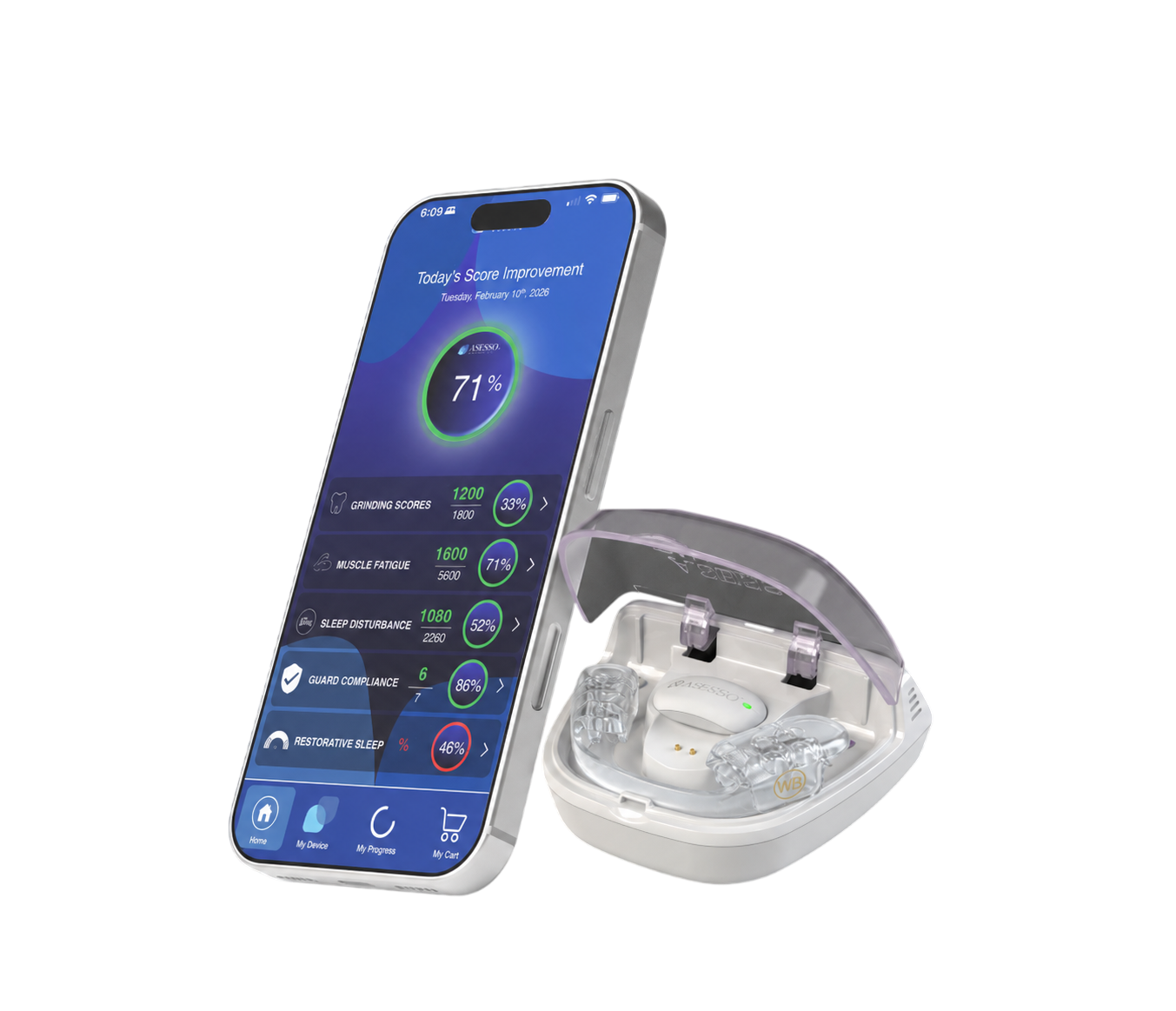
WAKEBRIGHT | The Wakebright Guard is built around the tooth-protection philosophy as a foundational treatment ask your dentist whether a muscle-load reduction approach should be added if headaches or jaw fatigue are also part of your picture.
This article is for informational purposes only and does not constitute medical advice. Consult a licensed dentist or healthcare provider for diagnosis and treatment recommendations specific to your situation.
References
- "Bruxism Management." StatPearls, NCBI Bookshelf, National Library of Medicine. https://www.ncbi.nlm.nih.gov/books/NBK482466/
- "The Current Trend in Management of Bruxism and Chronic Pain: An Overview of Systematic Reviews." Journal of Pain Research, PMC, National Library of Medicine. https://pmc.ncbi.nlm.nih.gov/articles/PMC7533232/
- "Bruxism Management: Overview, Definition, Etiology." Medscape. https://emedicine.medscape.com/article/2066277-overview
- National Institute of Dental and Craniofacial Research. "Bruxism." nidcr.nih.gov. https://www.nidcr.nih.gov/health-info/bruxism