Morning Headaches: Why Do I Wake Up With a Headache?

The Morning Headache Problem: A Common but Underrecognized Issue
Waking up with a headache is remarkably common, affecting millions of people worldwide. Some experience mild throbbing discomfort that fades within an hour; others wake with debilitating pain that ruins their morning and sets a poor tone for the entire day. Morning headaches are particularly frustrating because they steal the restorative quality that sleep is supposed to provide. You spent eight hours in bed supposedly recovering, yet you wake feeling worse than when you lay down.
Most people attribute morning headaches to sleep position, an old mattress, poor sleep quality, or dehydration, all reasonable initial guesses. Yet countless people optimize their sleep environment, try new pillows and mattresses, drink water before bed, and still wake with pain. That persistence suggests they are missing the actual root cause. For a significant portion of morning headache sufferers, the culprit is nocturnal bruxism and jaw clenching, an underrecognized mechanical driver that directly produces morning pain.
The reason morning headaches are so commonly misdiagnosed relates to timing: people assume the problem lies with sleep itself rather than with what happens during sleep. Yet your brain and head do not hurt while you are unconscious. The pain develops during sleep due to specific mechanical and physiological stresses, then you notice it when you wake. Understanding that morning headaches develop during sleep due to jaw mechanics, not the sleep environment itself, opens the door to effective solutions.
Morning headaches create a pattern of daytime dysfunction. People with chronic morning headaches often take pain medication just to function through their mornings, then gradually feel better as the day progresses. By evening they feel fine, so they never associate the problem with their nighttime habits. This disconnect perpetuates misdiagnosis and ineffective treatment. Breaking this cycle requires understanding the nocturnal jaw mechanics driving the pain.
The Connection Between Nocturnal Bruxism and Morning Headaches
Bruxism, meaning involuntary teeth grinding and jaw clenching during sleep, is the primary driver of morning headaches in a substantial portion of sufferers. During a grinding episode, the jaw muscles contract with forces exceeding 200 pounds per square inch while the brain is unconscious and unable to moderate the intensity. Unlike daytime clenching, which you can consciously release, nighttime grinding continues unabated for hours. The temporalis, masseter, and pterygoid muscles work at near-maximal intensity all night long, accumulating fatigue and inflammation.
By morning, these jaw muscles are exhausted, inflamed, and saturated with lactic acid and other metabolic waste products, exactly the same state your legs would be in if you had sprinted uphill for eight hours. The inflamed jaw muscles then irritate the sensory nerves around them and radiate pain to the temples, forehead, and back of the head. The sustained muscle tension also compresses blood vessels and restricts blood flow, contributing to the throbbing pain felt on waking.
The intensity of bruxism varies throughout the night, typically peaking during lighter sleep stages and REM sleep when jaw muscle tone is paradoxically high. A single night of intense grinding creates measurable inflammation and muscle fatigue. Night after night this cycle repeats, preventing the jaw muscles from ever fully recovering. The result is a chronic state of low-grade inflammation and tension that surfaces as a morning headache each day.
People with sleep apnea, stress-induced bruxism, or certain medications are at particularly high risk for bruxism-driven morning headaches. Sleep apnea causes repeated brief awakenings and oxygen drops that trigger intense jaw clenching as a protective response. Stress raises muscle tension and grinding intensity. Certain antidepressants, stimulants, and other medications can significantly increase bruxism. If any of these risk factors apply to you, bruxism is highly likely to be driving your morning headaches.
Why Morning Headaches Improve as the Day Progresses
A hallmark feature of bruxism-driven morning headaches is their tendency to improve noticeably through the morning and into the day. You wake with pain, but by mid-morning it is noticeably better, and by afternoon it is often gone entirely. This pattern is virtually diagnostic of nocturnal jaw clenching because it directly mirrors the recovery pattern of exhausted, inflamed muscles. As you move through the morning, the jaw muscles gradually relax, blood flow increases, lactic acid clears, and inflammation subsides.
Movements and activities throughout the morning accelerate this recovery. Speaking, eating (which stimulates active jaw relaxation), and various neck and head movements increase blood flow to the jaw muscles and help clear metabolic waste. By the time you have been awake for 3 to 4 hours and eaten breakfast, the acute inflammation has largely resolved. This is why morning headache sufferers often never connect the pain to their nighttime habits: the pain is gone by the time they are thinking clearly.
This daytime improvement pattern contrasts sharply with other headache types. Migraine pain does not reliably improve just from being awake. Tension headaches from poor posture or stress often worsen as the day progresses because the causative stress continues. But morning headaches that improve reliably as the day advances are classic signs of overnight muscle fatigue and inflammation. The improvement reflects muscle recovery, not medication efficacy, even when pain relievers are taken.
Understanding this pattern helps distinguish bruxism-driven morning headaches from other causes and confirms the jaw-centric approach to treatment. If your headaches follow this predictable arc, worst upon waking and progressively better through the morning and nearly gone by afternoon, bruxism is almost certainly the cause. That recognition makes the path to a solution clear: eliminate the nocturnal bruxism through mechanical support, and the morning headaches will disappear.
How the Wakebright Grind Guard Eliminates Bruxism-Driven Morning Headaches
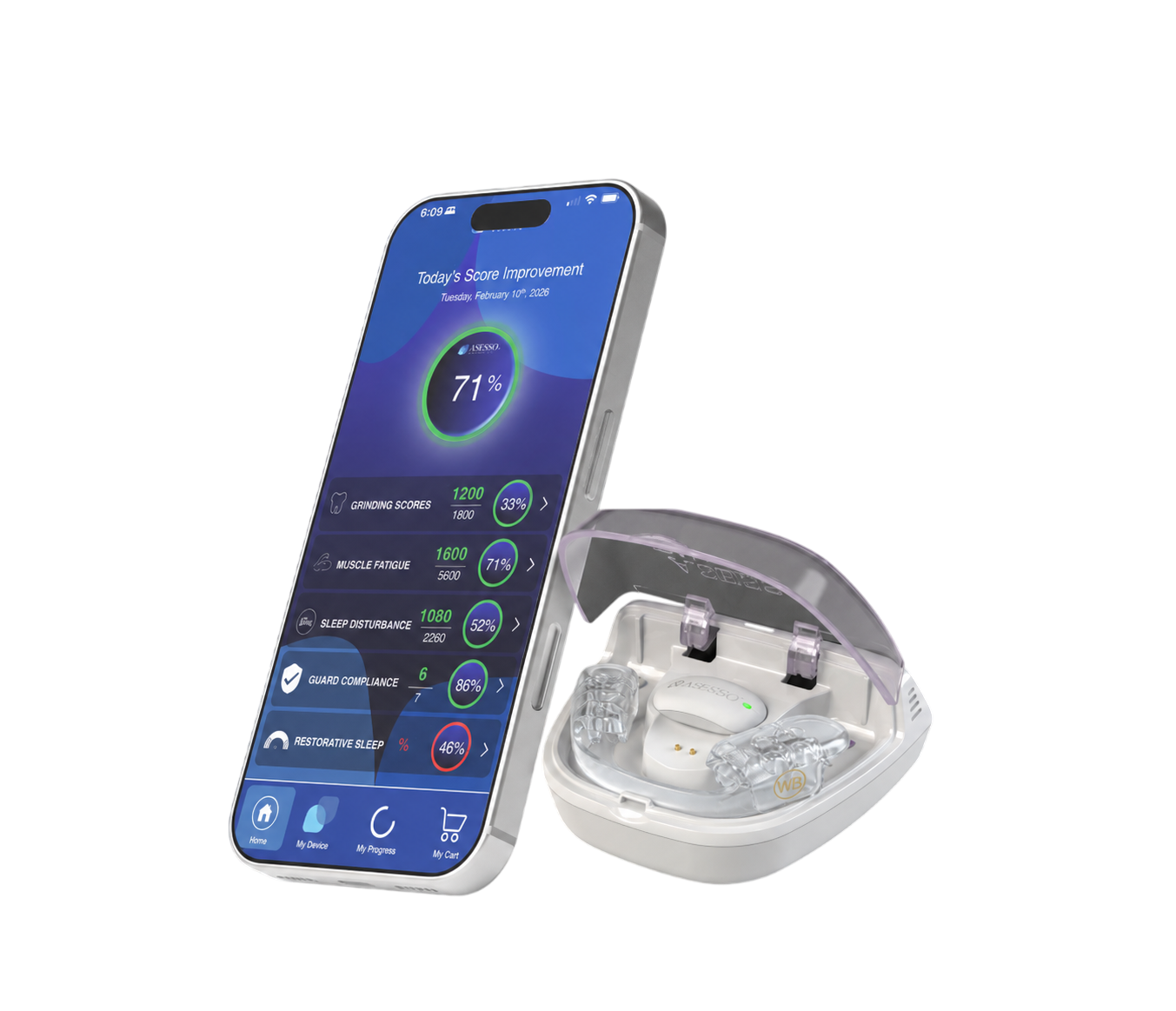
The Wakebright Grind Guard addresses morning headaches at their source by preventing the intense jaw clenching that occurs during sleep. The guard repositions the jaw to a neutral, relaxed position, mechanically preventing the extreme clenching forces that would otherwise accumulate. With the jaw supported in a comfortable, unstrained position, the jaw muscles do not work at maximal intensity all night. Instead, they rest and recover, emerging from sleep without inflammation or fatigue.
The mechanism is straightforward: less muscle work during sleep equals less fatigue and inflammation by morning, which equals no morning headache. Most Wakebright Grind Guard users report a noticeable reduction in morning headache severity within the first few nights of use. Within 1 to 2 weeks of consistent use, many experience complete elimination of morning headaches. This rapid improvement reflects how directly the guard addresses the mechanical problem: it is not treating a symptom; it is preventing the underlying cause from occurring.
One useful analogy is the difference between clenching your fist for eight hours straight (causing pain, swelling, and stiffness) versus keeping your hand relaxed and open. The Grind Guard keeps the jaw relaxed, preventing the eight-hour clenching session that was causing the morning pain. It is a mechanical, non-pharmaceutical solution that works because it targets the root cause directly.
Research on bruxism treatment shows that mechanical jaw repositioning devices produce faster and more durable morning headache relief than any other single intervention. Over 20 years of real-world use, countless people have moved from waking with daily pain to waking refreshed and pain-free simply by wearing the Wakebright Grind Guard consistently. The improvement is not gradual or marginal; most users experience substantial relief within weeks.
What You Can Do Now
Morning headaches that improve as the day progresses are classic signs of nocturnal bruxism and jaw clenching.
During sleep, jaw muscles can contract with forces exceeding 200 pounds per square inch, accumulating fatigue and inflammation overnight.
Eight hours of intense jaw muscle work creates a state of inflammation and metabolic waste buildup that produces pain on waking.
Morning improvement in headache pain reflects natural muscle recovery and blood flow normalization as the day begins.
Bruxism-driven morning headaches are distinct from other headache types in their reliable daytime improvement pattern.
The Wakebright Grind Guard prevents the intense nocturnal clenching that causes morning headaches by supporting the jaw in a relaxed position.
Most users experience noticeable relief within days and substantial elimination within 1 to 2 weeks of consistent use.
Addressing the mechanical cause (jaw clenching) produces faster and more durable relief than any symptomatic treatment alone.
Frequently Asked Questions
Q: Why do I wake up with a headache but feel fine by afternoon?
This pattern is classic for bruxism-driven morning headaches. Your jaw muscles are exhausted and inflamed from hours of intense grinding. During the morning they gradually recover and relax, inflammation decreases, and pain improves. By afternoon the acute inflammation has largely resolved.
Q: Is my morning headache caused by my mattress or pillow?
If your morning headache improves dramatically by mid-morning despite staying in bed for a time, it is probably not your mattress or pillow. These would produce pain that persists or worsens while you remain horizontal. Morning headaches that ease as you move and activity increases are driven by jaw clenching.
Q: How do I know if I'm grinding my teeth at night?
Signs include waking with jaw soreness or face pain, worn or chipped teeth, a clenched jaw on waking, headaches that improve as the day progresses, and a sleep partner reporting grinding sounds. A dentist can also observe wear patterns consistent with bruxism.
Q: Can morning headaches be caused by something other than bruxism?
Yes, though less commonly. Dehydration, sleep apnea, poor sleep quality, medication side effects, and chronic stress can all contribute. However, if your headaches follow the classic pattern of being worst on waking and improving through the morning, bruxism is most likely the primary driver.
Q: How quickly will the Wakebright Grind Guard eliminate my morning headaches?
Most users report noticeable improvement within the first few nights and significant relief within 1 to 2 weeks of consistent use. Complete elimination typically occurs within 2 to 4 weeks as the jaw muscles fully adapt to the supported position.
Q: Should I take pain medication for morning headaches?
Pain medication can help you function in the morning while you address the underlying cause. Relying solely on medication without treating the bruxism means the problem will continue, though. The Wakebright Grind Guard addresses the cause, which allows most users to reduce or eliminate their reliance on pain medication.
Q: Can morning headaches return if I stop using the Wakebright Grind Guard?
For people whose morning headaches are driven by bruxism, yes, discontinuing use would likely bring the headaches back. However, after several months of consistent use, the jaw muscles can develop a more relaxed baseline, potentially allowing for less frequent use while maintaining improvement.
WAKEBRIGHT | If you wake every morning with a headache that gradually improves as the day progresses, nocturnal bruxism and jaw clenching are almost certainly the cause. Trying new pillows, staying hydrated, and adjusting your sleep position will not address the mechanical root cause. The Wakebright Grind Guard provides direct, mechanical relief by preventing the intense jaw clenching that occurs during sleep. Thousands of people have woken up pain-free within weeks of starting the Grind Guard after years of chronic morning headaches. Stop masking the symptom with medication and address the cause. Experience what it feels like to wake up refreshed and headache-free. This article is for educational purposes only and does not constitute medical or dental advice. Please consult a qualified healthcare provider for personalized guidance.