Jaw Pain: Common Causes, Hidden Connections, and How to Find Lasting Relief

Jaw pain has a way of quietly taking over your day. It shows up as a dull ache when you eat breakfast, a sharpness when you yawn too wide, or a tight, heavy pressure spreading from your jaw toward your temples and ears. Sometimes it is there when you wake up, before you have had a chance to do anything at all.
What makes jaw pain particularly frustrating is how diffuse it can be. It does not always stay where it started. It radiates, refers, and mimics other conditions, which is why many people spend months tracking down the source before finding any meaningful answers.
This article breaks down the most common causes of jaw pain, the muscular mechanisms behind many of them, and what a muscle-load-reduction approach can offer when conventional treatments fall short.
Understanding Jaw Pain: Why the Source Isn't Always Obvious
The jaw is a complex mechanical and neuromuscular system. The temporomandibular joints hinge the mandible to the skull on each side of the face. Surrounding these joints are some of the most powerful muscles in the body relative to their size, the masseter, temporalis, and medial and lateral pterygoids, all coordinated by an intricate network of nerves.
Because the jaw's nerve supply overlaps significantly with the nerves serving the ears, sinuses, temples, and neck, pain originating in the jaw or its muscles can appear to come from somewhere else entirely. A jaw problem might feel like an earache. Jaw muscle tension might feel like a sinus headache. This referral pattern is one of the primary reasons jaw pain is so often misdiagnosed or delayed in its identification.
Common Causes of Jaw Pain
Jaw Muscle Overload from Clenching and Grinding
This is the most widespread and most underrecognized driver of jaw pain. Bruxism, the habitual clenching or grinding of teeth, generates sustained, high-force engagement of the jaw muscles. Over time, this produces the same kind of fatigue, tension, and soreness that any overworked muscle develops. The difference is that bruxism most commonly occurs during sleep, when the person has no awareness of it. By morning, the muscles have been under significant load for hours.
Temporomandibular Disorders (TMD)
TMD is a broad category covering dysfunction of the temporomandibular joints and associated muscles. It can involve disc displacement within the joint, joint inflammation, structural changes, or, most commonly, myofascial pain driven by muscle tension. Bruxism and TMD frequently overlap and compound each other, creating cycles that are difficult to break with single-modal approaches.
Dental Issues, Arthritis, and Other Sources
Dental pain from impacted wisdom teeth, abscesses, or cracked teeth can radiate into the jaw. Both osteoarthritis and rheumatoid arthritis can affect the temporomandibular joint, producing pain that worsens with movement. Trigeminal neuralgia, a nerve condition, can produce intense facial pain localized to the jaw. Injury, trauma, and prolonged mouth-open positions during dental procedures can also set off acute or chronic jaw pain.
The Jaw Muscle Stress Mechanism
Wakebright's framing of jaw pain starts with one question: how much load are the jaw muscles under, and for how long? When the muscles of mastication sustain high levels of contraction, through nighttime bruxism, daytime clenching, or chronic stress-related tension, the cumulative effects extend well beyond the teeth.
Direct muscular effects include soreness and tenderness in the masseter and temporalis, restricted range of motion, and a locked or heavy feeling in the jaw. Referred effects include tension headaches at the temples and behind the eyes, ear pressure or ringing, neck and shoulder tightness, and sinus-like pressure in the cheekbone area. Sleep effects include nighttime muscular activity that disrupts sleep architecture, morning fatigue despite adequate time in bed, and low energy throughout the following day.
Understanding that many forms of jaw pain are fundamentally muscular, rather than purely joint- or tooth-related, opens up different and often more effective treatment pathways.
When to Seek Medical or Dental Attention
Jaw pain should be evaluated by a healthcare provider if the pain is severe, sudden, or accompanied by swelling; if you are having difficulty swallowing or breathing; if the jaw becomes locked and will not release; if the pain comes with a fever; if symptoms follow trauma; or if symptoms persist beyond two to three weeks without improvement.
For milder, chronic, or recurring jaw pain, particularly the kind associated with morning stiffness, headaches, and poor sleep, a conversation about bruxism and jaw muscle stress is often the most productive starting point.
Effective Relief Strategies
Managing jaw pain effectively means addressing the mechanism, not just the sensation. Heat therapy applied to the masseter and temporalis muscles before bed reduces baseline tension and can lessen overnight clenching intensity. Jaw stretching and massage performed daily maintain range of motion and release accumulated trigger points. Stress reduction through exercise, mindfulness, and behavioral approaches targets the neurological drivers of clenching. Bite guard therapy, particularly with a guard designed around muscle-load reduction rather than tooth protection, addresses the primary overnight driver of jaw muscle fatigue.
What You Can Do Now
Perform a mid-day jaw check hourly. Notice whether your teeth are touching, and if they are, relax the jaw. Daytime clenching awareness is a high-leverage habit change.
Apply moist heat to the masseter and temple muscles morning and evening. This simple routine meaningfully reduces baseline jaw tension.
Try jaw stretches daily. Slow controlled opening, lateral movements, and jaw massage maintain range of motion and release trigger points.
Review your sleep setup. Stomach sleeping compresses the jaw and increases nighttime clenching, so side or back sleeping is preferable.
Evaluate your current night guard. If you are wearing one and still waking with symptoms, the design may be addressing the teeth without addressing the muscle.
Track patterns. Note when jaw pain is worse, whether after high-stress days, after poor sleep, or after caffeine. Pattern recognition leads to targeted, effective interventions.
Frequently Asked Questions
Q: How do I know if my jaw pain is from clenching or a tooth problem?
Muscle-sourced jaw pain tends to be diffuse, hard to pin to one specific tooth, and typically worse in the morning after a night of unconscious clenching. Dental pain, by contrast, is usually localized to a specific tooth, triggered by temperature or biting, and may come with visible decay or gum changes. If multiple teeth feel sensitive at the same time without a clear dental cause, the muscles are the more likely source.
Q: Can jaw pain cause headaches?
Yes, and this is one of the most clinically significant connections in jaw health. The masseter and temporalis muscles share nerve pathways with the head and temple region. When these muscles are fatigued or contain trigger points from clenching, they refer pain upward as tension headaches, temple pressure, and pain behind the eyes. Addressing jaw muscle load often produces meaningful headache reduction as a downstream outcome.
Q: Is jaw pain related to stress?
Strongly, yes. Stress increases sympathetic nervous system activity, which raises muscular tone throughout the body, and the jaw is a particularly common site. Stressed individuals tend to clench during the day, often without noticing, and grind during sleep. This makes stress management a meaningful component of jaw pain relief, even though it is rarely sufficient on its own.
Q: What is the fastest way to relieve jaw pain?
For immediate relief, apply moist heat to the jaw muscles for 10 to 15 minutes, take an OTC anti-inflammatory like ibuprofen if appropriate, and consciously relax the jaw with the teeth apart and the tongue resting lightly on the palate. These approaches reduce the inflammatory and tension components quickly. For lasting relief, addressing the underlying muscle load through consistent jaw awareness during the day and a mechanism-led grind guard during sleep is the more complete solution.
Q: Can jaw pain go away on its own?
Mild, episodic jaw pain triggered by specific events, such as dental procedures, illness, or a particularly stressful week, often resolves once the trigger resolves. Chronic jaw pain, particularly the kind that is present most mornings or follows a predictable pattern, typically does not resolve without intentional intervention. The earlier it is addressed, the less structural damage and sensitization accumulate.
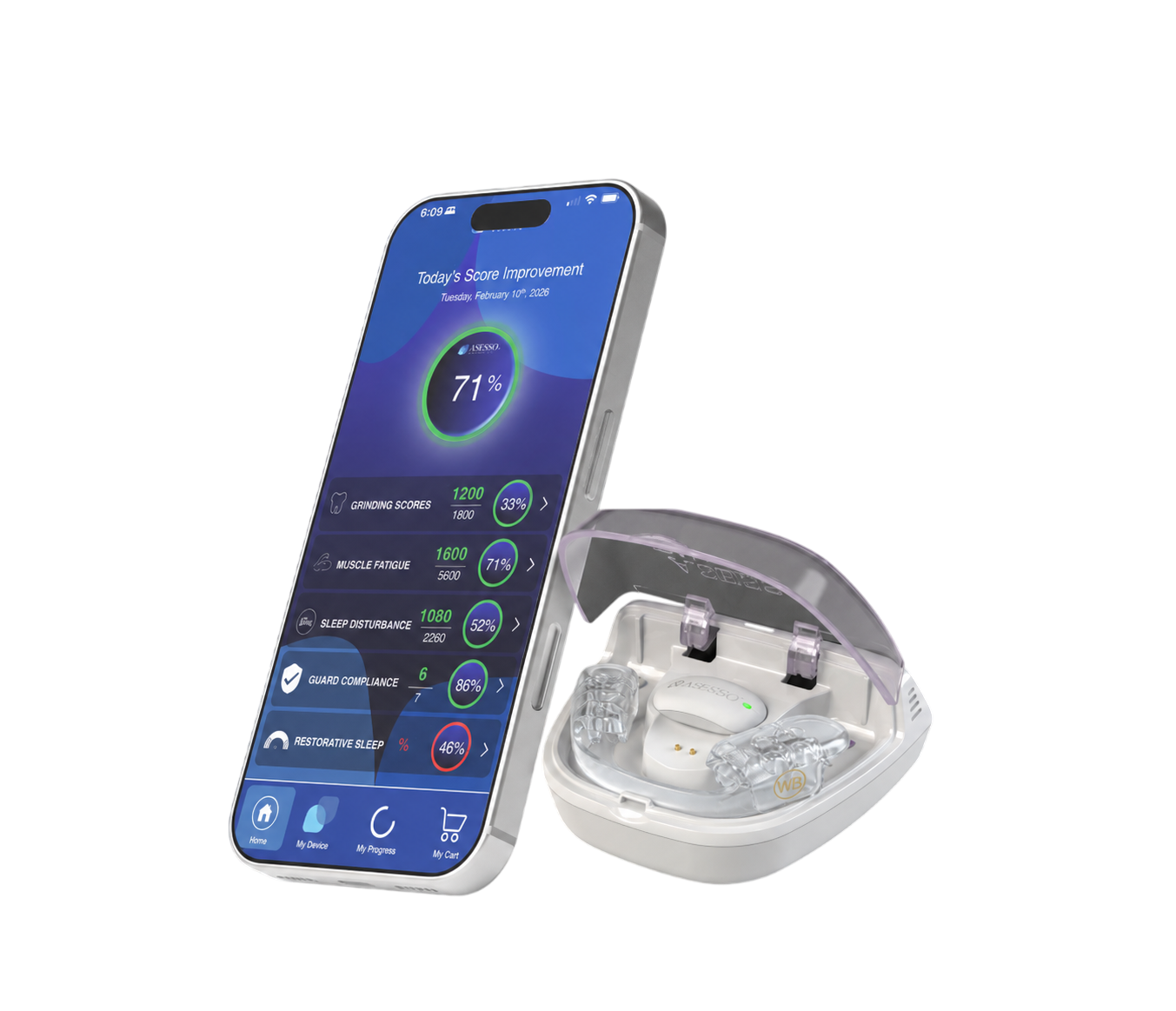
WAKEBRIGHT | The Wakebright grind guard system targets jaw pain at its muscular source. By mechanically limiting how fully the muscles of mastication can clench during sleep, it reduces the nightly buildup of tension that many people carry into their waking hours as headache, facial pressure, and jaw soreness. If jaw pain is a regular part of your mornings and you have not fully evaluated the role of muscle overload, that investigation is worth prioritizing. Visit wakebrightguards.com to learn more. This article is for educational purposes only and does not constitute medical or dental advice. Please consult a qualified healthcare provider for personalized guidance.