Is 5 Hours of Sleep Enough?

What Sleep Science Actually Tells Us
On this question, the research community speaks with one voice: for the vast majority of adults, five hours of sleep falls well short of what the body needs. The National Sleep Foundation, the American Academy of Sleep Medicine, and the CDC all point to 7 to 9 hours per night as the target for healthy adults. These recommendations were not pulled out of thin air. They rest on decades of studies tracking memory, immune strength, metabolism, and emotional stability. When adults routinely limit themselves to 5 hours, measurable declines show up across every one of those areas, and they show up within days.
Picture your sleep as a bank account. Each night, your body needs a certain deposit to cover the demands of the following day. When you regularly spend the energy of a full waking day while only banking 5 hours of recovery, you fall into the red. That shortfall, known as sleep debt, does not quietly vanish when you ignore it. It grows, and as it grows it drags down your performance, your mood, your immune defenses, and even how strongly you feel pain. Someone who sleeps 5 hours every night is not simply a bit tired. They are running on a physiological deficit that deepens week after week.
The Chain Reaction: What Chronic Short Sleep Does to Your Body
Mental sharpness takes a visible hit after a single 5-hour night, and the damage stacks up when short nights become a habit. Reactions slow down, choices get sloppier, and the brain struggles to lock in new memories. Sleep is the window your brain uses to sort through the day and file information away for the long term. Cut that window short and both learning and recall suffer. Students who stay up cramming and settle for 5 hours score measurably lower on exams than classmates who slept 7 to 9 hours, even when the crammers logged more total study time.
The hormonal and metabolic fallout arrives quickly as well. Losing sleep throws off the two hormones that manage appetite: ghrelin and leptin. Ghrelin, which drives hunger, climbs. Leptin, which signals fullness, drops. The result is a person who eats more yet feels less satisfied afterward. This is a big part of why chronic short sleepers tend to gain weight and fight constant cravings. On top of that, ongoing sleep restriction interferes with how the body handles glucose, raising the odds of metabolic syndrome and type 2 diabetes. In effect, you are asking your body to run on fuel that was never fully processed.
Your immune defenses pay a price too. Nighttime sleep is when the immune system organizes itself and moves immune cells to where they are needed. On 5 hours, that work gets cut off partway through. People who habitually sleep this little carry higher inflammation markers, come down with infections more often, and take longer to bounce back when they do get sick. If every bug in the office seems to find you while well-rested coworkers stay healthy, your sleep schedule is a prime suspect. The immune system simply never gets enough time to finish building its defenses.
The Pain Amplifier: How Lost Sleep Feeds Jaw Clenching
Here is a link most people never make: chronic sleep loss turns up pain sensitivity across the entire body, and it has a particularly strong effect on jaw clenching. When you are running on too little sleep, your nervous system sits in a state of heightened alert. Stress hormones such as cortisol and adrenaline stay elevated because the body never gets a long enough recovery window to flush them out and reset. That over-activated nervous system translates directly into muscle tension, and the jaw is one of the first places it shows.
Clenching works in both directions: it is a symptom of poor sleep and a driver of even worse sleep. You clench because you are exhausted and wound up. The clenching then builds tension and soreness in the jaw muscles, which makes it harder to reach deep, restorative sleep. From there the loop feeds itself. Shallow sleep triggers more clenching, the clenching produces pain, the pain blocks deep sleep, and the cycle tightens. A person getting 5 hours a night may blame their morning jaw ache on stress or grinding alone, never realizing that the missing sleep underneath is what keeps the clenching going.
There is a second layer to this problem: sleep loss lowers your pain threshold. Muscle tension that a well-rested person would barely register can feel genuinely painful to someone who has been short on sleep for weeks. The systems your body uses to dampen pain signals only work properly when sleep is adequate. Researchers have shown that even one rough night measurably raises pain sensitivity the next day. After months of 5-hour nights, that sensitivity sits far above where it should be.
What People Who 'Feel Fine' on 5 Hours Are Really Missing
Some people insist they do perfectly well on 5 hours and treat their own experience as proof that the official guidelines are overblown. That confidence is usually misplaced. Studies show that chronically short sleepers lose the ability to judge their own impairment accurately, a pattern sometimes described as sleep deprivation syndrome. It works much like alcohol: the very condition that impairs you also impairs your ability to notice the impairment. People living on 5 hours often 'feel fine' only because their expectations have quietly dropped. Brain fog, background fatigue, and mood swings have become their baseline, so nothing registers as wrong.
Objective testing tells a different story. When short sleepers sit for cognitive assessments, they consistently perform worse than they believe they did. They commit more errors, react more slowly, and show weaker judgment, yet they rate their own results as perfectly acceptable. This gap between self-assessment and actual performance appears in study after study. Someone who feels fine on 5 hours is functioning below their real capacity without knowing it. Their work, health, and daily life would all improve noticeably at 7 to 9 hours, but they will never see the difference until they experience it firsthand.
The hidden costs keep piling up in the background. Five hours a night adds up to 10 to 15 hours of missed sleep every single week. Stretched over months and years, that accumulated debt raises the risk of chronic illness, mental health struggles, strained relationships, and a lower overall quality of life. You may feel passable on a Tuesday after a few short nights, but months of unpaid sleep debt leave real marks on your health and longevity. The person who claims to thrive on 5 hours usually stays unaware of these downstream costs until a health problem finally forces the issue.
What You Can Do Now
Five hours of sleep sits far below the recommended 7 to 9 hours and produces measurable declines in thinking, metabolism, and immune function.
Sleep loss keeps stress hormones high and the nervous system on edge, which directly fuels jaw clenching and muscle tension.
People who sleep only 5 hours often believe they feel fine because sleep deprivation blunts their ability to notice their own decline.
Chronic short sleep lowers your pain threshold, so jaw tension and soreness feel stronger than they otherwise would.
The damage from lost sleep compounds over time, building toward chronic disease, mental health issues, and strain in your relationships.
If you clench your jaw and sleep only 5 hours a night, the missing sleep is very likely making the clenching significantly worse.
Frequently Asked Questions
Q: What about people who naturally need less sleep? Can some people thrive on 5 hours?
Genuine short sleepers are extremely rare. Likely fewer than 1 to 2 percent of people carry the genetic variants that allow full function on under 7 hours. Nearly everyone else who claims to need only 5 hours is either sleep-deprived without realizing it or quietly topping up with naps and weekend catch-up sleep they forget to count. If you truly believe you need less sleep than most people, that is unusual enough to bring up with a sleep specialist.
Q: How quickly will I feel better if I increase from 5 to 7 hours of sleep?
Most people notice a difference within 3 to 7 days: brighter mood, sharper thinking, and less jaw clenching. That said, if you have carried a sleep deficit for months, full recovery can take 2 to 4 weeks. One great night cannot erase months of shortfall. What matters is consistent, adequate sleep going forward.
Q: Does my body adjust to chronic sleep deprivation?
No. The body never truly adapts to running short on sleep. What actually happens is that you grow used to functioning poorly. Your health and performance drift downward, and your ability to perceive that drift declines along with them, so nothing feels obviously wrong. That is not adaptation. It is a slow decline you stop noticing because your reference point keeps sliding lower.
Q: If I'm clenching my jaw at night, does that mean I'm not sleeping deeply enough?
Nighttime clenching points to tension and an over-aroused nervous system during sleep. It usually signals sleep deprivation, stress, or both. Some grinding does occur in lighter sleep stages, but significant clenching is a sign that your sleep is not as restorative as it should be. Improving how long you sleep and easing jaw tension work together, and progress on one tends to support the other.
Q: Can naps compensate for not sleeping enough at night?
Short naps of 15 to 30 minutes give a modest lift in alertness, but they cannot stand in for a full night of sleep. The body carries out specific repair work during specific sleep stages that unfold across the night. A nap can patch over part of the shortfall, but it cannot deliver the full physiological restoration that overnight sleep provides.
Q: Why does chronic sleep loss make pain worse?
Sleep is when the body produces pain-suppressing neurotransmitters such as serotonin and processes pain-related signals. Without enough of it, pain signaling stays turned up while the systems that quiet pain wind down. Sleep loss also raises inflammation, which magnifies pain further. Put simply, your sensitivity to pain genuinely rises when sleep runs short.
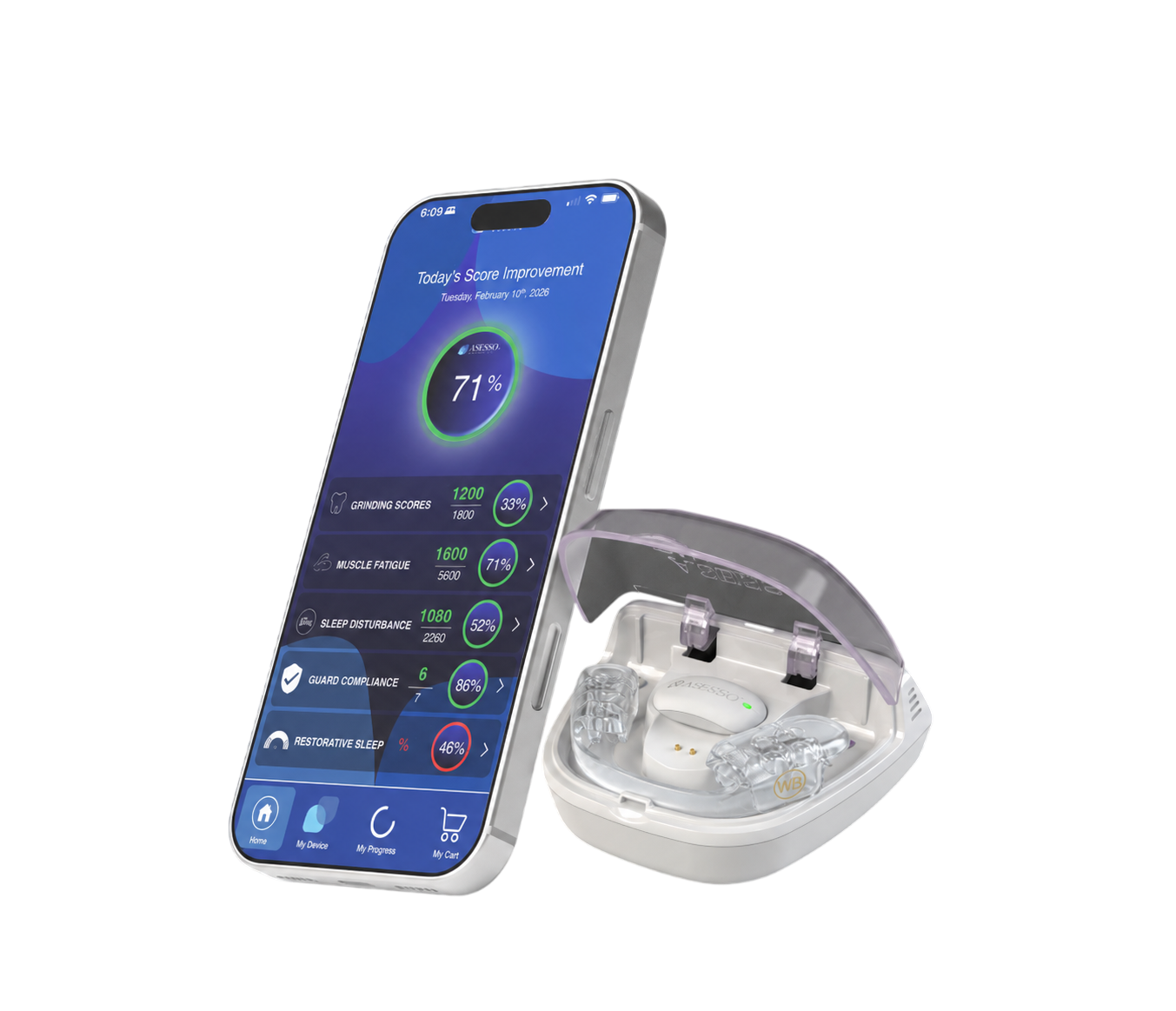
WAKEBRIGHT | Chronic short sleep drives jaw clenching and pain, but adding hours to your night is only half the answer. The Wakebright Grind Guard eases the load on your jaw muscles while you sleep, so every hour you do get works harder for your recovery. Paired with a move toward 7 to 9 hours of sleep, it helps break the cycle of tension and poor rest. Discover how healthy sleep and proper jaw positioning work together for real restoration. This article is for educational purposes only and does not constitute medical or dental advice. Please consult a qualified healthcare provider for personalized guidance.