How to Stop Clenching Your Jaw: A Dentist-Backed Guide

You catch yourself mid-clench during a stressful email, a long drive, or a tense scroll through your phone jaw locked tight, teeth pressed together, no memory of when it started. Daytime jaw clenching, known clinically as awake bruxism, is genuinely different from nighttime grinding in one important way: because it happens while you're conscious, it actually responds well to habit change. Here's a practical, step-by-step approach, grounded in what the research and clinical guidance actually support.
Step 1: Learn Your Resting Jaw Position
The foundation of stopping daytime clenching is knowing what your jaw is supposed to be doing when you're not eating or talking. The target position, sometimes taught by dentists as "lips together, teeth apart," means your lips rest gently closed, your teeth are not touching, and your tongue rests lightly against the roof of your mouth. Outside of chewing and speaking, your teeth aren't meant to be in contact at all some contact during the day is normal, but sustained contact is where clenching does its damage.
This matters because most people have no clear sense of what a relaxed jaw actually feels like, which makes it hard to notice when they've drifted out of it.
Step 2: Build Awareness With Regular Check-Ins
You can't interrupt a habit you don't notice. Set a recurring reminder hourly works well for most people to briefly check in: Are your teeth touching? Is your jaw tight? Are your shoulders up near your ears? The National Institute of Dental and Craniofacial Research (NIDCR) specifically lists this kind of behavior change, increasing awareness and practicing your resting mouth and jaw position among its recommended first-line approaches for bruxism.
Sticky notes, a phone alarm, or pairing the check-in with something you already do often (opening a new browser tab, refilling water) all work. The goal isn't constant vigilance, just enough regular check-ins to catch the pattern before it becomes hours of unnoticed tension.
Step 3: Try This Quick In-the-Moment Release
When you catch yourself clenching, a short, deliberate release can interrupt the pattern faster than just willing your jaw to relax. A technique shared by a practicing dentist and reported by TODAY.com combines breath and touch:
- Breathe in slowly through your nose, holding for a count of four.
- Exhale slowly through your mouth, also counting to four.
- Place your palms on the sides of your face, fingers spread.
- Slowly draw your fingers down the sides of your face and into your neck.
A University of Michigan School of Dentistry orofacial pain specialist notes that daytime clenching is more strongly linked to stressful events than nighttime grinding is which is exactly why a technique that combines breathing (to calm the stress response) with physical release (to relax the muscle) tends to work better than trying to relax the jaw in isolation.
Step 4: Address the Root Cause: Stress
Since stress is one of the most consistently identified drivers of daytime clenching specifically, reducing your overall stress load isn't a side note it's central to actually solving the problem rather than just interrupting individual episodes. Mayo Clinic's guidance for bruxism includes several stress-reduction approaches worth building into a regular routine rather than saving for acute moments:
- Meditation, yoga, or regular exercise
- Deep-breathing practices, beyond just the in-the-moment release above
- Counseling or talking with a mental health professional if stress or anxiety feels difficult to manage on your own
- Simply building in more regular breaks during high-focus work, since sustained concentration is a common clenching trigger
Step 5: Fix the Habits That Make It Worse
A few common daily habits make clenching more likely or more intense, and adjusting them tends to compound with the awareness work above:
- Caffeine and alcohol, particularly later in the day Mayo Clinic specifically recommends avoiding both in the evening as part of standard bruxism self-care
- Posture, especially the forward-head position common with phone and computer use, which changes how your jaw muscles have to work to hold your head up
- Chewing gum for long periods, which keeps jaw muscles in near-continuous use and can reinforce the clenching pattern
- Using your teeth as tools opening packages, holding objects which trains your jaw toward unnecessary tension and contact
None of these single-handedly causes clenching, but each one adds load on top of whatever's already driving the habit.
Step 6: Consider a Biofeedback Approach
Biofeedback using a device or technique to make you aware of clenching in real time has genuine, if still developing, research support specifically for awake bruxism. A systematic review of randomized controlled trials found that auditory and visual biofeedback reduced excessive masticatory muscle activity within a few days of starting, though the review noted that most of the available studies had a fairly high risk of bias, so the evidence should be considered promising rather than definitive.
A more recent randomized clinical trial comparing biofeedback to Botox injections for awake bruxism found that biofeedback significantly reduced clenching behaviors, even though neither treatment meaningfully improved pain or psychological distress in that particular study. Practically, this suggests biofeedback is a reasonable, low-risk option to try for reducing the clenching itself, even if it isn't guaranteed to resolve associated pain on its own.
Biofeedback doesn't require a specific device the awareness check-ins in Step 2 are a low-tech version of the same principle. Dedicated devices simply automate the noticing part.
Step 7: Protect Your Teeth at Night, Too
Everything above targets awake bruxism specifically. If you also grind or clench at night, something many people don't realize they're doing until a dentist notices the wear, or a partner mentions the sound, none of these daytime strategies will address it, since you're unconscious for it. A custom night guard remains the standard recommendation for protecting your teeth from nighttime grinding while any underlying causes are addressed separately.
If you're not sure whether you clench at night, signs to watch for include waking up with a sore or tired jaw, morning headaches, or a partner noticing grinding sounds worth mentioning at your next dental visit either way.
When Self-Help Isn't Enough: Professional Treatment
If you've been consistent with awareness, stress management, and habit changes for several weeks without real improvement, it's worth bringing the pattern to a dentist rather than continuing to troubleshoot alone. A dentist can check for physical wear or tenderness, rule out an underlying cause like a sleep disorder or medication side effect, and discuss additional options like physical therapy, a daytime biofeedback device, or in select cases medical treatments like Botox injections for jaw muscles that haven't responded to behavioral approaches.
Frequently Asked Questions
What's the fastest way to stop clenching my jaw right now?
The breathing-and-release technique in Step 3 a slow four-count inhale and exhale paired with drawing your hands down your face and neck is designed specifically as a quick in-the-moment interrupt you can use as soon as you notice you're clenching.
Is daytime jaw clenching different from nighttime teeth grinding?
Yes. Awake bruxism (daytime clenching) is more strongly linked to acute stress and tends to respond well to behavior change since you're conscious during it. Sleep bruxism happens during sleep-stage transitions you're unaware of, so it requires different management, typically a night guard alongside addressing any underlying cause.
Can I really train myself out of jaw clenching?
For many people, yes, particularly with consistent awareness practice and stress management, since awake bruxism is a behavior you're conscious of and can interrupt. It may take weeks of consistent practice rather than an overnight fix.
What does "lips together, teeth apart" actually mean?
It describes the relaxed resting position your jaw should be in when you're not eating or speaking lips gently closed, teeth not touching, tongue resting lightly against the roof of the mouth. It's a reference point to notice when you've drifted into clenching.
Do biofeedback devices for jaw clenching actually work?
Early research is promising: systematic reviews and at least one randomized trial have found biofeedback meaningfully reduces clenching behavior, though the overall evidence base is still developing and study quality has been mixed. It's considered a reasonable option to try, not a guaranteed fix.
Will stress management alone stop my jaw clenching?
For many people it significantly reduces clenching, since stress is one of the most consistently identified triggers for awake bruxism specifically, but it doesn't always eliminate it entirely if other contributing factors are present.
Should I wear a night guard during the day to stop clenching?
Not typically night guards are usually recommended for sleep, and wearing a bulky device during the day is impractical for most people's routines. Daytime clenching is better addressed through awareness and behavioral techniques, or a dedicated daytime biofeedback device if needed.
Can poor posture really make jaw clenching worse?
Yes. Forward-head posture, common with phone and computer use, changes how your jaw and neck muscles work together, which can add strain and make clenching episodes more likely or more intense.
How long does it take to break a jaw clenching habit?
It varies, but consistent awareness practice and biofeedback approaches have shown measurable reductions in clenching within days to a few weeks in research settings. Long-standing habits may take longer to fully resolve.
Can chewing gum help relieve jaw tension instead of making it worse?
Generally no prolonged gum chewing keeps the jaw muscles in near-continuous use, which tends to reinforce clenching patterns rather than relieve them. It's typically listed as a habit to reduce, not a helpful outlet.
When should I see a dentist about jaw clenching instead of managing it myself?
If you've tried consistent awareness and stress-reduction strategies for several weeks without improvement, or if you're noticing jaw pain, headaches, or tooth sensitivity, it's worth bringing to a dentist to rule out other contributing factors and discuss additional treatment options.
Is Botox a good option for jaw clenching?
It's sometimes used for cases that haven't responded to behavioral approaches, though research directly comparing it to biofeedback has found it doesn't necessarily outperform biofeedback for reducing clenching behavior itself. It's worth discussing with a provider as one option among several, not a first-line approach.
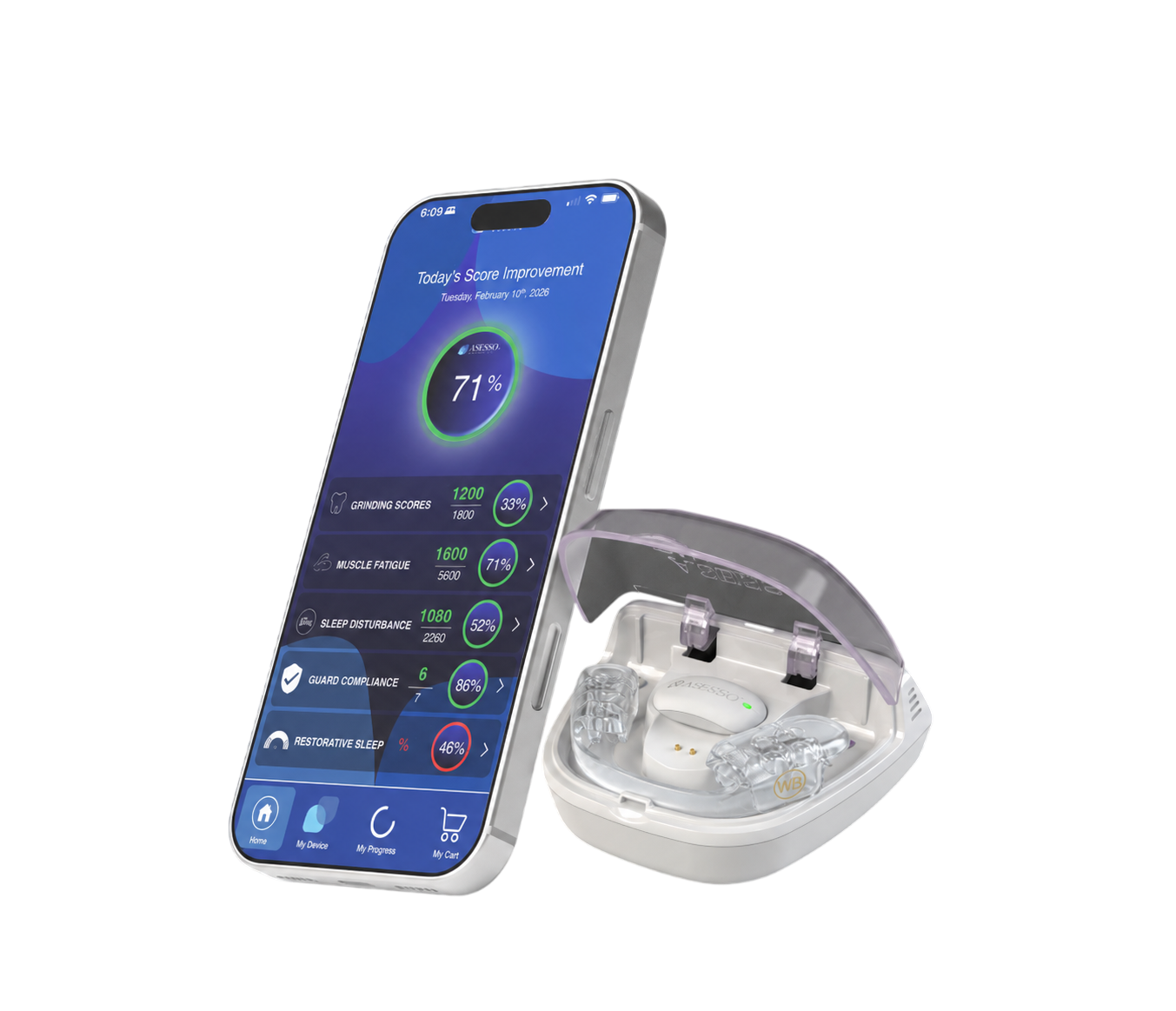
WAKEBRIGHT | While you work on breaking the daytime clenching habit, the Wakebright Guard protects your teeth from any grinding or clenching that continues while you sleep.
This article is for informational purposes only and does not constitute medical advice. Consult a licensed dentist or healthcare provider for diagnosis and treatment recommendations specific to your situation.
References
- National Institute of Dental and Craniofacial Research. "Bruxism." nidcr.nih.gov. https://www.nidcr.nih.gov/health-info/bruxism
- Mayo Clinic. "Teeth grinding (bruxism) – Diagnosis and treatment." mayoclinic.org. https://www.mayoclinic.org/diseases-conditions/bruxism/diagnosis-treatment/drc-20356100
- TODAY.com. "Dentist Shares 1 Simple Breathing Exercise to Stop Clenching Your Jaw." today.com. https://www.today.com/health/mind-body/expert-tip-to-stop-clenching-jaw-rcna224859
- Vieira, M.A. et al. "Effectiveness of Biofeedback in Individuals with Awake Bruxism Compared to Other Types of Treatment: A Systematic Review." International Journal of Environmental Research and Public Health, MDPI/PMC. https://www.ncbi.nlm.nih.gov/pmc/articles/PMC9863342/
- "Comparing botulinum toxin and biofeedback therapies for awake bruxism: a randomized clinical trial." BMC Oral Health, PMC. https://pmc.ncbi.nlm.nih.gov/articles/PMC12607165/