How to Sleep Better With Jaw Pain: Positions, Pillows, and Prep

Waking up with a sore, tight jaw has a way of setting the tone for your whole morning. If that's a regular occurrence for you, the problem often isn't just what's happening in your mouth at night it's how you're positioned, what your pillow is doing to your neck, and what your body is carrying into sleep in the first place. None of this replaces a dental evaluation if grinding or TMD is the underlying cause, but the right setup can meaningfully reduce how much your jaw suffers overnight.
Why Sleep Position Matters for Your Jaw
Your head weighs roughly 10-11 pounds, and where that weight rests for seven or eight hours a night has a direct effect on your neck, and by extension, your jaw. The temporomandibular joint doesn't operate in isolation it's mechanically and muscularly connected to your neck and cervical spine, so a posture that strains one tends to strain the other.
Back sleeping: generally the best option
Sleeping on your back is the position most consistently recommended for jaw pain, because it allows your head, neck, and spine to stay in a neutral line without extra pressure on either side of the jaw. It also reduces the likelihood of resting your face or hand directly against your jaw, which can happen easily inside or stomach positions.
If you're not used to back sleeping, don't expect the switch to feel natural right away sleep position habits are notoriously hard to change, and forcing it can just create a different kind of tension. A gradual approach, using pillows to make the position more comfortable, tends to work better than trying to force it in one night.
Side sleeping: workable, with the right setup
Side sleeping is far more common than back sleeping most people naturally gravitate to it and it's not inherently bad for your jaw, but it requires more attention to pillow height and positioning to avoid problems. Resting the side of your face directly and heavily into the pillow can compress the jaw joint on that side, which is a particular problem if you already have one-sided jaw pain.
If side sleeping is your default, avoid tucking your hand or fist under your jaw or cheek that adds direct pressure exactly where you don't want it. A properly sized pillow (more on that below) that keeps your neck level, rather than tilted up or down, makes side sleeping considerably more jaw-friendly.
Stomach sleeping: the position to avoid
Stomach sleeping is the position most consistently flagged as problematic for jaw pain, for a straightforward mechanical reason: to breathe, you have to rotate your head to one side and hold it there for hours. That sustained rotation strains the cervical spine and puts uneven pressure on the jaw joint on the side you're turned toward.
If you're a committed stomach sleeper, transitioning away from it is usually worth the effort if jaw pain is a recurring problem even a gradual shift toward side sleeping is an improvement.
Choosing a Pillow That Actually Helps
Pillow choice matters more than most people assume, and the right choice depends partly on which position you sleep in.
- Back sleepers generally do best with a medium-firm pillow with enough loft to support the neck's natural curve without tipping the head too far forward or letting it drop back. A thin pillow specifically supporting the neck (sometimes called a cervical or contour pillow) can help maintain that alignment.
- Side sleepers need a firmer, taller pillow than back sleepers the goal is keeping the space between your ear and shoulder filled so your neck stays level rather than angled down toward the mattress or propped too high.
- Stomach sleepers (while transitioning away from this position) should use the thinnest pillow they can tolerate, since a thick pillow only exaggerates the neck rotation that's already the core problem with this position.
A pillow that's too high or too flat for your position is one of the more fixable contributors to morning jaw and neck soreness it's worth experimenting with loft and firmness even before considering a specialty pillow.
What to Do in the Hour Before Bed
Sleep bruxism and nighttime jaw clenching happen unconsciously, which means you can't will yourself to stop mid-sleep but what you do before bed genuinely affects how tense your jaw is once you're out. This is where "sleep hygiene," a set of habits shown to improve overall sleep quality, overlaps directly with reducing nighttime jaw strain.
Build a consistent, calming wind-down. Going to bed and waking at consistent times helps regulate your nervous system, and a predictable pre-sleep routine — reading, light stretching, a warm shower — signals your body to downshift rather than stay braced.
Cut evening stimulants. Caffeine and alcohol both affect the central nervous system in ways that can increase muscle tension and disrupt sleep quality, including in the jaw. Avoiding caffeine in the afternoon and evening, and alcohol close to bedtime, is a reasonable and low-effort change to test.
Put screens away at least an hour before bed. Beyond the well-known effect on melatonin, late-evening scrolling news, social media, work email tends to keep your nervous system activated right when you want it winding down, and an activated nervous system is exactly the state associated with more clenching.
Try a short breathing or relaxation practice. A few minutes of slow, deep breathing (inhaling for a count of five to ten, then exhaling slowly) or a basic progressive muscle relaxation routine before bed can measurably reduce the muscle guarding that carries into sleep.
Do a jaw check before you lie down. Take thirty seconds to notice whether your jaw is tense, let your teeth come apart, and let your tongue rest gently against the roof of your mouth. It won't stay that way once you're asleep, but starting from a relaxed baseline rather than a clenched one is a small, genuinely useful habit.
Comparing Sleep Positions for Jaw Pain
| Position | Effect on Jaw | Recommendation |
|---|---|---|
| Back | Neutral head/neck/jaw alignment, least pressure on the joint | Best option for most people with jaw pain |
| Side | Can compress the jaw on the down side if pillow height is wrong | Workable with a properly sized pillow; avoid resting hand under jaw |
| Stomach | Forces prolonged head rotation, strains neck and jaw asymmetrically | Avoid; transition out gradually if this is your default |
Where a Night Guard Fits In
Sleep position and bedtime habits can meaningfully reduce jaw tension, but they don't eliminate sleep bruxism on their own grinding happens below conscious control, and no pillow or breathing exercise fully prevents it if it's happening. If your dentist has recommended a night guard, wearing it consistently remains the most direct way to protect your teeth from grinding-related damage while you work on the contributing factors around it. Position, pillow, and bedtime prep are complements to a guard, not substitutes for one if you've been told you need it.
When It's More Than a Setup Problem
Adjusting your sleep position and bedtime routine is genuinely worth trying, but it's not a substitute for a dental evaluation if:
- Jaw pain is present most mornings despite consistent changes to position and pillow
- You have signs of grinding a partner noticing sounds, visibly worn teeth, or a jaw that feels fatigued rather than just stiff on waking
- Jaw pain is accompanied by clicking, popping, or limited opening
- Pain is one-sided, sharp, or worsening rather than a dull, general tightness
These patterns point toward something a dentist should assess directly, rather than something sleep setup alone will resolve.
Frequently Asked Questions
What is the single best sleep position for jaw pain?
Back sleeping is generally the best-supported recommendation, since it keeps the head, neck, and spine aligned and avoids direct pressure on the jaw joint that side and stomach sleeping can cause.
Can changing my pillow really make a difference for jaw pain?
Yes pillow height and firmness directly affect neck alignment, and misalignment there commonly translates into jaw strain, especially for side sleepers whose pillow is too high or too flat.
Will sleep position changes cure my teeth grinding?
No. Sleep position and bedtime habits can reduce overall muscle tension, but sleep bruxism happens unconsciously and isn't something position alone resolves. A night guard is still the standard protective measure if grinding is diagnosed.
How long does it take to adjust to a new sleep position?
There's no fixed timeline, and forcing a change too abruptly can create its own tension. A gradual approach using pillows to make the new position more comfortable tends to work better than trying to switch overnight.
Is it bad to sleep with my hand under my face?
Yes, if you're a side sleeper resting your hand, fist, or arm under your jaw or cheek adds direct pressure to the joint and is worth breaking as a habit if you have jaw pain.
Does caffeine or alcohol actually affect nighttime teeth grinding?
Both affect the central nervous system in ways that can increase muscle tension and disrupt sleep quality, and cutting back particularly in the evening is a reasonable, low-risk change to try if you're dealing with jaw pain or grinding.
Should I still wear my night guard if I fix my sleep position?
Yes, if a dentist has recommended one. Sleep position and habits address contributing factors, but they don't replace the protection a night guard provides against grinding-related tooth damage.
Can stress before bed really cause jaw clenching overnight?
Yes an activated, stressed nervous system at bedtime is associated with more nighttime clenching, which is part of why a calming wind-down routine genuinely helps, not just as general wellness advice.
What pillow thickness is best if I'm a side sleeper?
Side sleepers generally need a taller, firmer pillow than back sleepers, since the goal is filling the space between your ear and shoulder so your neck stays level rather than tilted.
When should I stop trying self-care and see a dentist about jaw pain?
If jaw pain persists most mornings despite consistent changes to sleep position and habits, or if you notice signs of grinding, clicking, or one-sided pain, it's time for a dental evaluation rather than continuing to self-manage indefinitely.
What You Can Do Now
- Back sleeping with a properly sized pillow is generally the best position for reducing jaw strain
- A consistent, calming bedtime routine and cutting evening stimulants genuinely help reduce nighttime tension
- These habits complement, but don't replace, a prescribed night guard if grinding has been diagnosed
- Persistent morning jaw pain despite these changes is a signal to bring it to your dentist
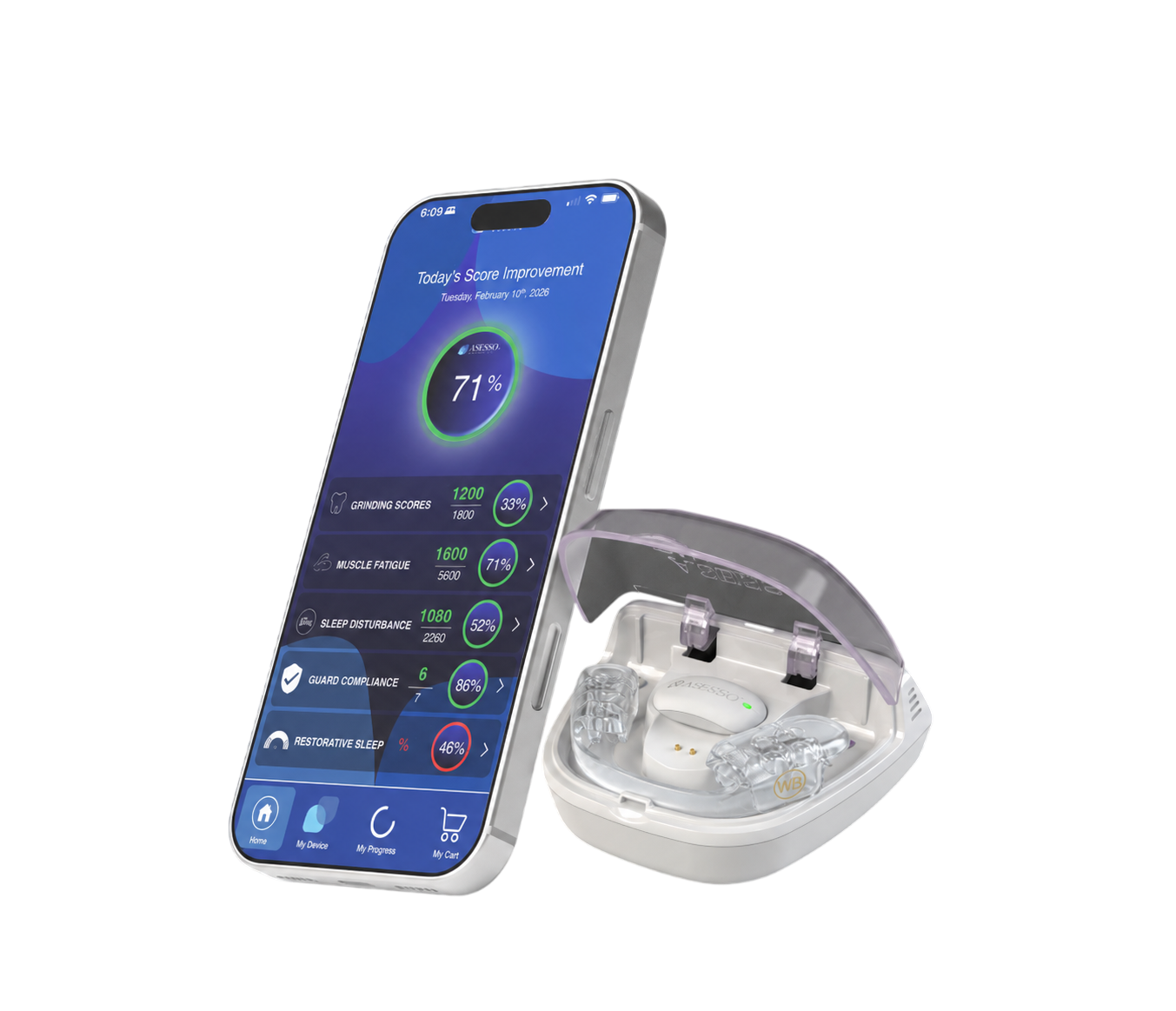
WAKEBRIGHT Combining a better sleep setup with the Wakebright Guard addresses both the mechanical and the muscular sides of morning jaw pain.
This article is for informational purposes only and does not constitute medical advice. Consult a licensed dentist or healthcare provider for diagnosis and treatment recommendations specific to your situation.
References
- Johns Hopkins Medicine. "Bruxism." hopkinsmedicine.org. https://www.hopkinsmedicine.org/health/conditions-and-diseases/bruxism
- Sleep Foundation. "How to Stop Grinding Teeth at Night." sleepfoundation.org. https://www.sleepfoundation.org/bruxism/tips
- Cleveland Clinic. "7 Tips To Stop Grinding Your Teeth at Night." health.clevelandclinic.org. https://health.clevelandclinic.org/how-to-stop-grinding-teeth
- Sleep Foundation. "Best Pillows for Neck Pain in 2026: Data-Backed Expert Picks." sleepfoundation.org. https://www.sleepfoundation.org/best-pillows/best-pillow-for-neck-pain