How to Get More Deep Sleep: Evidence-Based Tips for a Restful Night

Understanding Deep Sleep: Why It Matters
Sleep is not uniform. Across the night, your brain cycles through different sleep stages, each with its own restorative role. Deep sleep, also called slow-wave sleep (SWS), is the stage where your body repairs muscle damage, consolidates memories, clears metabolic waste from your brain, and rebuilds energy reserves. Without enough deep sleep, you wake unrefreshed even after logging plenty of hours.
During deep sleep, brain wave activity slows dramatically, your heart rate drops, blood pressure falls, and growth hormone surges. This is when genuine restoration takes place. A night rich in deep sleep leaves you alert, energized, and resilient. A night short on it leaves you foggy, irritable, and craving more sleep. Yet many people spend 7 to 8 hours in bed and still feel tired, because most of that time is lighter sleep.
The amount of deep sleep you get declines naturally with age. In childhood it might make up 15 to 20 percent of total sleep, while by middle age it drops to 5 to 10 percent. At any age, however, lifestyle factors have a dramatic influence on how much deep sleep you actually reach. Stress, poor sleep hygiene, bruxism, breathing disruptions, and jaw muscle tension all fragment sleep and cut into the deep sleep percentage.
Understanding which factors disrupt your personal sleep architecture is the first step toward recovery. Common culprits include nighttime teeth grinding and jaw muscle tension, both of which create arousals that keep you from reaching or holding deep sleep. Addressing these factors can transform your sleep quality without your having to sleep any longer.
How Bruxism Disrupts Deep Sleep
Bruxism, meaning teeth grinding and jaw clenching during sleep, is a major and often unrecognized deep sleep killer. Grinding episodes generate muscle tension, tooth impacts, and neural arousal that pull you out of deep sleep and into lighter stages. A person may never consciously wake, yet the brain registers each event as a microarousal, a brief activation that blocks deep sleep. Hundreds of these episodes a night fragment sleep architecture.
Each grinding episode essentially resets your sleep stage progression. Your brain was drifting deeper into restorative sleep, and the grinding arousal jerks it back toward wakefulness. You sink back into deep sleep, and the pattern repeats. Across a whole night, you accumulate far less actual deep sleep than the clock suggests. This is why someone can sleep 8 hours, grind heavily, and still wake exhausted.
Bruxism often intensifies during stress and poor sleep quality, which creates a vicious cycle. Stress triggers grinding, grinding fragments sleep, fragmented sleep increases stress vulnerability, and more stress triggers more grinding. Breaking this cycle means addressing the grinding directly, which happens mostly during sleep, when conscious prevention is impossible.
Grinding also stresses your nervous system as a whole, holding it in a heightened arousal state. Even when it does not fully wake you, it keeps your nervous system in fight-or-flight activation. That prevents the parasympathetic, or rest, activation that deep sleep requires. Reducing grinding-induced stress and arousal lets your nervous system genuinely rest.
Jaw Muscle Tension as a Sleep Disruptor
Beyond grinding, plain chronic jaw muscle tension prevents deep sleep. Muscles that carry constant tension through the day stay tense into sleep. That ongoing tension maintains a low-level nervous system activation that blocks the parasympathetic dominance deep sleep depends on. Your nervous system cannot fully relax while the jaw muscles remain chronically tight.
Tense muscles also produce proprioceptive feedback, meaning body-awareness signals, that keeps your brain partly occupied with monitoring that tension. This background muscle vigilance prevents the mental and physical relaxation that allows entry into deep sleep. It is like trying to sleep with a persistent ache: even if you do not consciously focus on it, your brain registers and responds to it.
Stress accumulated through the day tends to show up as jaw muscle tension by evening. You arrive at bedtime already clenched and tense. Sleep does not automatically release this tension, so you spend the night with background muscle tension that prevents full parasympathetic activation. The result is that you sleep but never truly relax, and deep sleep stays out of reach.
This is exactly why nighttime jaw muscle support can dramatically improve sleep quality. By reducing jaw muscle tension during sleep, the very window when conscious relaxation is impossible, you remove a constant arousal stimulus. Your nervous system can shift fully into parasympathetic dominance, which allows deep sleep to begin and continue.
Sleep Hygiene and Environmental Factors
Your sleep environment has a profound effect on sleep quality. A cool room, around 65 to 68 degrees Fahrenheit, promotes deep sleep better than a warm one, because your body temperature needs to drop to enter deep sleep and a cool room helps that happen. Darkness matters just as much: any light triggers arousal responses and disrupts melatonin production. Complete darkness, or a high-quality sleep mask, helps significantly.
Sound and distraction also prevent deep sleep. Even quiet snoring from a bed partner or traffic outside disrupts sleep architecture below conscious awareness. White noise machines or earplugs help by masking the variable sounds that trigger arousals. The key is steady, non-startling sound rather than variable, unexpected sound.
A consistent sleep schedule improves the deep sleep percentage dramatically. Your body runs on natural circadian rhythms, and sleeping and waking at consistent times aligns your physiology with them. Irregular schedules, going to bed at 10 PM one night and midnight the next, fragment your sleep architecture and reduce deep sleep. Consistency matters more than total hours.
A pre-sleep wind-down prepares your nervous system for deep sleep. Bright light, stimulation, and stress-inducing activities before bed keep the sympathetic system switched on. Instead, dim lights (with blue-light filtering), calm activities such as reading, stretching, or meditation, and a comfortable temperature signal to your body that sleep is safe. This 30 to 60 minute transition allows genuine parasympathetic activation.
Stress Management and Nervous System Regulation
Chronic stress may be the single most powerful deep sleep disruptor. Stress raises cortisol through the day and often carries into the evening, keeping the sympathetic, or stress, nervous system switched on. High sympathetic tone blocks the parasympathetic activation deep sleep requires. On top of that, stress triggers jaw clenching and grinding, doing double damage to your sleep.
Stress management is not a luxury; it is essential sleep medicine. Practices such as meditation, deep breathing, progressive muscle relaxation, or gentle yoga shift the nervous system from sympathetic to parasympathetic. They lower cortisol, ease muscle tension, and genuinely prepare your physiology for sleep. Research consistently shows that stress management improves both sleep quality and the deep sleep percentage.
Breathing practices are especially powerful. Slow, deep breathing activates the parasympathetic nervous system through the vagus nerve. A simple pattern, breathing in for a 4 count, holding for 4, and exhaling for 6, signals safety to your nervous system. Practicing it for 5 to 10 minutes before bed, or whenever you notice nighttime jaw tension, can move you toward deeper sleep.
Daytime stress management matters as much as any bedtime routine. People who manage stress regularly through the day arrive at bedtime with lower baseline tension and lower cortisol. That metabolic head start makes entering deep sleep much easier. Regular exercise, social connection, time in nature, and deliberate stress-reduction practices build the physiological foundation for good sleep.
Actionable Steps to Increase Deep Sleep Tonight and Beyond
Start with your environment: keep the bedroom cool (65 to 68 degrees Fahrenheit), completely dark (or use a sleep mask), and quiet (white noise if needed). This costs little yet improves the deep sleep percentage meaningfully. Turn the thermostat down and install blackout curtains if light is a problem. These environmental changes often produce noticeable improvement within days.
Establish a consistent sleep schedule: sleep and wake at the same times daily, weekends included. Your body craves consistency, and circadian alignment improves sleep quality. If your hours are currently irregular, shift gradually, in 15 to 30 minute steps per day, rather than abruptly. Within 2 to 3 weeks, your body adapts and sleep quality improves noticeably.
Address jaw muscle tension directly. This is often overlooked but incredibly impactful. If you grind or clench at night, seek professional assessment. A dentist can evaluate the evidence of bruxism and consider interventions such as night guards or specialized jaw support devices designed to reduce nighttime muscle load. If you carry daytime jaw tension, practice conscious relaxation through the day and consider jaw muscle stretches.
Build in pre-sleep relaxation: spend 30 to 60 minutes before bed on calm activities under dimmed or warm-spectrum light. Practice deep breathing, gentle stretching, meditation, or reading. Avoid screens, or at least reduce their brightness. This wind-down period tells your body that sleep is safe and moves your nervous system toward parasympathetic dominance.
Manage stress proactively: identify your personal stress triggers and build strategies to handle them. Exercise regularly, practice meditation or yoga, keep up social connections, and spend time in nature. These investments in daytime stress management create the physiological foundation for deep sleep. Start with just 5 to 10 minutes a day of intentional stress management.
What You Can Do Now
Deep sleep (slow-wave sleep) is where genuine restoration happens: your body repairs tissue, consolidates memory, and clears metabolic waste.
Bruxism and jaw muscle tension fragment deep sleep by creating microarousals that prevent both entry into and maintenance of deep sleep.
A cool, dark, quiet sleeping environment supports deep sleep far more than most people realize.
A consistent sleep schedule aligns your circadian rhythms and improves the deep sleep percentage more than simply sleeping longer.
Stress management and nervous system regulation are essential, because your nervous system has to shift into parasympathetic dominance to reach deep sleep.
Nighttime jaw muscle support removes a major sleep disruptor, letting your nervous system fully relax into deeper, more restorative sleep.
Frequently Asked Questions
Q: What percentage of sleep should be deep sleep?
Adults typically get 5 to 15 percent deep sleep, depending on age and sleep quality. Younger people naturally get more, older adults less. Most people would benefit from landing at the higher end of that range. Improving the deep sleep percentage is as important as total sleep duration.
Q: How does bruxism affect deep sleep?
Teeth grinding creates arousals that pull you out of deep sleep and into lighter stages. Hundreds of grinding episodes a night fragment sleep architecture, leaving you with minimal actual deep sleep despite an adequate duration. This is why heavy bruxism causes exhaustion even after a full night in bed.
Q: Can jaw muscle tension prevent deep sleep?
Yes. Chronic muscle tension keeps the sympathetic, or stress, nervous system activated, preventing the parasympathetic shift that deep sleep needs. The tension also generates proprioceptive feedback that keeps your brain partly engaged. Reducing jaw muscle tension allows genuine relaxation and entry into deep sleep.
Q: What room temperature is best for deep sleep?
Research suggests 65 to 68 degrees Fahrenheit (18 to 20 degrees Celsius) is optimal for most people. A cool room supports the body temperature drop needed to enter and maintain deep sleep. A room that runs too warm interferes with that temperature regulation and reduces the deep sleep percentage.
Q: How long does it take to improve deep sleep?
Environmental and behavioral changes, such as a cool room, darkness, a consistent schedule, and stress management, often show improvement within days to a week. Addressing grinding and jaw muscle tension may take longer, since those require habit change or professional intervention, but improvement typically appears within 2 to 3 weeks.
Q: Can exercise improve deep sleep?
Yes. Regular aerobic exercise increases the deep sleep percentage significantly. Timing matters, though: intense exercise within 2 to 3 hours of bedtime can disrupt sleep. Exercising 4 or more hours before bed generally improves sleep quality and increases deep sleep.
Q: Does alcohol affect deep sleep?
Yes, and negatively. Although alcohol may help you fall asleep at first, it reduces both deep sleep and REM sleep, fragments the structure of your sleep, and lowers overall sleep quality. Its disruptive effect typically shows up in the second half of the night.
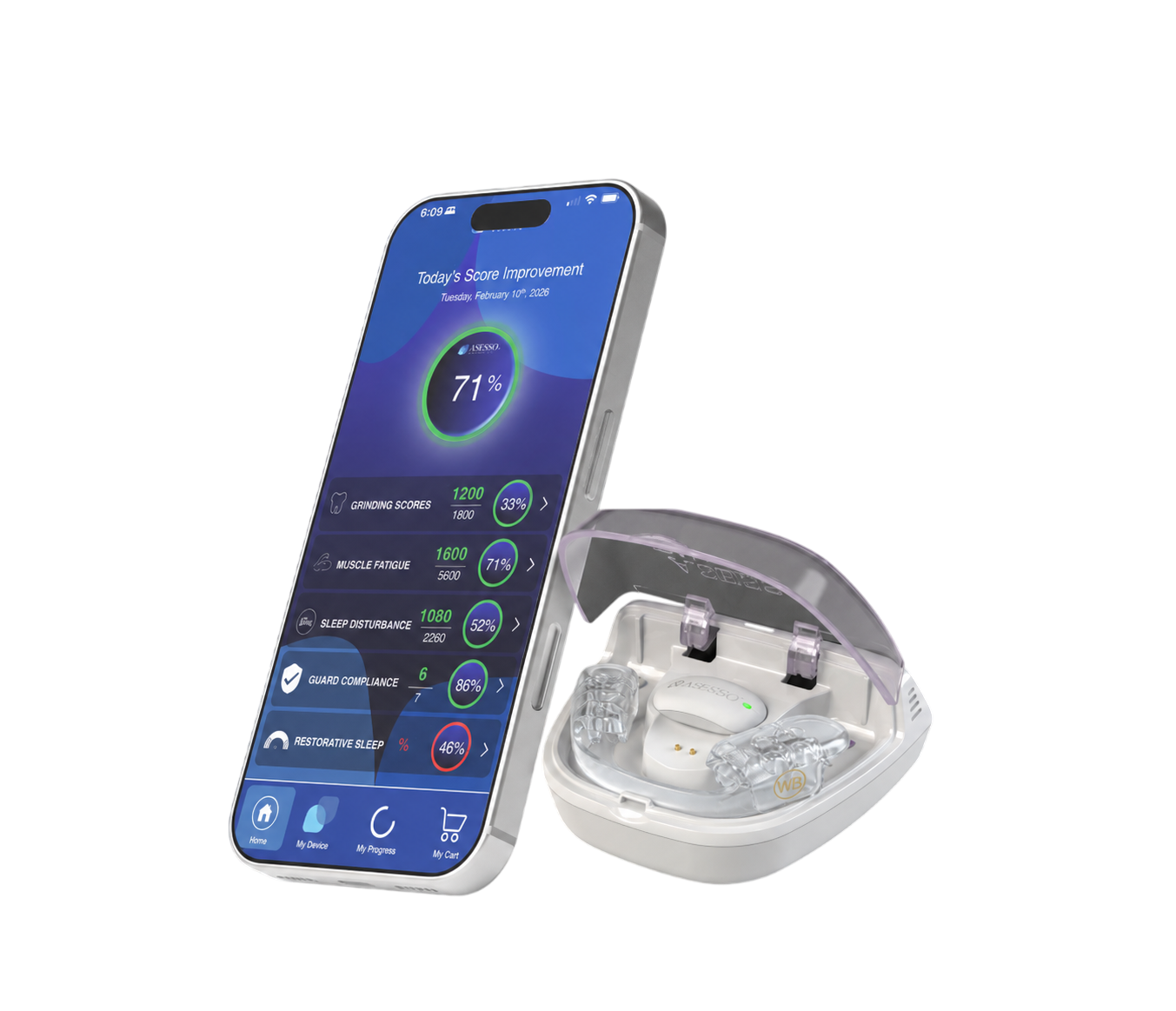
WAKEBRIGHT | If jaw muscle tension or grinding disrupts your deep sleep, the Wakebright Grind Guard addresses it directly by reducing jaw muscle load during sleep, the time when conscious prevention is impossible. Better deep sleep often follows once this disruptor is removed. This article is for educational purposes only and does not constitute medical or dental advice. Please consult a qualified healthcare provider for personalized guidance.