How to Find the Right Dental Care for Jaw Pain, Bruxism, and TMD

Jaw pain is one of those conditions that sends people in circles. You see your primary care doctor, who refers you to a dentist. The dentist finds nothing structurally wrong and sends you home with a night guard. The night guard helps a little, but the morning soreness persists, the headaches continue, and you are left wondering whether you have missed something important.
The reality is that jaw pain, bruxism, and TMD sit at an unusual intersection of medicine and dentistry, and depending on which type of provider you see first, you may get a very different picture of what is wrong and what to do about it. Finding the right care means understanding not just which kind of provider to see, but what to look for within that specialty and what questions to ask before committing to a treatment plan.
This guide is your roadmap for navigating the dental and medical landscape when jaw health is the goal.
Why Finding the Right Provider Is Harder Than It Sounds
TMD and bruxism are multifactorial conditions. They involve muscles, joints, the nervous system, sleep, and psychology, and no single specialty owns them completely. Dentists manage the dental consequences. Physicians manage medical comorbidities. Physical therapists address the musculoskeletal component. Sleep specialists manage the sleep-related dimension. Psychologists address the stress and behavioral drivers.
In an ideal world, these providers would collaborate seamlessly around a shared understanding of your condition. In practice, many patients run into fragmented care: a dentist who makes a night guard but never screens for sleep apnea, a physician who prescribes a muscle relaxant but does not connect the dots to jaw dysfunction, a physical therapist unfamiliar with TMD-specific treatment protocols.
Knowing what each type of provider offers, and where the gaps sit, lets you build a more complete care team proactively rather than discovering the gaps after treatment has already failed.
Types of Providers for Jaw Pain and TMD
Understanding the landscape of specialists who treat jaw-related conditions helps you steer toward the right expertise.
General Dentists
General dentists are typically the first point of contact for bruxism and TMD. They are well-positioned to diagnose the dental consequences of bruxism (enamel wear, fractures, tooth sensitivity), fabricate custom night guards, identify bite abnormalities that may contribute to TMD, and refer to specialists when appropriate.
What general dentists may not offer: specialized training in myofascial pain, expertise in sleep-related bruxism management, or integration with physical therapy. Ask your general dentist specifically about their experience with TMD diagnosis and treatment before assuming they are the right lead clinician for your jaw pain.
Oral Medicine and Orofacial Pain Specialists
Orofacial pain specialists, who sometimes practice under the umbrella of oral medicine, represent the most specialized dental expertise for TMD and bruxism. These clinicians complete advanced training in diagnosing and managing complex jaw pain, neuropathic facial pain, and sleep-related oral disorders. If you have been struggling with persistent TMD symptoms that have not responded to basic dental care, an orofacial pain specialist is likely your best resource.
Physical Therapists (Jaw-Specialized)
Physical therapists with specific training in craniofacial and temporomandibular conditions offer treatments that dentists generally cannot: manual therapy to release tight masseter and temporalis muscles, trigger point therapy, jaw-specific therapeutic exercise, postural correction, and patient education around jaw habits. In many cases, physical therapy is the most effective intervention for the muscular component of TMD, and it is frequently underused because patients are never referred.
Sleep Medicine Physicians
Because sleep bruxism is a sleep-related movement disorder, and because sleep apnea significantly worsens bruxism, sleep medicine physicians play an important role in comprehensive jaw care. If you have significant snoring, witnessed breathing pauses, excessive daytime sleepiness, or poorly controlled bruxism despite other treatments, a sleep study can determine whether sleep-disordered breathing is a contributing factor.
What to Ask Before Starting Treatment
The quality of your care depends significantly on the questions you ask before committing to a treatment plan. These are the most important conversations to have with any provider treating your jaw condition.
"What is the primary driver of my symptoms, the joint, the muscles, or both?" The answer shapes everything about which treatment makes sense. Muscle-driven TMD is generally treated very differently from a structural joint problem.
"Does my treatment address the cause or just the consequences?" A night guard, for example, addresses the consequence (tooth damage) but not the cause (muscle overactivation). Understanding this distinction helps you know what to expect and which additional interventions you may need.
"Are you screening me for sleep apnea?" TMD and sleep apnea co-occur at elevated rates. If your provider is not asking about sleep quality, snoring, or daytime fatigue, it is worth raising the topic yourself.
"Do you coordinate with physical therapists or other specialists?" Integrated care, where multiple providers work toward the same goals, produces better outcomes than siloed treatment. A provider who proactively folds physical therapy into their TMD care planning is likely offering a more comprehensive approach.
"What does success look like, and how will we know if this is working?" Clear benchmarks for progress help you evaluate whether the approach is working and when to consider alternatives.
Red Flags to Watch For
Not all TMD and bruxism treatment is equal, and some approaches carry risk. Be thoughtful if any provider recommends the following without prior conservative treatment.
Irreversible dental procedures, such as grinding down teeth to change your bite or extensive crown work, carry significant risk as a first-line TMD treatment and are rarely indicated before non-invasive options have been exhausted. Surgery for TMD is appropriate in a minority of cases involving genuine structural joint pathology, and it should never be a first recommendation. Aggressive repositioning splints that dramatically change your bite position can create new problems, and most clinical guidelines recommend more conservative splint designs as a starting point.
Complementing Professional Care with Wakebright
Professional dental and medical care is essential for diagnosing and managing jaw conditions. But what happens between appointments, specifically during the hours you spend asleep, is where much of the damage accumulates and where much of the recovery opportunity lies.
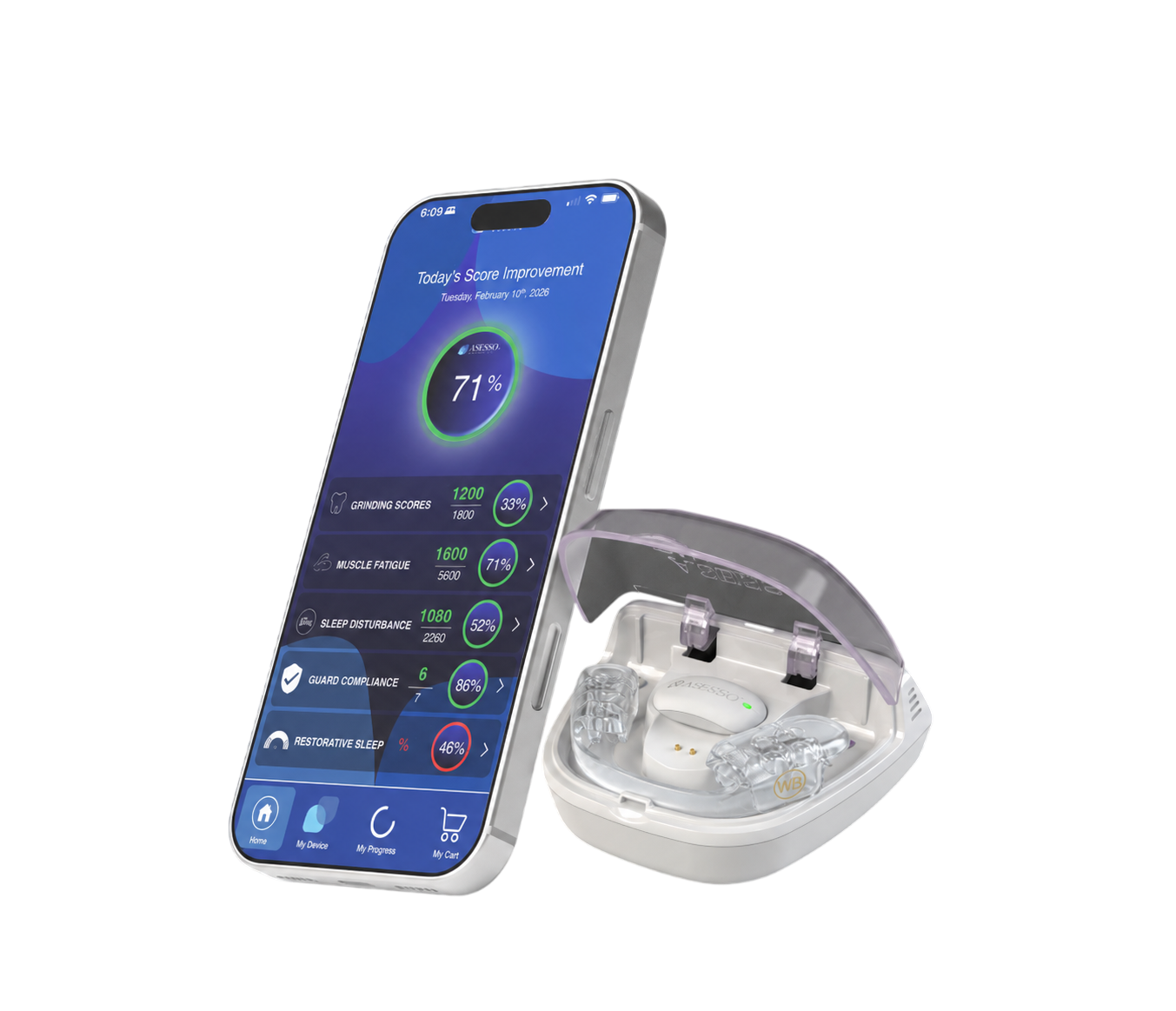
Wakebright provides a non-invasive, at-home system that addresses what no dental appointment can directly manage: the jaw muscle activity that occurs during sleep. By targeting the muscles during the hours when bruxism is most active, Wakebright complements your professional care team rather than replacing it.
Bringing information about Wakebright to your dental or medical provider creates an opening for a productive conversation about folding this approach into your overall treatment plan. Most clinicians respond positively to patients who are proactively managing the between-appointment dimension of their condition.
What You Can Do Now
TMD and bruxism sit at the intersection of dentistry, medicine, physical therapy, and sleep medicine, and no single specialist covers the full picture.
Orofacial pain specialists and jaw-specialized physical therapists offer the most targeted expertise for complex, persistent jaw conditions.
Always ask providers whether treatment addresses the cause of your condition or just the consequences, because that determines which gaps remain in your care plan.
Sleep apnea co-occurs with bruxism at elevated rates, so if you have not been screened, raise the question with your provider.
Irreversible dental procedures should never be a first-line TMD treatment, so exhaust conservative options first.
What happens in your jaw during sleep is largely outside the scope of what appointments address, so at-home management of that window is a critical complement to professional care.
Frequently Asked Questions
Q: Should I see a dentist or a doctor for jaw pain?
Either can be an appropriate starting point. General dentists are well-positioned to identify dental causes and consequences of jaw pain. Primary care physicians can rule out medical causes and address systemic factors. For persistent, complex jaw pain, an orofacial pain specialist or a TMD-trained physical therapist often offers the most targeted expertise.
Q: Does insurance cover TMD treatment?
Coverage varies considerably. Some dental insurance plans cover a portion of night guard fabrication. Medical insurance may cover TMD-related care when it is managed as a medical rather than dental condition, particularly when it is tied to documented physical therapy or specialist evaluation. Navigating this often takes advocacy and documentation from your clinical team.
Q: How do I find a physical therapist who treats TMD?
Ask your dentist or physician for a referral to a PT with craniofacial or TMD experience. Many physical therapy practices list their specialty areas on their websites. The Academy of Orofacial Pain and the American Academy of Craniofacial Pain maintain directories that can help you identify qualified practitioners in your area.
Q: What should I bring to my first TMD appointment?
Bring a summary of your symptoms (duration, severity, what makes them better or worse), a list of all medications and supplements, any relevant dental or medical records, and notes about your sleep quality and stress levels. The more context you provide, the more efficiently your provider can build an accurate picture of your condition.
Q: Is telehealth an option for jaw pain management?
Telehealth has a limited but real role in jaw pain care. Initial consultations, follow-up appointments, prescription management, and psychologically based approaches (such as CBT for bruxism) can all be delivered by telehealth. Physical examination and hands-on physical therapy require in-person visits. Sleep studies, while increasingly available in take-home formats, require coordination with a sleep physician.
WAKEBRIGHT | Navigating jaw pain treatment can feel overwhelming, but you do not have to figure it all out alone. Wakebright provides the at-home component of comprehensive jaw care that professional appointments often cannot reach: targeted support for your jaw muscles during sleep. Start your journey toward complete jaw health and discover how Wakebright can complement the professional care you are already pursuing. This article is for educational purposes only and does not constitute medical or dental advice. Please consult a qualified healthcare provider for personalized guidance.