How Do Nasal Strips Work?

The Mechanics Behind Nasal Strips
Nasal strips are adhesive devices applied across the bridge of the nose. They contain flexible metal or plastic strips embedded in the adhesive backing. When you apply a nasal strip, these internal strips are pre-curved to create tension that mechanically pulls the nasal passages open. Think of them as tiny structural supports: the curved strips hold the nasal tissue in a more dilated position, reducing the airflow resistance that occurs when nasal passages narrow due to congestion, swelling, or structural deviation.
The effect is purely mechanical and immediate. As soon as the strip adheres to your skin and the tension takes hold, the nasal passages widen slightly. That widening reduces the effort required to breathe through the nose, making nasal breathing feel easier and more natural. No medication is involved, and there are no systemic effects. The strip simply changes the physical shape of the external nasal passage to optimize airflow. Most users notice the effect within seconds of applying the strip.
When Nasal Strips Help Most
Nasal strips work particularly well for two groups: people with nasal congestion, and people with snoring driven by nasal airway resistance. If a cold, allergies, or seasonal congestion is making your nose feel stuffy, a nasal strip genuinely opens the passage and reduces breathing effort. Athletes and fitness enthusiasts often use them during workouts because they increase oxygen intake when the nasal passages are clear. For these temporary, congestion-based scenarios, nasal strips deliver noticeable relief.
Snoring caused primarily by nasal obstruction also responds well. When the nasal passages are narrow or restricted, airflow becomes turbulent, creating the vibration and sound we call snoring. Widening those passages with a strip reduces turbulence and can significantly quiet snoring in people whose snoring stems from nasal anatomy or congestion. Many people report that their partners notice immediate snoring reduction after strip application, and this effect is reproducible and documented in sleep research.
Nasal strips are also inexpensive, non-invasive, and free of side effects for most users. They carry no systemic absorption, do not interfere with medications, and require no special application or removal process. For mild congestion or congestion-driven snoring, they represent a straightforward first-line option worth trying.
The Important Limitations
Nasal strips do not address snoring or sleep problems caused by jaw position or muscle tension. If your snoring stems from jaw clenching, poor tongue posture during sleep, or restricted airway space caused by jaw positioning, a nasal strip will not solve the problem. The nasal passages might be wide open, but if the jaw is tight and positioned in a way that compresses the airway further down, the snoring persists. This is a critical distinction that many people miss. They apply a strip, experience temporary improvement if congestion was part of the picture, and then wonder why snoring returns.
Nasal strips also do not work well for people with structural nasal deviation severe enough to significantly block airflow, such as a deviated septum that substantially narrows one side. They can help but cannot fully resolve the issue because they cannot overcome fundamental anatomical obstruction. Their mechanical widening is modest, typically increasing nasal airway diameter by 30 to 40 percent when properly applied, which is helpful but not unlimited.
Skin sensitivity is another limitation. Some people develop contact dermatitis from the adhesive, especially with regular use. The skin on the bridge of the nose is delicate, and nightly strip application can cause redness, irritation, or allergic reactions over time. Users need to remove strips gently and may need to take days off to let the skin recover. For people with very sensitive skin or certain dermatological conditions, strips may not be tolerable long-term.
Nasal Strips vs. Jaw Repositioning and Combined Approaches
Nasal strips and jaw repositioning address different anatomical problems. A nasal strip optimizes airflow through the nasal passages. Jaw repositioning relaxes the jaw muscles and opens the airway space at the throat and jaw level. A person with both nasal congestion and jaw clenching could benefit from both: the strip improves nasal airflow while jaw repositioning reduces the obstruction created by jaw tension further down the airway.
Nasal strips are temporary though; you remove them each morning. Jaw repositioning works throughout the night and, for some device designs, extends its benefits into the day. Strips treat the symptom (nasal obstruction) while jaw repositioning addresses a root cause (muscle tension). If your sleep problem is primarily driven by jaw clenching and the resulting muscle fatigue, a nasal strip will not substantially improve it. You would be treating a secondary factor while ignoring the primary mechanism.
For maximum effectiveness with complex sleep issues, a two-pronged approach often makes sense. If nasal congestion is a factor, a nasal strip can help, but pairing it with attention to jaw positioning and muscle relaxation addresses the bigger picture. Someone with both seasonal allergies and chronic jaw clenching might find that treating the congestion with strips during allergy season, while also addressing jaw tension with proper positioning, produces the best sleep quality. Each tool tackles a different problem in the sleep physiology puzzle.
What You Can Do Now
Nasal strips work by mechanically opening nasal passages, making breathing easier when congestion or obstruction is present.
They are most effective for congestion-driven snoring and temporary airway resistance, not for structural problems like sleep apnea.
Nasal strips do not address snoring or sleep issues caused by jaw clenching or poor jaw positioning.
They are inexpensive, non-invasive, and free of side effects for most people, making them a reasonable first-line option for nasal obstruction.
Skin irritation and reduced effectiveness over time are common limitations with regular nightly use.
For comprehensive sleep improvement, combining nasal strips with jaw repositioning addresses both nasal and jaw-based factors.
Frequently Asked Questions
Q: How long do nasal strips stay adhered to the skin?
Quality nasal strips typically stay adhered for 8 to 10 hours with normal sleeping movement. Excessive sweating, humidity, or rough removal can reduce durability. They are designed for single-night use and should be removed gently in the morning and discarded. Attempting to reuse strips usually results in poor adhesion.
Q: Can children use nasal strips?
Many nasal strips are labeled for ages 5 and up, but parental discretion is important. Young children might remove the strip during sleep or wake up distressed if they feel restricted. For children, ensuring proper sleep position and addressing any underlying congestion through saline rinses is often preferable before introducing strip-based solutions.
Q: Do nasal strips help with sleep apnea?
Nasal strips can reduce apnea severity if the apnea is caused primarily by nasal obstruction, but they are not a treatment for true sleep apnea. If you have diagnosed sleep apnea, a healthcare provider should evaluate whether strips might be a helpful adjunct, but they should not replace proper apnea treatment like CPAP or other prescribed devices.
Q: Why do nasal strips stop working for some people over time?
Some users experience reduced benefit over weeks or months because they develop skin tolerance, the adhesive strength decreases with repeated applications, or the underlying cause of their snoring has shifted. If snoring stems from jaw position rather than nasal congestion, addressing the jaw issue is more effective than continuing to use strips.
Q: Are there differences between nasal strip brands?
Most nasal strips use the same mechanical principle, with flexible strips embedded in adhesive. Differences lie in adhesive strength, material flexibility, and comfort. Some people find certain brands less irritating to their skin. The core function is similar across brands, so trying a couple to find your preference is a reasonable approach.
Q: Can nasal strips be combined with other sleep products?
Yes. Nasal strips can be used alongside humidifiers, saline rinses, or jaw positioning devices. If you use a CPAP mask, a strip under the mask might help, but check with your sleep specialist to ensure it does not interfere with the mask seal or airflow. Combining approaches is often more effective than using one tool alone.
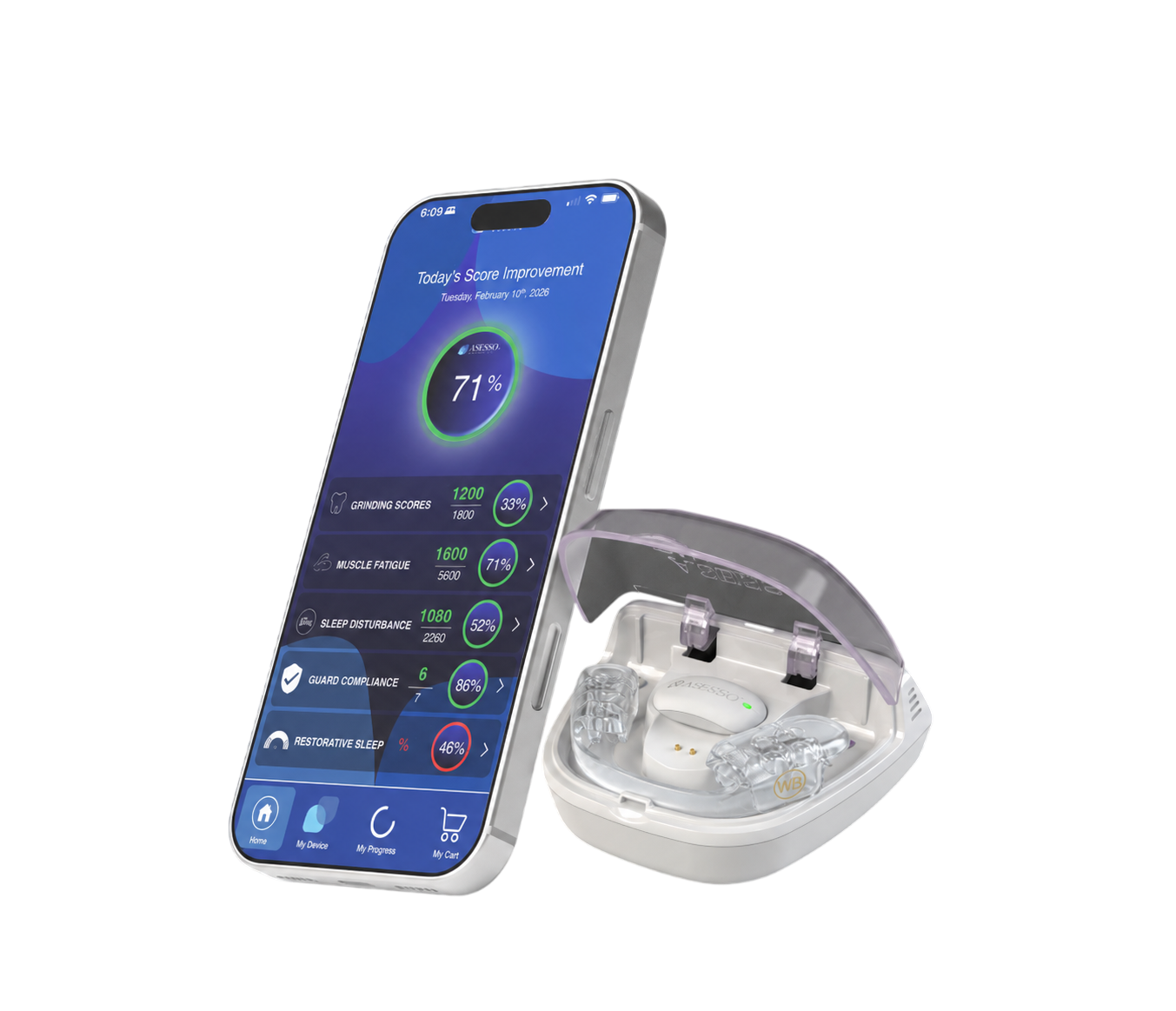
WAKEBRIGHT | While nasal strips help with congestion, many sleep problems, especially snoring tied to jaw tension, require addressing the jaw directly. The Wakebright Grind Guard repositions your jaw to reduce muscle stress and support better sleep. Discover how more than 20 years of real-world use has helped people improve their sleep without relying solely on temporary fixes. This article is for educational purposes only and does not constitute medical or dental advice. Please consult a qualified healthcare provider for personalized guidance.