How Do I Know If I Grind My Teeth at Night? 10 Signs to Check

Sleep bruxism has a strange quality that makes it hard to self-diagnose: it happens while you're completely unconscious. There's no moment where you catch yourself doing it, no memory to check against. What you're left with instead are the after-effects clues your body leaves behind that add up to a fairly reliable picture, once you know what to look for. Here are 10 signs worth checking, based on clinical guidance from Mayo Clinic and the National Institute of Dental and Craniofacial Research (NIDCR).
Why It's Hard to Know You're Doing It
Sleep bruxism is classified as a sleep-related movement pattern, which means it happens during specific stages of sleep, largely outside conscious awareness. Many people find out only when a dentist notices wear on their teeth during a routine exam, or when a partner mentions hearing grinding sounds which is exactly why a checklist of downstream signs is more useful here than trying to "notice" it directly.
10 Signs You Might Be Grinding Your Teeth at Night
1. A Partner Has Mentioned Grinding or Clenching Sounds
This is one of the more direct signs, when it's available to you. Mayo Clinic specifically lists grinding or clenching loud enough to wake a sleep partner as a recognized symptom. If you sleep alone, this clue simply isn't available which is part of why the rest of this list matters.
2. Flattened, Fractured, Chipped, or Loose Teeth
Take a look at your teeth, particularly your molars and canines, in a mirror. Flattened edges, small chips, or a tooth that feels slightly loose are physical evidence of repeated grinding forces, and they're often the sign a dentist spots first during a routine checkup, even before a patient has noticed anything themselves.
3. Worn Tooth Enamel
Beyond visible chips, grinding gradually wears down the protective enamel layer on your teeth, sometimes exposing the softer dentin layer underneath. This kind of wear can be subtle enough that you won't necessarily see it yourself, but it's a hallmark sign dentists check for directly.
4. Increased Tooth Pain or Sensitivity
New or worsening sensitivity to hot, cold, or sweet foods and drinks is a common downstream effect of enamel wear from grinding. If sensitivity has crept up gradually without an obvious cause like a new cavity, bruxism is a reasonable explanation to consider.
5. Tired, Tight, or Sore Jaw Muscles in the Morning
Grinding puts your jaw muscles to work for hours while you sleep, and many people notice the same kind of soreness they'd feel in any other muscle after unusual, sustained activity — a tired or tight feeling specifically upon waking, which tends to ease as the day goes on.
6. A Jaw That Feels Locked or Doesn't Open and Close Fully
Mayo Clinic lists a locked jaw — one that won't open or close completely among the recognized symptoms of bruxism. This is a more significant sign than general soreness and is worth mentioning to a dentist specifically, since it can also indicate a related temporomandibular joint (TMJ) issue.
7. Jaw, Neck, or Face Pain
Because grinding engages muscles connected throughout the jaw, face, and neck, pain doesn't always stay confined to the mouth. Discomfort radiating into your neck or general facial soreness, especially concentrated in the morning, fits the same pattern as jaw-specific soreness.
8. Pain That Feels Like an Earache (Without an Ear Problem)
This one surprises people. Mayo Clinic specifically notes that bruxism can cause pain that feels like an earache even though there's no actual ear problem a result of the jaw joint's proximity to the ear canal. If you've had recurring "ear pain" that never turns out to be an infection, it's worth considering a jaw-related cause.
9. Dull Headaches Centered at the Temples
Morning headaches, particularly ones that start in the temples and ease as the day progresses, are a well-documented symptom of bruxism, tied to the sustained muscle tension of nighttime grinding.
10. Marks on Your Tongue or Damage Inside Your Cheeks
Check the edges of your tongue for scalloped indentations, and the inside of your cheeks for small areas of irritation or bite damage. Mayo Clinic lists both indentations on the tongue and chewing-related damage to the inside of the cheek among the physical signs associated with bruxism.
A Simple Self-Check You Can Do Tonight
You don't need special equipment for a basic check:
- Look in a mirror at your back teeth (molars) and canines for flattening, chipping, or shine that looks different from surrounding tooth surfaces.
- Gently press along your jaw muscles, from your cheekbones down to your jawline, feeling for tenderness this is often more noticeable in the morning.
- Check the edges of your tongue for a scalloped or wavy pattern, and the inside of your cheeks for small irritated areas.
- Try opening your mouth as wide as comfortable. Noticeable difficulty, or a catching/locking sensation, is worth mentioning to a dentist directly.
- Ask a partner or family member if they've ever heard grinding sounds, even briefly, and don't rule it out just because they haven't mentioned it light grinding isn't always audible.
None of this replaces an actual dental exam, but it can help you decide whether it's worth bringing up at your next visit or booking one sooner.
What Each Sign Actually Points To
| Sign | What's Likely Happening |
|---|---|
| Partner hears grinding | Direct evidence of nighttime grinding |
| Flattened/chipped teeth | Cumulative mechanical wear from grinding forces |
| Worn enamel | Enamel layer thinning from repeated friction |
| Tooth sensitivity | Enamel loss exposing more sensitive dentin |
| Morning jaw soreness | Muscle fatigue from hours of sustained activity |
| Locked or limited jaw | Possible related TMJ involvement |
| Jaw/neck/face pain | Muscle strain radiating beyond the jaw itself |
| Earache without infection | Referred pain from jaw joint proximity to the ear |
| Morning temple headaches | Muscle tension pattern typical of nighttime grinding |
| Tongue/cheek marks | Physical evidence of clenching pressure and contact |
What to Do If Several of These Sound Familiar
You don't need all 10 signs to have bruxism even two or three together, especially morning jaw soreness paired with any visible tooth wear, is a reasonable reason to bring it up at your next dental visit. A dentist can confirm what's going on with a straightforward exam: checking your teeth for wear patterns, feeling your jaw muscles for tenderness, and asking about your sleep, stress levels, and any partner-reported grinding.
If bruxism is confirmed, the standard first step is usually a custom night guard to protect your teeth, alongside a conversation about what might be contributing to it stress, sleep quality, or other factors worth addressing over time.
Frequently Asked Questions
How many of these signs do I need to have to actually be grinding my teeth?
There's no fixed number even one or two consistent signs, particularly morning jaw soreness or visible tooth wear, are worth mentioning to a dentist. Bruxism ranges from mild to severe, and mild cases may show fewer or subtler signs.
Can I have sleep bruxism even if my partner has never heard me grinding?
Yes. Not everyone grinds loudly enough to be heard, and some people primarily clench rather than grind, which can be much quieter. A sleep partner not noticing anything doesn't rule out bruxism.
Is morning jaw soreness always a sign of teeth grinding?
Not necessarily on its own it can also stem from sleeping position, an unrelated jaw issue, or tension held elsewhere. But when it's a consistent morning pattern, especially paired with other signs on this list, it points toward bruxism.
Can teeth grinding cause ear pain?
Yes this is a genuinely common but often-missed connection. The jaw joint sits close to the ear canal, and bruxism-related muscle tension can produce pain that feels like an earache without any actual ear infection or problem present.
How can a dentist tell if I grind my teeth, even if I'm not sure myself?
Dentists look for specific wear patterns on the biting surfaces of teeth, check for jaw muscle tenderness, and ask about symptoms and sleep history these clinical signs are often detectable even in people who have no idea they're grinding.
Should I be worried if I only notice one or two of these signs?
Not necessarily worried, but it's worth mentioning at your next routine dental visit so a professional can take a look. Mild bruxism is common and doesn't always need active treatment, but it's worth having it checked and monitored.
Can children show these same signs of teeth grinding?
Some overlap, yes parents may notice grinding sounds or a child mentioning jaw soreness, though childhood bruxism is common and frequently resolves on its own as permanent teeth come in.
Is there a way to record myself to check for nighttime grinding?
Some people use a phone or dedicated app to record sleep sounds, which can sometimes pick up grinding noises, though this isn't a formal diagnostic method a dental exam remains the most reliable way to confirm bruxism.
Can stress-related daytime clenching cause the same signs as nighttime grinding?
Yes, there's real overlap morning jaw soreness, headaches, and tooth sensitivity can result from either sleep bruxism or daytime clenching (or both), which is why a dentist's evaluation, including questions about your daytime habits, matters for sorting out the full picture.
If I have several of these signs, do I need an X-ray to confirm bruxism?
Not usually. Bruxism is typically diagnosed through a clinical exam looking at tooth wear and checking jaw muscles rather than imaging. X-rays or other imaging are generally reserved for more complex cases or to rule out other issues.
Can worn enamel from grinding grow back?
No, enamel doesn't regenerate once it's worn away, which is part of why catching bruxism early before significant wear accumulates makes a real difference in how simple treatment can be.
What's the very first step if I recognize several of these signs in myself?
Mention it at your next dental visit, or schedule one if it's been a while. A straightforward exam can confirm whether bruxism is happening and how significant the wear is so far, and a night guard is usually a simple, effective first step if needed.
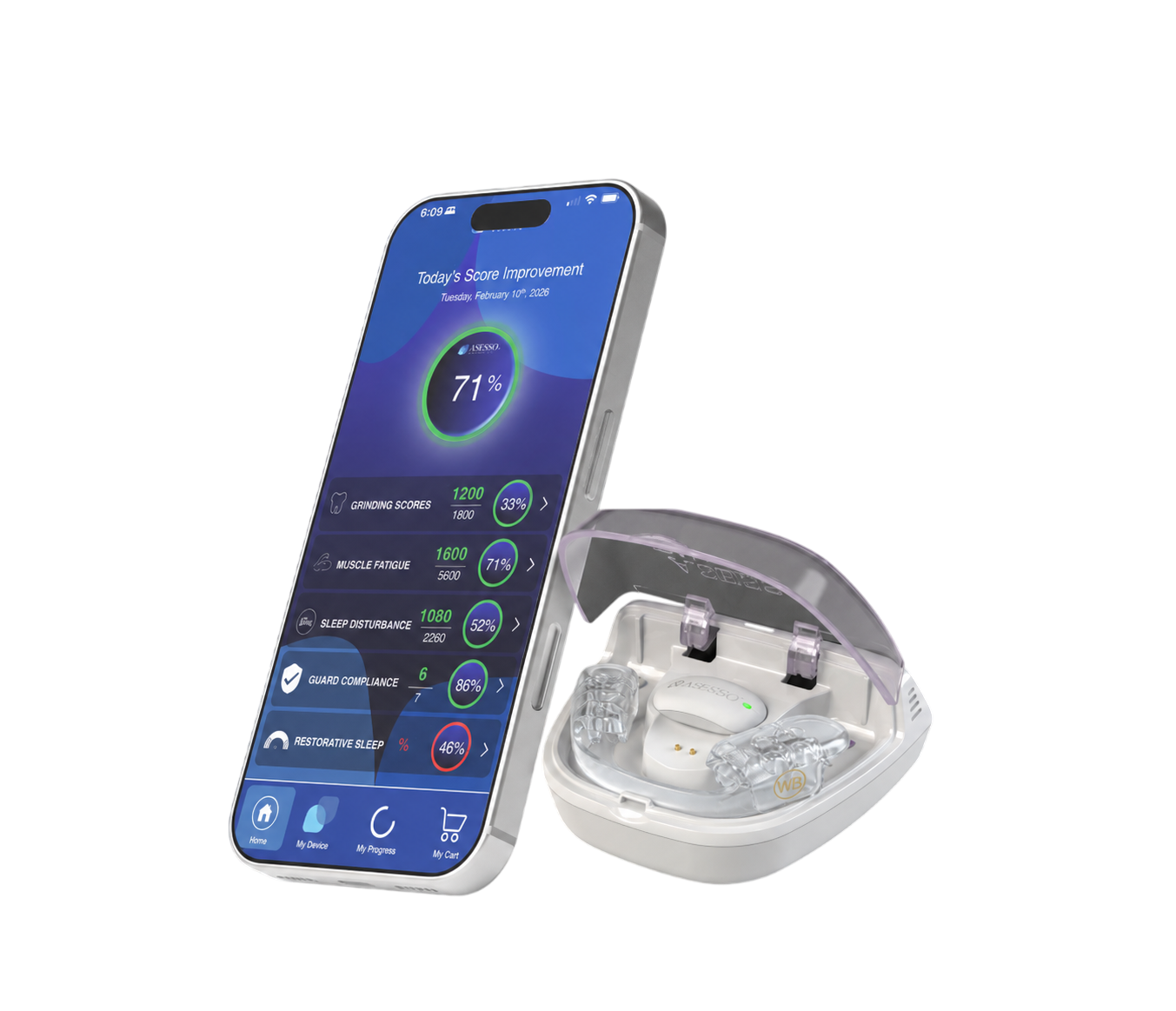
WAKEBRIGHT If several of these signs sound familiar, the Wakebright Guard is designed to protect your teeth while you get an official evaluation and diagnosis from your dentist.
References
- Mayo Clinic. "Teeth grinding (bruxism) Symptoms and causes." mayoclinic.org. https://www.mayoclinic.org/diseases-conditions/bruxism/symptoms-causes/syc-20356095
- National Institute of Dental and Craniofacial Research. "Bruxism." nidcr.nih.gov. https://www.nidcr.nih.gov/health-info/bruxism
- American Dental Association, MouthHealthy. "Teeth Grinding." mouthhealthy.org. https://www.mouthhealthy.org/all-topics-a-z/teeth-grinding
This article is for educational purposes only and does not constitute medical or dental advice. Please consult a qualified healthcare provider for personalized guidance.