Heat and Massage for Jaw Pain: What Works, What Doesn't, and the Science Behind Real Relief

When your jaw hurts, the instinct to press your fingers into the tender spot along your cheekbone or hold a warm cloth against the side of your face is not just comforting; it is physiologically sound. Heat therapy and targeted jaw massage rank among the most evidence-supported, accessible, and immediately effective tools available for managing the pain of TMD, bruxism, and chronic jaw muscle tension.
But like most therapies, the difference between relief and wasted effort comes down to how you apply them. Applied correctly, heat and massage target the specific tissues driving your pain. Applied incorrectly, they deliver temporary comfort without touching the underlying dysfunction.
This guide explains the science, the technique, and the strategic context for using heat and massage as part of a comprehensive approach to jaw health.
Why Jaw Muscle Pain Responds So Well to Heat and Massage
The pain of myofascial TMD, the most common form of jaw pain, is fundamentally a problem of muscle dysfunction. The masseter, temporalis, and medial pterygoid muscles that power jaw movement develop trigger points: small, hyper-irritable knots within the muscle tissue that hurt on compression and refer pain to adjacent structures including the temples, teeth, ears, and neck.
Heat and massage address this type of pain through several converging mechanisms.
Heat raises tissue temperature, which reduces viscosity in the muscle fascia, allows greater extensibility of the muscle fibers, and promotes vasodilation, meaning increased blood flow to the area. That improved circulation delivers oxygen and nutrients to chronically tense tissue and helps clear away the inflammatory byproducts that accumulate in overworked muscles.
Massage applies direct mechanical pressure to the muscle tissue, breaking up the adhesions and tight bands that characterize trigger points, stimulating the mechanoreceptors in the skin and underlying muscle that interrupt the pain-tension cycle, and releasing endorphins that reduce pain perception throughout the body.
Together, heat and massage address the physical substrate of jaw muscle pain more directly than most other conservative interventions.
Heat Therapy: The Right Way to Use It
For jaw muscle pain, moist heat is significantly more effective than dry heat. Moist heat penetrates more deeply into the muscle tissue because it conducts thermal energy more efficiently than dry air does. The options include a warm, moist towel, a microwaveable moist heat pack (available at pharmacies), or a commercial facial heat wrap.
Temperature: the target is warm to hot but never painful. If you have to pull the heat source away immediately, it is too hot. A comfortable, sustained warmth that you can hold against the face for 15 to 20 minutes is ideal.
Duration: 15 to 20 minutes per application. That is enough time to raise tissue temperature meaningfully and produce therapeutic vasodilation. Longer application does not add proportional benefit and does risk skin irritation.
Timing: heat helps most when applied proactively, ideally right upon waking (when the jaw muscles are most inflamed from overnight activity), before planned meals that require significant chewing, and in the evening before sleep as part of a relaxation routine. Many TMD sufferers find that morning heat therapy meaningfully shortens the time it takes for jaw stiffness to fade after waking.
Avoid heat during acute injury: if jaw pain comes with visible swelling, bruising, or follows a recent trauma, apply cold rather than heat for the first 48 to 72 hours to manage the acute inflammation.
Cold Therapy: When to Use It Instead
Cold therapy, meaning ice packs applied through a cloth barrier for 10 to 15 minutes, addresses a different dimension of pain: acute inflammation and nerve sensitization. It fits best during acute TMD flares marked by swelling, immediately after dental procedures, or when jaw pain is sharp and throbbing rather than deep and achy.
Cold numbs the area by slowing nerve conduction velocity and constricts blood vessels to limit inflammatory swelling. It is less useful for chronic, tight, achy jaw muscle pain, which responds better to heat.
Alternating heat and cold, 10 minutes of each repeated for two to three cycles, can work well for pain that combines both inflammatory and muscular components.
Self-Massage Techniques for Jaw Muscle Pain
Effective self-massage for jaw pain targets the specific muscles behind most TMD symptoms: the masseter, the temporalis, and the suboccipital muscles at the base of the skull.
Masseter Massage
The masseter runs vertically along the side of the jaw, from the cheekbone down to the lower jaw angle. To locate it, clench your teeth gently and you will feel the muscle bulge under your fingers.
To massage: with the jaw relaxed and the teeth slightly apart, apply firm but comfortable pressure with two or three fingertips. Work in small circular motions, moving from the upper attachment near the cheekbone downward toward the jaw angle. Spend extra time on any particularly tender spots (trigger points), holding sustained pressure for 20 to 30 seconds before releasing. The discomfort of a trigger point during massage should sit around a 6 or 7 on a 10-point scale, uncomfortable but not unbearable. Continue for 2 to 3 minutes per side.
Temporalis Massage
The temporalis fans across the temple region, from above the ear toward the upper forehead. It is often tender in people who get temporal headaches as part of their TMD presentation.
To massage: with the jaw relaxed, use the pads of your fingers to apply gentle circular pressure across the temple. Begin above the ear and work upward and forward toward the hairline. The temporalis tends to respond better to lighter, more sustained pressure than the masseter does. Spend 2 to 3 minutes per side.
Suboccipital Release
The suboccipital muscles at the base of the skull are frequently involved in TMD-related headache patterns and often need direct attention alongside the jaw muscles themselves.
To massage: place both thumbs at the base of the skull, just to the sides of the midline. Apply upward pressure and hold for 30 to 60 seconds, letting the muscles release gradually. This technique works best lying down with the head supported by a pillow, using gravity to assist the release.
Combining Heat and Massage for Maximum Effect
The most effective approach combines both methods in sequence: apply moist heat for 15 minutes first, then perform massage while the tissue is still warm. Pre-heated tissue is more extensible, less painful to work with, and more responsive to manual pressure than cold, tight muscle. This sequence, heat and then massage, consistently produces better outcomes than either technique used on its own.
Performing this routine daily, in the morning upon waking and in the evening before sleep, builds a consistent therapeutic habit that, over weeks, begins to lower the baseline tension carried in the jaw muscles.
Where Professional Massage and Physical Therapy Fit In
Self-massage is effective and accessible, but it has limits. The force and precision you can reach with your own hands fall short of what a trained therapist can provide, and self-treatment of trigger points requires a degree of body awareness that takes time to develop.
Massage therapy from someone experienced in TMD or craniofacial pain provides deeper, more targeted treatment. Physical therapists with TMD specialization add therapeutic ultrasound, specific manual therapy techniques, and a systematic approach to identifying and treating the muscular contributors to your symptoms.
Professional care and self-care are complementary rather than competitive. Learning proper self-massage technique from a physical therapist and applying it daily between professional sessions produces significantly better outcomes than professional care alone.
The Wakebright Advantage: Addressing Overnight Tension
Heat and massage are most effective at addressing the tension that builds in the jaw during the day and during sleep. But here is the challenge: while massage and heat treat the consequences of overnight bruxism, the soreness, the tight muscles, the trigger points, they cannot prevent the bruxism itself.
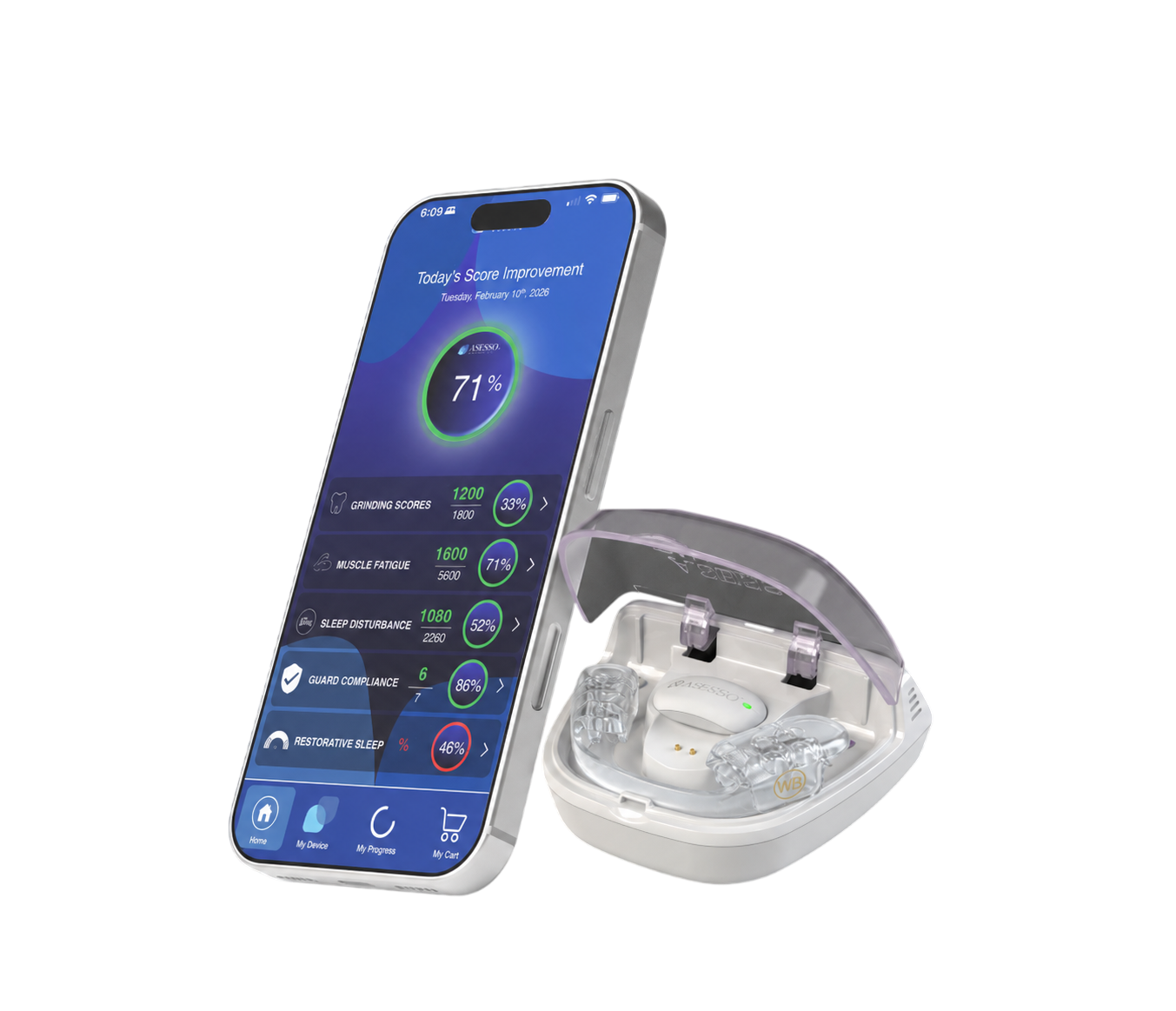
Wakebright's approach addresses what happens during the night directly. By reducing jaw muscle load during sleep, the Wakebright system supports muscular relaxation through the very hours when bruxism would otherwise create the tension that your morning heat and massage routine is trying to undo.
Think of it this way: heat and massage are excellent recovery tools. Wakebright works to reduce how much recovery you need by addressing the tension at its source, during the hours it is being generated. Used together, they represent a genuinely comprehensive approach to jaw muscle health.
What You Can Do Now
Moist heat penetrates muscle tissue more deeply than dry heat, so use warm, damp towels or commercial moist heat packs for 15 to 20 minutes per session.
The masseter and temporalis are the primary targets for jaw self-massage: locate the trigger points and apply sustained pressure for 20 to 30 seconds.
Applying heat before massage pre-warms the tissue, making it more responsive and less painful to treat, so always use this sequence.
Cold therapy suits acute inflammation, while heat addresses the chronic muscular tightness typical of TMD.
Daily consistency over weeks produces cumulative improvement in baseline muscle tension: single sessions provide relief, but the habit creates change.
Heat and massage address recovery from overnight tension, while addressing that tension as it is being generated during sleep requires a complementary approach.
Frequently Asked Questions
Q: How often should I apply heat to my jaw?
Most people benefit from 15 to 20 minutes of moist heat applied two to three times daily during periods of significant jaw pain. Upon waking and before sleep are particularly valuable times. As symptoms improve, once daily is usually enough for maintenance.
Q: Can I use a heating pad instead of moist heat?
Dry heating pads are less effective than moist heat for jaw muscle pain because they do not penetrate as deeply into the muscle. If moist heat is inconvenient, a dry heating pad is still beneficial, just less so. Placing a damp towel between the heating pad and your skin is a simple way to add moisture.
Q: Is jaw massage safe if I have a disc problem in my TMJ?
Massage of the surrounding muscles (the masseter and temporalis) is generally safe regardless of disc status, since it targets the muscles rather than the joint itself. Avoid applying direct pressure over the joint space if you have disc derangement. A physical therapist or orofacial pain specialist can provide personalized guidance based on your specific diagnosis.
Q: How long before I see improvement from daily heat and massage?
Many people notice a meaningful reduction in morning jaw stiffness within one to two weeks of consistent daily application. A full reduction in trigger point tenderness and baseline muscle tension typically takes four to eight weeks of regular practice. Consistency matters more than any single session.
Q: Can children use heat therapy for jaw pain?
Yes, with appropriate temperature precautions. Use warm rather than hot compresses for children, and supervise to make sure the heat source is not too intense. Jaw pain in children should always be evaluated by a pediatric dentist or physician to identify the underlying cause before beginning self-treatment.
WAKEBRIGHT | Heat and massage can transform your mornings, reducing the stiffness and soreness that bruxism leaves behind. But for lasting change, you need to address the source of that overnight tension. Wakebright's system targets jaw muscle overactivation during sleep, reducing how much recovery your mornings require. Combine the best of at-home care with the power of a system built for the night, and experience what genuinely rested jaw muscles feel like. This article is for educational purposes only and does not constitute medical or dental advice. Please consult a qualified healthcare provider for personalized guidance.