Hard vs. Soft vs. Dual-Laminate Night Guards: Which One Actually Works?

Search for night guards and you'll find plenty of confident claims about which material "works best." The honest answer, based on the actual clinical research, is more nuanced than most of that marketing suggests and understanding that nuance will help you make a better decision than picking whichever one has the flashiest description.
The Three Types, Explained
Hard (Acrylic) Night Guards
Made from rigid acrylic resin, hard night guards are custom-fitted by a dentist from an impression of your teeth. They're the most durable option and the traditional standard for people with more severe grinding, since the rigid material resists wear far better than softer alternatives and holds its shape precisely over time. The tradeoff is a longer adjustment period some people find the rigidity uncomfortable at first and they're generally more expensive and require more chairside time to fabricate and adjust properly.
Soft Night Guards
Soft guards are typically made from a pliable material like EVA (ethylene-vinyl acetate), giving them a cushioned, flexible feel that most people find comfortable right away. They're quicker to fabricate and generally more affordable. The tradeoff is durability: soft material wears down faster, particularly for heavier grinders, and some research has raised a specific concern a small number of studies have found that soft splint material can, in some patients, encourage more clenching rather than less, possibly because the "give" of the material invites more forceful biting.
Dual-Laminate (Hybrid) Night Guards
Dual-laminate guards combine both: a soft inner layer against your teeth for comfort, and a rigid outer shell for durability. The idea is to capture the best of both the comfort that keeps people actually wearing the appliance, and enough durability to hold up over time. This has made dual-laminate a popular middle-ground recommendation for people who don't clearly fall into "mild" or "severe" grinding categories.
What the Research Actually Says About "Which Works Better"
Here's where it gets genuinely interesting, and where a lot of marketing content oversimplifies things. A network meta-analysis of 48 randomized controlled trials examined various splint types for managing temporomandibular disorders (TMD) and found a nuanced pattern: soft stabilization splints ranked higher than hard splints for muscle-related (myogenous) TMDs, but lower than hard splints for joint-related (arthrogenous) TMDs. In other words, which material performs better may depend on whether your primary issue is muscle tension or an actual joint problem — not a universal "hard beats soft" or "soft beats hard."
Complicating this further, a separate systematic review and meta-analysis specifically comparing hard versus soft splints for myofascial (muscle) pain found no significant difference between the two in reducing pain intensity or muscle tenderness. And a broader, more rigorous systematic review published in the British Dental Journal which pooled 37 trials using Cochrane review methods found the overall evidence for splints reducing TMD pain was of very low certainty, with no clear evidence that splints reduced pain when different TMD subtypes were pooled together.
The honest summary: the research does not strongly support the idea that one material is simply "better" across the board. Material choice appears to matter less than getting an accurate fit, and as covered below matters less than whether you actually wear it consistently.
Protection vs. Pain Relief Are Different Questions
It's worth separating two things that often get blurred together: protecting your teeth from grinding damage, and relieving TMD-related pain or muscle tension. The research above is largely about the second question whether splints reduce pain and muscle activity and the evidence there is genuinely mixed and low-certainty across material types.
For the first question mechanical protection against wear hard acrylic has a clearer, more straightforward advantage: it's simply more resistant to being ground through, which is why it remains the standard recommendation for people with heavy, severe grinding where durability is the primary concern. A soft guard being worn through in a few months by a heavy grinder isn't a controversial or debated point the way pain-reduction outcomes are.
Comparison at a Glance
| Feature | Hard Acrylic | Soft (EVA) | Dual-Laminate |
|---|---|---|---|
| Durability | Highest | Lowest | Moderate-high |
| Initial comfort | Lower (adjustment period) | Highest | High |
| Best suited for | Severe grinding, TMJ joint involvement | Mild grinding, occasional clenching | Moderate grinding, uncertain severity |
| Typical lifespan | 3–5 years | 6–12 months | 1–3 years |
| Fabrication | More chair time, more precise fit | Quick, sometimes same-day | Moderate |
| Cost | Highest | Lowest | Middle |
| Research support for pain relief | Mixed, low-certainty evidence | Mixed, low-certainty evidence; ranked higher for muscle-type TMD in one analysis | Limited direct comparison research |
Who Should Use Which
Despite the nuanced pain-relief research, some practical patterns still hold up reasonably well in clinical practice:
Hard acrylic tends to make the most sense if: you have severe, frequent grinding; you've worn through a softer guard quickly in the past; or you have signs of TMJ joint involvement (clicking, structural symptoms) rather than primarily muscle tension.
Soft guards tend to make sense if: your grinding is mild or occasional; you're new to wearing a night guard and want to build the habit with something comfortable from night one; or cost and quick turnaround matter more than long-term durability.
Dual-laminate tends to make sense if: you're not sure how severe your grinding is; you want more durability than a soft guard without the adjustment period of hard acrylic; or you've found hard guards uncomfortable but need more protection than a soft guard provides.
None of these are hard rules they're reasonable starting points that a dentist will adjust based on an actual exam of your teeth, jaw, and grinding pattern.
The Compliance Factor: Why the "Best" Guard Is the One You'll Actually Wear
Given how mixed the direct research on material effectiveness is, one practical factor deserves more weight than marketing tends to give it: a night guard only works if you actually wear it. Soft and dual-laminate guards generally have an easier adjustment period, which matters if comfort has been the reason you've abandoned a night guard before. A hard guard with objectively superior wear resistance provides no protection sitting in a drawer because it felt too rigid to sleep in.
This is part of why a dentist's in-person assessment matters more than trying to pick the "objectively best" material from general research. Your specific grinding pattern, whether TMJ symptoms are involved, your past experience with any type of guard, and your tolerance for an adjustment period are all things a generic comparison can't account for.
Frequently Asked Questions
Is a hard night guard really more effective than a soft one?
It depends what "effective" means. For mechanically protecting teeth from wear, hard acrylic has a clear durability advantage. For reducing TMD-related pain specifically, research is mixed — one large analysis found soft splints performed better for muscle-related TMD but worse for joint-related TMD, and other studies found no significant difference in pain outcomes between hard and soft splints.
Can a soft night guard make grinding worse?
A small number of studies have raised this concern the pliable material may, in some patients, encourage more forceful clenching rather than reducing it. This isn't universal, but it's part of why soft guards are generally recommended more for mild cases than severe ones.
How do I know if I need a hard or soft night guard?
It depends on how severe your grinding is, whether you have TMJ joint symptoms specifically, and your own comfort tolerance. A dentist's exam checking tooth wear, jaw symptoms, and grinding pattern is the most reliable way to determine which fits your situation.
Is dual-laminate always the "safe middle choice"?
It's a reasonable default when severity is unclear, but it's not automatically superior to hard or soft guards for every situation direct research comparing dual-laminate specifically against the other two types is more limited than research on hard-vs-soft.
Why does the research on night guard materials seem so mixed?
Because TMD and bruxism are genuinely complex, multifactorial conditions, and clinical trials in this area often have small sample sizes and methodological limitations. A major systematic review found the overall certainty of evidence for splints reducing TMD pain was very low which is a reflection of research quality challenges in this field generally, not necessarily a sign that guards don't help.
If the pain-relief research is mixed, is a night guard still worth wearing?
Yes, for most people even with mixed evidence on pain reduction specifically, night guards provide clear mechanical protection against tooth wear, chipping, and cracking from grinding, which is a well-established benefit independent of the pain-relief question.
How long does each type of night guard typically last?
Hard acrylic guards generally last 3 to 5 years with proper care, dual-laminate guards typically last 1 to 3 years, and soft guards usually need replacing every 6 to 12 months, though this varies with how heavily you grind.
Can I switch from a soft guard to a hard one later if needed?
Yes it's common to start with a more comfortable option and move to a more durable one if the soft guard wears out too quickly or doesn't provide enough relief. A dentist can reassess and refit as needed.
Are over-the-counter night guards made from the same materials?
Often similar materials in a lower-quality, less precisely fitted form. Custom-fitted guards from a dentist in any material generally outperform store-bought versions because of the precision fit, which affects both comfort and how evenly grinding forces are distributed.
Does the material affect how a night guard is cleaned or cared for?
Slightly hard acrylic tends to be easiest to keep clean and odor-free, while soft materials can be somewhat more prone to holding bacteria or odor over time if not cleaned consistently. Regardless of material, rinsing after use and regular cleaning matter.
Is there a "best" material for TMJ pain specifically, versus just grinding protection?
Based on the research, it's genuinely unclear one large analysis found soft splints performed somewhat better for muscle-related TMJ symptoms but worse for joint-related ones, while other reviews found no significant difference at all. This is a case where an individualized exam matters more than a general rule.
Should cost be a major factor in choosing a night guard material?
It's a reasonable factor to weigh, but not in isolation a cheaper soft guard that needs replacing every six months may cost more over several years than a hard guard that lasts three to five, so it's worth thinking about cost per year of use rather than just the upfront price.
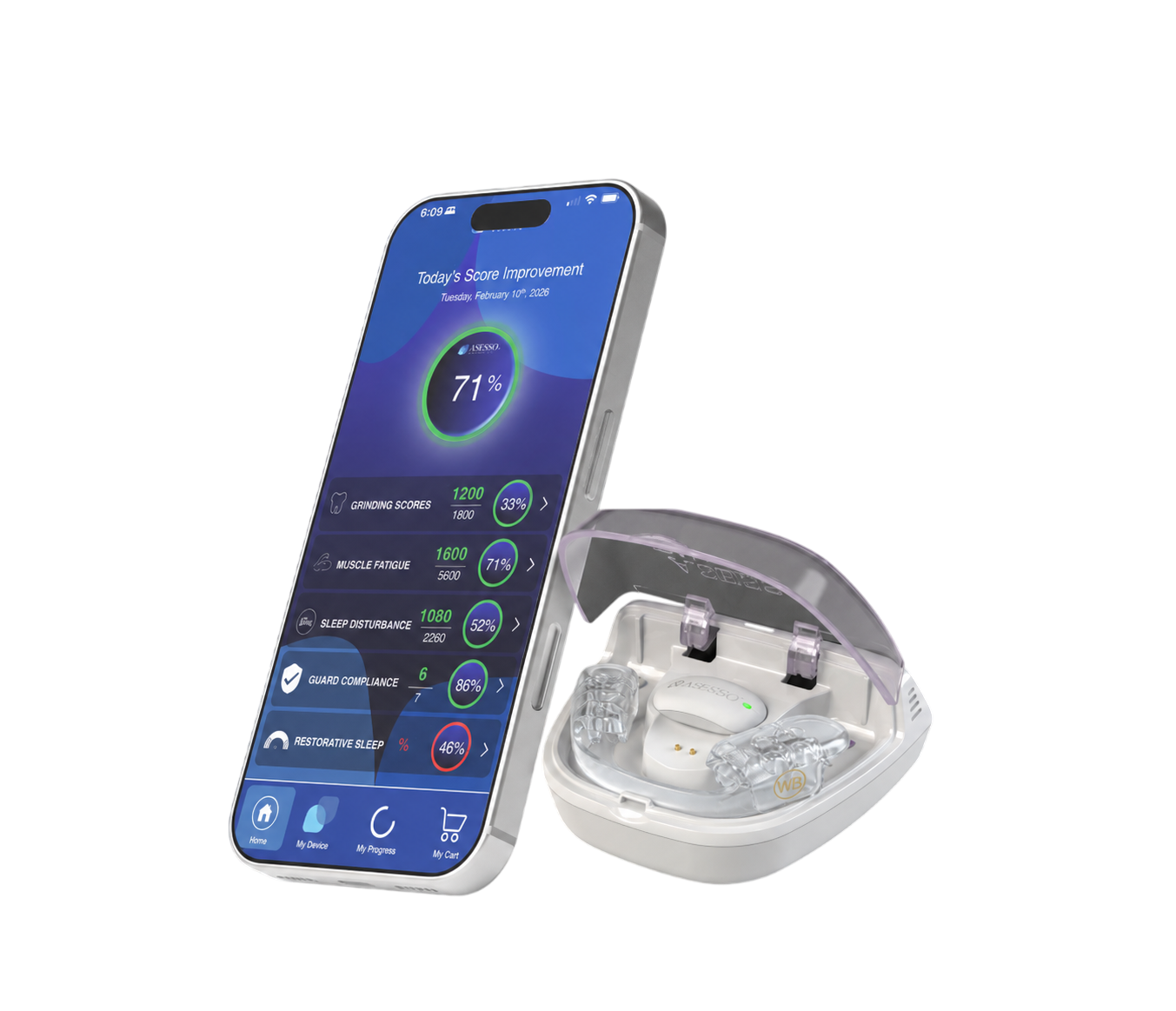
**WAKEBRIGHT **The Wakebright Guard is available in materials suited to a range of grinding severities ask your dentist which option best matches your specific case.
This article is for informational purposes only and does not constitute medical advice. Consult a licensed dentist or healthcare provider for diagnosis and treatment recommendations specific to your situation.
References
- "Soft versus hard occlusal splint therapy in the management of temporomandibular disorders (TMDs): A network meta-analysis of randomized controlled trials." Journal of Dental Sciences, ScienceDirect. https://www.sciencedirect.com/science/article/pii/S1013905215000516
- "Effect of Hard Versus Soft Occlusal Splint on the Management of Myofascial Pain: Systematic Review and Meta-Analysis." ResearchGate. https://www.researchgate.net/publication/317146465_Effect_of_Hard_Versus_Soft_Occlusal_Splint_on_the_Management_of_Myofascial_Pain_Systematic_Review_and_Meta-Analysis
- "Oral splints for temporomandibular disorder or bruxism: a systematic review." British Dental Journal, Nature. https://www.nature.com/articles/s41415-020-1250-2
- "Efficiency of mixed and rigid occlusal stabilization splints: Randomized clinical trial." PMC, National Library of Medicine. https://www.ncbi.nlm.nih.gov/pmc/articles/PMC11376624/
- Cleveland Clinic. "Mouth Guards: Types & Purpose." my.clevelandclinic.org. https://my.clevelandclinic.org/health/treatments/10910-mouthguards