Earaches With No Infection: The TMJ Connection ENTs Look For

You've had the earache for weeks. Your doctor looked in your ear, found nothing no redness, no fluid, no infection and sent you home reassured but still in pain. If this sounds familiar, you're not imagining the discomfort, and you're also not alone in the confusion. A substantial share of unexplained earaches trace back not to the ear at all, but to the temporomandibular joint (TMJ) sitting just in front of it. Here's the anatomy behind that connection, and what an ENT is specifically checking for before they consider it.
Why Are the Ear and Jaw So Closely Linked?
The connection isn't a coincidence of nearby geography it's built into how these structures develop and how they're wired neurologically. According to an academic review of the TMJ-ear relationship, the two share overlapping embryological development, neurovascular pathways, and biomechanical connections that together create a real physiological basis for pain in one area to be felt in the other.
Specifically, the region is supplied by overlapping innervation from the trigeminal nerve (cranial nerve V), the facial nerve (VII), the glossopharyngeal nerve (IX), and the greater auricular nerve (C2–C3) several different nerve pathways converging on the same general area. When your jaw joint or the surrounding muscles are irritated or inflamed, the pain signal can travel along these shared pathways and be perceived as coming from your ear, even though the ear itself is completely unaffected.
How Common Is This, Really?
More common than most people expect. According to an analysis published in the American Journal of Neuroradiology, otalgia (ear pain) is listed as a chief complaint by 70% to 78% of patients with diagnosed TMJ disorders meaning ear pain isn't a rare, unusual symptom of TMD, it's one of the most frequently reported ones. The same source notes TMJ disorders are diagnosed considerably more often in women than men, at a rate estimated between two and nine times higher, and typically affect adults between 40 and 70 years old.
This connection has actually been recognized in medicine for nearly a century the pattern of jaw-related ear symptoms was first described by an otolaryngologist named James Costen in 1934, and the combination is still sometimes referred to informally as Costen syndrome in older or more specialized literature.
Three Theories for Why TMJ Causes Ear Pain
Researchers haven't settled on a single definitive mechanism the same neuroradiology analysis notes it's unclear whether TMJ-related ear pain results from one dominant cause or a combination of factors, and outlines three leading explanations:
- Direct nerve impingement. The auriculotemporal nerve, a branch of the trigeminal nerve, runs close to the TMJ and can be directly irritated by joint inflammation or dysfunction, carrying pain signals toward the ear.
- Muscle spasm. The masseter and temporalis muscles, the primary muscles used for chewing sit directly above and below the ear canal. Tension or spasm in these muscles, common in TMD and bruxism, can produce pain that's felt in or around the ear.
- A direct ligamentous connection. Some researchers have proposed an actual physical, ligamentous link between the TMJ and the middle ear itself, which could transmit mechanical strain directly rather than through nerve signals alone.
Any one or a combination of these may explain a given patient's symptoms, which is part of why the evaluation process (discussed below) matters more than trying to pinpoint the exact mechanism.
What an ENT Actually Looks For
When someone comes in with an earache, an ENT's first job is ruling out a primary ear problem. That typically involves otoscopy a direct visual exam of the ear canal and eardrum checking for redness, fluid, perforation, or other signs consistent with infection, along with checking for fever, discharge, or hearing loss.
Here's the key clinical distinction: research on referred otalgia notes that pain from TMD and dental sources typically relates to jaw movement and chewing, while true ear infections are more likely to present with systemic features like fever, discharge, and visible eardrum abnormalities. If your eardrum looks completely normal, there's no discharge or hearing loss, and your pain seems to track with chewing, yawning, or jaw movement rather than existing independently of it, an ENT will reasonably start considering the TMJ as the actual source.
TMJ-Referred Ear Pain vs. a True Ear Infection
| Feature | TMJ-Referred Pain | Ear Infection |
|---|---|---|
| Eardrum appearance | Normal | Often red, bulging, or fluid-filled |
| Fever | Typically absent | Often present |
| Discharge | None | Sometimes present |
| Hearing loss | Typically absent | Sometimes present |
| Pain pattern | Worse with chewing, yawning, or jaw movement | Often constant, may worsen lying flat |
| Associated symptoms | Jaw clicking, popping, or stiffness | Ear fullness, sometimes dizziness |
| Response to standard ear treatment | No improvement | Improves with appropriate treatment |
Other Ear-Related Symptoms Linked to TMJ
Ear pain isn't the only ear-related symptom associated with TMD. The same overlapping anatomy and nerve pathways have been linked to tinnitus (ringing in the ears) and a sensation of ear fullness or pressure, even without any actual middle ear problem. If you have any of these symptoms alongside jaw clicking, stiffness, or pain that tracks with jaw movement, it's a reasonable pattern to mention to whichever provider you see first ENT or dentist.
What Happens After an ENT Rules Out Infection
If your ear exam comes back clear and your symptoms fit the TMJ pattern, the next reasonable step is a dental or TMD-focused evaluation checking your jaw joint for tenderness, clicking, or limited movement, and reviewing your history for signs of teeth grinding or clenching, which are common underlying contributors. Imaging like a CBCT scan or specialized dental radiographs can sometimes reveal joint changes not visible on standard ear-focused imaging.
Treatment for TMJ-related ear pain generally follows the same conservative-first approach used for TMD generally: a properly fitted night guard if grinding is a factor, stress management, jaw exercises, and over-the-counter anti-inflammatories, with more involved treatments reserved for cases that don't improve with these initial steps.
What You Can Do Now
- The jaw joint sits directly next to the ear canal and shares nerve and ligament connections that can produce referred ear pain
- A normal ear exam with pain that changes with jaw movement is a strong signal to consider a jaw-related cause
- This isn't the same as an ear infection and won't respond to antibiotics treating the jaw source is what typically resolves it
- If your ENT has ruled out ear pathology, a dental evaluation for TMD is a reasonable next step
Frequently Asked Questions
How common is it for TMJ to cause ear pain without any actual ear problem?
Very common among people with diagnosed TMD research published in the American Journal of Neuroradiology found ear pain is a chief complaint in 70% to 78% of TMJ disorder patients, making it one of the most frequently reported symptoms of the condition.
Why would my ear hurt if the problem is actually in my jaw?
The TMJ and the ear share overlapping nerve pathways (including branches of the trigeminal, facial, and glossopharyngeal nerves) and sit in very close physical proximity, so pain signals originating in the jaw joint or surrounding muscles can be perceived as coming from the ear itself.
How can I tell if my earache is from TMJ or an actual infection?
Key differences include whether your eardrum looks normal on exam (TMJ-related pain won't show eardrum abnormalities), whether you have fever or discharge (uncommon with TMJ-related pain), and whether your pain seems to track with chewing, yawning, or jaw movement specifically, which points more toward TMJ.
Should I see an ENT or a dentist first for unexplained ear pain?
Either is a reasonable starting point, but if you have any signs of infection like fever or discharge, an ENT should evaluate you first to rule that out. If your ear has already been checked and appears normal, or you also have jaw symptoms like clicking or stiffness, a dentist familiar with TMD is a logical next step.
Can TMJ cause ringing in the ears (tinnitus), not just pain?
Yes tinnitus and a sensation of ear fullness have both been associated with TMD through the same overlapping anatomy and nerve pathways responsible for referred ear pain.
What is Costen syndrome?
It's an older, informal term for the pattern of jaw-related ear and facial symptoms, named after an otolaryngologist who first described the connection between jaw joint dysfunction and ear symptoms in 1934. The condition is now more commonly discussed simply as TMD with referred otalgia.
If my ENT says my ears are completely normal, does that mean the pain isn't real?
No it means the pain very likely isn't originating from the ear itself, which is actually useful diagnostic information. Referred pain from the TMJ is a real, physiologically explainable phenomenon, not an indication that the pain is imagined.
Can treating my TMJ actually resolve the ear pain?
For many people, yes, since addressing the underlying jaw joint or muscle issue removes the source of the referred pain. Response varies by individual and by which specific TMD mechanism is involved, so it's not a guaranteed fix, but it's a reasonable and evidence-supported approach to try.
Are women more likely to experience TMJ-related ear pain than men?
TMJ disorders overall are diagnosed considerably more often in women, at an estimated two to nine times higher rate than men, according to research which likely also means TMJ-related ear symptoms are more frequently reported by women, though this specific breakdown wasn't separately measured in that source.
What imaging might a dentist use to check for TMJ-related ear pain?
A CBCT (cone-beam CT) scan or specialized dental radiographs can sometimes reveal joint changes, such as condylar or soft tissue abnormalities, that wouldn't show up on standard ear-focused imaging used by an ENT.
Can jaw clenching or teeth grinding specifically cause ear pain?
Yes bruxism is a common contributor to TMD, and the muscle tension and joint strain it causes are among the recognized mechanisms behind TMJ-related referred ear pain.
How long should I wait before seeking a TMJ evaluation if my ear pain isn't improving?
If an ENT has ruled out infection and your ear pain persists or recurs, particularly alongside any jaw symptoms, it's reasonable to seek a dental or TMD evaluation without significant delay, since untreated TMD can also affect your teeth and jaw function over time.
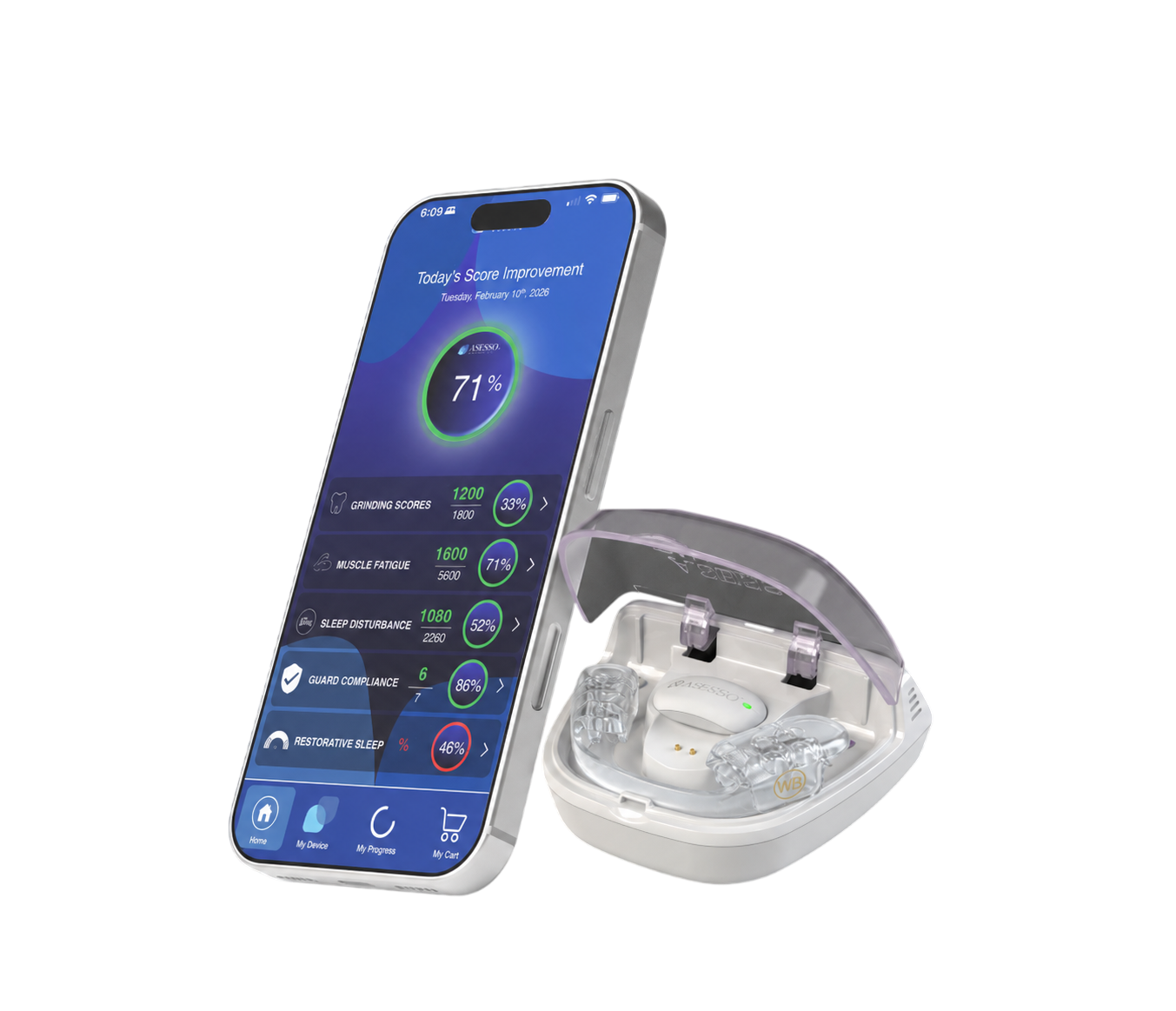
WAKEBRIGHT If grinding is contributing to jaw strain behind your ear pain, the Wakebright Guard can help reduce that strain while you work with your dentist to confirm and address the underlying cause.
This article is for informational purposes only and does not constitute medical advice. Consult a licensed dentist or healthcare provider for diagnosis and treatment recommendations specific to your situation.
References
- "The Radiology of Referred Otalgia." American Journal of Neuroradiology. https://www.ajnr.org/content/30/10/1817
- "Temporomandibular Joint Disorders in Otology: The Anatomical Ear-TMJ Connection." IntechOpen. https://intechopen.com/online-first/1227471
- National Institute of Dental and Craniofacial Research. "TMD (Temporomandibular Disorders)." nidcr.nih.gov. https://www.nidcr.nih.gov/health-info/tmd
- Mayo Clinic. "TMJ disorders – Diagnosis and treatment." mayoclinic.org. https://www.mayoclinic.org/diseases-conditions/tmj/diagnosis-treatment/drc-20350945