Dental Crowns: Types, Procedure & Care and How to Protect Your Investment

A dental crown is one of the most durable and versatile restorations in dentistry. It can save a tooth that would otherwise be lost, restore a cracked or severely decayed tooth to full function, or protect a tooth weakened by a root canal. For many patients, a crown represents a significant investment in time, in cost, and in preserving something they would rather not lose.
What gets discussed less often at the time of placement is this: what you do after the procedure, and what might be working against your crown while you sleep, matters enormously for how long that investment lasts. Jaw clenching and teeth grinding rank among the most common reasons crowns chip, crack, debond, or fail early. Understanding this connection is a practical step toward protecting your restoration for years to come.
What Is a Dental Crown?
A dental crown is a custom-made cap that fits over a prepared tooth, covering it entirely from the gum line up. Once cemented in place, the crown restores the tooth's shape, size, and function, and, depending on the material, its appearance.
Crowns are typically recommended when a tooth has a large cavity too extensive for a filling, has cracked or fractured significantly, has had a root canal and needs fracture protection, has broken at or near the gum line, has a failed restoration, or needs modification for a dental bridge.
Types of Dental Crowns
All-Ceramic and Zirconia Crowns
These deliver the most natural-looking results. Modern zirconia, a remarkably strong ceramic, is increasingly used for both front and back teeth, offering the durability of metal with tooth-colored aesthetics. Purely porcelain crowns without zirconia reinforcement are less resistant to the high forces of grinding and are better suited to front teeth with limited occlusal load.
Porcelain-Fused-to-Metal (PFM) Crowns
A metal substructure supplies strength while a porcelain overlay supplies aesthetics. These have been the workhorse of crown dentistry for decades. The metal provides excellent durability, but the porcelain can chip, particularly in patients who grind heavily. The porcelain-metal interface can become a failure point under repeated bruxism forces.
Gold and Full Metal Crowns
Full metal crowns, whether gold or base metal alloys, are the most durable option and the least likely to fracture or chip under extreme clenching forces. They require minimal tooth reduction and are highly biocompatible. For back molars in patients with severe grinding, they remain an excellent clinical choice despite the aesthetic trade-off.
The Crown Procedure: What to Expect
Getting a crown typically takes two appointments. At the first, your dentist prepares the tooth (removing decay or damaged structure and reshaping it for the crown), takes an impression or digital scan, and places a temporary crown. At the second appointment, usually one to two weeks later, the permanent crown is checked for fit, bite, and aesthetics, then cemented permanently in place.
Some practices now offer same-day CAD/CAM crowns, in which the crown is digitally designed and milled chairside from ceramic blocks, removing the need for a second appointment.
How Jaw Clenching and Grinding Damage Crowns
The forces generated during grinding and clenching far exceed those of normal chewing. During nighttime bruxism, bite forces can top 250 pounds per square inch, well beyond the design tolerance of many restorations. Over time, these forces can chip or fracture porcelain layers, loosen the cement bond so the crown shifts or falls off, crack the crown itself, fracture the underlying tooth structure, and overload adjacent teeth and restorations.
This is why the question "Do you grind or clench your teeth?" should be, and increasingly is, a standard part of every crown consultation. If the answer is yes, or even "I'm not sure," addressing jaw muscle stress becomes an essential part of protecting the restoration.
Why Standard Night Guards May Not Be Enough
Your dentist may recommend a night guard after crown placement, which is a sound instinct. But a guard that simply separates the teeth still lets the masseter and temporalis muscles contract forcefully. The forces get redirected, yet the underlying clenching behavior continues. A grind guard system designed to reduce the peak load the jaw muscles can generate provides more complete protection, and it also addresses the headaches, jaw soreness, and sleep disruption that standard guards often leave unresolved.
What You Can Do Now
Evaluate whether you clench or grind before and after crown placement. Ask a bed partner, check your teeth for wear, and note whether you wake with jaw soreness. Bruxism puts your crown at elevated risk.
Discuss bruxism before crown placement. Material selection and protective appliance planning should be part of the treatment conversation, not an afterthought.
Invest in jaw muscle management alongside your crown. A mechanism-led grind guard that reduces jaw muscle load protects your crown and provides headache and sleep benefits that tooth-only guards do not deliver.
Report any crown changes promptly. Sensitivity, bite changes, looseness, or visible cracks warrant immediate dental attention. Early problems are far easier and less expensive to address.
Maintain excellent oral hygiene at the crown margin. This is the area most vulnerable to recurrent decay, so thorough brushing and daily flossing at the gum line are non-negotiable.
Bring your night guard to dental appointments for evaluation alongside your crown. A worn or misadjusted guard may no longer be protecting your restoration adequately.
Frequently Asked Questions
Q: How long do dental crowns last?
With proper care, dental crowns typically last 10 to 15 years, and high-quality zirconia or gold crowns can last considerably longer. The main factors affecting longevity are oral hygiene (particularly at the crown margin where the crown meets the gum line), regular dental monitoring, and the presence of bruxism. Patients who grind heavily and skip a protective guard may see crown failure within 3 to 5 years, regardless of material quality.
Q: Can you get a crown if you grind your teeth?
Yes, and in fact grinding may make crowns more necessary, to protect fractured or heavily worn teeth. The key is that the bruxism must be addressed alongside the crown placement. Material selection (favoring zirconia or metal for high-force situations), protective night guard use, and ideally muscle-load reduction through a mechanism-led guard all contribute to crown longevity in bruxism patients.
Q: What should I do if my crown feels high or uncomfortable?
Contact your dentist promptly. A crown that sits "high," meaning it contacts the opposing teeth before the surrounding natural teeth do, creates concentrated force that can damage the crown, the tooth it sits on, and the joint. This is a quick and painless adjustment at the dental office and should not be postponed.
Q: Do crowns need special cleaning?
Crowns do not require special cleaning products, but they do require consistent technique. The crown margin, where the crown meets the gum line, is the area most vulnerable to recurrent decay and gum disease. Thorough brushing at the gum line and daily flossing are essential. Water flossers or interdental brushes can supplement floss for cleaning around crowns.
Q: Can a crown on a back tooth fail from grinding?
Yes. Back teeth, meaning molars and premolars, bear the highest clenching forces and are the most vulnerable to crown failure from bruxism. Zirconia and full metal crowns are the most resistant to fracture in this region. Whatever the material, consistent use of a grind guard that reduces jaw muscle force is the single most important protective measure for crowns in the back teeth.
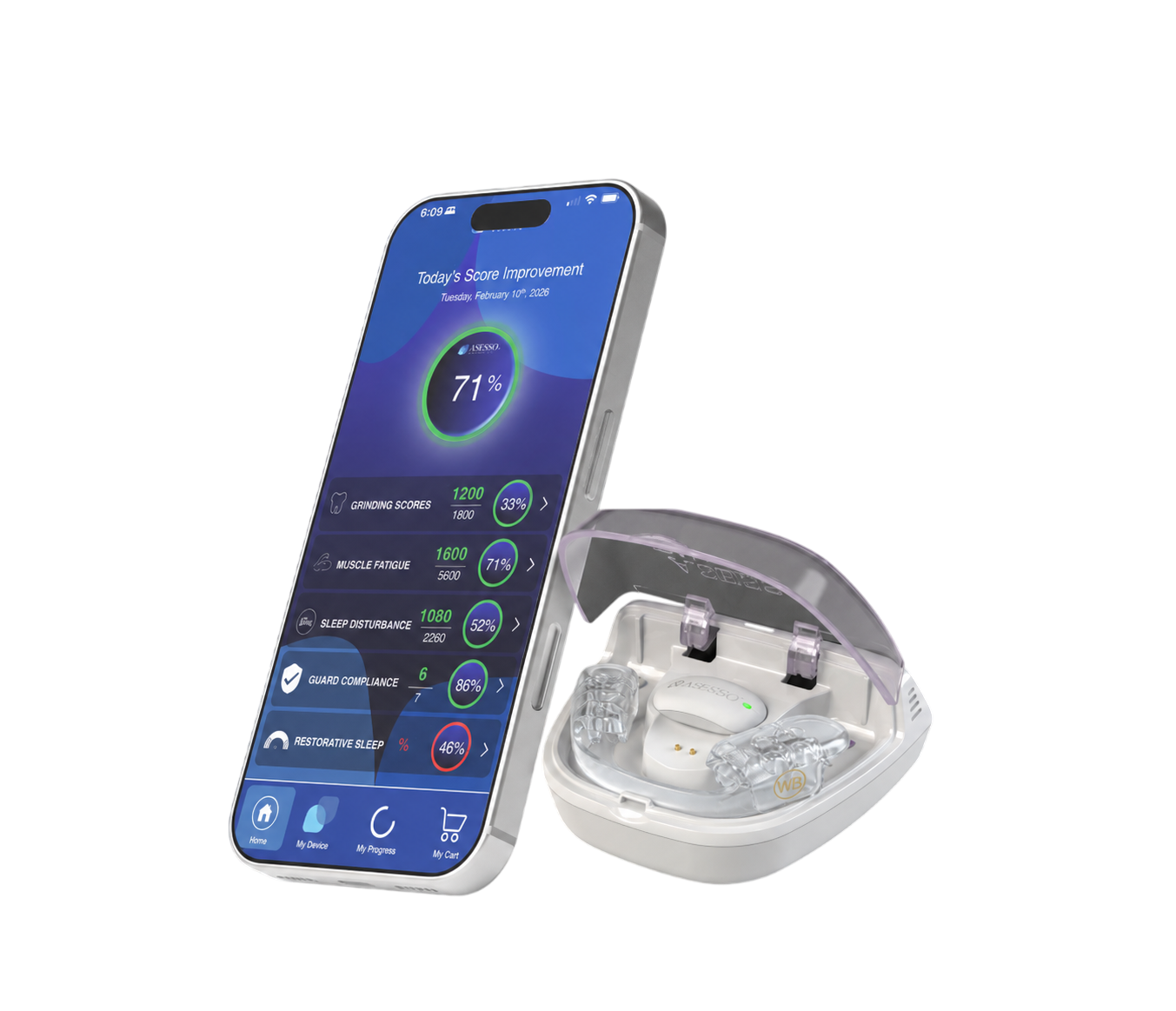
WAKEBRIGHT | Dental crowns are significant restorations, so protecting them from the forces of bruxism makes both practical and financial sense. The standard approach, a tooth-protective night guard, does not address the muscular forces driving the clenching. The Wakebright grind guard system reduces the sustained muscle load that makes bruxism hard on crowns, hard on joints, and hard on sleep. By limiting how fully the jaw muscles can engage during sleep, it reduces the clenching forces that compromise dental restorations while also delivering the headache relief and sleep improvements standard guards do not provide. Visit wakebrightguards.com to learn more. This article is for educational purposes only and does not constitute medical or dental advice. Please consult a qualified healthcare provider for personalized guidance.