Custom Night Guards: Are They Worth It and What Should You Know Before Getting One?

You have been told you grind your teeth. Maybe your dentist noticed unusual wear on your enamel. Maybe your partner has mentioned the sounds coming from your side of the bed. Maybe you are the one waking up with a sore, tender jaw every morning and a dull headache that takes an hour to fade.
The standard recommendation at this point is usually a night guard, and for good reason. Custom night guards are among the most effective tools available for protecting teeth from the damage caused by nocturnal bruxism.
But before you invest in one, there are important things to understand: what a custom night guard actually does, how it differs from cheaper alternatives, and, crucially, what it cannot do on its own. Protecting your teeth and treating your bruxism are not the same thing.
What Is a Custom Night Guard?
A custom night guard is a precisely fitted oral appliance made from dental-grade acrylic, or from a combination of hard and soft materials. It is fabricated from impressions of your specific teeth, which means it conforms exactly to your bite and distributes forces in a clinically calibrated way.
The process begins with your dentist taking impressions, digital or traditional, of your upper or lower teeth. These go to a dental lab, where technicians fabricate the appliance to precise specifications. The finished guard returns to your dentist's office, where adjustments are made to ensure a proper fit and correct bite alignment.
Custom night guards are usually worn over the upper teeth, though lower jaw versions are sometimes preferred for specific clinical reasons. Wearing time is primarily during sleep, when bruxism occurs most intensely.
Custom vs. Over-the-Counter: Why the Difference Matters
The marketplace is flooded with boil-and-bite guards, mail-order options, and generic one-size-fits-all appliances marketed for teeth grinding. These cost less than custom appliances, but the differences in clinical effectiveness and comfort are significant.
Fit precision: custom guards are fabricated to your exact dental anatomy. OTC guards are approximate fits, and an imprecise fit alters the bite unevenly, which can raise muscle tension in some cases rather than lower it.
Material quality: professional-grade dental acrylics are durable, dimensionally stable, and engineered specifically for the mechanical demands of bruxism.
Bite calibration: a key step in custom guard delivery is bite adjustment, making sure that when the guard is in place, the bite lands even and balanced. This calibration is impossible with OTC devices.
Longevity: a well-made custom night guard typically lasts three to five years with proper care. OTC guards may last months or less before distorting.
Soft guard caution: research suggests that soft, comfortable OTC guards may paradoxically increase clenching activity in some users, since the cushiony texture may actually invite more biting rather than less.
What a Custom Night Guard Protects You From
Used consistently, a custom night guard delivers real, measurable protection.
Enamel preservation: enamel does not regenerate once worn away. Bruxism causes enamel loss that accumulates over years of grinding, eventually exposing sensitive dentin and raising cavity risk. A night guard creates a sacrificial surface for grinding forces to act on, sparing the enamel.
Fracture prevention: sustained grinding creates micro-fractures that can spread into full cracks, especially in restored teeth such as crowns and fillings, and in teeth already weakened by decay.
Joint protection: by positioning the jaw in a more neutral, stable alignment, a custom guard reduces peak loading forces on the temporomandibular joint.
Tooth sensitivity reduction: by protecting the enamel and reducing inflammation in the periodontal ligaments, well-fitted night guards often reduce tooth sensitivity over time.
The Important Limitation: Night Guards Don't Stop Bruxism
This is the single most important thing to understand about night guards, and it is something clinicians often do not communicate clearly enough: a night guard does not reduce or eliminate bruxism. It manages the consequences.
The jaw muscles keep contracting with the same frequency and intensity while the night guard is in place. The grinding and clenching still happen; the guard simply redirects where the damage goes. The muscles still overwork. The joint is still under stress. The cycle of tension goes uninterrupted.
This is why so many dedicated night guard wearers still experience morning jaw soreness, still get headaches, and still develop TMD symptoms over time. The guard is doing exactly what it was designed to do, protecting the teeth. But it was never designed to treat the underlying muscle dysfunction.
Caring for Your Custom Night Guard
A custom night guard is an investment, typically running from $300 to $800 or more depending on the materials and your dental provider. Proper care extends its lifespan significantly.
Rinse the guard with cool water, never hot, immediately upon removal each morning, since hot water can distort the acrylic. Brush it gently with a soft toothbrush and mild soap rather than toothpaste, which is abrasive enough to scratch the surface over time. Let it air dry fully before storing it in the ventilated case provided by your dentist.
Bring the guard along to your regular dental checkups so your dentist can assess its condition and fit.
What to Pair With Your Night Guard for Full-Spectrum Care
A night guard works best as one component of a broader approach. For people whose bruxism is driven by stress and muscle dysfunction, which is the majority of cases, the following additions meaningfully improve outcomes.
Jaw physical therapy targets the masseter, temporalis, and associated muscles through manual release and therapeutic exercise, addressing the dysfunction the guard cannot reach.
Stress regulation: psychological stress is among the strongest predictors of bruxism severity. Regular physical exercise, mindfulness practices, and adequate recovery time all measurably reduce jaw muscle activation.
Sleep quality improvement: bruxism is closely tied to sleep stage disruptions. Improving sleep architecture, through sleep hygiene, treatment of sleep apnea where present, and less alcohol and caffeine, can lower bruxism frequency and intensity.
Daytime jaw awareness: most people with nocturnal bruxism also clench unconsciously during the day. Building the habit of consciously relaxing the jaw during stress and screen use reduces the cumulative daily muscle burden.
What You Can Do Now
Custom night guards are significantly superior to OTC alternatives in fit precision, bite calibration, material quality, and durability.
Night guards protect teeth from grinding damage; they do not reduce bruxism or the muscle tension driving it.
Soft, cushiony guards may paradoxically increase clenching activity, so hard acrylic is generally preferred clinically.
Waking up with a sore jaw despite wearing your guard faithfully signals that the muscular component of your condition is not being addressed.
Full jaw health requires addressing what happens in the muscles, not just managing the consequences on the teeth.
Proper care, meaning a cool water rinse, a soft brush, and air drying, extends the life of your investment significantly.
Frequently Asked Questions
Q: How much does a custom night guard cost?
Custom night guards typically range from $300 to $800 at the dental office, depending on the material, the design, and your location. Some dental insurance plans cover a portion of the cost when the guard is prescribed for bruxism or TMD. Mail-order custom options have appeared at lower price points, though they lack the chairside bite calibration that is a key feature of professionally fitted appliances.
Q: How long does a custom night guard last?
With proper care, a quality custom night guard typically lasts three to five years. Heavy grinders may wear through them faster. Regular dental checkups let your dentist assess the guard's condition and recommend replacement when needed.
Q: Can a night guard make my bite worse?
A properly fitted and calibrated custom night guard should not worsen your bite. However, poorly fitted OTC guards, or guards worn continuously beyond their recommended use, can cause tooth movement or bite changes over time. This is one reason proper fit and regular monitoring matter.
Q: Should children use night guards for bruxism?
Childhood bruxism is common and usually resolves on its own as the child's teeth and jaw develop. Night guards are generally not recommended for young children because they can interfere with natural jaw development. Consult a pediatric dentist if you are concerned about a child's grinding habits.
Q: I have a night guard but still wake up sore. What should I do?
Morning soreness despite night guard use is a common experience, and it usually means the guard is successfully protecting your teeth while the underlying muscle tension goes unaddressed. Adding muscle-focused treatment, whether physical therapy, stress management, or a system targeting jaw muscle activity during sleep, is typically the next step.
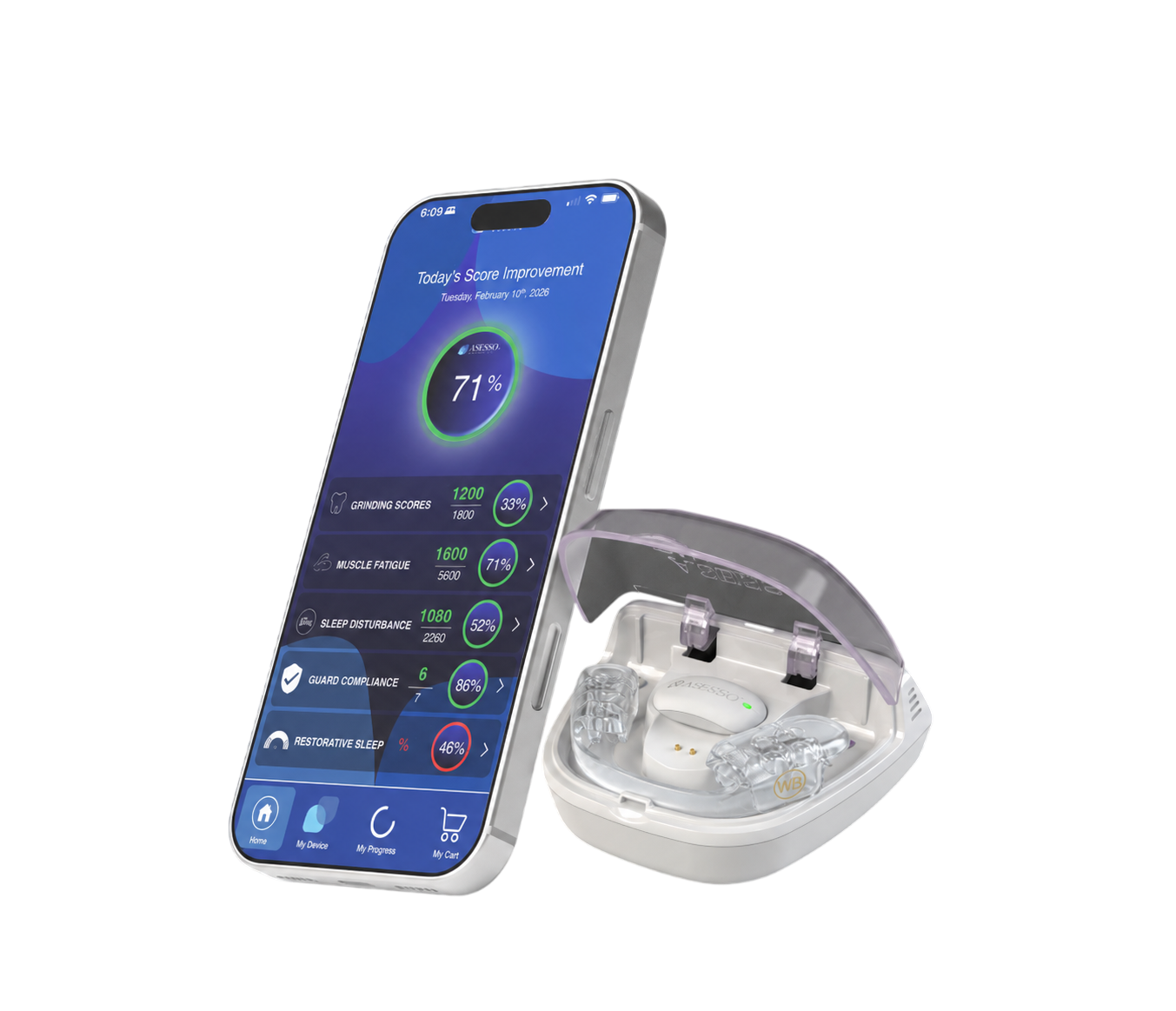
WAKEBRIGHT | Your night guard is protecting your teeth. But if you are still waking up sore, still battling headaches, still feeling that tight, heavy jaw, it is time to address what the guard cannot reach. Wakebright's approach targets jaw muscle tension during sleep, filling the gap in conventional bruxism treatment. Explore how Wakebright can transform your mornings and give your jaw the complete care it deserves. This article is for educational purposes only and does not constitute medical or dental advice. Please consult a qualified healthcare provider for personalized guidance.