Custom Night Guard vs. Boil-and-Bite: A Dentist's Honest Comparison

A boil-and-bite guard costs a few dollars at the drugstore and works tonight. A custom night guard costs several hundred dollars and takes a couple of appointments. If cost and convenience were the only factors, this wouldn't be much of a comparison. But there's real research on how these two options actually perform, and it's more nuanced and more useful than a simple "custom is always better" verdict.
The Basic Difference
A custom night guard is made from an impression or digital scan of your specific teeth, fabricated by a dental lab to match your exact bite. A boil-and-bite guard is a one-size-starts-as-many product you soften in hot water and then bite into, letting the material mold roughly to your teeth as it cools. Both are meant to sit between your upper and lower teeth to absorb the force of grinding and clenching.
What the Research Says About Effectiveness
Here's a genuinely surprising finding, if you assume custom automatically means "works better": some research cited in a randomized controlled trial comparing splint types notes that custom hard acrylic and boil-and-bite splints have shown nearly equal efficacy in certain studies, while separately, hard acrylic appliances have shown an advantage over soft or repositioning appliances specifically for managing TMD pain. In other words, the material and design matter more than whether it was custom-fitted or store-bought, at least for raw effectiveness in some comparisons.
But that same randomized trial found something important on the practical side: participants using OTC splints had real difficulty fabricating them to a clinically acceptable standard at home, and the OTC group showed significantly more nighttime grinding episodes than the comparison group during the study. The researchers' conclusion wasn't "boil-and-bite doesn't work" it was that dentists should be actively involved in overseeing self-fabricated appliances, rather than patients using them entirely unsupervised.
The Real Risk With Boil-and-Bite: Fit and Long-Term Wear
This is where the honest comparison gets more serious than "custom is more comfortable." A peer-reviewed survey of over-the-counter bruxism splints, published in the British Dental Journal, searched the FDA's MAUDE adverse event database and found a number of genuinely concerning reports associated with these products, including choking hazards, tissue damage, and occlusal changes meaning changes to how your teeth actually fit together. The same review found that none of the OTC splint designs it surveyed assured full occlusal coverage (contact across all your teeth), and noted that partial-coverage appliances worn for long periods carry a real risk of unwanted tooth movement.
This isn't a theoretical concern. A case report published in the same journal documented a real patient who developed an anterior open bite and increased overjet a genuine change in how their teeth met after wearing a dental appliance with incomplete occlusal coverage over an extended period. The mechanism is straightforward: teeth not held in contact by the appliance can gradually over-erupt (shift further into the bite) over months of use, while teeth in contact with the appliance are held in place. A well-made custom guard is specifically designed to maintain full, even contact across your bite to prevent exactly this.
The takeaway isn't that boil-and-bite guards are dangerous for occasional or short-term use. It's that unsupervised, long-term use of a poorly fitting appliance carries a real, documented risk that a properly fitted custom guard is specifically designed to avoid.
Cost and Lifespan Comparison
| Factor | Custom Night Guard | Boil-and-Bite |
|---|---|---|
| Upfront cost | $300–$800 | $10–$40 |
| Typical lifespan | 3–5 years | 6–12 months |
| Fit accuracy | Precise, based on your exact teeth | Approximate, dependent on home molding |
| Occlusal coverage | Full, even coverage by design | Not guaranteed; varies by product |
| Professional monitoring | Included via dental visits | None, unless you bring it up yourself |
| Best suited for | Ongoing, moderate to severe grinding | Short-term or occasional use, ideally with dentist input |
Over several years, a boil-and-bite guard replaced every 6-12 months can approach or exceed the cost of a single custom guard, without matching its fit or built-in monitoring.
When Boil-and-Bite Is a Reasonable Choice
To be genuinely fair to the cheaper option: a boil-and-bite guard isn't automatically the wrong call. It's a reasonable choice if you need something quickly before a dental appointment, you're testing whether a night guard helps at all before investing in a custom one, your grinding is mild or occasional, or cost is a real barrier to custom care right now. If you go this route, following the molding instructions carefully (avoiding overheating the material, biting down evenly rather than off-center) reduces though doesn't eliminate the fit-related risks described above.
When You Should Go Custom
A custom guard is the better call if you have moderate to severe grinding, you've already tried a boil-and-bite guard and found it uncomfortable or ineffective, you have any signs of TMJ involvement, or you plan to wear a night guard consistently for years rather than as a short-term fix. The precision fit matters more the longer and more consistently you're wearing something every single night.
The Honest Verdict
Boil-and-bite guards aren't a scam or inherently unsafe for short-term, occasional use the research even suggests the raw grinding-protection efficacy can be reasonably comparable to custom guards in some cases. But the documented risks of occlusal changes and poor fit with long-term, unsupervised use are real, not marketing exaggeration, and they specifically stem from a lack of full, even coverage across your bite precisely the thing a custom guard is engineered to get right. If you're using a boil-and-bite guard for more than a few months, or you have any ongoing jaw symptoms, it's worth having a dentist actually look at your bite rather than continuing indefinitely on your own.
Frequently Asked Questions
Is a boil-and-bite guard actually dangerous to use?
Not inherently, for short-term or occasional use. The documented risks occlusal changes, tissue damage, choking hazard reports in FDA adverse event data are specifically associated with poor fit and long-term, unsupervised use rather than occasional use of a well-molded guard.
Can a boil-and-bite guard actually change my bite?
It's a documented, real risk with long-term use, particularly if the guard doesn't provide full, even contact across all your teeth. A case report in the British Dental Journal documented exactly this outcome after extended use of a partial-coverage appliance.
Is a custom night guard really more effective at stopping grinding damage?
Some research suggests custom and boil-and-bite guards can have similar raw efficacy for certain outcomes, but custom guards have a clear advantage in fit precision, full occlusal coverage, durability, and professional monitoring all of which reduce the specific risks associated with boil-and-bite use.
How long is it safe to use a boil-and-bite guard before switching to custom?
There's no universally defined cutoff, but given the documented risks of long-term use of partial-coverage appliances, it's reasonable to treat a boil-and-bite guard as a short-term or occasional solution and have a dentist evaluate your fit if you're still using one after a few months.
Why would a dentist ever recommend a boil-and-bite guard?
As a reasonable short-term option before a scheduled custom fitting, to test whether a guard helps before investing in a custom one, or for genuinely mild, occasional grinding where the lower cost and convenience outweigh the more modest risks.
Can I bring my boil-and-bite guard to a dental appointment for a dentist to check?
Yes, and it's a good idea if you've been using one for a while. A dentist can check your bite and jaw for any early signs of the fit-related issues described above, even if you're not ready to switch to a custom guard yet.
Do boil-and-bite guards fit as well as custom guards?
No they're molded at home to an approximate fit, while custom guards are made from a precise impression or digital scan of your specific teeth. The fit difference is the main driver of most of the practical tradeoffs between the two.
Is it true that some over-the-counter splints don't cover all your teeth evenly?
Yes a peer-reviewed survey of OTC bruxism splints specifically found that none of the products surveyed guaranteed full occlusal coverage, which is the mechanism behind the tooth-movement risk associated with long-term unsupervised use.
Are boil-and-bite guards regulated the same way as custom dental appliances?
Not in the same way custom guards are made under a dentist's supervision as part of clinical care, while OTC splints are consumer products with comparatively limited safety information required for their sale, according to research surveying the OTC bruxism splint market.
If cost is the main barrier to a custom guard, are there any middle-ground options?
Yes some dental labs and online services offer custom guards made from at-home impression kits at a lower price point than an in-office dentist-made guard, which can be a reasonable middle ground, though it's still worth having a dentist review the fit at some point.
Can using an ill-fitting guard actually make my grinding worse?
Research has found that certain fit issues, particularly with self-fabricated OTC splints, were associated with more nighttime grinding episodes in at least one study so a poor fit isn't just a comfort issue, it may reduce how well the guard actually manages the underlying grinding pattern.
What should I do if I've already been wearing a boil-and-bite guard for a long time?
Bring it to your next dental visit (or schedule one) so a dentist can check your bite for any early signs of shifting or unevenness, and discuss whether switching to a custom guard makes sense for your situation.
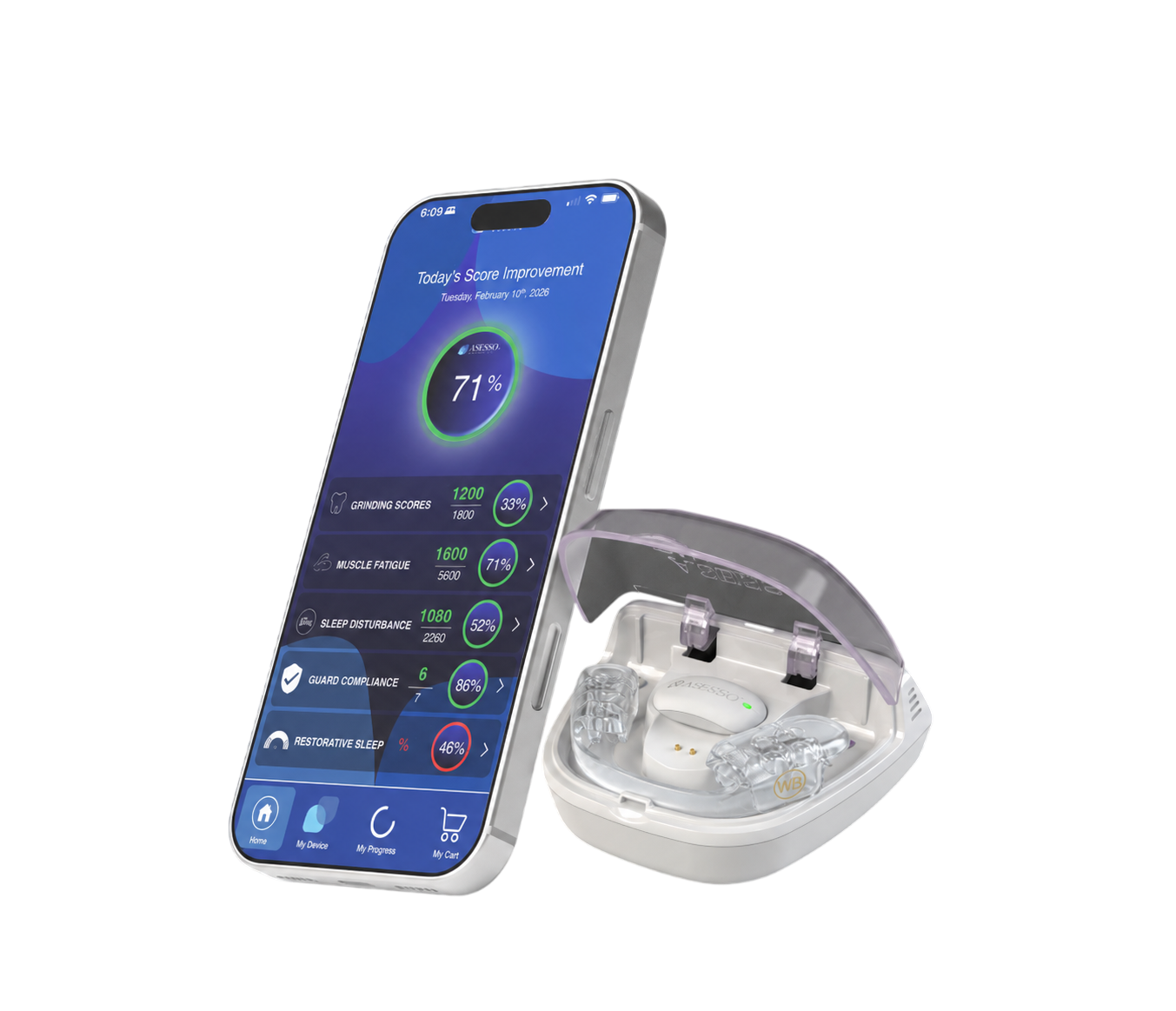
WAKEBRIGHT The Wakebright Guard is custom-fitted specifically to your bite, giving you the precision and durability a boil-and-bite option can't match ask your dentist about getting started.
This article is for informational purposes only and does not constitute medical advice. Consult a licensed dentist or healthcare provider for diagnosis and treatment recommendations specific to your situation.
References
- Wassell, R.W. et al. "Over-the-counter (OTC) bruxism splints available on the Internet." British Dental Journal, Nature. https://www.nature.com/articles/sj.bdj.2014.452
- "Dental appliances with inadequate occlusal coverage: a case report." British Dental Journal, PubMed, National Library of Medicine. https://pubmed.ncbi.nlm.nih.gov/21311530/
- "Over-the-counter bite splints: A randomized controlled trial of compliance and efficacy." PMC, National Library of Medicine. https://www.ncbi.nlm.nih.gov/pmc/articles/PMC7745066/
- Cleveland Clinic. "Mouth Guards: Types & Purpose." my.clevelandclinic.org. https://my.clevelandclinic.org/health/treatments/10910-mouthguards