Can Stress Cause Teeth Grinding? The Anxiety Bruxism Connection

If you already suspect stress is behind your teeth grinding, you're not just pattern-matching your own bad days to a sore jaw. The connection between anxiety and bruxism is one of the more well-studied relationships in dental research, with actual biological mechanisms behind it — not just a correlation dentists have noticed anecdotally. Here's what the research shows, and why it happens at a physiological level.
Yes Here's What the Research Actually Shows
A 2020 systematic review and meta-analysis pooling multiple studies found that stressed adults had 2.07 times the odds of presenting with bruxism compared to adults without elevated stress a meaningful effect size, and one the researchers noted held up with relatively low variability across the studies included. A separate systematic review focused specifically on sleep bruxism and anxiety symptoms found a consistent association across the studies it reviewed, reinforcing that this isn't a one-off finding from a single small study.
A study of dental students illustrates the pattern at an individual level: among students who reported bruxism, 88.8% also reported experiencing stress, compared to only 56.78% of students who didn't report bruxism a striking gap that lines up with the broader research.
The Mechanism: How Anxiety Turns Into Jaw Muscle Activity
This isn't just a psychological association there's an identifiable biological pathway connecting the two. When you experience emotional stress or anxiety, your body activates the hypothalamic-pituitary-adrenal (HPA) axis, a signaling system connecting your brain to hormone-producing glands. The HPA axis, working alongside your sympathetic nervous system, mobilizes physical resources in response to a perceived threat: heart rate and blood pressure rise, and the adrenal glands release cortisol, the body's primary stress hormone.
Research on stomatognathic (jaw and mouth-related) function has found that this same activation elevated cortisol and heightened autonomic nervous system activity is directly linked to increased muscle activity in the jaw, sleep disturbances, and bruxism episodes during both sleep and wakefulness. In other words, the same hormonal cascade that speeds up your heart rate under stress also appears to prime your jaw muscles for the repetitive clenching and grinding pattern that defines bruxism.
The Cortisol Connection: What Biomarkers Show
This isn't purely theoretical. Research measuring salivary cortisol a well-established, measurable biomarker for stress has found elevated cortisol levels specifically in people with severe bruxism and temporomandibular joint (TMJ) disorders, compared to people without these conditions. That's a meaningful piece of evidence: it means the anxiety-bruxism connection shows up not just in what people report about their stress levels, but in an actual physiological measurement.
Stress vs. Anxiety: Is There a Difference for Bruxism?
The research literature tends to use "stress," "anxiety," and sometimes "depression" somewhat interchangeably when studying bruxism, and for good reason they frequently overlap and share the same underlying HPA axis and nervous system pathways. That said, some studies have looked at anxiety specifically (as opposed to general life stress) and found it independently associated with bruxism, suggesting the connection isn't just about having a stressful week, but may also relate to a person's baseline tendency toward anxious arousal.
Research on bruxers and non-bruxers has also found differences in emotional distress more broadly not just anxiety, but depression and anger suggesting bruxism may be connected to a wider pattern of how someone's nervous system processes and expresses emotional strain, rather than being triggered by anxiety in isolation.
Sleep Bruxism vs. Awake Bruxism: Does Anxiety Affect Them the Same Way?
Not entirely and this is one of the more interesting nuances in the research. Awake bruxism (daytime clenching) tends to be more strongly and directly tied to acute, active stress the kind associated with a stressful meeting, an argument, or a demanding task. Sleep bruxism's relationship with stress appears somewhat different and is thought to involve broader dysregulation of the nervous system's arousal patterns during sleep, rather than a direct, moment-to-moment reaction the way daytime clenching often is.
This distinction matters practically: if your grinding happens mostly during the day, addressing acute, in-the-moment stress responses is likely to have a more direct effect. If it happens mostly at night, general anxiety management and sleep quality may matter more than trying to interrupt a stress response you're not conscious for.
What the Research Says, Summarized
| Finding | What It Means |
|---|---|
| Stressed adults have 2.07x the odds of bruxism | A meaningful, measurable increase in risk, not just a loose correlation |
| Elevated salivary cortisol found in severe bruxism/TMD | The connection shows up in physical biomarkers, not just self-reported stress |
| HPA axis and sympathetic nervous system activation | A specific biological pathway links stress hormones to jaw muscle activity |
| Anxiety linked to bruxism independent of general stress | Baseline anxiety, not just situational stress, appears to play a role |
| Awake and sleep bruxism relate to stress differently | Daytime clenching tracks with acute stress; nighttime grinding involves broader nervous system dysregulation |
Breaking the Cycle: What Actually Helps
Because the connection is genuinely physiological, not just behavioral, addressing the underlying stress response tends to be more effective than trying to will yourself to stop clenching. Approaches with real support in bruxism research and clinical guidance include:
- Reducing overall stress load through regular exercise, meditation, or other relaxation practices these have documented effects on lowering cortisol and calming sympathetic nervous system activity generally
- Addressing anxiety directly, through counseling or therapy if it's a persistent pattern rather than situational stress, since research has found anxiety specifically (not just acute stress) plays a role
- Protecting your teeth in the meantime with a custom night guard, since reducing stress won't happen overnight, and grinding can continue to cause damage while you work on the underlying cause
- Building daytime awareness for clenching specifically tied to acute stressful moments, since awake bruxism responds well to noticing and interrupting the pattern in real time
- Improving sleep quality generally, given the connection between nervous system arousal during sleep and sleep bruxism specifically
None of these need to happen in isolation most people benefit from combining protective dental care with whatever stress or anxiety management approach fits their situation.
What You Can Do Now
Stress and anxiety are genuinely, consistently linked to bruxism, particularly awake bruxism
The connection to sleep bruxism is more indirect, working through broader nervous system arousal rather than a direct pathway
Stress reduction alone doesn't reliably resolve bruxism if other contributing factors are also present
A dental evaluation can help identify whether stress is the primary factor or one of several overlapping causes
Frequently Asked Questions
Does stress actually cause teeth grinding, or is it just a coincidence?
The research supports a genuine causal-leaning association, not just coincidence. A meta-analysis found stressed adults have about twice the odds of bruxism compared to non-stressed adults, and the connection is backed by measurable biological markers like elevated cortisol, not just self-reported correlation.
What's actually happening in the body when stress leads to teeth grinding?
Stress activates the hypothalamic-pituitary-adrenal (HPA) axis and the sympathetic nervous system, which releases cortisol and increases muscle activity throughout the body, including the jaw. Research has found this activation is directly linked to increased jaw muscle activity and bruxism episodes.
Is anxiety different from stress when it comes to bruxism risk?
They overlap substantially and share the same biological pathways, but some research has looked at anxiety specifically and found it independently associated with bruxism suggesting a person's baseline anxiety level may matter, not just whether they're having a stressful week.
Can reducing stress alone stop me from grinding my teeth?
For many people it significantly helps, particularly for daytime clenching, but bruxism is generally multifactorial genetics, sleep patterns, and other medical factors often play a role too, so stress reduction may reduce but not necessarily eliminate grinding entirely.
Why do I grind my teeth at night when I don't feel especially anxious during the day?
Sleep bruxism's relationship to stress appears to involve broader nervous system dysregulation during sleep rather than a direct reaction to daytime anxiety, so it's possible to have significant nighttime grinding without feeling overtly anxious while awake.
Is there a blood or saliva test that can confirm my grinding is stress-related?
Research has measured salivary cortisol in bruxism studies and found elevations associated with severe cases, but this isn't a standard diagnostic test used in routine dental practice diagnosis is still based on clinical exam and history, not lab testing.
Can therapy or counseling actually reduce teeth grinding?
It can, particularly if anxiety or chronic stress is a significant contributing factor. Since research has found anxiety independently associated with bruxism, addressing it directly through counseling is a reasonable part of a treatment approach alongside dental protection.
Does depression play a role in teeth grinding too, or is it just anxiety?
Research has found associations between bruxism and a broader range of emotional distress, including depression and anger, not just anxiety specifically suggesting bruxism may relate to how someone's nervous system handles emotional strain generally.
If I'm not consciously stressed, could I still be grinding my teeth from stress?
Yes. Much of sleep bruxism happens without any conscious awareness, and the underlying nervous system activation driving it doesn't require you to feel actively anxious in the moment it can reflect more chronic or baseline stress patterns.
Should I see a therapist or a dentist first if I think stress is causing my grinding?
Either is a reasonable starting point, and many people benefit from both a dentist can protect your teeth with a night guard while any underlying stress or anxiety is addressed, and a therapist or counselor can help with the anxiety itself if it's a significant, ongoing pattern.
Can exercise really reduce stress-related teeth grinding?
Regular exercise has well-documented effects on lowering cortisol and calming the nervous system's stress response generally, which is part of why it's commonly recommended as part of standard bruxism self-care alongside other stress-reduction techniques.
Is the stress-bruxism connection the same in children as adults?
Children can also show bruxism linked to emotional factors, but the research summarized here focuses on adult populations; childhood bruxism has some different patterns and often resolves on its own as permanent teeth come in, regardless of stress levels.
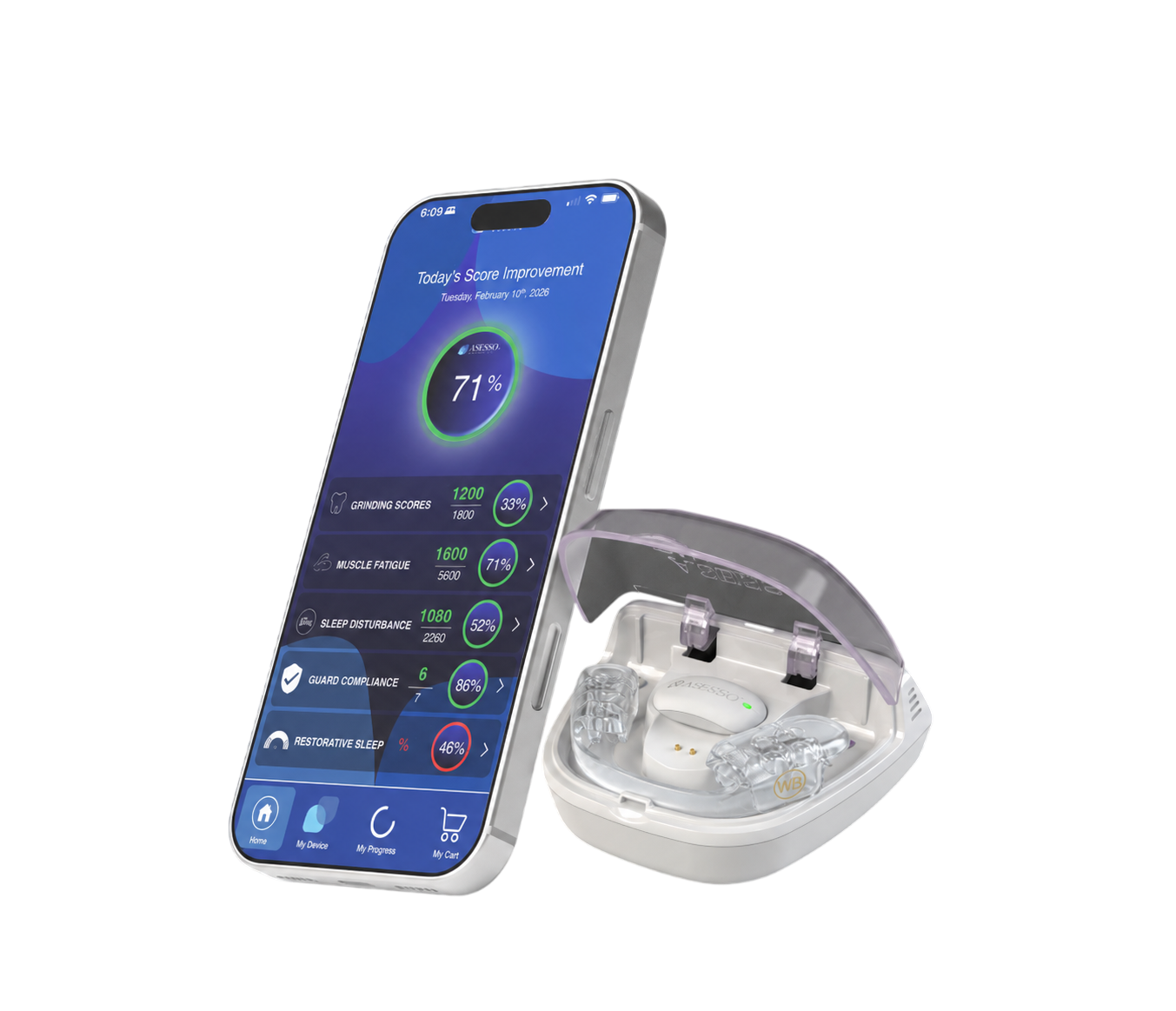
**WAKEBRIGHT **While you work on managing the stress behind your clenching, the Wakebright Guard protects your teeth from the physical effects in the meantime.
This article is for informational purposes only and does not constitute medical advice. Consult a licensed dentist or healthcare provider for diagnosis and treatment recommendations specific to your situation.
References
- Chemelo, V.S. et al. "Is There Association Between Stress and Bruxism? A Systematic Review and Meta-Analysis." Frontiers in Neurology. https://www.frontiersin.org/journals/neurology/articles/10.3389/fneur.2020.590779/full
- Polmann, H. et al. "Association between sleep bruxism and anxiety symptoms in adults: A systematic review." Journal of Oral Rehabilitation, Wiley Online Library. https://onlinelibrary.wiley.com/doi/abs/10.1111/joor.13142
- "Stomatognathic Dysfunction and Neuropsychological Imbalance: Associations with Salivary Cortisol, EMG Activity, and Emotional Distress." PMC, National Library of Medicine. https://www.ncbi.nlm.nih.gov/pmc/articles/PMC12191476/
- National Institute of Dental and Craniofacial Research. "Bruxism." nidcr.nih.gov. https://www.nidcr.nih.gov/health-info/bruxism
- Mayo Clinic. "Teeth grinding (bruxism) – Diagnosis and treatment." mayoclinic.org. https://www.mayoclinic.org/diseases-conditions/bruxism/diagnosis-treatment/drc-20356100