Bruxism Explained: Why You Grind Your Teeth and What Can Be Done About It

Most people who grind their teeth have no idea they are doing it. Bruxism, the involuntary clenching, grinding, or gnashing of teeth, happens most often during sleep, well beyond the reach of conscious awareness. The first clue usually arrives in the morning: a jaw that feels worked over, aching temples, and teeth that have become sensitive for no obvious reason.
Sometimes the discovery comes from a partner who hears the grinding at night and reveals something you genuinely never knew about yourself. Sometimes it comes from a dentist who spots the flat, polished wear on your enamel and realizes the grinding has been going on for years.
Bruxism is common. Estimates put it at 10 to 15 percent of adults, with sleep bruxism as the most prevalent form. It is also consequential: left alone, it damages teeth, disrupts sleep, fuels chronic pain, and erodes quality of life in ways that build on each other over time. Understanding what bruxism actually is, and what causes it, is the essential first step toward managing it well.
Sleep Bruxism vs. Awake Bruxism: Two Different Problems
Bruxism is not one uniform condition. It comes in two distinct forms, and knowing which one you have, or whether you have both, shapes the most effective management approach.
Sleep bruxism happens during sleep and is classified as a sleep-related movement disorder. It occurs without any conscious awareness, most often during the light sleep stages (N1 and N2) and during transitions between stages. Sleep bruxism is tied to bursts of rhythmic masticatory muscle activity (RMMA), repetitive jaw muscle contractions that power the grinding motion.
Awake bruxism shows up as jaw clenching and tooth contact during waking hours. Where sleep bruxism involves grinding movement, awake bruxism tends toward a static clenching pattern. It is strongly linked to psychological stress, concentration, and emotional arousal: people clench through tense meetings, difficult phone calls, screen-heavy work, and traffic.
Many people carry both forms, with daytime clenching stacking additional mechanical load on top of the overnight grinding. That cumulative picture, stress by day and grinding by night, explains why bruxism-related damage tends to progress steadily.
What Causes Bruxism? The Science Behind the Grind
There is no single cause of bruxism. It is a multifactorial condition arising from the interplay of neurological, psychological, anatomical, and lifestyle factors.
The primary cause is the damage to the articular disc near the mandible. Unfortunately, it is easier than we think, to displace or damage this disc, which can happen due to a fall in the playground or a blow to the face. When this disc is displaced, it causes the 4 muscles of mastication (masseter, temporalism and the 2 pterygoid muscles) to act and try to restore the disc in its original position. Unfortunately, once displaced, it cannot be permanently re-positioned. The resulting action is a grinding action that is caused by the muscles to reposition the articular disc.
Central nervous system factors: research points strongly to the brain, not the teeth, as the driver of bruxism. The rhythmic muscle activity of sleep bruxism appears to be regulated centrally, through dopamine pathways and other neurotransmitter systems that govern sleep and movement control. This is exactly why bruxism is classified as a sleep-related movement disorder rather than a dental condition.
Psychological stress and anxiety: stress ranks among the most consistently identified risk factors. Elevated cortisol and sympathetic nervous system activation raise baseline muscle tension throughout the body, and the jaw is one of the most common places that tension collects. People under heavy stress almost universally report worse bruxism symptoms.
Sleep architecture disruption: bruxism episodes cluster around sleep stage transitions and arousals. Anything that fragments sleep, including sleep apnea, insomnia, caffeine, and alcohol, raises bruxism frequency. The relationship runs in both directions: fragmented sleep worsens bruxism, and bruxism-related discomfort fragments sleep further.
Genetic predisposition: research supports a hereditary component, with family history raising risk. The precise genetic mechanisms remain unsettled, but the evidence for heritability is consistent.
Medications: certain drugs, especially SSRIs (antidepressants), stimulants prescribed for ADHD, and some antipsychotics, are linked to increased bruxism risk. If your grinding started or intensified after beginning a new medication, that is worth raising with your prescribing physician.
The Damage Bruxism Does: A System-Wide View
The consequences of untreated bruxism reach far beyond the teeth, even though dental damage is usually the most visible and measurable harm.
Enamel wear and tooth sensitivity: the most direct consequence. Grinding strips enamel from tooth surfaces irreversibly, exposing the more sensitive, decay-prone dentin underneath. As wear progresses, teeth change shape, the bite shifts, and structural integrity can eventually be compromised.
Tooth fractures and restorative failure: bruxism sharply raises the risk of cracked teeth, fractured cusps, and the failure of existing dental work such as fillings, crowns, and implants. Fixing these complications is often expensive and complex.
Jaw muscle pain and TMD: chronic overuse of the masseter and temporalis breeds inflammation, trigger points, and the full clinical picture of myofascial temporomandibular disorder. Morning jaw soreness, tension headaches, and facial tightness are the most frequent complaints.
Sleep disruption: bruxism episodes come paired with microarousals, brief and often forgotten interruptions to sleep. These accumulate over time into a pattern of non-restorative sleep, feeding daytime fatigue, mood changes, and cognitive fog.
Secondary pain syndromes: the chronic muscle tension and inflammation of untreated bruxism can spread into the neck, shoulders, and upper back, and it is associated with more frequent headaches, including tension-type and migraine headaches, as well as ear pain.
Evidence-Based Management: What Works
Bruxism management works best when it tackles several dimensions of the condition at once rather than a single symptom.
Protecting the Teeth
Custom-fabricated night guards remain the standard of care for shielding teeth from the mechanical damage of nocturnal bruxism. A well-fitted hard acrylic guard supplies a sacrificial surface that soaks up grinding forces, preventing enamel loss and lowering fracture risk. The guard does not stop the grinding, but it spares the teeth from the worst of its consequences.
Addressing Muscle Tension
Physical therapy aimed at the jaw muscles, through manual release, trigger point work, and therapeutic exercise, treats the muscular dysfunction behind the pain. Jaw-specific exercises can expand range of motion, correct muscle imbalances, and bring pain intensity down over time.
Managing the Psychological Driver
Because stress sits so close to the center of bruxism, evidence-based stress management is genuinely therapeutic. Cognitive behavioral therapy (CBT) has demonstrated effectiveness for both stress reduction and bruxism habit reversal. Mindfulness meditation, biofeedback, and regular aerobic exercise all measurably calm the stress physiology that amplifies jaw muscle activation.
Improving Sleep Quality
Better sleep is both a goal of treatment and a treatment in itself. Consistent sleep timing, a cool and dark bedroom, less alcohol and caffeine, and treatment of sleep apnea where it exists all reduce the sleep fragmentation that feeds bruxism. Deeper sleep also lowers cortisol and sympathetic nervous system tone, which directly eases daytime jaw tension.
The Wakebright Approach
Wakebright addresses the dimension of bruxism management that conventional approaches most often skip: what is actually happening in the jaw muscles during sleep.
A night guard protects the teeth while the grinding carries on. Physical therapy treats the aftermath of overworked muscles. Stress management makes bruxism activation less likely. Yet none of these interventions directly changes what the muscles are doing through the hours when bruxism is most active.
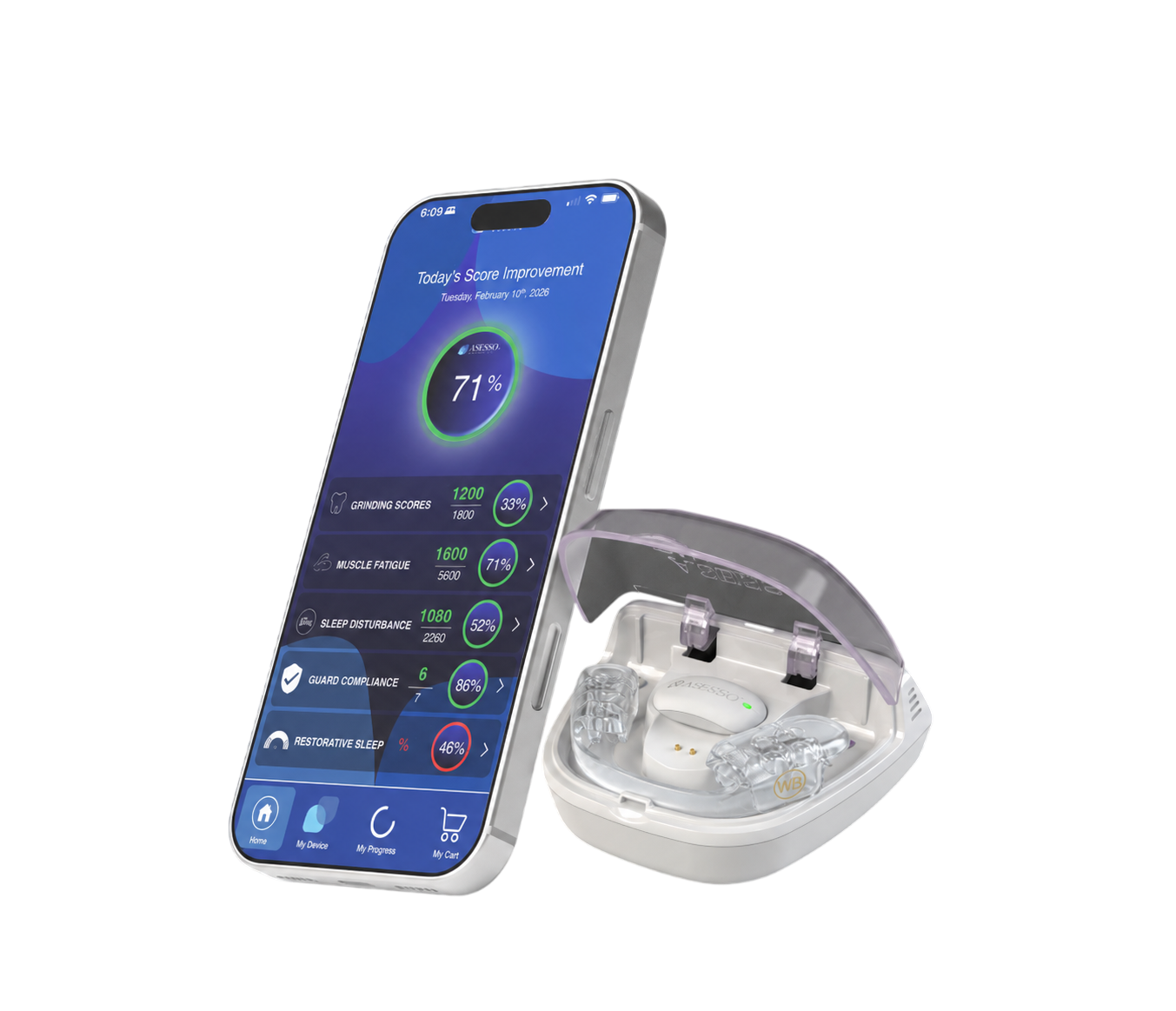
Wakebright's Complete TMJ solution does exactly that. By supporting the jaw muscles into relaxation during sleep, it reduces the clenching and grinding activity in the very window when it would otherwise occur. Users feel the difference as mornings with meaningfully less jaw soreness, not because the teeth were better shielded, but because the muscles did less damaging work overnight.
More than 20 years of real-world use stand behind the Wakebright approach. The underlying principle is not new; reducing jaw muscle overactivation during sleep has been recognized as a therapeutic target for decades. What Wakebright contributes is a practical, non-invasive system that puts this intervention within reach for daily use at home.
What You Can Do Now
Bruxism is classified as a sleep-related movement disorder driven by the central nervous system, not by dental factors.
Sleep bruxism and awake bruxism are distinct forms that call for different management strategies, and many people experience both.
Psychological stress, sleep fragmentation, genetic predisposition, and certain medications are the primary risk factors.
Bruxism damages teeth, jaw muscles, and sleep quality all at once, so effective management has to cover all three.
Night guards protect teeth but do not stop the grinding; complete management means addressing the muscular and neurological drivers.
Early intervention matters, because enamel lost to grinding never grows back and the damage accumulates silently across years.
Frequently Asked Questions
Q: Is bruxism a dental problem or a sleep problem?
Neither. It is actually a muscular problem. It may begin with the displacement of the articular disc, and get exacerbated by external factors such as stress, lack of sleep and other physiological behaviors. That is why purely dental treatments such as night guards only protect the teeth without stopping the grinding.
Q: Can children have bruxism?
Yes. Childhood bruxism is common and usually fades on its own as the child's teeth and nervous system mature. It is less tied to stress than adult bruxism and more often connected to developmental factors. Parental observation and regular pediatric dental checkups are the main management approach for children.
Q: Does bruxism go away on its own?
Mild bruxism can improve with stress reduction and lifestyle changes. Established bruxism, particularly when sleep disruption, genetics, or medications are driving it, rarely resolves fully without targeted intervention. Because the dental damage is cumulative and irreversible, early management beats a wait-and-see approach every time.
Q: Can I feel myself grinding my teeth during sleep?
Generally no. Sleep bruxism happens during sleep, outside conscious awareness. Most people with sleep bruxism learn about it only from a bed partner or from a dentist who recognizes the characteristic wear patterns. Some people do sense clenching during light sleep transitions and partially recall it after waking.
Q: What is the difference between clenching and grinding?
Clenching is sustained, static compression of the teeth against each other without sideways movement. Grinding, which is bruxism in the strict sense, involves lateral jaw movement while the teeth stay in contact, producing the audible grinding sound. Both load the teeth and jaw muscles with damaging force, though through different mechanical patterns, and many people do both.
WAKEBRIGHT | Bruxism does not have to be something you simply live with. Wakebright's approach targets jaw muscle tension during sleep, the core of what drives nightly grinding, so you wake up with less soreness and more energy while protecting the teeth that depend on your intervention. Explore Wakebright and discover what managing bruxism at its source actually feels like. This article is for educational purposes only and does not constitute medical or dental advice. Please consult a qualified healthcare provider for personalized guidance.