Botox vs. Night Guards for Bruxism: What the Evidence Shows

Night guards have been the standard bruxism treatment for decades. More recently, Botox injections into the jaw muscles have become a genuinely popular alternative and the two work in completely different ways. One protects your teeth from the effects of grinding; the other tries to reduce the muscle activity behind it. Here's what the actual research shows about how they compare.
How Each Treatment Works
A night guard is a passive, physical barrier: it sits between your teeth and absorbs grinding forces, protecting your enamel, without changing the underlying muscle activity that causes bruxism in the first place.
Botox (botulinum toxin type A) works differently it's injected directly into the masseter muscle (and sometimes the temporalis), the primary muscles used for chewing and clenching. It temporarily weakens the targeted muscle's ability to contract forcefully, which is intended to directly reduce the intensity of clenching and grinding, rather than just protecting your teeth from its effects.
What the Evidence Shows on Effectiveness
For reducing biting force, Botox has stronger evidence. A 2023 meta-analysis published in Aesthetic Plastic Surgery, compiling data from ten studies on Botox for bruxism, found that Botox produced a significantly greater reduction in maximal biting force than both oral splints and saline placebo injections at one month, and continued to outperform both oral splinting and placebo at three months.
For pain relief specifically, the picture is more mixed. A 2024 randomized controlled trial designed as an equivalency study directly comparing occlusal splints to Botox for jaw muscle pain in probable sleep bruxism found that both treatments effectively reduced jaw muscle pain and improved quality of life and jaw function, but noted that occlusal splints may offer additional benefits in specific functional parameters. A separate efficacy review cited a specific head-to-head comparison in which Botox was found to be slightly less effective than occlusal splints for pain reduction, even though both provided real relief. In other words, Botox's advantage in reducing biting force doesn't automatically translate into a clear pain-relief advantage over a well-fitted splint.
A newer systematic review adds some encouraging specifics. A 2024 review in the journal Dentistry (analyzing nine randomized trials with 137 participants) found meaningful reductions in bruxism events in some studies from roughly 5 events per hour down to under 2 per hour in one trial along with improvements in jaw stiffness and total sleep time in others. The review's authors were careful to describe these findings as preliminary, given variability in study design across the trials included.
Duration and Maintenance
This is one of the more practical differences between the two options. A night guard, once fitted, is a durable, reusable appliance that typically lasts one to five years depending on material and how heavily you grind a largely one-time investment with occasional replacement. Botox's effects are temporary by nature, generally lasting in the range of three to four months for facial muscles, sometimes longer for the masseter specifically as it's treated repeatedly over time. This means Botox requires ongoing, repeated injections to maintain its effect, an important factor in both the total cost over time and the commitment involved.
Safety and Side Effects
Botox for bruxism is generally described in the research as well-tolerated, with adverse effects that tend to be mild and temporary rather than serious. The 2024 systematic review noted injection site pain in roughly 20% of participants in one study and temporary cosmetic changes to smile symmetry in about 15% of patients in another, both described as mild and transient in the studies reviewed. As with any injectable treatment, side effects and risks should be discussed directly with the provider administering it, since individual risk factors and technique can affect outcomes.
Night guards carry a different risk profile entirely one centered on fit rather than injection-related effects. A poorly fitted guard can, as covered in more detail elsewhere, potentially worsen jaw strain or contribute to bite changes with long-term use, which is why professional fitting matters regardless of which treatment you choose.
FDA Approval Status: Why "Off-Label" Matters, But Isn't Disqualifying
It's worth being direct about this: Botox is not FDA-approved specifically for treating bruxism or TMJ disorders. It is FDA-approved for a number of other conditions, including chronic migraine, cervical dystonia, and certain other muscular and cosmetic indications, and its use for bruxism is what's known as "off-label" a legal and common practice where a licensed provider uses their clinical judgment to prescribe an approved medication for a use it wasn't specifically approved for. A Cochrane systematic review specifically examining botulinum toxin for sleep bruxism is currently underway, reflecting genuine, ongoing interest in establishing higher-certainty evidence for this specific use.
Off-label doesn't mean unproven or unsafe plenty of well-established treatments are used off-label based on accumulated clinical evidence, and the research summarized above shows real, measurable effects. But it does mean the regulatory bar for this specific use hasn't been formally met the way it has for a night guard, which doesn't require the same approval pathway as a drug.
Cost and Insurance Considerations
Night guards are typically a one-time cost (with occasional replacement), commonly ranging from a few hundred dollars custom-made through a dentist to less through online labs, as covered in more detail in our night guard cost guide. Botox for bruxism involves recurring costs every few months for as long as you continue treatment, and because it's an off-label use, insurance coverage is inconsistent some medical plans may cover it with documented medical necessity, but cosmetic-focused Botox use is essentially never covered, and coverage for bruxism-specific use should be confirmed directly with your insurer rather than assumed.
Side-by-Side Comparison
| Factor | Night Guard | Botox |
|---|---|---|
| Mechanism | Physical barrier; protects teeth | Reduces muscle contraction strength |
| Effect on biting force | Doesn't reduce it | Significantly reduces it, per research |
| Effect on pain | Effective; may have some functional edge in research | Effective, though possibly slightly less so than splints in some studies |
| Duration of effect | Ongoing, as long as it's worn | Temporary, typically 3–4 months |
| Maintenance | Occasional replacement (1–5 years) | Repeated injections every few months |
| FDA status | Not a drug; no approval pathway needed | Off-label for bruxism specifically |
| Typical side effects | Fit-related jaw/bite issues if poorly made | Mild, transient injection-site effects in most studies |
| Cost pattern | Largely one-time | Recurring |
Who Might Consider Botox Over (or Alongside) a Night Guard
Botox may be worth discussing with a provider if you've used a well-fitted night guard consistently without adequate relief from muscle-related pain or jaw fatigue, you're specifically bothered by clenching intensity rather than just tooth wear, or you're also interested in the muscle-relaxation effect for related concerns like masseter hypertrophy. It's not necessarily an either-or choice some patients use both together, with a night guard protecting the teeth and Botox addressing muscle activity, particularly since Botox doesn't stop grinding motion entirely and a guard's tooth-protection benefit remains relevant even alongside injections.
Frequently Asked Questions
Is Botox more effective than a night guard for bruxism?
It depends on what outcome matters most. Research shows Botox reduces maximal biting force more effectively than splints, but for pain relief specifically, evidence is more mixed some studies find splints and Botox roughly equivalent, and at least one comparison found Botox slightly less effective than splints for pain.
Does Botox actually stop teeth grinding?
Not entirely it reduces the strength of muscle contractions involved in clenching and grinding, which can meaningfully reduce bruxism events and force, but it doesn't eliminate the underlying nervous system activity that drives bruxism the way some other interventions aim to.
Is Botox for bruxism FDA-approved?
No it's an off-label use. Botox holds FDA approval for other conditions like chronic migraine and cervical dystonia, but not specifically for bruxism or TMJ disorders, though it's widely used off-label by dentists, oral surgeons, and other qualified providers based on accumulated research.
How long does Botox last for bruxism?
Typically around three to four months for the effect on muscle activity, though results can sometimes last longer with repeated treatments over time as the muscle responds to ongoing therapy.
Can I use a night guard and Botox together?
Yes, and some patients do a night guard protects your teeth regardless of muscle activity, while Botox addresses the intensity of the underlying clenching, so the two can complement rather than replace each other.
What are the side effects of Botox for bruxism?
Research describes them as generally mild and temporary — injection site discomfort and, less commonly, temporary changes in smile symmetry were reported in some studies. Serious complications are uncommon but should be discussed directly with your provider before treatment.
Is Botox covered by insurance for bruxism?
It varies significantly by plan. Because it's an off-label use, coverage isn't guaranteed and depends on documented medical necessity; cosmetic-focused use is essentially never covered. Check directly with your insurer rather than assuming coverage.
Why would a night guard still be recommended if Botox reduces clenching more effectively?
Because a night guard directly protects your teeth from mechanical wear, which Botox doesn't address at all even with reduced muscle force, some grinding motion can still occur, and a guard provides a physical barrier regardless of muscle activity.
Is Botox a permanent solution for bruxism?
No its effects are temporary, generally lasting a few months, which means ongoing treatment is needed to maintain results. A night guard, once made, doesn't require repeat "dosing" in the same way, though it does eventually need replacement.
Who administers Botox for bruxism?
Depending on your state's regulations, this can be a dentist, physician, or other licensed provider trained in these injections. It's worth confirming your provider's specific training and experience with masseter/temporalis injections for bruxism specifically, not just general cosmetic Botox experience.
Does Botox help with jaw pain from TMD, or just bruxism itself?
Research has examined Botox for both bruxism-related muscle activity and associated jaw pain, with generally positive but somewhat mixed results depending on the specific outcome measured pain reduction has been demonstrated in several trials, though not always shown to outperform standard splint therapy.
Should I try a night guard before considering Botox?
Many providers take this conservative-first approach, starting with a properly fitted night guard and considering Botox for cases where muscle-related symptoms haven't adequately improved, given that a night guard is generally lower-cost, non-invasive, and doesn't carry injection-related considerations.
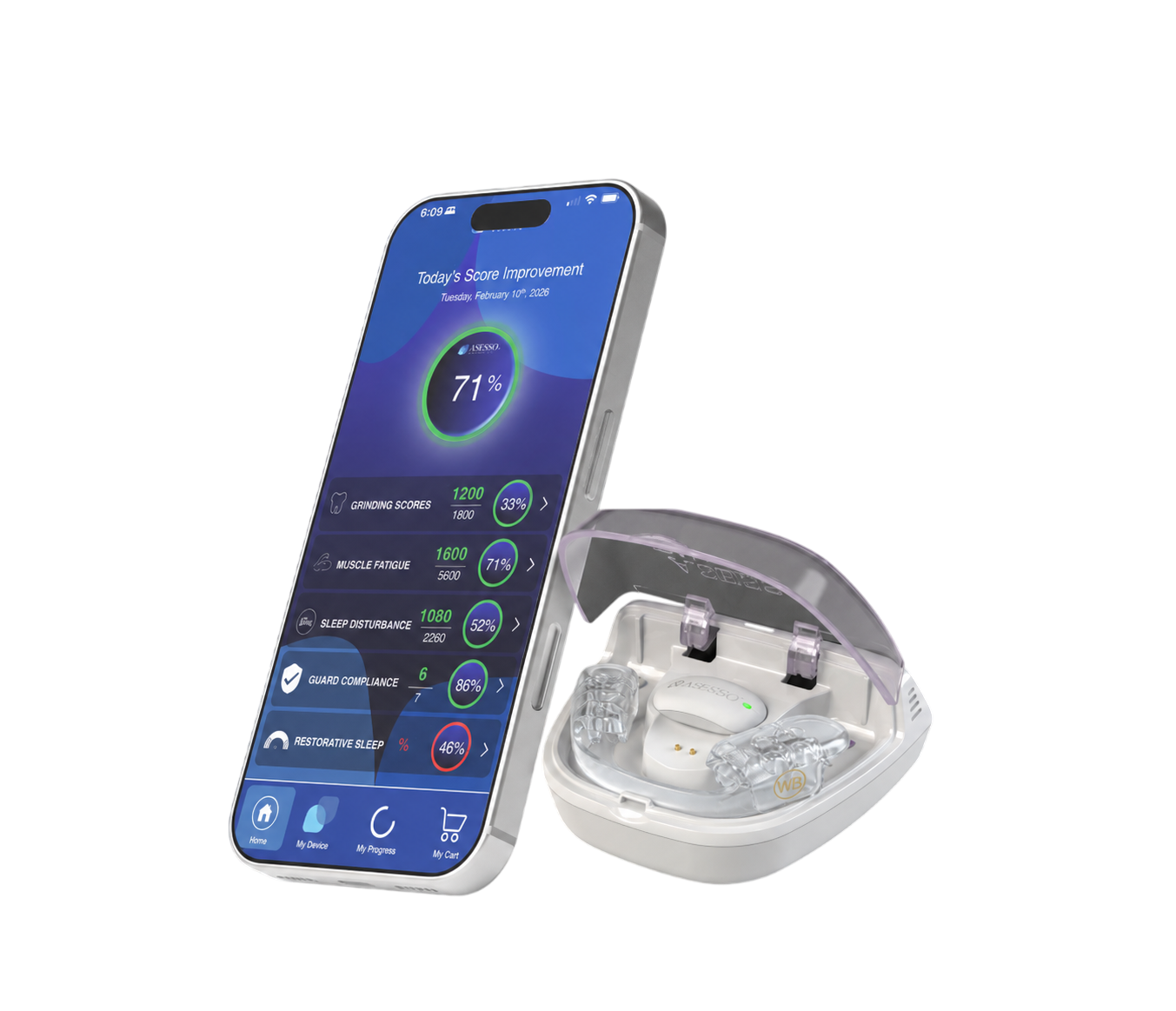
WAKEBRIGHT Regardless of whether Botox is part of your treatment plan, the Wakebright Guard provides the direct tooth protection that Botox alone doesn't offer, ask your dentist how the two might work together for your case.
This article is for informational purposes only and does not constitute medical advice. Consult a licensed dentist or healthcare provider for diagnosis and treatment recommendations specific to your situation.
References
- "Effectiveness of Botulinum Toxin Injection on Bruxism: A Systematic Review and Meta-analysis of Randomized Controlled Trials." Aesthetic Plastic Surgery, Springer Nature Link. https://link.springer.com/article/10.1007/s00266-023-03256-8
- "Occlusal splint or botulinum toxin-a for jaw muscle pain treatment in probable sleep bruxism: A randomized controlled trial." Journal of Dentistry, ScienceDirect. https://www.sciencedirect.com/science/article/pii/S0300571224006092
- Buzatu, R. et al. "Efficacy and Safety of Botulinum Toxin in the Management of Temporomandibular Symptoms Associated with Sleep Bruxism: A Systematic Review." Dentistry Journal, MDPI. https://www.ncbi.nlm.nih.gov/pmc/articles/PMC11203296/
- Balanta-Melo, J. et al. "Botulinum toxins for sleep bruxism." Cochrane Database of Systematic Reviews (protocol). cochrane.org. https://www.cochrane.org/CD015010/MOVEMENT_botulinum-toxins-sleep-bruxism
- National Institute of Dental and Craniofacial Research. "Bruxism." nidcr.nih.gov. https://www.nidcr.nih.gov/health-info/bruxism