Botox for TMJ: 7 Things to Know Before You Consider It

What Botox Does in the Context of TMJ and Bruxism
Botulinum toxin, sold under brand names including Botox, Dysport, and Xeomin, is a neurotoxin that temporarily interrupts the nerve signals that make muscles contract. Injected into the masseter or temporalis, it limits how much force those muscles can produce, which in turn caps the intensity of jaw clenching and grinding.
For TMJ disorders rooted mainly in muscular overload, that drop in muscle force is the entire therapeutic mechanism. Weaker jaw muscles press less hard on the temporomandibular joint, hold less sustained tension across the face and temples, and send less pain signaling into the trigeminal system. Over the short term, this frequently translates into real relief from jaw pain, headaches, and morning soreness.
It is worth knowing that Botox has no FDA approval for bruxism or TMJ. Its use here is off-label, meaning it rests on physician judgment and clinical evidence rather than a specific regulatory green light. Off-label prescribing is common in medicine, and plenty of effective treatments fall into this category. Even so, it means the evidence behind this use is thinner than for approved indications, and insurance coverage is hit or miss.
Before you pursue Botox for TMJ or bruxism, you should understand what it can realistically deliver, where it falls short, what the risks look like, and which alternatives deserve a try first. The seven considerations below are all grounded in the available clinical evidence.
Seven Key Things to Know Before You Decide
First: Botox for TMJ is temporary. The effect typically holds for three to six months, after which muscle activity gradually returns and symptoms can come back with it. That makes Botox a repeating commitment. Most patients using it for bruxism or TMJ need fresh injections every four to six months indefinitely, or until they deal with the underlying drivers of their jaw muscle overload.
Second: the evidence base is moderate rather than strong. Several small randomized controlled trials show that Botox lowers jaw pain and headache frequency in bruxism and TMJ patients, with effects ranging from moderate to substantial. Most of these studies, however, suffer from small sample sizes, short follow-up periods, and blinding difficulties. A 2021 Cochrane-style review judged the evidence promising but not sufficient to place Botox ahead of conservative approaches as a first-line treatment.
Third: it does not treat the cause. Botox weakens the muscles, nothing more. It does not resolve the neurological or behavioral drivers of bruxism, the stress that keeps the clenching going, or the sleep disruption that ramps up jaw muscle activity overnight. Once the Botox fades, all of those original drivers are still sitting there. Without parallel work on the root causes, relapse is the rule rather than the exception.
Fourth: the risks and side effects are real. The most serious long-term concern is masseter atrophy, where the muscle shrinks under repeated injections. This can change facial appearance, producing a slimmer, more angular jaw in some patients and asymmetry in others. Additional reported side effects include trouble chewing hard foods, temporary smile asymmetry when the injection spreads into neighboring muscles, and in rare cases swallowing or speech changes if the toxin diffuses into unintended areas.
Cost, Insurance, and Practical Considerations
Fifth: the cost is significant and usually comes out of pocket. Off-label Botox for TMJ and bruxism generally runs between 500 and 1,500 dollars per session, depending on how many units are used and who administers them. Because the use is off-label, most insurance plans decline to cover it. Across two years at four injections per year, total out-of-pocket spending can easily land between 4,000 and 12,000 dollars.
Set that against the cost of a properly fitted oral repositioning appliance: a one-time purchase that, with reasonable care, lasts for years and manages jaw muscle overload continuously instead of in four-to-six-month windows. For most patients, the math strongly favors trying conservative appliance-based treatment before signing up for an open-ended series of injections.
Sixth: who performs the injections matters enormously. Outcomes with TMJ Botox hinge on technique, specifically the accuracy of the injection sites and the dosing. An experienced orofacial pain specialist, or a dentist with real training in facial anatomy, will deliver more consistent results and fewer adverse effects than a general provider who does not know jaw muscle anatomy well. Asking a provider about their experience with TMJ-specific Botox, as opposed to cosmetic Botox, is an entirely reasonable question.
Seventh: Botox should not be your first treatment. Clinical guidelines from orofacial pain societies consistently frame Botox as an option for patients who have already failed conservative care, never as a starting point. Conservative treatments such as oral repositioning appliances, physical therapy, behavioral interventions, and heat therapy are safer, frequently just as effective, and carry neither the risk of muscle atrophy nor the financial weight of ongoing injections.
Who May Genuinely Benefit From Botox for TMJ
Botox makes the most sense for patients with documented severe bruxism-related myofascial pain who have genuinely exhausted conservative treatments over a proper trial period, typically three to six months of consistent use. In this group, the balance of benefit against risk improves precisely because the alternatives have already been tried.
Patients with masseter hypertrophy, meaning masseter muscles visibly enlarged by years of heavy clenching, may have a dual reason to consider it: a therapeutic drop in muscle force plus cosmetic slimming of the lower face. Here the injections serve both goals at once, and the cosmetic payoff can give the patient extra motivation to stay with the treatment.
Patients whose headaches trace primarily to jaw muscle tension, and who get inadequate relief from standard headache medications, sometimes respond well to masseter and temporalis Botox as one component of a broader headache management plan. That is very different from reaching for Botox as a first-line TMJ treatment. It is a targeted intervention for a group with a clear, specific indication.
Where Botox does not belong: joint-structural TMD such as disc displacement or osteoarthritis, patients who have never tried conservative management, patients chasing purely cosmetic results without a genuine pain indication, and patients who cannot sustain the ongoing financial commitment of repeated treatments.
Conservative Alternatives Worth Trying First
Before Botox enters the conversation, the evidence strongly supports a trial of jaw repositioning with a well-designed oral appliance. Unlike flat-surface stabilization splints, which protect teeth without lowering jaw muscle load, repositioning appliances go after the same muscle-overload driver that Botox attacks pharmacologically.
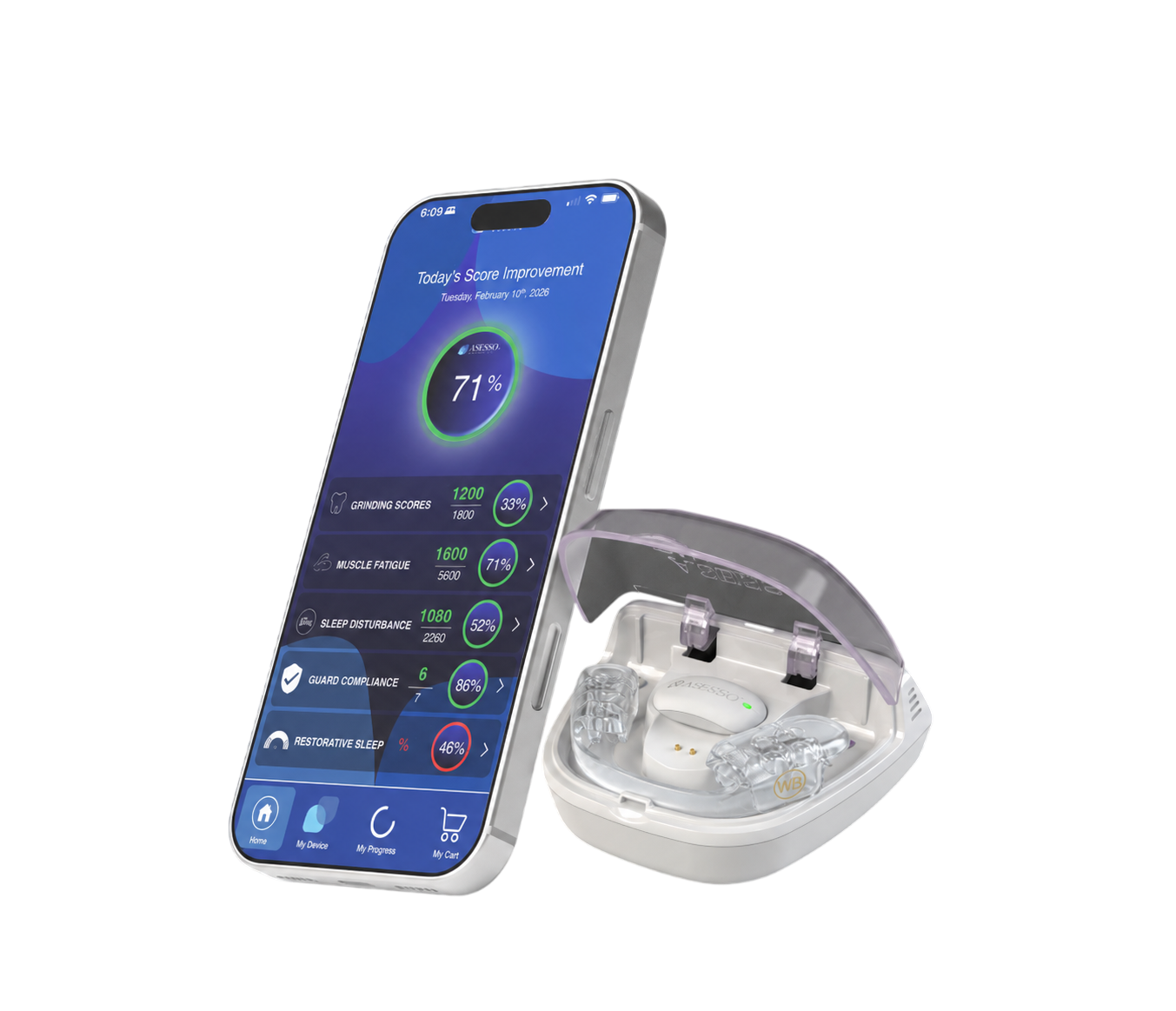
The Wakebright Grind Guard operates on the same therapeutic principle as Botox for bruxism, reducing effective jaw muscle engagement, but achieves it mechanically and non-invasively rather than through a drug. By repositioning the mandible, it lowers the compressive force that overloaded muscles generate, which reduces the trigeminal input driving both TMD pain and migraine frequency.
Unlike Botox, the Wakebright Grind Guard carries no risk of muscle atrophy, involves no repeated injections, costs nothing beyond the initial device, and can be adjusted and maintained across years of use. For anyone who has not yet tried this approach, starting here before committing to injections is the lower-risk path that the evidence actually supports.
Physical therapy, stress management, heat therapy, and cognitive-behavioral work on clenching awareness complete the conservative toolkit. Used together, these approaches often deliver relief on par with Botox, without the costs, the risks, or the built-in expiration date of injection therapy.
What You Can Do Now
If you are weighing Botox for TMJ or bruxism, first talk with your provider about whether you have truly given conservative treatment a fair run. Three to six months of consistent use of a repositioning appliance, physical therapy, and stress management counts as a fair run. If you have not done that yet, that is where the evidence says to begin.
If conservative care has genuinely been tried and genuinely failed, and Botox is on the table, make sure the provider is an orofacial pain specialist with specific experience in TMJ-related injection technique. Ask about dosing, how long relief should last, the risk of atrophy, and what the plan is for tackling the underlying bruxism drivers alongside the injections.
Botox for TMJ lowers jaw muscle force temporarily (3 to 6 months) but leaves the root causes untouched.
The evidence is promising but not strong enough to justify Botox as a first-line treatment.
Repeated injections carry real risks of masseter atrophy and changes to facial appearance.
The cost is significant (500 to 1,500 dollars per session) and insurance rarely covers it.
Conservative treatments, including jaw repositioning appliances, belong ahead of Botox in the treatment sequence.
Botox fits best for patients who have genuinely failed conservative management.
Frequently Asked Questions
Q: How long does Botox last for TMJ?
Injections for TMJ and bruxism typically hold their effect for three to six months. As the body metabolizes the toxin, muscle activity gradually returns, so most patients repeat injections every four to six months to keep the relief going. Unless the underlying drivers of bruxism and jaw overload are addressed, symptoms return whenever the Botox wears off.
Q: Is Botox for TMJ covered by insurance?
Usually not. Because TMJ and bruxism are off-label uses, most insurance plans exclude them. A few plans with robust orofacial pain or headache benefits may cover it under specific circumstances, but paying out of pocket is the norm. Budget 500 to 1,500 dollars per session depending on the units used and the provider.
Q: Does Botox for TMJ change facial appearance?
It can. Repeated masseter injections shrink the muscle over time, which slims the lower face and can carve a more oval or V-shaped jawline. Some patients welcome that as a cosmetic bonus, while others find it an unwanted change. If the two sides are injected unevenly, the resulting asymmetric atrophy can alter facial symmetry as well.
Q: How many units of Botox are used for TMJ?
Dosing varies widely with the provider and the patient's anatomy. Masseter injections typically use 25 to 50 units per side, and when the temporalis is included for headache management, that adds another 15 to 25 units per side. Total doses of 60 to 150 units are common. More is not automatically better; precise placement counts for more than a high dose.
Q: Are there alternatives to Botox for jaw clenching?
Yes, and in most cases they belong first in line. Jaw repositioning oral appliances, physical therapy, behavioral management of stress and clenching, and heat therapy together tackle the same jaw muscle overload that Botox targets with a drug. These approaches bring no risk of muscle atrophy, involve no repeated procedures, and cost far less over time.
Q: Can Botox help with both TMJ and headaches?
For patients whose headaches stem mainly from jaw muscle tension and trigeminal sensitization, yes. Masseter and temporalis injections can bring down jaw pain and headache frequency at the same time. The strongest evidence exists for chronic migraine, where Botox holds FDA approval for a specific injection protocol, and for tension-type headaches with a substantial TMD component.
Q: What should I do if Botox did not work for my TMJ?
If Botox delivered no meaningful relief, the two most likely explanations are that jaw muscle overload was never the main driver of your pain (joint-structural TMD does not respond as reliably) or that the injections missed the placement needed to reduce the relevant muscle force. The right next step is a fresh evaluation of your TMD diagnosis with an orofacial pain specialist.
WAKEBRIGHT | Before committing to Botox for TMJ, ask yourself whether conservative jaw muscle management has had a genuine trial. The Wakebright Grind Guard works on the same principle, reducing effective jaw muscle load, but does it mechanically: no injection risks, no muscle atrophy, and none of the 4,000 to 12,000 dollar multi-year cost of repeating treatments. It is not a cosmetic shortcut; it is the evidence-supported first step that most guidelines recommend before any invasive intervention. Learn more at wakebrightguards.com. This article is for educational purposes only and does not constitute medical or dental advice. Please consult a qualified healthcare provider for personalized guidance.