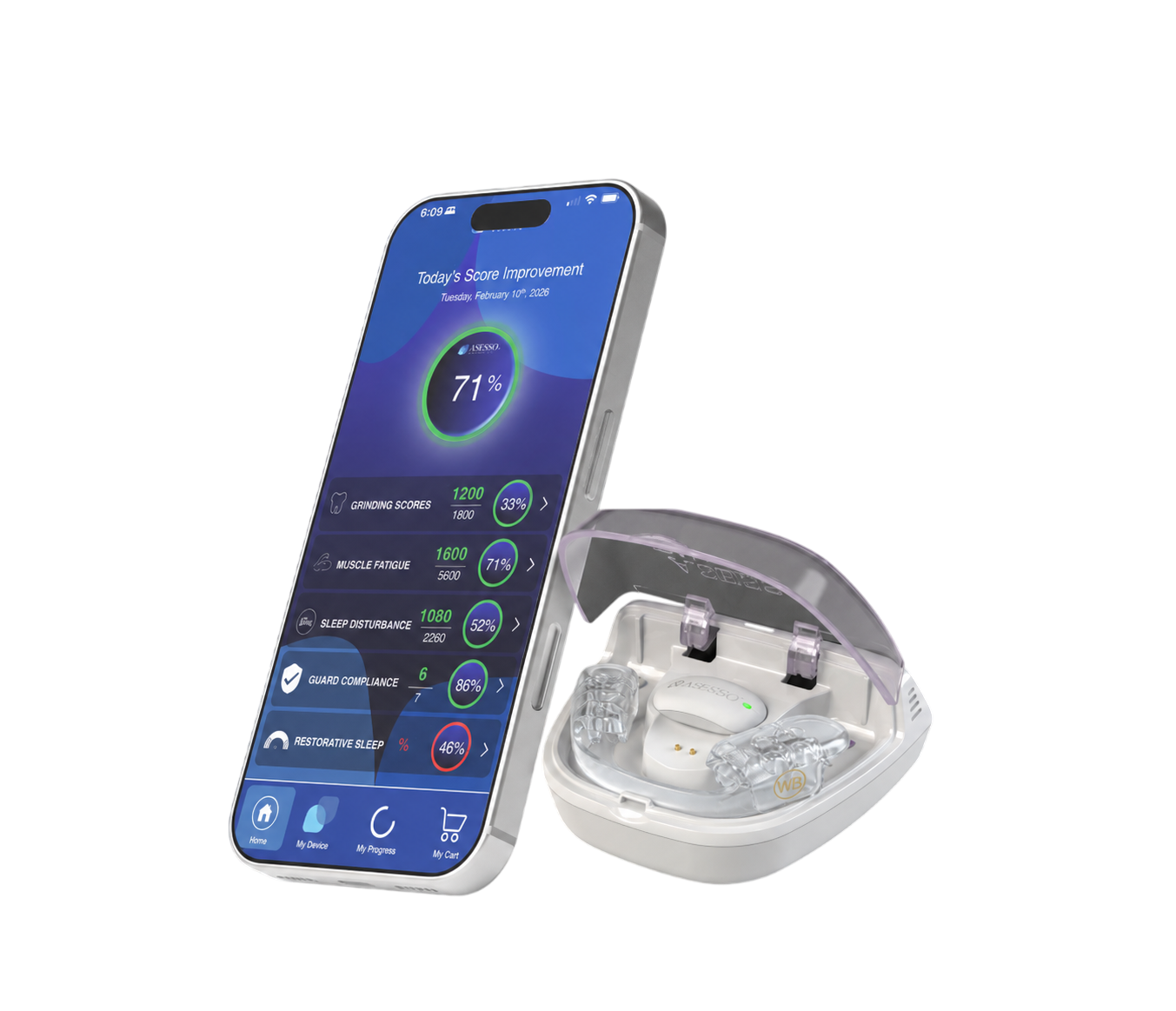
Best Sleep Trackers of 2026: Expert-Approved Wearables and What They Reveal

What Sleep Trackers Measure and Why It Matters
Sleep trackers have evolved dramatically since their introduction, now providing sophisticated data on sleep architecture, movement patterns, heart rate variability, and sleep disruption events. Modern wearables use accelerometers, optical sensors, and advanced algorithms to detect transitions between light sleep, deep sleep, and REM sleep. This granular data reveals patterns invisible to the naked eye and empowers users to understand the quality and structure of their nighttime rest.
The most valuable sleep metrics for identifying bruxism and jaw tension-related disruption are sleep fragmentation (how often sleep is interrupted), movement events per hour, heart rate variability during sleep, and the percentage of time spent in restorative deep and REM sleep. When jaw clenching intensifies, it triggers microarousals, brief arousals too short to remember but sufficient to fragment sleep and prevent restorative deep sleep stages. Quality sleep trackers capture these disruption patterns and give you objective evidence of sleep quality degradation.
Sleep trackers fall into several categories: wrist-worn devices (watches and bands), bedside devices, and mattress-based sensors. Wrist-worn trackers like the Oura Ring, Whoop Band, and Apple Watch offer convenience and continuity. Bedside devices like the Dreem band add EEG-based sleep stage detection. Mattress sensors provide contact-free movement and heart rate data. The best choice depends on your priorities around accuracy, convenience, and data integration.
For people concerned about jaw-related sleep disruption, wrist-worn devices are a practical starting point because they are worn consistently, provide useful movement and heart rate data, and connect with common health apps. The data from these devices becomes particularly meaningful when compared before and after implementing jaw support strategies like the Wakebright Grind Guard.
How Sleep Trackers Reveal Bruxism and Jaw Tension Patterns
Sleep trackers cannot directly detect teeth grinding, but they reveal the sleep disruption and movement patterns that go with it. When you grind or clench during sleep, several physiological events happen at once: jaw muscle contraction triggers a brief arousal, your heart rate rises, and your body often shifts slightly. Sensitive motion sensors in quality trackers pick up these events, showing them as elevated "movement events" or "sleep disruptions" in your nightly data.
A telling pattern in bruxism sufferers is elevated microarousal events, brief periods when the brain moves toward wakefulness without fully waking up. These events tend to cluster during specific sleep stages, particularly lighter stages and REM, where jaw muscle activity is highest. Over a full night, dozens of microarousals accumulate, fragmenting sleep and cutting into the extended deep sleep the body needs for recovery. Your sleep tracker will register this as a lower deep sleep percentage and more frequent sleep disruptions.
Another revealing pattern is elevated movement variability and restlessness throughout the night. People with intense bruxism tend to toss, turn, and shift position more often, since the muscle tension and arousal cycles drive postural changes. When you compare sleep tracker data before and after using the Wakebright Grind Guard, you typically see a clear drop in movement events, fewer microawakenings, and a measurable gain in deep sleep percentage within 1 to 2 weeks.
Some advanced trackers measure heart rate variability (HRV), which reflects the autonomic nervous system's balance. Bruxism and jaw clenching trigger sympathetic nervous system activation (the stress response), which lowers HRV and signals poor sleep quality from a stress perspective. Grind Guard users often report improved HRV readings, reflecting reduced stress-driven jaw tension and better sleep quality. This objective data validates the subjective improvement users experience.
Top Sleep Trackers of 2026 and Their Strengths for Monitoring Jaw-Related Sleep Issues
The Oura Ring stands out in 2026 as one of the most advanced wearable sleep trackers available, offering detailed sleep staging, resting heart rate, temperature sensing, and comprehensive sleep quality metrics. The ring's small size makes it unobtrusive, and the data dashboard is user-friendly. For monitoring bruxism patterns, its movement sensitivity and sleep fragmentation metrics provide actionable insights. Users can track night-to-night variation and observe improvements in deep sleep percentage and fragmentation after implementing the Wakebright Grind Guard.
The Whoop Band provides continuous monitoring and generates a daily strain and recovery score based on sleep and activity data. The band excels at detecting sleep disruption patterns and heart rate variability changes. For jaw-related sleep assessment, Whoop's detailed microarousal detection and HRV tracking are particularly useful. Many Grind Guard users track their Whoop metrics before and after starting the guard, finding that recovery scores improve noticeably within weeks as sleep quality rises.
The Apple Watch Series 9 and newer models include robust sleep tracking capabilities built on top of the device's already-ubiquitous wearability. While not as specialized as dedicated sleep trackers, the Apple Watch provides convenient tracking of sleep duration, sleep stages, and sleep disruptions. The advantage is integration with Apple Health data and the device's many other functions. For users already in the Apple ecosystem, adding sleep tracking creates minimal extra friction.
The Fitbit range, particularly the Fitbit Sense and newer models, offers reliable sleep tracking with detailed sleep stage information and disruption metrics. Fitbit devices are user-friendly, affordable, and their dashboard clearly shows trends over time. For people beginning to track sleep-related jaw issues, Fitbit devices provide a solid entry point. The data clearly shows improvements in sleep continuity and deep sleep percentage as Grind Guard use builds a consistent pattern.
Using Sleep Tracker Data to Optimize Jaw Muscle Recovery
Sleep tracker data becomes most valuable when used as a feedback mechanism for interventions targeting jaw muscle load. Start by establishing a baseline: use your chosen tracker for 1 to 2 weeks before making changes, recording your typical sleep fragmentation, deep sleep percentage, movement events, and any other relevant metrics. This baseline reveals the current impact of jaw tension on your sleep architecture. Many people are surprised to discover how fragmented their sleep actually is.
Once you have baseline data, introduce the Wakebright Grind Guard consistently. Track your sleep metrics nightly and expect to see changes within 3 to 7 days. The most dramatic improvements typically show up in sleep fragmentation metrics: fewer microawakenings and arousals as jaw tension falls. Deep sleep percentage usually rises noticeably within 1 to 2 weeks. Heart rate variability often improves, indicating reduced stress activation during sleep. These objective improvements validate the subjective sense of better sleep quality and morning freshness that users report.
Compare your nightly data week to week using your tracker's trending features. Most platforms generate weekly or monthly summaries that make progress easy to see. Nights when you use the Grind Guard consistently will likely show noticeably better metrics than nights when you do not, which becomes a powerful motivator for consistent use. This data-driven feedback is far more compelling than subjective feeling alone and helps embed the Grind Guard as a valued part of your sleep hygiene routine.
Share sleep tracker data with your healthcare provider or sleep specialist to demonstrate the mechanical improvement in sleep quality that jaw support provides. Objective data showing reduced fragmentation, increased deep sleep, and improved heart rate variability makes a compelling case that addressing jaw mechanics improves sleep architecture. This information is particularly valuable for people exploring whether jaw-related interventions are truly effective in their specific situation.
What You Can Do Now
Sleep trackers measure sleep stages, fragmentation, movement, and heart rate variability, revealing jaw-related sleep disruption patterns that would otherwise stay invisible.
Bruxism and jaw clenching trigger microarousals and sleep fragmentation that show up in tracker data as elevated disruption events.
Advanced sleep trackers like the Oura Ring and Whoop Band excel at detecting the fragmentation patterns associated with jaw tension.
Baseline sleep tracker data gathered before implementing the Wakebright Grind Guard provides powerful evidence of the problem's scale.
Most users see measurable improvements in sleep fragmentation and deep sleep percentage within 1 to 2 weeks of consistent Grind Guard use.
Sleep tracker data integrates with health apps and can be shared with healthcare providers for a more complete sleep assessment.
Regular monitoring with a sleep tracker provides ongoing feedback and motivation for consistent Grind Guard use.
Frequently Asked Questions
Q: Can sleep trackers detect teeth grinding directly?
No. Sleep trackers cannot detect grinding directly, but they reveal the sleep disruption patterns associated with bruxism. Elevated movement events, microawakenings, and reduced deep sleep percentages all indicate the impact bruxism is having on sleep quality.
Q: What's the best sleep tracker for monitoring bruxism?
Wrist-worn devices like the Oura Ring and Whoop Band excel at detecting the movement and sleep fragmentation associated with bruxism. The key features to look for are detailed sleep staging, motion sensitivity, and a clear presentation of fragmentation metrics.
Q: How quickly will I see improvements in sleep tracker data after using the Wakebright Grind Guard?
Most users see noticeable reductions in sleep disruption events and gains in deep sleep within 3 to 7 days of consistent Grind Guard use. Significant improvements typically appear within 1 to 2 weeks.
Q: What sleep metrics should I focus on to assess jaw-related sleep issues?
Focus on sleep fragmentation (microawakenings and brief arousals), percentage of time in deep sleep, total movement events, and heart rate variability. These metrics directly reflect the impact of jaw muscle tension on sleep quality.
Q: Are expensive sleep trackers better than budget options?
More expensive trackers generally offer more sophisticated metrics and better accuracy. Even budget trackers like Fitbit, however, provide enough fragmentation and sleep stage data to track meaningful improvements from Grind Guard use. Choose based on your budget and the features you care about.
Q: Can I rely on sleep tracker data completely, or should I combine it with other assessment methods?
Sleep tracker data is valuable but not infallible. Combine it with how you feel, including morning freshness, daytime alertness, and headache frequency, for a complete picture. Subjective improvements plus objective data improvements together create the strongest evidence of benefit.
Q: How do I know if my sleep tracker is giving accurate data?
Compare your tracker's data with how you subjectively feel. If your tracker shows excellent sleep but you wake exhausted, something is off. Conversely, if the tracker shows fragmentation and you feel exhausted, the correlation validates the data. A good tracker aligns subjective experience with objective metrics.
WAKEBRIGHT | If you suspect jaw clenching is disrupting your sleep, a quality sleep tracker provides objective evidence of that disruption and tracks your improvement as you address it. Start by establishing your current sleep baseline with a tracker like the Oura Ring or Whoop Band, then bring in the Wakebright Grind Guard and watch your metrics improve. Within 1 to 2 weeks you will likely see measurable reductions in sleep fragmentation, increases in restorative deep sleep, and improved heart rate variability. The combination of sleep tracker data and the Grind Guard's mechanical support creates a powerful framework for understanding and improving your sleep quality from the ground up. This article is for educational purposes only and does not constitute medical or dental advice. Please consult a qualified healthcare provider for personalized guidance.