Best Nasal Strips for Snoring of 2026: How They Work and When They Help

How Nasal Strips Address Snoring: The Mechanics
Snoring results from airflow turbulence in the throat: air moving rapidly through a narrowed airway causes soft tissues, including the soft palate, uvula, and pharyngeal tissues, to vibrate, producing snore sounds. Anything that narrows the airway or increases turbulence worsens snoring. Anything that opens the airway and smooths airflow reduces it.
Nasal strips work mechanically by opening the nasal passages. When applied to the bridge of the nose, they gently pull the nasal side walls outward, widening the nasal openings and reducing airflow resistance through the nose. This increased nasal airflow makes it easier to breathe through the nose rather than compensating with mouth breathing. Reduced mouth breathing decreases turbulent airflow at the back of the throat, which reduces snoring.
The mechanism is straightforward: nasal congestion or obstruction narrows nasal passages, raises breathing resistance, and forces compensation through mouth breathing, which creates throat turbulence and snoring. By improving nasal airflow, nasal strips reduce the drive to mouth-breathe, and with less compensatory mouth breathing, snoring decreases. The effect is often noticeable within minutes of strip application.
Think of it like opening a clogged straw: when the straw is blocked, you must suck harder to get liquid through, creating turbulence and whistling sounds. Opening the straw allows smooth flow with minimal turbulence. Similarly, opening the nasal passages allows smooth airflow with minimal throat vibration. This simple physics explains why nasal strips work for snoring rooted in nasal obstruction.
Leading Nasal Strips in 2026: Options and Considerations
Nasal strips have evolved significantly since their introduction in the 1990s. Leading 2026 options include established brands like Breathe Right (the original), plus newer alternatives like Nasal Breathe, SleepZone, and various pharmacy generic versions. Each varies in adhesive strength, material, flexibility, and skin compatibility. Choosing among them depends on your specific nasal anatomy, skin sensitivity, and personal preference.
Breathe Right remains the market leader. These strips use a plastic spring-like material that pulls the nasal passages open. They are available in different strengths (regular and extra strength) and sizes (regular and large). The adhesive is reliable but can be harsh on sensitive skin. Many people find regular strength sufficient unless they have significant nasal obstruction.
Newer options like Nasal Breathe and SleepZone offer gentler adhesives designed for sensitive skin while maintaining lifting strength. Some use different materials, such as flexible fabric rather than plastic springs, that conform better to individual nose shapes. These often cost more but provide real advantages for people sensitive to standard strip adhesives.
Generic pharmacy strips have improved substantially. While sometimes less effective than premium brands, quality generics are often 50 to 70 percent of the price of brand names and work well for many people. If you are new to nasal strips, starting with an affordable generic before investing in premium options is a reasonable approach. If generics do not work, trying premium brands is then justified.
What Nasal Strips Actually Do and Don't Fix
Nasal strips are effective for snoring rooted in nasal obstruction: allergies, congestion, a deviated septum, or structural narrowing. If your snoring improves noticeably within minutes of strip application, nasal obstruction is a major contributor. This makes nasal strips a logical first intervention for congestion-related snoring.
However, nasal strips do not address snoring caused by soft tissue collapse at the throat level. Some snoring results not from nasal obstruction but from loose pharyngeal tissues that collapse during breathing, creating vibration regardless of nasal patency. Nasal strips cannot fix this; opening the nasal passages alone does not stiffen throat tissues.
Nasal strips also do not address jaw-related snoring. When jaw muscle tension pulls the mandible backward, it narrows the oropharyngeal airway (the throat space behind the tongue). Even with fully open nasal passages, this narrowed throat space creates turbulent airflow and snoring. Opening the nasal passages does not change jaw position, so the snoring persists. Jaw-related snoring requires jaw-specific interventions.
Sleep apnea complicates nasal strip effectiveness. If snoring accompanies witnessed breathing pauses or a diagnosed sleep apnea condition, nasal strips alone are insufficient. Apnea involves actual airway collapse, not just turbulence. While improving nasal airflow helps, addressing the underlying apnea requires more comprehensive treatment. Nasal strips are a supportive tool for apnea, not a solution.
Limitations and When Nasal Strips Fall Short
Adhesive limitations are real. Nasal strips rely on adhesive that degrades with sweat, sebum, and moisture. If you have oily skin, perspire heavily through the night, or shower right before bed, strips may not stay adhered for the entire sleep period. They are designed for one-time use, and removing them mid-sleep to reapply defeats the purpose.
Individual nose anatomy varies significantly. Nasal strips work best for people with relatively standard nasal bridge geometry. People with unusually shaped noses, prominent bumps, or very narrow bridges may find strips uncomfortable or ineffective. Sizing options help, but some people simply cannot achieve good adhesion or meaningful benefit.
Nasal obstruction from multiple causes can sometimes overwhelm the strips' mechanical effect. If you have a severe deviated septum, significant polyps, or severe allergic congestion, mechanically opening the nasal passages may not fully overcome the obstruction. In these cases, treating the underlying obstruction through structural surgery or allergy management becomes necessary.
Psychological dependence occasionally develops: some people become convinced they cannot sleep without strips, even when the strips are not actually solving their snoring. Placebo effects are real, and if you believe strips help, they may be working partly through expectation plus partial mechanical effect. This is not harmful in itself, but it highlights the importance of assessing actual snoring improvement honestly.
Complementary Approaches: Beyond Nasal Strips
Addressing underlying nasal obstruction directly is more effective long-term than nasal strips alone. If allergies drive obstruction, comprehensive allergy management (allergen avoidance, antihistamines, intranasal corticosteroid sprays, allergen immunotherapy) reduces congestion systematically. If structural obstruction exists such as a deviated septum or polyps, surgical correction provides permanent improvement.
Sleep position optimization reduces snoring independently of nasal strips. Sleeping on your back promotes airway collapse and snoring more than side-sleeping. Simply switching to a side-sleeping position often reduces snoring significantly, even without strips. Body pillows or positional devices that prevent rolling to a back position can be surprisingly effective, and they combine well with nasal strips.
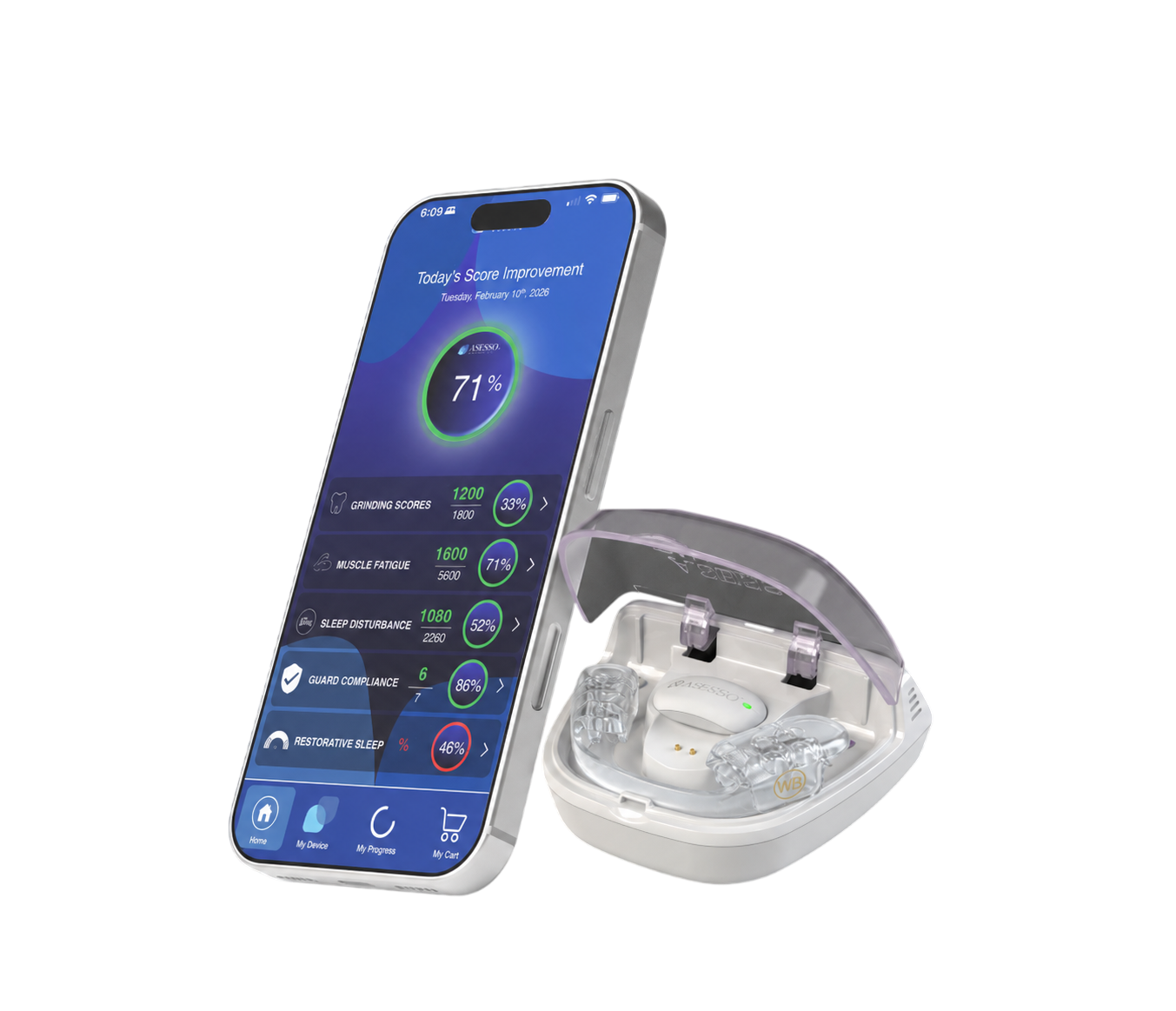
Jaw repositioning and muscle tension management address the jaw component of snoring. If jaw muscle tension pulls the mandible backward and narrows the throat, supporting the jaw in a more forward position during sleep opens the oropharyngeal airway. This is where the Wakebright Grind Guard becomes particularly relevant: by reducing jaw muscle load and supporting forward jaw positioning during sleep, it opens the throat airway and complements nasal strip use for more comprehensive snoring reduction.
Weight management and lifestyle factors influence snoring substantially. Even modest weight loss improves airway mechanics and reduces snoring. Avoiding alcohol and sedatives before bed reduces the pharyngeal muscle relaxation that contributes to airway collapse. Improving sleep posture, avoiding sleep deprivation, and managing stress all lower snoring. These foundational changes often produce more dramatic snoring reduction than any single device.
Integrating Nasal Strips Into a Comprehensive Snoring Strategy
Nasal strips work best as part of a multi-pronged snoring reduction strategy rather than a standalone solution. Start with an honest assessment: is your snoring primarily from nasal obstruction, throat-level airway collapse, jaw positioning, or sleep apnea? If you notice snoring improving significantly when your nose is clear during non-allergy periods, or when you deliberately breathe through your nose, nasal obstruction is a major factor.
Layer interventions strategically: use nasal strips if nasal obstruction is confirmed; optimize sleep position with side-sleeping; consider jaw support if jaw tension is contributing; manage allergies if present; maintain a healthy weight. Rather than expecting any single intervention to eliminate snoring, understand your specific contributors and address each one. Most people achieve dramatic snoring reduction by targeting multiple factors.
Test nasal strips consistently: wear them for 7 to 10 nights and assess snoring honestly. Do you notice clear improvement? Does your bed partner report less snoring? If yes, they are working and worth continuing. If improvement is minimal, nasal obstruction may not be your primary snoring driver; focus on other factors. Objective assessment prevents continued use of ineffective interventions.
Consider jaw involvement: if nasal strips help somewhat but snoring persists, ask whether jaw positioning could be contributing. Do you notice your mouth open when you snore? Does your jaw feel tense on waking? These suggest jaw involvement. Adding jaw support like the Wakebright Grind Guard to nasal strip use often produces the snoring reduction that nasal strips alone could not achieve.
What You Can Do Now
Nasal strips open nasal passages mechanically, reducing airflow resistance and decreasing compensatory mouth breathing that causes throat turbulence.
They work best for snoring rooted in nasal obstruction, such as allergies, congestion, or structural narrowing.
Nasal strips do not address throat-level airway collapse, jaw positioning, or sleep apnea, and those limitations matter if snoring persists.
Integration with other approaches is key: address nasal obstruction, optimize sleep position, manage jaw tension, and consider overall lifestyle factors.
Jaw muscle tension contributes to snoring independently of nasal patency, making jaw support a valuable complementary intervention.
Frequently Asked Questions
Q: Do nasal strips really work for snoring?
Yes, they work well for snoring rooted in nasal obstruction or resistance. If your snoring improves significantly when your nasal passages are clear, nasal strips can help. However, they do not address throat-level airway collapse, jaw positioning, or sleep apnea, which are other common causes of snoring.
Q: Which nasal strip is best?
Breathe Right is the market leader and works well for most people. Newer brands offer gentler adhesives for sensitive skin. Generic pharmacy options are affordable and effective for many. The best choice depends on your nose anatomy, skin sensitivity, and budget. Start with an affordable option and upgrade if needed.
Q: How long do nasal strips last on?
Most nasal strips are designed for one night of use (8 to 12 hours). Adhesion may degrade earlier if you sweat heavily, shower before bed, or have very oily skin. Removing and reapplying mid-sleep reduces their effectiveness.
Q: Can nasal strips cause skin irritation?
Some people experience adhesive irritation, redness, or contact dermatitis, particularly with sensitive skin. Gentler brands and occasional adhesive breaks help. If irritation is severe, consult a dermatologist.
Q: Do nasal strips work if you have sleep apnea?
Nasal strips are supportive but not sufficient as a sole apnea treatment. They improve nasal airflow but do not prevent the airway collapse that characterizes apnea. Anyone with sleep apnea should pursue comprehensive medical treatment rather than relying on nasal strips alone.
Q: Can jaw tension cause snoring despite clear nasal passages?
Yes. Jaw muscle tension pulls the mandible backward, narrowing the throat airway. This creates turbulent airflow and snoring even when the nasal passages are fully open. These individuals benefit more from jaw support than from nasal strips alone.
Q: Should I use nasal strips with a jaw support device like the Wakebright Grind Guard?
Yes. Combining approaches often works better than either alone. Nasal strips open the nose; jaw support opens the throat by reducing jaw tension. Together they address multiple snoring mechanisms for more comprehensive relief.
WAKEBRIGHT | If jaw tension contributes to your snoring, using nasal strips alongside jaw support produces better results. The Wakebright Grind Guard reduces jaw muscle load during sleep, opening the throat airway naturally. Combined with nasal strips and other interventions, you address multiple snoring mechanisms for more comprehensive relief. This article is for educational purposes only and does not constitute medical or dental advice. Please consult a qualified healthcare provider for personalized guidance.