Ask an Endodontist: Your Top 15 TMJ Questions Answered

Patients ask a lot of the same TMJ questions, and for good reason jaw pain, clicking, and related symptoms like headaches or ear ringing are confusing, and reliable answers can be hard to find. Dr. Cliff sat down to answer the 15 questions that come up most often, drawing on current dental and medical research rather than outdated assumptions.
1. What exactly is TMJ, and how is it different from TMD?
Dr. Cliff: People use "TMJ" as shorthand for the whole condition, but technically it just refers to the temporomandibular joint itself the hinge connecting your jaw to your skull, right in front of your ears. Everyone has one; it's not a diagnosis. What you're usually describing is TMD, a temporomandibular disorder, which is the actual condition pain, dysfunction, or noise coming from that joint or the muscles around it. I don't correct patients for saying "TMJ," but understanding the difference helps when you're reading about it or talking to a specialist.
2. What actually causes TMD?
Dr. Cliff: It's rarely one single thing. The National Institute of Dental and Craniofacial Research groups TMD into three categories problems within the joint itself, problems in the surrounding chewing muscles, and headaches specifically caused by the disorder. Common contributors include teeth grinding or clenching, jaw injury, arthritis, and stress-related muscle tension. One thing worth knowing: research doesn't actually support the old idea that a "bad bite" alone causes TMD, even though that was standard thinking in dentistry for a long time.
3. How do I know if I actually have TMD?
Dr. Cliff: Common signs include jaw pain or tenderness, clicking or popping when you open your mouth, a jaw that feels stuck or has limited movement, and headaches or facial pain. But here's something patients don't expect: a clicking or popping sound without any pain is actually considered normal and usually doesn't need treatment. It only becomes something to evaluate when it's paired with pain, locking, or a real change in how your teeth fit together.
4. Can TMJ problems really cause headaches?
Dr. Cliff: Yes, and it's more common than most people, including a lot of physicians, realize. Research has found headache is actually the most common symptom of TMD more common than jaw pain itself, showing up in around 79% of TMD patients in one evidence review. Because of that, TMD headaches often get missed entirely, especially when the patient's main complaint is "I get headaches" without mentioning their jaw at all.
5. Can TMJ cause ear pain or ringing in my ears?
Dr. Cliff: Both, actually. Ear pain is one of the most frequently reported TMD symptoms research puts it at 70% to 78% of TMD patients experiencing it. The jaw joint sits right next to your ear and shares overlapping nerve pathways, so pain can easily get "referred" there. As for ringing (tinnitus), there's a well-documented statistical association too TMD patients are several times more likely to experience tinnitus than people without TMD. I'll be honest, though: while the connection is real, the evidence that treating TMD reliably fixes tinnitus specifically is much thinner. It's worth trying, but I wouldn't promise it.
6. Can TMD cause neck and shoulder tension?
Dr. Cliff: Genuinely, yes and this one surprised me when I first read the research behind it. A study comparing women with TMD to healthy controls found significantly more muscle trigger points in both the jaw and neck-shoulder muscles in the TMD group. What's really interesting is that the referred pain from those neck trigger points was actually larger than the pain referred from the jaw muscles themselves. So sometimes a jaw problem shows up more in your neck than in your jaw.
7. Can TMJ problems cause dizziness?
Dr. Cliff: There's real research showing an association: one study found the severity of someone's TMD correlated with how many vestibular (balance-related) symptoms they reported. But I want to be direct about something important here: dizziness can have serious causes, including some that are genuine medical emergencies. If dizziness comes on suddenly with things like face drooping, arm weakness, slurred speech, or trouble walking, that needs immediate emergency care not a dental appointment. Once serious causes are ruled out, a jaw connection becomes a reasonable thing to explore.
8. Is a night guard the right treatment for me?
Dr. Cliff: For straightforward grinding-related TMD, usually yes it's the standard first-line protection. But "night guard" isn't one-size-fits-all. There are different materials (hard, soft, dual-laminate) and different splint designs depending on whether your issue is more muscle-related or joint-related. Interestingly, research on splint materials is genuinely mixed soft splints actually outperformed hard splints for muscle-type TMD in one large analysis, while hard splints did better for joint-type TMD. There's no single "best" guard for everyone.
9. Do I need a special TMJ splint instead of a regular night guard?
Dr. Cliff: Sometimes. A standard night guard is mainly built to protect your teeth from grinding. Some TMJ-specific splints go further, aiming to guide jaw position or redistribute muscle forces. If your main issue is tooth wear without much joint involvement, a standard guard is often enough. If you have real joint symptoms locking, significant pain, clear dysfunction a more specialized splint, chosen after a proper exam, may be more appropriate.
10. Is surgery ever necessary for TMJ problems?
Dr. Cliff: Rarely, and it should be a last resort. Both the American Dental Association and family medicine guidelines are explicit that permanent, irreversible procedures surgery, reshaping your bite, that kind of thing aren't well-supported as first-line treatments and should only be considered after conservative options have genuinely been tried and haven't worked. If someone recommends surgery or a major bite adjustment as a first step, I'd get a second opinion.
11. Can stress really cause jaw clenching and TMD?
Dr. Cliff: Absolutely, and it's backed by solid research, not just clinical impression. A meta-analysis found stressed adults have roughly twice the odds of bruxism compared to people without elevated stress, and there's even a measurable biological pathway cortisol and nervous system activation appear to directly increase jaw muscle activity. If your clenching seems to track with your stress levels, that's not a coincidence; it's consistent with what the research shows.
12. Why do more women than men seem to get TMD?
Dr. Cliff: This is one of the most consistent findings in the research, though the exact ratio varies by study — anywhere from about 2 times to 9 times more common in women depending on the source. The leading theory involves estrogen; TMD tends to be most common during reproductive years and can ease after menopause, which tracks with hormone levels. But it's not fully settled — some research has found genetic joint hypermobility and differences in pain processing may also play a role, and it's likely a combination of factors rather than one single explanation.
13. Should I see a doctor or a dentist first?
Dr. Cliff: It depends on your symptoms. If you have jaw clicking, soreness, or a history of grinding, a dentist is a logical starting point. If your main complaint is something like recurring headaches or ear pain with no obvious jaw connection, you might see a physician first — but I'd encourage mentioning any jaw symptoms, even minor ones, since research shows this connection gets missed surprisingly often in general medical visits.
14. How long does TMD treatment usually take to work?
Dr. Cliff: It varies a lot depending on the cause and severity, but many people see real improvement within weeks to a few months using conservative treatment — a night guard, stress management, gentle jaw exercises. There's actually decent evidence for structured jaw exercises specifically; one trial found them as effective as a stabilization splint for reducing myofascial pain, and more cost-effective too. If conservative treatment genuinely hasn't helped after a reasonable trial, that's when it's worth discussing next steps with a specialist.
15. What's the single most important thing you want patients to know about TMJ?
Dr. Cliff: That it's rarely just about your jaw. TMD can show up as headaches, ear symptoms, neck tension, even dizziness and because of that, it gets misdiagnosed or missed more often than people expect. My advice: if you're dealing with any of these symptoms and haven't found a clear explanation, mention your jaw, even if it doesn't hurt. That one detail is sometimes the piece that finally connects the dots.
What You Can Do Now
- TMJ is the joint; TMD is the disorder understanding this distinction helps you research and discuss your symptoms more precisely
- Most TMD cases respond to conservative, non-invasive treatment, with surgery reserved for a small minority
- TMD is genuinely multifactorial stress, bruxism, posture, and sleep quality can all contribute
- A thorough evaluation should ask about your full symptom picture, not just jaw pain in isolation
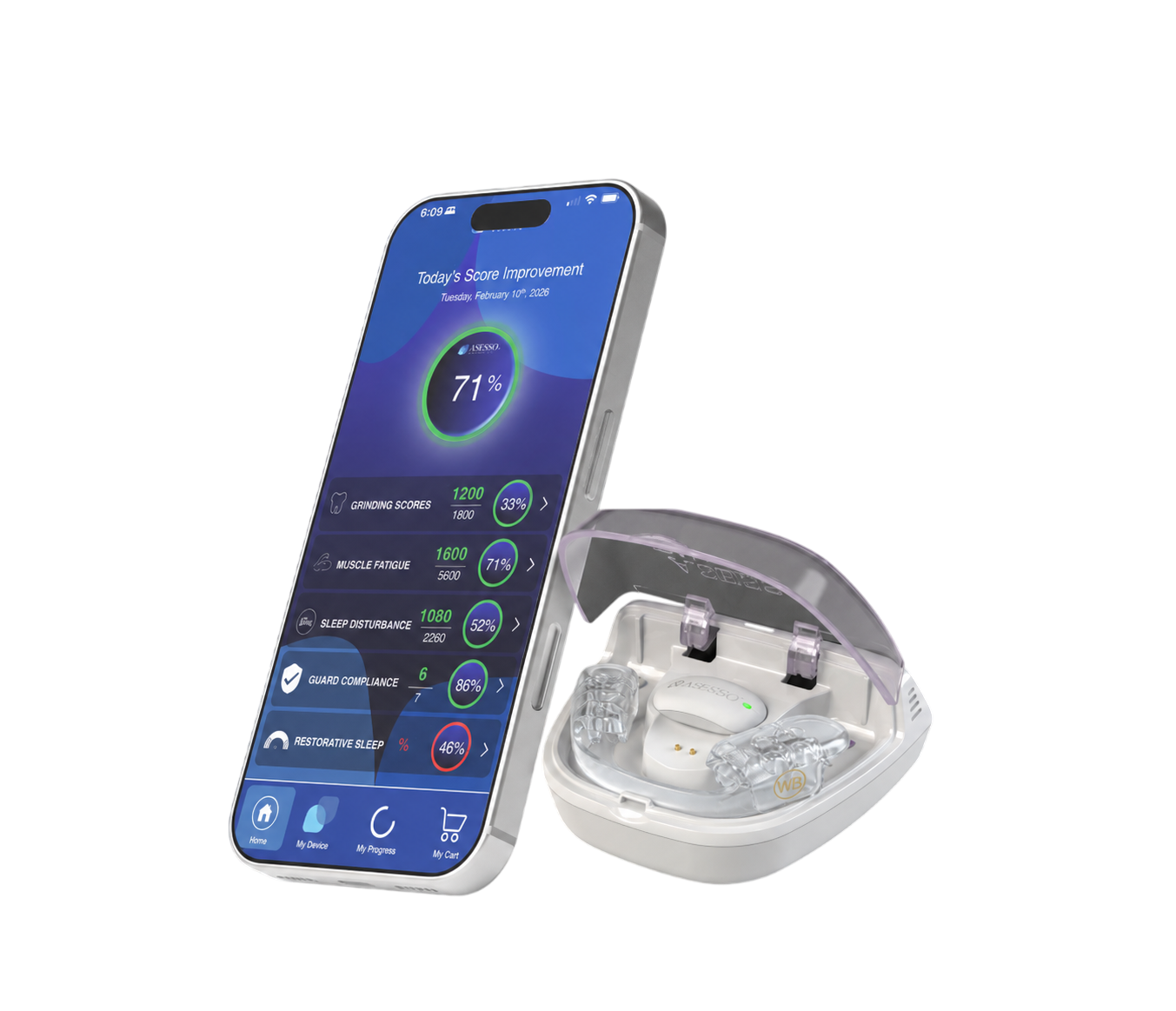
WAKEBRIGHT | If bruxism or clenching is part of your TMD picture, the Wakebright Guard can be a straightforward first step in a broader, conservative treatment plan ask your dentist how it fits your specific case.
References
- National Institute of Dental and Craniofacial Research. "TMD (Temporomandibular Disorders)." nidcr.nih.gov. https://www.nidcr.nih.gov/health-info/tmd
- Matheson, E.M. et al. "Temporomandibular Disorders: Rapid Evidence Review." American Family Physician, American Academy of Family Physicians. https://www.aafp.org/afp/2023/0100/temporomandibular-disorders
- "The Radiology of Referred Otalgia." American Journal of Neuroradiology. https://www.ajnr.org/content/30/10/1817
- Fernández-de-las-Peñas, C. et al. "Referred Pain from Muscle Trigger Points in the Masticatory and Neck-Shoulder Musculature in Women With Temporomandibular Disoders." The Journal of Pain, ScienceDirect. https://www.sciencedirect.com/science/article/pii/S1526590010003937
- Chemelo, V.S. et al. "Is There Association Between Stress and Bruxism? A Systematic Review and Meta-Analysis." Frontiers in Neurology. https://www.frontiersin.org/journals/neurology/articles/10.3389/fneur.2020.590779/full
- Mayo Clinic. "TMJ disorders – Diagnosis and treatment." mayoclinic.org. https://www.mayoclinic.org/diseases-conditions/tmj/diagnosis-treatment/drc-20350945
This article is for educational purposes only and does not constitute medical or dental advice. Please consult a qualified healthcare provider for personalized guidance.